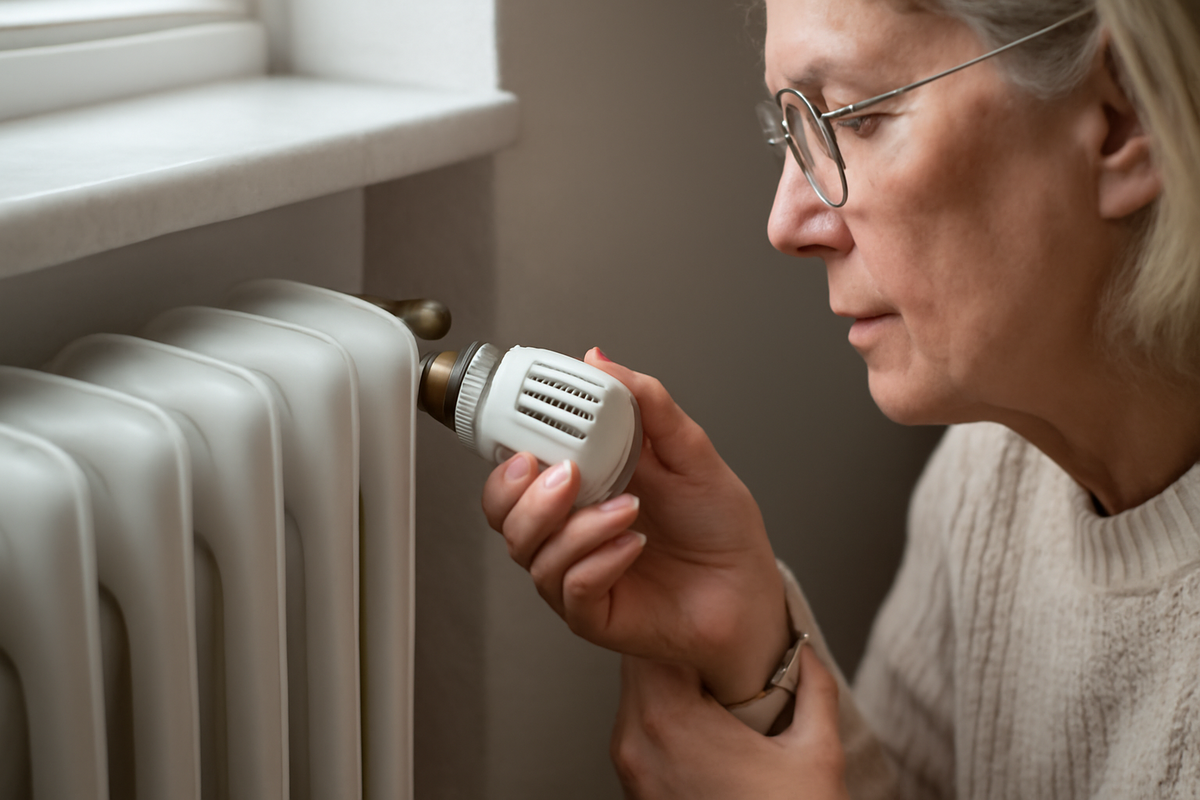
The first cold week of autumn arrives quietly. One day you’re walking home in a light shirt, the next you can see your breath bloom in the evening air. Inside, you twist the thermostat to 19°C—because you’ve always been told that’s the “right” temperature. Sensible. Efficient. Grown-up. But as the radiators give off a lukewarm sigh and your feet stay stubbornly cold against the floor, a thin question creeps in: 19°C… for whom?
The Myth of the “Perfect” Temperature
For decades, 19°C has been whispered like a magic number in energy guides, winter advice columns, and even government recommendations. A little uncomfortable, maybe, but noble—good for the planet and your energy bill. That quiet sacrifice you were supposed to make in the name of efficiency.
But if you’ve ever sat on the sofa in two sweaters, hands wrapped around a mug just to keep your fingers working, you’ve already felt the truth: there is no single perfect indoor temperature. There never was.
Modern building scientists, doctors, and comfort specialists now agree that this strict, one-size-fits-all rule is not only outdated, but can be unhealthy, inequitable, and even counterproductive. It came from an era of very different houses, very different people, and very different data.
The 19°C norm is rooted in old studies that focused on a narrow group of young, healthy male office workers, and on energy models that assumed leaky buildings and fuel so cheap it barely needed counting. The world has changed. Our homes have changed. Our understanding of health and comfort has changed. But many of our rules have not caught up.
So what should replace the 19°C rule? As it turns out, not another magic number—but a much more human way of thinking about heat.
Where 19°C Came From—and Why It No Longer Fits
Walk into a typical living room from the 1970s in your imagination. Single glazing, thin loft insulation (if any), draughts under every door. Heating was often a fight against a constant flow of cold air, and energy policy focused on just one question: how low could you go without risking serious harm?
Studies at the time suggested that 18–19°C might be a workable lower boundary for a healthy adult in reasonably warm clothes, moving around now and then. That number became simplified, repeated, and then fossilized into “the rule.” Media picked it up. Policy echoed it. Energy-saving campaigns reduced complex comfort science to a single neat soundbite.
But comfort science has a way of complicating soundbites. Modern researchers consider not just air temperature, but:
- Radiant temperature (how warm your walls, windows, and furniture are)
- Air movement (draughty or still)
- Humidity
- How active you are (typing is not the same as vacuuming)
- What you’re wearing—and how your body handles the cold
We’ve also learned something else uncomfortable: 19°C can be too cold for many people. Older adults, babies, those with heart or lung conditions, people with low body fat, and anyone sitting still for long periods are all more vulnerable to cold. For them, 19°C isn’t a responsible target—it’s a risk.
Why Health Experts Are Quietly Raising the Bar
Healthcare professionals now tend to recommend warmer minimum temperatures indoors, especially in rooms where people sit or sleep for long stretches. Many public health guidelines lean closer to 20–21°C for living spaces, often higher for the elderly or unwell.
Why? Because even mild cold stress can nudge blood pressure up, tighten airways, and lower your body’s ability to fight infections. It may not feel extreme, but over long winters, those small stresses add up. Cold homes have been linked with more respiratory illness, more hospital visits, and even excess winter deaths—especially in poorly heated, low-income households.
That “heroic” act of braving a chilly living room doesn’t always translate into a meaningful climate win either. If your house leaks heat or your walls are cold, your body becomes the backup radiator, burning energy to make up the difference. You might also end up using portable heaters, which can be both less efficient and more expensive than a properly set central system.
The emerging message from experts is not “heat more, always,” but “heat smarter, and protect people first.” And that brings us to a more nuanced way to think about winter comfort.
From One Number to a Comfort Range
Instead of a single fixed temperature, experts now talk more often about comfort ranges. A band of temperatures you move through depending on your activity, health, and the quality of your home.
Think of it like clothing: you wouldn’t wear the exact same outfit for a run, a nap, and a slow afternoon reading on the sofa. Your heating shouldn’t be fixed either.
What Experts Often Recommend Now
While specific advice varies by country, climate, and housing, a lot of modern guidance lands in roughly the same territory:
- Living areas (daytime, sitting): around 20–21°C for most adults in typical indoor clothing.
- Bedrooms at night: 17–19°C is often comfortable for healthy adults under adequate bedding, slightly warmer for babies and older adults.
- Homes with elderly, infants, or health conditions: many health experts advise 21–23°C in main living areas.
- Short absences: a modest setback (1–3°C lower) instead of turning heating off entirely.
Notice what’s missing? A strict demand that everyone hover at 19°C. The modern conversation is less “What is the right temperature?” and more “What is safe and comfortable for you, in this home, in this moment?”
Even energy experts now tend to talk about avoiding waste rather than clinging to a single austerity temperature. Warming just the rooms you use, improving insulation, and fixing draughts can cut energy use far more effectively than forcing every winter day to feel like a survival challenge.
Why 19°C Often Feels Colder Than It Looks
If you’ve ever checked a thermostat reading 19–20°C and still felt chilled to the bone, you’ve already experienced another key lesson of modern building science: air temperature isn’t the whole story.
The Hidden World of Radiant Cold
Imagine standing by a large, single-glazed window on a winter night. The air in the room might technically be 20°C, but the cold glass beside you is radiating chill. Your body “sees” that cold surface and gives off heat to it. You feel colder—not because the air has changed, but because the radiant environment has.
Uninsulated walls, draughty floors, and big cold windows all work the same way. They make you feel as if the room is colder than the thermostat claims. So you do the obvious thing: you turn the thermostat up. The boiler works harder, the bills climb, but your feet are still complaining.
In better-insulated homes, something remarkable happens. At the same air temperature, you simply feel warmer. The walls aren’t stealing your body heat. The surfaces around you hold warmth. Many people in well-insulated homes find they’re comfortable at 19–20°C where once they needed 22–23°C.
This is one of the reasons experts now emphasize the building at least as much as the boiler. Fixing the fabric of the home—insulation, windows, draught-proofing—can make modest temperatures truly comfortable. The goal stops being “tough it out at 19°C” and becomes “make 20°C feel like 20°C.”
The New Rules of Thumb for a Warmer, Wiser Winter
So if the old 19°C rule no longer serves most people, what should you do instead? Think less in commandments, more in guidelines—adaptive, flexible, forgiving.
1. Start with Health, Not Heroics
If anyone in your home is older, has heart or lung conditions, is very young, or feels the cold more than others, prioritize their comfort. For these groups, shivering isn’t a sign of frugality; it’s a warning signal. Let your living area reach 20–22°C if needed, and treat that as a baseline, not an indulgence.
2. Use a Range, Not a Target
Instead of fixating on one number, choose a comfortable range based on what you’re doing:
- Working at a desk or relaxing: around 20–21°C
- Cooking, cleaning, moving around: 18–20°C may feel fine
- Sleeping: often 17–19°C, with good bedding
Allow yourself to nudge the thermostat up or down within that band as the day changes. Comfort is a moving target; your heating can move too.
3. Heat the Human, Then the Home
Warm slippers, thick socks, a decent jumper, and a throw on the sofa can let you keep the thermostat a degree or two lower without feeling deprived. But this is about comfort, not punishment. If you’re fully layered and still tense with cold, the room is too chilly.
Meanwhile, focus your heating where you actually spend time. Close doors, zone your system if possible, and concentrate warmth in living spaces and bathrooms rather than trying to flood every unoccupied room with heat.
4. Fix the Fabric Before Blaming the Thermostat
If you’re constantly cold at 19–20°C, your home might be telling you something. Draught excluders, heavy curtains at night, rugs on bare floors, and basic loft or wall insulation can transform how warm a space feels at the same air temperature.
Over time, improving the building can let you be both warmer and more efficient, instead of stuck in the false choice between shivering for the planet or overheating to feel human.
5. Be Kind to Your Future Self
Heating systems run most efficiently when they’re allowed to work steadily, not in dramatic bursts. Deep setbacks—letting the house plunge to near-outdoor temperatures, then blasting it back up—often waste energy and leave you uncomfortable for long spells.
A small overnight or daytime setback, perhaps 2–3°C lower than your normal setting, often strikes the best balance. You avoid major heat loss while still dialing back the energy use a bit when you don’t need full comfort.
A Quick Look at Temperatures, Comfort, and Who They Suit
The numbers below are not rules, but a snapshot of how different people and spaces often align with certain temperatures. Use them as a conversation starter with your own body, not a commandment.
| Space / Person | Typical Comfort Range | Notes |
|---|---|---|
| Living room (healthy adults) | 20–21°C | Sitting, reading, working at a laptop with normal indoor clothing. |
| Living room (elderly or unwell) | 21–23°C | Higher minimums reduce health risks and cold stress. |
| Bedroom (healthy adults) | 17–19°C | Cooler air can aid sleep if bedding is warm enough. |
| Bedroom (babies/older adults) | 19–21°C | More stable warmth is safer for vulnerable sleepers. |
| Hallways/less used rooms | 16–18°C | Can be cooler as long as main spaces stay comfortable. |
Beyond Numbers: Listening to Your Own Winter Story
There is a particular kind of silence that arrives when a house finally reaches a comfortable temperature on a cold day. The boiler eases into a gentle murmur. Your shoulders drop. Your breath feels softer. The air around you is no longer a thing you fight, but a quiet companion.
For too long, many of us have treated that feeling as a guilty luxury—something to be rationed by a stubborn thermostat setting and a belief that virtue lives at exactly 19°C. But warmth is not a moral failure. It’s a basic human need, and one that interacts deeply with health, sleep, mood, work, and the very ability to enjoy being at home.
The experts rethinking indoor temperatures are not arguing for waste. They are arguing for balance: good insulation instead of constant strain on the boiler; steady, reasonable temperatures instead of yo-yo extremes; attention to vulnerable bodies instead of blind obedience to an old rule.
So as this winter settles in, you might try a small experiment. Instead of asking, “What should my thermostat be set to?” ask, “How do I actually feel in this room right now?” Are your toes warm? Are your fingers flexible? Is your breath easy? Could a warmer jumper fix it—or is your home itself asking for a bit more care?
The story of indoor heating is changing. The 19°C chapter served a purpose in its time, but it’s no longer the whole tale. The new story is more personal, more scientific, and, ultimately, more humane: keep people warm enough to thrive, use buildings clever enough to waste less, and let your thermostat be a tool—not a badge of honor.
FAQ
Is 19°C always too cold?
Not necessarily. Some healthy, active adults in well-insulated homes feel perfectly comfortable at 19°C, especially when moving around or wearing warm clothing. The issue is treating 19°C as a universal rule rather than one option within a wider comfort range.
What temperature do most experts recommend now?
Many modern guidelines suggest around 20–21°C for main living areas used by healthy adults, with slightly higher temperatures (21–23°C) for elderly people, babies, or those with health conditions. Bedrooms can often be cooler, around 17–19°C, if bedding is adequate.
Can turning my heating down too much harm my health?
Yes. Long-term exposure to cold indoor temperatures increases the risk of respiratory problems, higher blood pressure, and other health issues, especially for vulnerable people. Regularly living or sleeping in rooms below about 18°C can be risky for some groups.
Is it better to turn the heating off when I go out?
For short absences, it’s usually more efficient and comfortable to lower the thermostat a few degrees rather than switch the heating off completely. Deep temperature drops can lead to higher energy use to reheat the home and less comfort when you return.
How can I feel warmer without raising the thermostat too much?
Layer your clothing, use warm socks and slippers, add throws or blankets, and tackle draughts around windows and doors. Heavy curtains at night, rugs on cold floors, and basic insulation improvements can make a big difference to how warm a given temperature feels.

Hello, I’m Mathew, and I write articles about useful Home Tricks: simple solutions, saving time and useful for every day.