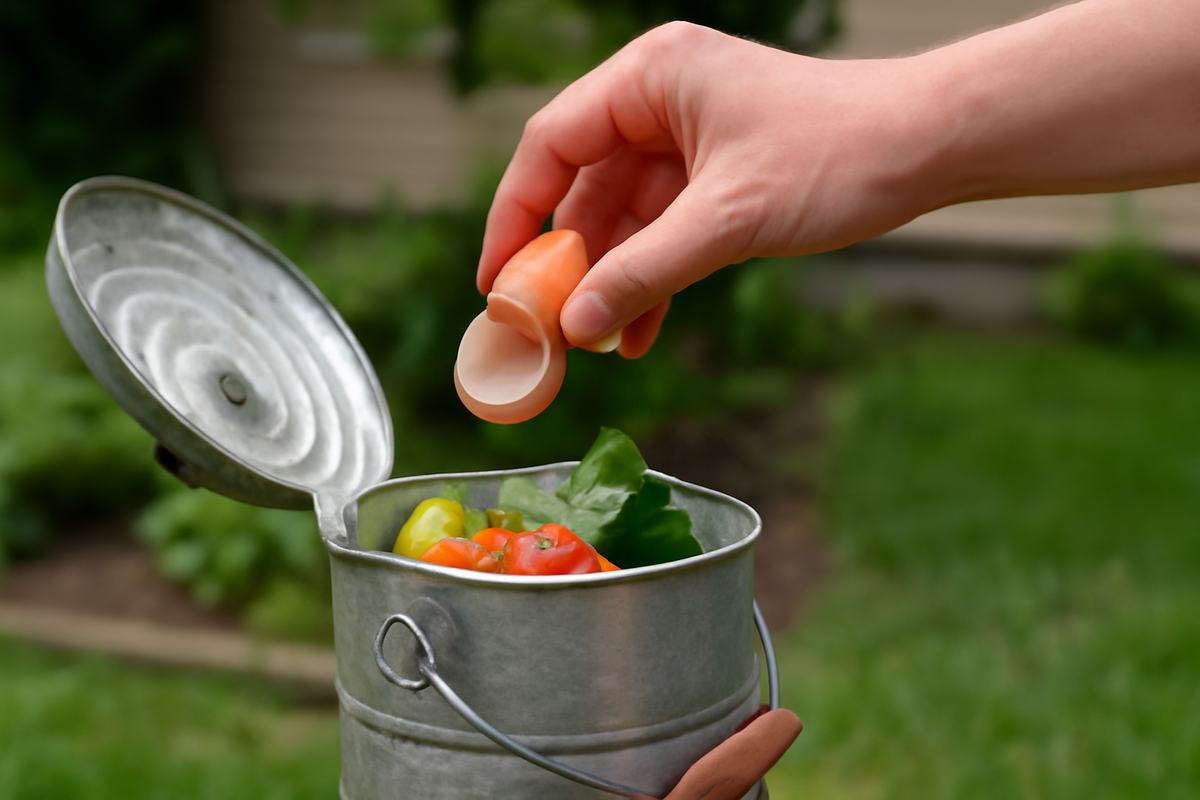
The banana peel was still warm from the sun when it hit the trash can with a soft, defeated thud. It landed on top of a crushed paper cup, a knot of plastic wrap, and the leftovers of someone’s rushed lunch. For a moment it lay there, bright and yellow, strangely alive against the dull gray of the bin. Then the lid swung shut, and the peel—the quiet, perfect package of organic goodness—vanished into the anonymous darkness we call “waste.”
We do this every single day. With banana peels. Coffee grounds. Eggshells. Onion skins. Apple cores. Tea bags. We toss them out, wrinkle our noses, and move on with our lives. Garbage day comes, the bin gets dragged to the curb, and the truck swallows the story before it’s even begun. But if you garden, if you love houseplants, if you’ve ever knelt in the dirt and wondered how to make your plants happier, greener, stronger—this “waste” might be the most overlooked treasure you own.
Because almost everything soft and squishy we throw away from our kitchens is not trash. It’s organic gold. And your plants are starving for it.
The Quiet Alchemy in Your Trash Bowl
If you’ve ever left a bowl of kitchen scraps on the counter for a day too long, you know what happens: things soften, darken, break down, and eventually start to smell… alive, in a wild, unruly way. Most of us rush to get rid of it. But what you are actually watching is the very beginning of soil being born.
That banana peel? It’s full of potassium, a nutrient that helps plants strengthen their stems, move water efficiently, and prepare for flowering and fruiting. Coffee grounds? They’re a slow, gentle source of nitrogen—one of the key building blocks of leafy growth. Crushed eggshells quietly deliver calcium and trace minerals. Onion and garlic skins contain sulfurous compounds that can support plant resilience. Even that papery tea bag, once you’ve torn it open, is just plant matter ready for another life.
Microbes—those invisible decomposers we rarely think about—see kitchen scraps not as trash, but as a banquet. When you give organic waste back to the soil, you’re not just “adding nutrients.” You’re feeding a living underground city of bacteria, fungi, nematodes, and earthworms. They chew, digest, trade, and transform all that rotting fruit and veg into something plants can sip like a perfect, balanced smoothie.
In nature, nothing is wasted. A leaf falls, an animal dies, a fruit rots under its own tree, and everything that once lived returns to the soil, fueling the next cycle of life. Our trash cans are the only place in the ecosystem where that story gets cut short.
The Day You Start Saving Your Scraps
There’s often a moment—the first day you decide you won’t toss your peels and cores—when the world tilts slightly. You stand over the bin with half an apple in one hand and a bowl in the other and realize: this could be the start of something.
Maybe it’s a small ceramic bowl on the counter. Maybe it’s a bucket under the sink. It doesn’t look like much at first: a few coffee grounds, the peel of a clementine, some lettuce ribs. But look closer. You’re holding the raw ingredients of dark, crumbly, living compost that can make soil looser, more water-retentive, richer in nutrients, and bursting with microbial life.
The change happens quietly. Instead of thinking, “Ugh, trash,” you start thinking, “Ooh, my plants are going to love this.” Your relationship with your own waste shifts. That’s a surprisingly intimate thing—to look at the byproducts of your meals and feel possibility instead of guilt.
And here’s the beauty: you don’t need a big backyard or a fancy compost system to start. You can feed organic gold to your plants in many small, simple ways.
Easy Ways to Turn Scraps into Plant Food (Even in a Tiny Space)
Not everyone has space for a compost pile, but everyone can do something. The trick is to match your living situation with a method that feels easy instead of overwhelming.
| Living Situation | Simple Scrap Method | What It’s Best For |
|---|---|---|
| Apartment with no balcony | Coffee grounds, banana peel water, blender “scrap smoothies,” worm bin | Houseplants, herbs in pots |
| Small balcony or patio | Bucket composting, small worm farm, buried scrap trenches in containers | Container tomatoes, peppers, flowers |
| Yard or garden bed | Classic compost pile, direct burying, compost trenches | Vegetable beds, fruit trees, shrubs |
Each of these methods is just a different way of saying: “I’m not going to let organic gold leave my home.” The scale doesn’t matter. The intention does.
Meet the Misfits: Scraps Your Plants Secretly Crave
Open your fridge or look at your cutting board and imagine little speech bubbles above your scraps:
Banana peel: “I’m rich in potassium and a bit of phosphorus—great for flowering and fruiting plants.”
Coffee grounds: “I bring nitrogen and organic matter—and I smell like a good morning.”
Eggshells: “I’m mostly calcium carbonate; slow and steady for strong cell walls.”
Onion and garlic skins: “I’ve got micronutrients and natural compounds that can support resilience.”
Tea leaves: “I’m just shredded plant leaves—you know, like mulch but more refined.”
These scraps don’t look like fertilizer because we’re used to fertilizer being a bright blue crystal, a tidy pellet, or a liquid in a bottle with a label full of promises. But plants don’t care what the package looks like. They care about what reaches their roots, and that’s where decomposition does its magic.
Here are a few sensory, down-to-earth ways to use these misfits at home:
- Banana peel soak: Chop clean banana peels into strips, place in a jar, cover with water, and let it sit for a couple of days. The water will take on a faint color and a sweet, slightly funky smell—like a fruit bowl left out a bit too long. Strain and dilute this “banana tea” with more water (about 1:4) and use it to water flowering plants or fruiting vegetables. Don’t overdo it; once or twice a month is enough.
- Coffee ground dressing: Dry your used coffee grounds on a tray so they don’t go moldy. Then sprinkle a thin layer over the soil of acid-loving plants (blueberries, some houseplants) or mix lightly into the top layer of potting soil. A dusting, not a blanket—too much can become compacted and water-repellent.
- Crushed eggshell sprinkle: Rinse shells, air-dry, and crush them as finely as you can. A mortar and pestle, a rolling pin, or even a blender works. The finer the powder, the more accessible the calcium. Scatter this around your plants or mix it into the soil when potting. It’s a slow gift, not a quick fix, but your plants will quietly draw on it for years.
- Onion and garlic skin mulch: Let them dry out and crumble them over the soil like confetti. They’re not a miracle cure, but they’re another layer of organic matter returning to the ground instead of the bin.
- Scrap smoothies: Got a blender and a few stubborn carrot nubs, limp lettuce, or apple cores? Blend them with water into a thin slurry and bury that slurry in small holes near your plants, a few inches below the surface. It vanishes quickly underground, and microbes get to work right away.
There is no single perfect recipe. There is only the rhythm of giving back, bit by bit, what your home already creates.
Compost: The Forest Floor in a Box
Step into a forest after rain and scoop up a handful of the topsoil. It’s dark, crumbly, and smells like something both alive and peaceful—earthy, sweet, slightly smoky. That’s humus: decomposed organic matter in its most elegant form. Compost is our attempt to recreate that forest floor in a compact, human-managed way.
You don’t need towering pallets or a giant open heap to compost. A single lidded bin, an old trash can with holes drilled in the sides, or a simple pile in a corner of the yard can host this transformation. The ingredients are absurdly simple:
- Greens: Kitchen scraps (fruit and veg), fresh grass clippings, coffee grounds.
- Browns: Dry leaves, torn cardboard, paper towels, shredded paper, straw.
Layer them. Keep them moist like a wrung-out sponge. Turn occasionally if you like, or not much at all if you’re patient. Over weeks and months, the pile slumps, heats internally, cools, and gradually disappears into a dark, uniform material that no longer looks like what it used to be. No banana peels, no egg shells, just rich, living compost.
When you spread this over your garden or tuck a handful into the pot of a tired houseplant, you’re not just “fertilizing.” You’re rebuilding the community under the surface: fungi forming symbiotic threads with roots, bacteria trading nutrients, earthworms tunneling and aerating. Soil that receives regular compost becomes more like a sponge and less like a brick. It holds moisture during dry spells and drains better after heavy rain. Plant roots can breathe, stretch, and explore.
In a world where synthetic fertilizers promise instant results, compost is a conversation with time. It’s slower, humbler, and deeper. But once you see the difference in the way water soaks in and how plants carry themselves—leaves a little glossier, stems a little sturdier—it’s hard to go back.
For the Space-Challenged: Worms, Buckets, and Quiet Corners
What if you don’t have a yard at all? The good news: decomposition doesn’t demand acreage. It only needs a container—and usually, a bit of help from some hungry friends.
Worm bins are like tiny compost factories for apartments. Inside a dark box (plastic or wood), you provide bedding (shredded paper, cardboard, coco coir), add a colony of composting worms, and feed them small amounts of kitchen scraps. In return, they produce castings: a fine, dark, crumbly material that is prized as one of the most balanced natural fertilizers available. A handful mixed into potting soil can give houseplants an almost unfair advantage.
There’s something disarming about lifting the lid of a worm bin for the first time and seeing dozens of small red wigglers quietly writhing among tea leaves and melon rinds. It’s not gross. It’s oddly tender. You become a caretaker of a tiny ecosystem whose only job is to turn your leftovers into soil.
Bucket composting is even simpler. Take a sturdy bucket with a tight lid. Add layers of chopped scraps and dry materials like torn cardboard or shredded paper. Sprinkle in a bit of finished compost or garden soil to introduce microbes. Poke some small holes near the top if needed for airflow. Seal it, tuck it on a balcony or in a corner, and let it slowly break down. Every few days, open and stir. Eventually you get a rough, partially decomposed mix that can be buried in large pots or garden beds to finish its transformation.
Both worm bins and buckets are quiet acts of resistance. They say: you don’t need a perfect system to begin. You just need to stop sending everything away.
Houseplants That Glow on Kitchen Leftovers
Watch a houseplant closely for a few weeks after you start feeding its soil with homemade organic goodness. A peace lily that looked permanently droopy begins to hold its leaves a bit higher. A pothos that always seemed pale produces a deeper green new leaf. The soil, once dusty and compacted, starts to look darker and more springy under your fingers.
Most indoor plants are grown in potting mixes that, over time, become exhausted. Water leaches nutrients out. Microbial life dwindles. The mix loses that subtle fresh-earth smell and begins to feel more like inert fluff. Synthetic fertilizers can push new growth, but without organic matter, the soil doesn’t really heal. It just gets juiced.
When you add small, regular doses of organic material—worm castings, a bit of compost, finely blended kitchen scraps—you’re rebuilding your pot from the inside out. Instead of just feeding leaves, you’re feeding the complex web that supports those leaves. That web, in turn, buffers mistakes. Overwater a bit? Living soil recovers better. Forget to fertilize? There’s a slow reserve of nutrients being released as tiny things keep digesting.
Plants grown this way often don’t look dramatically different overnight. The change is subtler: fewer mysterious yellowing leaves, stronger roots when you repot, a feeling that your plants are not surviving but quietly thriving.
The Story That Doesn’t End at the Trash Can
When you begin to see banana peels and coffee grounds as organic gold, something else happens: the invisible thread between your kitchen, your soil, and the larger world becomes harder to ignore.
Every bag of “trash” that leaves your home is heavy not just with objects but with missed potential. In landfills, organic matter doesn’t turn into rich soil. It decomposes in airless piles and releases methane, a powerful greenhouse gas. What could have been a gift to your garden becomes a burden on the atmosphere.
But in your hands, with your bowl of scraps and your patch of soil—or even your windowsill of potted plants—that story can end differently. Each peel, shell, and ground can be part of a loop instead of a line. You eat. You save. You return. The soil responds. The plants respond. You see the results in the shimmer of a leaf or the scent of a tomato you grew yourself.
Somewhere in a landfill right now, thousands of banana peels lie entombed in plastic bags, their potassium locked away from the roots that could have used it. Somewhere else, a gardener sprinkles finished compost around a tomato plant, and the same element moves from soil into fruit, into a kitchen, and back again. Those are two futures for the same humble peel.
The difference starts with a small, simple decision: not to toss it mindlessly.
Frequently Asked Questions
Can I put all kitchen scraps on my plants directly?
No. Large chunks of fresh scraps can attract pests, mold, and bad smells if left on the surface. It’s better to compost them first, bury them under soil, or blend them into a slurry and cover lightly.
Are coffee grounds safe for all plants?
Use coffee grounds in moderation. They can be slightly acidic and may compact if used in thick layers. Mix a small amount into potting soil or sprinkle thinly on top rather than piling them.
Do eggshells really help with calcium for plants?
Yes, but slowly. Eggshells must be rinsed, dried, and crushed very finely. They break down over time, gradually releasing calcium. They won’t fix sudden deficiencies overnight, but they support long-term soil health.
Is a worm bin going to smell or attract pests indoors?
A well-maintained worm bin should smell like damp soil, not garbage. Avoid overfeeding, always cover fresh scraps with bedding, and keep the bin moist but not soggy. This keeps odors and pests to a minimum.
What scraps should I avoid using?
Avoid large amounts of meat, dairy, oily foods, and very salty leftovers in small home systems—they can smell, attract pests, and break down poorly. For basic plant feeding, focus on fruit and vegetable scraps, coffee grounds, tea leaves, and eggshells.
How long does it take for scraps to turn into usable compost?
In a traditional compost pile, it can take anywhere from 2–6 months depending on temperature, moisture, and how often you turn it. In a worm bin, smaller scraps can break down within a few weeks. Directly buried scraps may disappear in 1–3 months in warm, active soil.
Can I use these methods for indoor houseplants only, or also for outdoor gardens?
Both. Indoor plants benefit from gentle, well-finished compost or worm castings mixed into their potting soil. Outdoor gardens can handle rougher compost, buried scrap trenches, and more experimental methods like scrap smoothies and peel soaks.

Hello, I’m Mathew, and I write articles about useful Home Tricks: simple solutions, saving time and useful for every day.