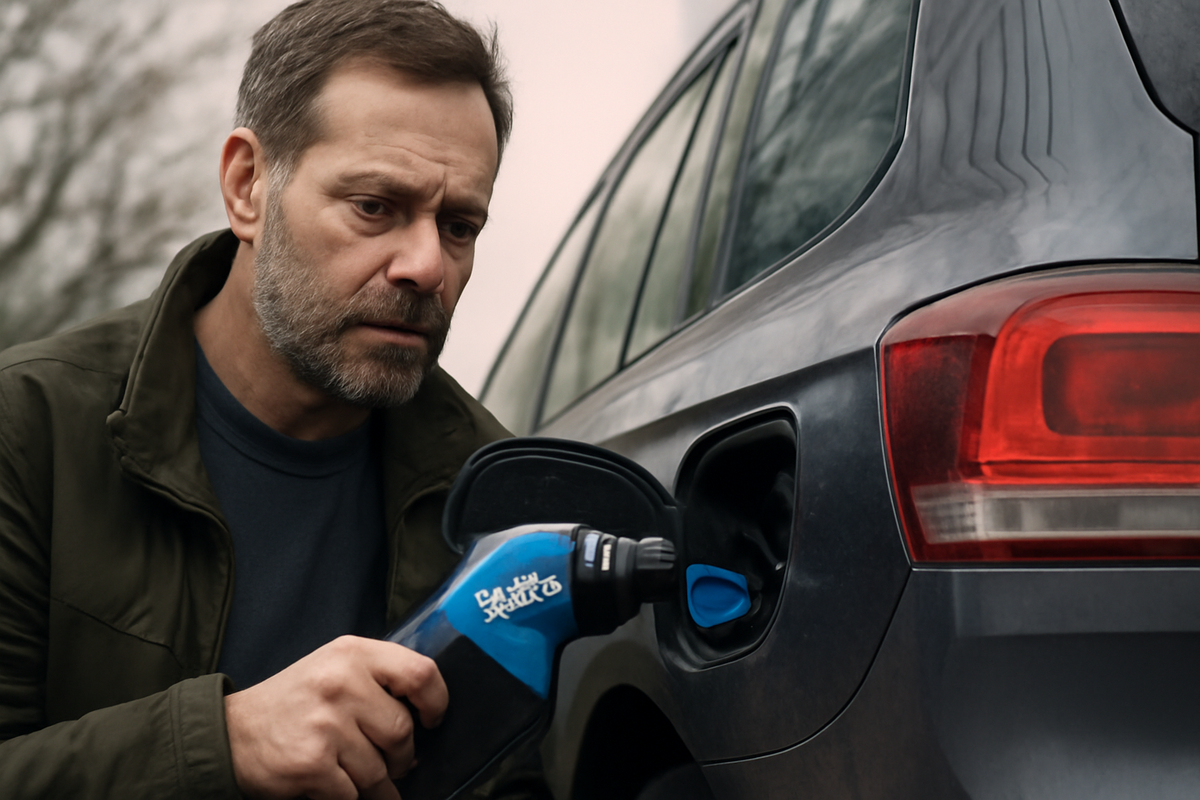
The first frost of winter had just begun to lace the hedgerows when the rumours started circling in lay-bys, workshops, and fuel station forecourts: “They’re cracking down in January… big fines if your AdBlue’s not right.” It spread in the quiet way important things do—passed between drivers over steaming takeaway coffee, in low voices across the counter at the parts shop, in hurried messages pinging across group chats at midnight. For many diesel drivers, especially those who live on the road as much as at home, it felt less like a new rule and more like the tightening of a noose they’d half expected for years.
Winter Roads, Quiet Rules
Imagine a cold January morning. Your breath fogs the air as you tug your jacket tighter and watch your diesel warm from a reluctant rumble to a familiar thrum. The sky is still ink-dark, and the first light catches the salt dust on the bodywork. You check your mirrors, lights, fuel. It’s routine, almost muscle memory.
But this winter, there’s another invisible check hovering over every ignition: your AdBlue system. Not just whether you’ve got some in the tank—but whether it’s working, legitimate, and untouched by the little grey market of cheat devices and “fixes” that’s sprung up over the years.
Starting in January, enforcement goes from quiet warnings to hard reality. Drivers of modern diesel vehicles—cars, vans, motorhomes, and especially heavy-duty trucks—are being put on notice: run without proper AdBlue, tamper with your emissions system, or rely on fake fluid, and you’re looking at heavy fines, possible vehicle prohibition, and even long-term costs to your livelihood.
On the surface, it sounds like another faceless regulation. But the story underneath is messier and more human: a dance between environmental necessity, economic pressure, and the timeless urge to cut corners when no one seems to be watching.
The Blue Liquid That Changed Diesel
Stand near a modern diesel as it idles on a crisp morning and you might see only exhaust mist drifting into the cold air. But tucked behind the bodywork, near the fuel tank, there’s often a smaller filler cap—sometimes blue, sometimes clearly labelled “AdBlue.” That unassuming port leads to the heart of an emissions system that’s now under the microscope.
AdBlue isn’t a fuel additive, and it’s not a magic potion. It’s a carefully formulated solution of high-purity urea and deionised water, fed into the exhaust system of diesel vehicles equipped with Selective Catalytic Reduction (SCR) technology. As hot exhaust gases flow out of the engine, AdBlue is injected and breaks down into ammonia, which reacts with the harmful nitrogen oxides (NOx) in the exhaust.
The result is less invisible damage. NOx—those harsh, eye-stinging gases linked to asthma, heart problems, and smog—is converted into harmless nitrogen and water vapour. You can’t see the chemistry. You just see the plume, a little whiter, a little cleaner, hanging under streetlights on a damp night.
This system was never optional. For years, manufacturers have built diesel engines around SCR to meet tight emissions standards. In return, we’ve got torquey diesel performance and long-range efficiency without quite so much poison in the air. But that deal comes with a condition: AdBlue must be present, and the system must work as designed.
The Temptation to Cheat
Of course, anything that adds cost, hassle, or the risk of a dashboard warning light tends to attract a shadow trade. And AdBlue has drawn plenty of shadows.
In the real world, AdBlue can feel like just one more thing to worry about. Extra fluid to buy. Another tank to keep topped up, especially on long-haul routes where every stop costs time. Another system to fail in the dead of winter when hoses freeze, sensors sulk, and warning messages multiply.
Into that frustration slipped the promise of shortcuts: cheap “AdBlue delete” boxes, software hacks that trick the vehicle into believing the system is functioning, and bargain-basement fluids of dubious origin. The pitch is always the same: save money, save hassle, keep the engine running without the bother.
Some drivers, especially in high-mileage or low-margin work, found it hard to say no. When fuel prices spike and contracts barely keep pace with costs, a little box that saves AdBlue and dodges repairs can look less like cheating and more like survival. In quiet corners of industrial estates, vans and trucks rolled in with working SCR systems and rolled out with them silently disabled.
On the road, no one could tell. The exhaust looked the same to the naked eye. The cab felt the same. Only the air noticed.
A Crackdown Years In The Making
The upcoming January enforcement isn’t really new—it’s an enforcement of rules that have been on the books for years. What’s changing is the mood, the means, and the willingness to act.
Regulators and roadside inspectors have been steadily arming themselves with diagnostics, portable testing tools, and a clearer mandate: emissions tampering is no longer a dirty little secret; it’s a target. They’ve watched NOx levels in some regions refuse to fall as expected, even while newer, “cleaner” vehicles hit the roads. They’ve followed the breadcrumb trail from suspiciously cheap AdBlue substitutes to blatant emissions delete devices, sold with a wink.
Now, the conversation has shifted. This winter, many regions and agencies are moving from awareness campaigns to strict enforcement. Heavy fines, fixed penalties, and prohibition notices are being prepared not as theoretical options but as everyday tools.
For diesel drivers, that means the stakes are changing. A tampered AdBlue system isn’t just a thing you hope the MOT or inspection doesn’t catch. It’s a potential roadside problem, a reason to be pulled aside, questioned, and possibly parked until it’s fixed—on your time and your dime.
What January’s Enforcement Actually Means
The word “enforcement” can feel vague, but on a wet January day under the sodium glow of a roadside checkpoint, it becomes very real. Picture a random stop on a bypass, or a targeted inspection near an industrial estate known for freight traffic. Police, transport officers, or environmental inspectors step up to your door, not just to check your licence and tyre tread, but to peer under the skin of your emissions systems.
Here’s what’s likely to be in play as the new enforcement wave begins:
- AdBlue tank and system checks: Inspectors may check your AdBlue level, cap, and filler for signs of tampering or strange modifications.
- Diagnostic scans: Plug-in tools can interrogate the vehicle’s onboard systems, looking for disabled SCR functions, altered software, or stored fault codes that don’t match a “healthy” emissions system.
- Visual evidence of tampering: Loose connectors, added boxes, suspicious wiring, or evidence of deleted sensors and modulators can all raise eyebrows.
- Portable emissions testing: In some areas, mobile units can measure NOx and other pollutants directly from the exhaust, comparing real-world output against what a compliant vehicle should produce.
When things don’t add up, consequences follow. Fines can vary by jurisdiction and vehicle class, but the direction of travel is clear: heavy. For commercial operators, the risk stretches further—to lost contracts, damaged compliance scores, or scrutiny of entire fleets.
For drivers, the uncomfortable truth is this: “I didn’t know” may not cut it anymore. Downstream responsibility is becoming as real as upstream intention. If your vehicle is caught running dirty—whether you personally installed the delete device or inherited someone else’s shortcut—you may be the one explaining it at the roadside.
Comparing The Costs: Fines vs Doing It Right
There’s a quiet arithmetic behind every decision to tamper with AdBlue, and enforcement is about tipping that arithmetic back towards honesty. Put simply: it’s going to be more expensive to cheat than to comply.
Consider a rough comparison, simplified but illustrative. Actual figures will vary with country and specific penalties, but the shape of the numbers tells a story:
| Scenario | Upfront / Ongoing Cost | Risk & Long-Term Impact |
|---|---|---|
| Using proper AdBlue and maintaining SCR | Regular AdBlue refills, occasional maintenance or sensor replacement | Low enforcement risk, better air quality, vehicle retains value and compliance |
| Using cheap, non-spec AdBlue | Lower fluid cost but possible system damage over time | Risk of system failure, costly repairs, possible emissions non-compliance |
| Installing AdBlue delete/emulator | One-time device and fitting fee | High risk of heavy fines, roadside prohibition, MOT/inspection failure, reputational damage |
| Being caught with a tampered system under new enforcement | Immediate fines, cost of restoring system to factory spec, downtime | Potential for repeated inspections, increased scrutiny on future trips, possible fleet-wide audits |
For years, the balance tilted just enough toward the shortcut for some people to take the risk. But with organised enforcement and the weight of public concern over air quality, that margin is shrinking fast.
Air You Can Taste
Strip away the technical terms and the bureaucratic language, and the core of this crackdown is deceptively simple: the air. The stuff you breathe standing at the school gate, stepping out of the bakery, or tying down a load in a lorry park at dusk. The air that hangs, faintly sour, in city streets where traffic stacks up and engines idle.
If you live near a major road, you know it without needing a report. Some days, the fumes are a background hum, something your lungs make small accommodations for. Other days—they sting. Children cough more. The elderly close their windows. Joggers hug quieter backstreets, trading time for breath.
NOx gases from untreated diesel exhaust are invisible most of the time, but the damage they do isn’t. They irritate airways, trigger asthma attacks, and gradually wear down the resilience of hearts and lungs. When enough vehicles cheat the system, the cumulative cloud is huge.
Against that backdrop, AdBlue isn’t a bureaucratic hurdle; it’s a fragile agreement. A way of saying: if we’re going to burn diesel, we’ll at least do the minimum to avoid poisoning our own streets. The January enforcement push is, in its own blunt way, the system saying: that agreement has to mean something.
And there’s a strange kind of comfort in that, if you let yourself feel it. Somewhere between the tired service stations and early-morning lay-bys, the law is bending back towards the simple idea that air should hurt less to breathe.
What Drivers Can Do Now
January might feel close and far away at the same time—near enough to cast a shadow, far enough that it’s tempting to put off dealing with the details. But for diesel drivers, a little preparation now could make the difference between a smooth winter and a shaky one.
Consider these steps, not as a lecture, but as a quiet checklist:
- Check your AdBlue system today: Make sure your tank is topped up with proper, certified AdBlue. If you’ve been tempted by unusually cheap fluid, consider flushing and refilling with trusted stock.
- Deal with warning lights promptly: That persistent AdBlue or emissions warning on your dash isn’t just a minor annoyance. Put off long enough, it could land you in trouble at a roadside check.
- Undo the shortcuts, if you can: If your vehicle has an emulator, a delete, or “modded” software, now is the time to have it restored to factory spec. It may cost, but it will cost less than being forced to fix it under a penalty notice.
- Talk to your garage or fleet manager: Good workshops are already aware of the upcoming enforcement changes. Ask them to confirm that your SCR system is compliant and functioning as intended.
- Keep records: Receipts for AdBlue, service records, and repair invoices can all help demonstrate good faith if any questions arise.
Nobody is pretending this is painless. For some drivers and small operators, it’s yet another demand on a budget already stretched thin. But in the long run, compliance buys not just legal safety, but also reliability—and a quieter conscience each time the engine turns over.
Between Engine And Earth
On a still night, parked up on the edge of a town where the orange streetlights give way to the ink of open countryside, you can hear a diesel cooling. Metal ticks, plastic settles, exhaust smells hang low until the breeze nudges them away. Somewhere beyond the hedgerow, an owl calls, the sound of wild land holding its breath at the border of tarmac and field.
We like to think of emissions as a city problem, a thing that happens “over there,” under concrete flyovers and between high-rises. But every road, every engine, stitches its own faint thread into the atmosphere, whether you’re hauling pallets through industrial districts or creeping a campervan along coastal lanes. The AdBlue in your tank, colourless and unremarkable, is part of that invisible story.
January’s enforcement is not the end of that story; it’s just a sharper chapter. A reminder that technology meant to gentle our impact on the air can’t be ornamental. That laws written in dry language ripple out into the fog you inhale when you step outside your door.
Diesel, for now, still carries the weight of economies, journeys, and lives entwined with the open road. But as frost brightens the verges and inspectors plug diagnostics into reluctant sockets, a new message rides quietly on the winter air: if we are to keep burning, we will at least burn more cleanly. The engine note may sound the same. The change is in what you can’t see.
So as the year turns and the first checkpoints of January blink awake under grey skies, the question for every diesel driver is simple, and unavoidably personal: when the blue light of enforcement falls across your bonnet, will your exhaust be telling the truth?
Frequently Asked Questions
What is AdBlue, exactly?
AdBlue is a high-purity urea and deionised water solution used in diesel vehicles with Selective Catalytic Reduction (SCR) systems. It’s injected into the exhaust stream to reduce harmful nitrogen oxide (NOx) emissions, turning them into harmless nitrogen and water vapour.
Which vehicles are affected by the new enforcement?
Most modern diesel vehicles fitted with SCR systems are affected, including many cars, vans, motorhomes, buses, and heavy goods vehicles. If your vehicle has an AdBlue filler cap or you see AdBlue warnings on the dashboard, you’re likely within the scope of the enforcement.
What happens if I run my diesel without AdBlue?
If your vehicle is designed to use AdBlue, running without it can trigger limp modes, no-start conditions, and emissions faults. Under the new enforcement, being caught with an empty tank, disabled system, or tampered components can result in fines, prohibition notices, and failed inspections.
Is it illegal to use AdBlue delete devices or software?
Yes. Devices or software that disable or bypass the AdBlue/SCR system are considered emissions tampering in many jurisdictions. They can lead to serious penalties, failed inspections, and demands to restore the system to full working order.
How can I tell if my AdBlue system is working correctly?
Watch for warning lights or error messages related to emissions or AdBlue on your dashboard. A healthy system typically only alerts you when the fluid is running low, not constantly. Regular servicing at a trusted garage, using proper diagnostic tools, is the best way to verify that everything is functioning as designed.
Will my vehicle fail its inspection or MOT if there’s a problem with AdBlue?
Yes, in many regions a malfunctioning or tampered AdBlue/SCR system is now an inspection or MOT failure. As enforcement tightens, testers are under increasing pressure to flag such issues rather than overlook them.
What should I do if I suspect a previous owner tampered with the system?
If you’ve bought a used diesel and suspect modifications, talk to a reputable garage or dealer. Ask them to scan the vehicle and visually inspect the emissions system. It’s safer—and likely cheaper in the long run—to restore it to factory specification before enforcement officers find the problem for you.

Hello, I’m Mathew, and I write articles about useful Home Tricks: simple solutions, saving time and useful for every day.