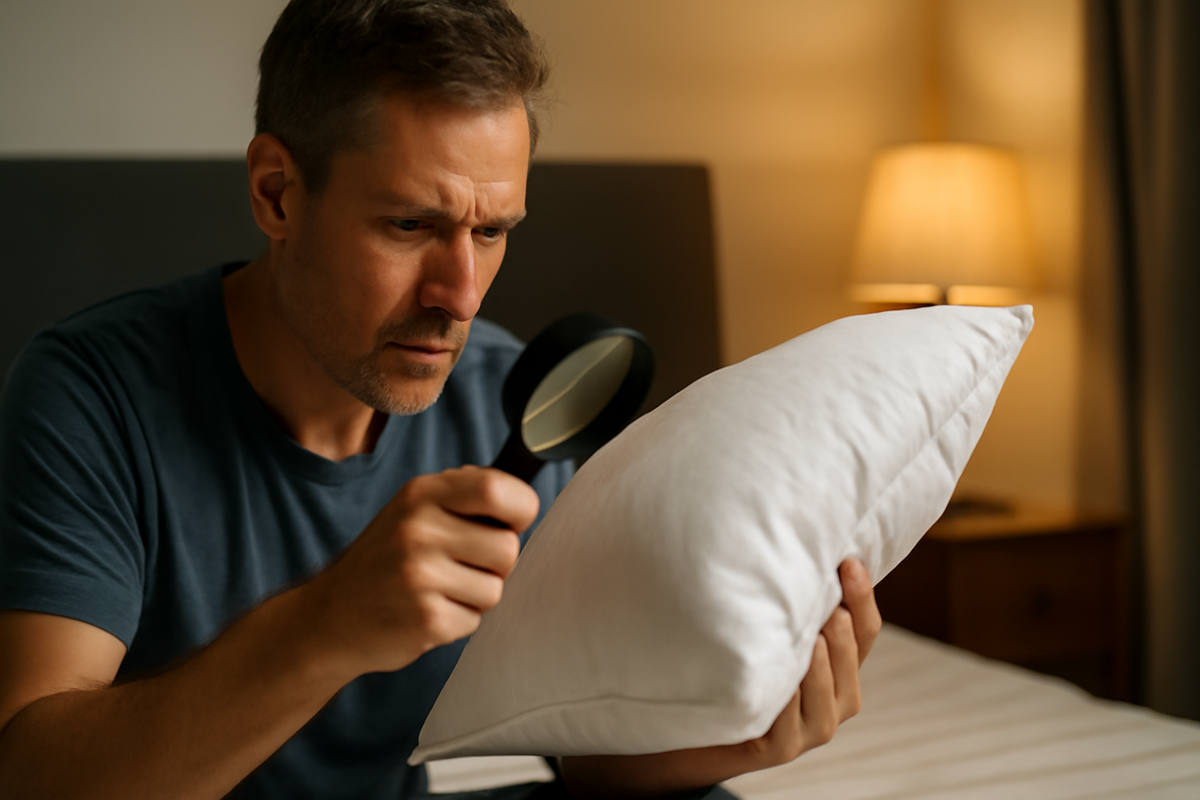
The first time I realized something was wrong, it was the second week of poor sleep. Not the kind you could blame on coffee or late-night scrolling, but the kind that wakes you at 2:17 a.m. with a prickling on your skin and a feeling—an ancient animal feeling—that something is feeding on you in the dark. I remember sitting up in bed, the streetlight leaking through the blinds, listening to the hush of the house. Everything looked normal. Sheets rumpled, a book still open on the nightstand, a glass of water with a faint ring near the rim. But sleep felt suddenly dangerous, like stepping into a room you cannot lock.
The Night You Notice You’re Not Alone
It rarely begins with a dramatic discovery. More often, it’s a small red mark on your forearm that you dismiss as a mosquito bite. Then another one appears, and another, in a neat little line along your wrist or at the edge of your ankle sock. You rub it absentmindedly during the day. At night, the itching gets worse, and your mind starts to wander into the shadows of what if.
There’s something particularly cruel about bed bugs. They choose the one place you are supposed to feel safest—your bed, your nest, your soft nightly retreat—and turn it into a hunting ground. They don’t care how clean your home is or how carefully you fold your laundry. They travel in luggage, hitchhike on secondhand furniture, sneak in from neighboring apartments. And once they’re in, they act like they’ve always owned the place.
But there is a quiet power in noticing early, in paying attention to the whispers of your environment before they become shouts. Somewhere between the last sip of herbal tea and the moment you click off the lamp, you have a chance to reclaim your territory. The habit that keeps bed bugs away doesn’t involve harsh chemicals or endless paranoia. It lives in a small, deliberate ritual at dusk—a way of saying to the night: I see you, I’m ready, and this place belongs to me.
The Evening Habit: A Slow, Intentional Sweep
Imagine this as less of a chore and more of a small, sensory ceremony at the edge of your day. The sun is dissolving behind rooftops, your room is caught between natural light and the softer glow of lamps. You’re not yet tired, but you’re beginning to move slower. This is when the habit begins.
The evening habit that keeps bed bugs away is simple: a nightly, five- to ten-minute inspection and reset of your sleeping space, paired with a few small changes in how you treat your bed. It’s not glamorous. It won’t look impressive on social media. But there’s a quiet satisfaction in doing it—like locking your front door or washing your face. A basic act of self-respect.
You start by treating your bed as sacred ground. No work laptop open on the comforter, no suitcase tossed onto the pillows, no pile of clothes waiting for “tomorrow.” Bed bugs thrive where there is clutter and fabric that rarely moves. Your job is to become the kind of person who disturbs them every single night.
Pull the corner of the fitted sheet away from the mattress and run your fingers along the seams. You’re not just looking for bugs; you’re looking for the signs they leave behind—tiny pepper-like specks, small rusty stains, a faint musty odor if they’ve been around for a while. Lift the pillows, shake them lightly, and place them back with intention. Slide a hand along the headboard, especially if it’s upholstered or has cracks where anything could hide. A small flashlight or the glow from your phone can help you see what your sleepy eyes might miss.
At first, it may feel obsessive, like an overreaction to a threat you can’t see. But over time, it becomes something else: a conversation with your space, a daily calibration that says, “I’m paying attention.” And in the secret lives of insects, attention is a form of power.
Why Evening Matters More Than Morning
Morning is rush and distraction. You’re already thinking of emails, traffic, breakfast, that text you forgot to answer. It’s when we strip the bed in a hurry, toss everything in the wash, and run. Evening, though—that’s when things slow down. Bed bugs are nocturnal; they emerge when lights go out, when your body heat and carbon dioxide drift into the dark like an invitation.
Checking your bed at night is like walking the fence line before you let the animals out to graze. You’re inspecting the borders, the seams, the crossings. You’re giving yourself a chance to notice the early signs—before the problem multiplies, before you wake up with rows of bites and a nest you no longer trust.
Building a Bed That Bugs Don’t Want
Your habit doesn’t stop with the nightly sweep. It’s also about reshaping the environment so bed bugs have fewer places to hide and less chance of ever getting a foothold. Think of it as designing a landscape that is beautiful to you but inhospitable to them.
First, consider your bedding. A mattress and box spring encasement, specifically labeled for bed bug protection, is like turning your bed into a sealed island. It traps any bugs already inside and makes new intruders easier to spot because they can’t disappear into deep seams and stitching. You slip the encasement on once, zip it fully, and suddenly the geography of your bed is simpler—fewer secret caves, more open ground.
Your sheets and pillowcases become part of the evening habit, too. Instead of waiting until “laundry day,” you begin to treat your bedding as your personal skin: something that deserves freshness and regular care. Washing sheets in hot water once a week—and drying them on high heat—does more than clear sweat and dust. It quietly destroys any stray bed bugs or eggs that may have wandered in from luggage, guests, or secondhand fabrics.
The floor around your bed becomes a kind of perimeter. Clothes are no longer draped on the frame or abandoned in soft piles beside it. That sweater you meant to hang, the jeans from yesterday, the cardigan that lives on the footboard “just in case”—these become stepping stones for pests. Your new ritual involves picking them up each evening, clearing a margin of open space under and around the bed. Not pristine, not sterile—just open, visible, and easy to scan with a single glance.
Over time, the mood of the room itself begins to shift. Clutter drains away. Layers of unused fabrics vanish. The bed stands a little taller in the space, clean lines and smooth surfaces replacing hidden folds and shadows. You haven’t just created a bed that bugs don’t want. You’ve created a bed that you want more deeply—a place you look forward to entering because it feels intentionally yours.
The Tiny Things That Make a Big Difference
Sometimes it’s the smallest changes that create the strongest shields. Consider the legs of your bed. Bed bugs cannot fly or jump; they crawl. Elevating your bed frame on simple interceptors—shallow, specially designed cups that trap crawling insects—turns each leg into a guarded border crossing. Each evening, as part of your habit, you glance at those interceptors. Still empty? Good. Any speck that moves becomes a clue worth following.
Then there’s your suitcase. After a trip, the old routine might have been: drop it near the bed, unzip, and unpack at leisure. But suitcases are one of the most common ways bed bugs cross continents, riding silently in seams and zippers. So the new habit is different. Your luggage never lands on the bed again. It goes straight to a hard floor—tile, wood, or even the bathtub—where you can inspect it by lamplight. Clothes go directly into the wash on hot, not onto the rug or the comforter.
This might sound exhausting, but it isn’t—not once it becomes rhythm. The habit nests into your evening the way brushing your teeth or filling your water bottle does. Five, maybe ten minutes. A small investment that saves you months of emotional and financial cost later. Because anyone who has fought a full-blown bed bug infestation will tell you: once they’re truly established, they don’t leave quietly.
The Emotional Weight of Sleep, Lifted
There’s something deeply intimate about being bitten in your sleep. The violation isn’t just physical; it’s psychological. Your bed stops feeling like a refuge and starts feeling like a trap. Even after an infestation is treated, many people report phantom itches, insomnia, and a lingering mistrust of the dark. The body remembers.
This is why an evening habit matters beyond simple pest control. It restores your relationship with sleep itself. Each small action—lifting the sheet, scanning the seams, shaking out the pillows—is a message to your nervous system: You are not helpless here. You are watching. You are caring for yourself in a tangible way.
You begin to notice other benefits. The room smells fresher from regular laundering. The cleared floor makes morning less frantic—no more tripping over yesterday’s clothes in the half-light. The bed, once an accidental dumping ground for mail, bags, and laundry, becomes a visually calm center of the room. Your brain, attuned to patterns and signals, registers this calm. By the time you slide under the sheet, the space already whispers safety.
There’s also a subtle shift in how you relate to “creepy crawlies” of all kinds. Instead of swinging between denial and panic, you develop a practical curiosity: What left that mark? Where would it hide? How can I outsmart it? You are less the startled victim, more the quiet caretaker of your own environment.
A Simple Evening Flow You Can Follow
Think of this as a gentle checklist, not a rigid rulebook—something you can adjust to your space and your lifestyle. Most nights, it can all be done in the time it takes a kettle to boil.
| Step | Action | Why It Helps |
|---|---|---|
| 1 | Clear the bed surface (no bags, clothes, or clutter). | Reduces hiding spots and makes inspection easier. |
| 2 | Peel back corners of the fitted sheet; check seams and edges. | Catches early signs of activity before an infestation spreads. |
| 3 | Shake out pillows and inspect pillowcases and headboard. | Targets favorite hiding spots near your head and upper body. |
| 4 | Glance at bed leg interceptors and the floor perimeter. | Monitors for new intruders from surrounding areas. |
| 5 | Set aside one evening per week for hot-water sheet washing. | Uses heat to kill any unseen bugs or eggs. |
Some nights, you’ll move through this almost on autopilot, fingers brushing along the fabric, eyes scanning out of habit. Other nights, especially after travel or guests, you might slow down, spending an extra minute with the flashlight, tracing every line of stitching. Either way, you finish with the same small pleasure: pulling the sheet tight, plumping the pillows, and stepping back for a moment to look at the bed you’ve just defended.
Travel, Guests, and Other Open Doors
Our beds do not exist in isolation. They’re part of a web of places we move through—hotel rooms, friend’s couches, buses, trains, borrowed blankets. Each of these can be a bridge, a quiet pathway for bed bugs to find their way into your sanctuary. Your evening habit extends its reach here, too, with just a few mindful additions.
When you travel, your inspection ritual begins the moment you enter a hotel room or rental. Before you flop onto the mattress or toss down your bag, you pause. You set the suitcase in the bathroom or on a hard luggage rack. You peel back the sheets at the head of the bed, scanning the seams of the mattress, especially near the corners. You check the headboard crevices if you can. It takes two minutes, maybe three, and then—if everything looks clean—you can exhale and settle in.
When guests come to stay with you, the habit takes on a gentler, hosting flavor. You provide freshly laundered sheets and a cleared sleeping area, not just out of politeness but out of care for both them and your home. After they leave, you treat their bedding to a hot wash cycle, and maybe you give the room a slightly slower inspection, particularly if they’ve come from far away.
None of this is about suspicion or fear of other people. It’s about acknowledging that we live in a world of movement, of shared spaces and overlapping lives. Bed bugs are opportunists; they ride our connections. Your ritual is simply a way of saying: I welcome the people, not the hitchhikers.
When the Habit Finds Something
Of course, the question that sits quietly behind all this is: what if, one night, you really do find something? A tiny reddish-brown insect, flat as a fingernail clipping and about the same size? Or a constellation of dark specks along a mattress seam that you know shouldn’t be there?
Oddly enough, this is where the habit reveals its greatest strength. Because finding bed bugs early is not a failure of your routine—it’s proof that it works. Early detection means you are dealing with intruders, not residents. A few, not a colony.
If you confirm what you’re seeing—either through a pest professional or careful comparison with reliable images—you act quickly. You wash and heat-dry your bedding. You vacuum slowly along mattress edges, bed frame joints, and the floor perimeter, emptying the vacuum contents into a sealed bag outside your home. You may choose to contact an exterminator before the problem spreads beyond your reach.
And when you do, your evening habit becomes your ally again. After treatment, those nightly checks pick up fresh meaning: they’re your way of tracking progress, ensuring the intruders haven’t returned. The same ritual that once served as a shield now serves as a compass, steering you back toward peaceful sleep.
Returning to the Soft Darkness
Over weeks and months, the evening habit weaves itself into the fabric of your life. You no longer have to remind yourself to check the seams or lift the pillows; your hands move before your mind even names the task. And your relationship with night shifts, too.
The darkness no longer feels like an unchecked wilderness where anything might creep up unseen. It feels like a familiar, tended forest path—one you walk every evening, noticing the small changes, the beginnings of things. You understand what lives here, what passes through, what doesn’t belong. You become, in a quietly domestic way, the naturalist of your own bedroom.
There is a particular pleasure, after the last check is done, in turning off the light. The room hums with the softer sounds of night: a car passing outside, the faint ticking of cooling pipes, the subtle rustle of fabric as you shift into place. Your skin relaxes against the sheet, and your mind, having done its small work of protection, allows itself to let go.
Sleep returns not as a surrender to something unknown, but as a visit to a place you have prepared. A bed that is cleared, checked, enclosed, and watched over. A nightly ritual that transformed a fear of what might be hiding into a steady confidence in what you’ve already seen.
In a world that often feels chaotic, there is something quietly radical about that: choosing, every evening, to spend a few minutes tending your own small corner of safety. Not just to keep bed bugs away, but to reclaim the simple, profound act of closing your eyes in a place that feels entirely, undeniably yours.
Frequently Asked Questions
How often should I do an evening bed inspection?
A quick inspection should be done every evening—just a few minutes. A more detailed check, including lifting the mattress corners and inspecting the bed frame, can be done once a week or after travel.
What are the most common early signs of bed bugs?
Look for tiny rust-colored or dark spots on sheets or mattress seams, small shed skins, a faint musty odor, or actual bugs—flat, reddish-brown, about the size of an apple seed. Bites in lines or clusters can be a clue, but they’re not definitive on their own.
Can bed bugs live in clean homes?
Yes. Bed bugs are attracted to warmth and carbon dioxide, not dirt. They can thrive in spotless apartments and messy bedrooms alike. Cleanliness just makes them easier to spot and harder for them to hide.
Is washing sheets in warm water enough?
For killing bed bugs and their eggs, hot water is best—ideally the hottest safe setting for your fabric. Just as important is using a high-heat dryer cycle for at least 30 minutes, which is very effective at killing pests.
Do essential oils or natural sprays replace the evening habit?
No. Some scents may repel insects slightly, but they are not reliable protection or treatment. The evening habit—inspection, heat-based laundering, clutter reduction, and encasements—is far more effective at prevention and early detection.
What should I do if I think I brought bed bugs home from a trip?
Keep your suitcase off the bed. Unpack directly into the washer, using a hot cycle and high-heat drying. Inspect your luggage, especially seams and pockets, and store it away from your sleeping area. Then, be extra thorough with your evening inspections for the next few weeks.
Are bed bug mattress encasements really worth it?
Yes. They dramatically reduce hiding spots, trap any bugs already inside, and make new ones easier to see. Combined with your evening habit, they create a strong layer of protection and peace of mind.

Hello, I’m Mathew, and I write articles about useful Home Tricks: simple solutions, saving time and useful for every day.