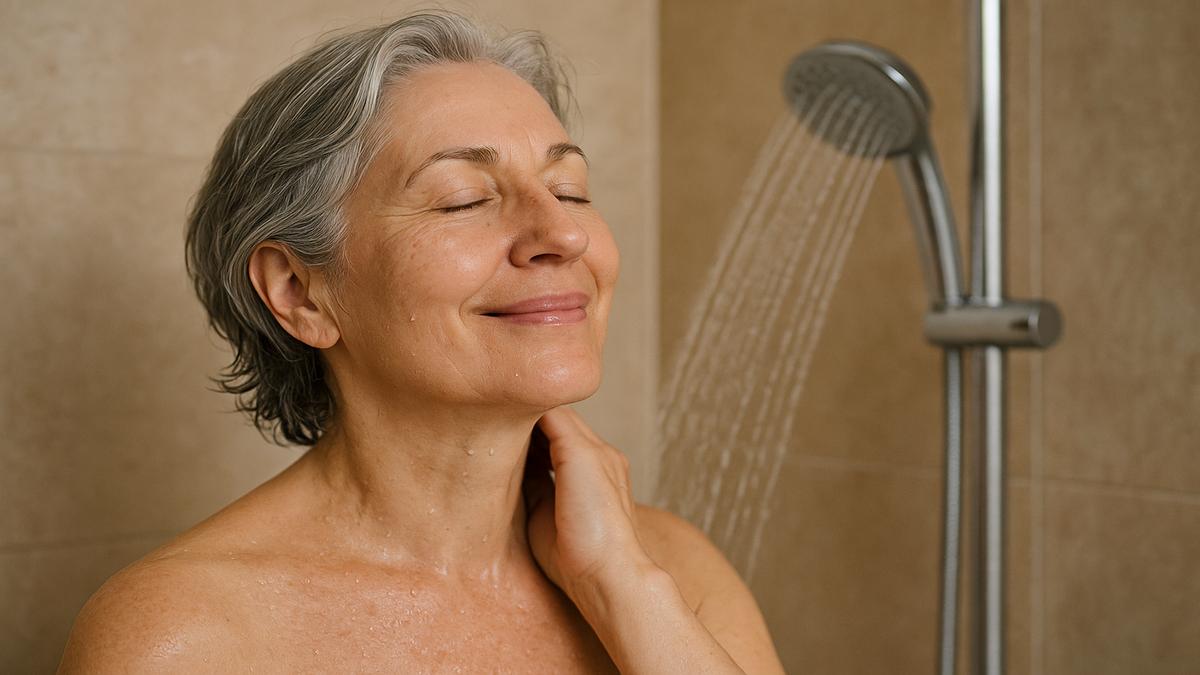
The steam curls around you, soft as breath, as you reach for the familiar tap. You’ve done this dance thousands of times—water on, soap, rinse, towel, done. A daily shower feels as natural as your morning coffee, stitched into the rhythm of your life. But somewhere in your fifties, your skin starts whispering a different story. The tightness after you towel off lingers a little longer. Your shins look flaky no matter how much lotion you slather on. That favorite fragrant body wash suddenly stings. You haven’t changed anything. And yet, everything seems to be changing.
The Quiet Shift No One Warned You About
Here’s the part no one really prepares you for: after 50, your skin becomes a different landscape. What once felt like a sturdy, well-watered garden can slowly turn into a delicate ecosystem that protests at the smallest disruption. Hormones shift; oil production dips; the outer layer of skin, your barrier, doesn’t bounce back as fast. Hot water and daily scrubbing, which once left you feeling squeaky clean, can suddenly feel like a sandstorm crossing a desert that’s already dry.
Most of us grew up with the rule: “Shower every day. Clean equals healthy.” It’s printed into us like an invisible label. But your skin doesn’t need the same routine at 55 that it did at 25. In fact, clinging to that daily rinse might be the very thing that’s leaving you itchy, flaky, and mildly annoyed at your own bathtub.
This isn’t about letting go of hygiene or lowering your standards. It’s about understanding that your body has changed—and that a smarter, gentler shower rhythm can be the difference between tired, dull skin and a soft, comfortable glow you can actually feel when you slip into your clothes.
How Often Should You Really Shower After 50?
Here is the good news: you probably don’t need to shower every day—and your skin will thank you if you don’t. For many people over 50, the sweet spot is:
- Full-body showering 2–4 times per week,
- with targeted washing of key areas daily (like armpits, groin, feet, and face).
This rhythm keeps you clean where it matters most, without stripping your skin from head to toe every single day. Think of it as moving from “all-or-nothing” hygiene to something more intentional and skin-respecting.
Of course, your ideal frequency depends on your life: Do you exercise heavily? Do you live in a humid climate? Do you sweat a lot at night? But for most people in their fifties and beyond, a daily, full-body, hot-water scrub is more habit than necessity. And that habit may be aging your skin faster than time alone.
Imagine instead: a few full showers a week, with short, warm—not scorching—water sessions. On the in-between days, a quick “spot clean” at the sink, a fresh change of clothes, a gentle face cleanse, and a spritz of your favorite clean scent. You still feel fresh, but your skin finally has space to hold on to its natural oils and moisture.
What Happens to Skin When You Shower Less Often?
When you cut back from a daily full-body shower to, say, three a week, several subtle but powerful shifts can happen over time:
- Your skin barrier calms down. That invisible shield of oils and lipids gets a chance to rebuild instead of being washed away daily.
- Dry patches ease up. Areas like your shins, forearms, and back may start to feel less tight and less prone to flaking.
- Natural oils balance out. Instead of alternating between oily and bone-dry, your skin often finds a more comfortable middle ground.
- Your microbiome stabilizes. The good bacteria on your skin, which help defend against irritation and some infections, aren’t being blasted off as often.
It doesn’t happen overnight. But give it a few weeks, and you might notice your moisturizer working better, your skin feeling less “angry,” and that uncomfortable post-shower tightness fading into memory.
Designing a “Smarter” Shower: What to Change First
Showering smarter after 50 isn’t just about how often you shower; it’s about how you do it when you step under that stream. You can think of it like editing a beloved routine: keep what truly serves you, and gently let go of what doesn’t.
Turn Down the Heat and the Time
Those long, nearly scalding showers feel incredible on sore muscles, but they are merciless to aging skin. Hot water melts away your natural oils the way dish soap cuts through grease. After 50, those oils are no longer an endless supply.
- Aim for warm, not hot water—comfortable, but not steaming up the entire bathroom like a sauna.
- Try to keep showers around 5–10 minutes instead of lingering for 20.
If you crave heat, save it for a short warm soak now and then, or alternate between warmer and slightly cooler water in the same shower so your skin isn’t under a constant blast of high heat.
Be Picky with Products (Your Skin Already Is)
As your skin thins and dries with age, harsh cleansers that once seemed fine can suddenly feel like an assault. Scrubby beads, strong fragrances, and heavy foaming washes are often more about marketing than skin health.
Look for products labeled:
- Gentle or for sensitive skin
- Fragrance-free or very lightly scented
- Moisturizing, with ingredients like glycerin, ceramides, shea butter, or plant oils
Use these only where you truly need soap: armpits, groin, feet, and any visibly dirty areas. Your arms, legs, and trunk usually don’t need a daily soapy scrub; warm water alone often does the job just fine.
Retire the Loofah (Yes, Really)
You may love that “scrubbed clean” feeling from loofahs, rough cloths, and exfoliating gloves, but your barrier doesn’t. Over 50, aggressive scrubbing can lead to micro-tears, redness, and chronic irritation.
Instead:
- Use your hands or a very soft washcloth for gentle cleansing.
- Limit physical exfoliation to once every week or two, if you use it at all—and go very gentle.
Your skin doesn’t need to feel squeaky or scrubbed raw to be clean. It just needs to be free of sweat, odor, and visible grime.
Moisturizing: The Secret Second Half of Your Shower
The shower doesn’t end when the water turns off. For skin after 50, the most important part often happens with towel and lotion in hand. Think of the shower as step one…and what you do in the next five minutes as step two.
Towel Off Like You’re Handling Silk
Instead of vigorously rubbing your skin dry, try patting or gently pressing the towel into your skin. Leave your skin slightly damp—this helps trap some of that water when you apply moisturizer.
Moisturize Within 3 Minutes
That short window right after stepping out is prime time: your pores are a little more open, your skin is plump with water, and products can sink in more effectively.
- Use a cream or lotion rather than a thin gel, especially on arms and legs.
- For very dry areas (shins, hands, feet), consider something richer like a balm or ointment.
- Apply in long, gentle strokes rather than aggressive rubbing.
It doesn’t have to feel like a spa ritual every time. Even a quick two-minute all-over moisturize, done consistently, can transform how your skin feels and looks.
| Age 50+ Shower Habit | Old Way | Smarter Way |
|---|---|---|
| Shower Frequency | Daily full-body, out of habit | 2–4 full showers/week + daily spot cleaning |
| Water Temperature | Very hot, long showers | Warm, shorter showers (5–10 minutes) |
| Cleansers | Strong, heavily fragranced, full-body use | Gentle, fragrance-free, used only on key areas |
| Tools | Loofahs, rough scrubs, daily exfoliation | Hands or soft cloth, minimal exfoliation |
| Post-Shower Care | Air-dry or quick rub with towel, no moisturizer | Gentle pat dry + moisturizer within 3 minutes |
Listening to Your Skin’s Signals
Your skin is constantly speaking to you; the trouble is, most of us were never taught how to listen. After 50, those messages get louder and clearer—if you’re willing to pay attention.
Notice these clues when you’re rethinking how often to shower:
- Tightness after washing. If you feel the urge to scratch your legs right after you dry off, it’s a sign your barrier is being strained.
- Persistent flakiness. Especially on the shins, forearms, and back, can point to over-cleansing or too-hot water.
- Stinging from products. If your body wash or lotion tingles in a way that isn’t pleasant, it may be too harsh now.
- Redness that lingers. If your skin stays flushed long after your shower, your water temp or scrubbing may be too intense.
On the flip side, if you cut back on daily full showers and your skin feels:
- Softer to the touch
- Less itchy, especially at night
- More even in tone with fewer angry patches
—that’s your body quietly saying, “Thank you. This is better.”
Of course, everyone’s different. Some people over 50 still comfortably shower daily with no issues, especially if they naturally have oilier skin and use very gentle products. The key is not to cling to rules just because they’re familiar. Let your own skin be the guide.
When a Daily Shower Still Makes Sense
There are seasons of life where daily showering remains practical, even after 50. The trick is to adjust how you do it instead of forcing yourself into guilt over needing that regular rinse.
You might still shower daily if:
- You exercise hard most days and end up drenched in sweat.
- You live in a hot, humid climate and feel sticky without it.
- Your work or hobbies expose you to dirt, dust, strong odors, or chemicals.
In those cases, you can soften the impact by:
- Keeping the water lukewarm.
- Skipping soap on arms/legs unless visibly dirty.
- Using extra-rich moisturizer directly after your shower.
- Occasionally taking a “bare minimum” day with a quick rinse of key areas instead of a full scrub-down.
This isn’t about rules; it’s about flexibility. Aging well is rarely about perfection. It’s about small, sustainable shifts that make your body feel more like a place you want to live in.
Turning the Shower into a Gentle Ritual, Not a Chore
There’s another layer to this conversation that has nothing to do with biology: your relationship with your own body. Showers can be rushed, automatic tasks—or they can be quiet moments where you check in with yourself, literally from head to toe.
When you shower less often, each session can feel a little more intentional. You might notice the strength still in your calves as you wash your legs. The freckles on your shoulders that have traveled with you for decades. The softness of your belly, the curve of your hands, the way warm water feels on a neck that has been holding up your life for over half a century.
Ditching the daily rinse doesn’t mean lowering your standards. It means raising them—for comfort, for care, for respect toward the skin that has carried you through every age so far.
In a culture obsessed with youth, we’re taught to wage war on time. But your skin isn’t your enemy. It’s your longest, oldest companion. After 50, it finally asks for something simple: fewer assaults, more kindness. Less scrubbing, more listening. Not more products—just smarter habits.
So the next time you reach for the faucet out of sheer routine, pause. Ask your body a quiet question: “Do I really need this full shower today?” If the answer is no, trust it. A warm cloth, a small wash of the places that truly need attention, a bit of moisturizer, and fresh clothes might be all it takes.
Your skin can still glow well past fifty. It just doesn’t want to be polished like stone anymore. It wants to be tended like a garden—lightly watered, gently touched, given room to breathe.
FAQ: Showering Smarter After 50
How many times a week should I shower after 50?
For many people over 50, 2–4 full-body showers per week is enough, combined with daily spot cleaning (armpits, groin, feet, and face). Adjust based on your activity level, climate, and how your skin feels.
Is it unhygienic to skip a daily shower?
No. Hygiene is about keeping key areas clean and managing sweat and odor, not necessarily about washing your entire body with soap every single day. Daily washing of armpits, groin, feet, and face is usually enough, with full showers spaced out through the week.
What if I exercise every day—do I still need to shower less?
If you sweat heavily, a daily rinse can be helpful, but you can still protect your skin by:
- Using warm, not hot water.
- Soaping only the sweaty/odorous areas.
- Moisturizing right after your shower.
Why does my skin feel drier now than it did in my 30s?
After 50, your skin naturally produces less oil, and the barrier that keeps moisture in becomes more fragile. Hot water, harsh soaps, and frequent scrubbing strip away the little oil you still produce, making dryness more noticeable.
Can changing my shower routine really make my skin look better?
Yes. Many people notice that when they:
- Shower less frequently,
- Use gentler products, and
- Moisturize consistently after bathing,
their skin feels softer, less itchy, and more comfortable, with fewer flaky or red patches over time.
Do I need special “over 50” body wash or lotion?
You don’t need age-branded products, but you do need gentle, moisturizing formulas. Look for words like “for dry or sensitive skin,” “fragrance-free,” and ingredients like glycerin, ceramides, or shea butter. The right product is the one your skin tolerates well and that feels nourishing, not irritating.
What’s the single most important change I can make?
If you choose only one shift, make it this: stop using very hot water and long showers. Shorter, warm showers plus a good moisturizer afterward can dramatically change how your skin feels, even if you keep your usual shower frequency.

Hello, I’m Mathew, and I write articles about useful Home Tricks: simple solutions, saving time and useful for every day.