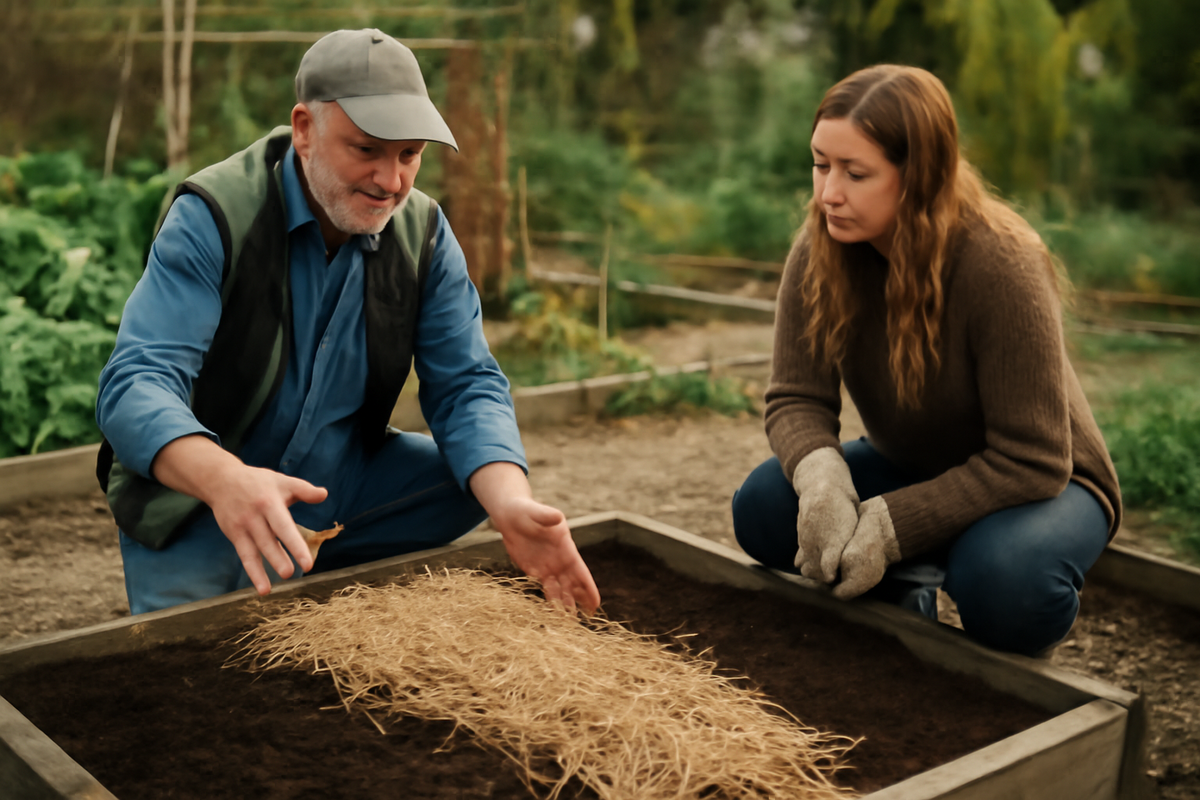
The last tomato had gone soft on the vine when Linda knelt in the fading light of October and did something that, to her neighbors, looked suspiciously like laziness. Instead of yanking out the tangled remains of her summer jungle and raking the soil smooth, she tucked her beds in like sleeping children. She spread crinkled leaves, scattered compost that steamed faintly in the cold air, and then walked away. No winter tilling. No tidy bare dirt. Just a mess that, she knew, would quietly transform under frost and snow.
By spring, the same neighbors were peeking over the fence, asking the same question: “What on earth did you do to your soil?”
Garden experts have a name for what Linda practiced in her backyard laboratory: they call it “soil-sleep.” It’s a gentle, seasonal pause—part science, part patience, part faith—that allows the living community beneath your feet to recover, rebuild, and recharge between growing seasons. And if you’re willing to let your vegetable beds rest, rather than wrestle them into winter submission, you just might step into spring with soil so rich and crumbly it almost feels alive in your hands.
What Exactly Is “Soil-Sleep”?
To understand soil-sleep, you first have to stop thinking of soil as dirt.
Dirt is what you sweep off the kitchen floor. Soil, on the other hand, is an ecosystem—a layered, breathing city of bacteria, fungi, earthworms, microscopic predators, organic matter, and mineral particles. It’s not just a place your plants stand; it’s the community that feeds them, protects them, and negotiates the delicate trade of nutrients and water.
Soil-sleep is the practice of deliberately resting vegetable beds over fall and winter so that this underground community can repair itself and grow stronger. Instead of leaving your beds bare or aggressively turned and exposed, you give the soil a protective blanket and let biological processes carry on in peace. Gardeners who use this method report easier digging, fewer weeds, stronger seedlings, and noticeably better yields come spring.
Garden soil, like any hard worker, can burn out. A full season of hungry tomatoes, sprawling squash, and relentless harvesting takes a toll. Repeated tilling, synthetic fertilizers, and bare winter ground strip away organic matter and disrupt fungus networks—the very architecture that keeps soil crumbly and fertile.
Soil-sleep is the quiet antidote. It’s a season-long exhale for your garden.
The Science of Letting Soil Rest
If you could shrink yourself small enough to walk between the soil particles in your beds during winter, you would see something very different from the lifeless void many gardeners imagine.
Even while frost silvers the surface, microbes are still at work. Fungi—with their hair-thin threads called hyphae—are mapping routes between plant roots, trading nutrients for sugars. Bacteria are digesting tiny fragments of dead roots. Earthworms, in milder spells, drag leaves into their burrows like kids hauling comforters to a fort.
When you practice soil-sleep, you’re essentially providing three crucial ingredients those organisms crave:
- Cover – A physical barrier, such as mulch or living plants, shields soil from erosion, pounding rain, and harsh sun or wind.
- Food – Organic materials (leaves, compost, straw) become a buffet for microbes, who break them down into plant-ready nutrients.
- Stability – Less disturbance means fungi can build intact networks, worms can form structured tunnels, and micro-habitats can mature.
Exposed soil, on the other hand, pays a price. Raindrops fall with enough force to shatter soil crumbs, washing fine particles—and with them, nutrients—down and away. Winter winds strip off the top layer like sand from a dune. The sun bakes and cracks what remains, leaving compacted, exhausted beds by the time you are ready to plant again.
Soil-sleep flips this script. The protective cover softens raindrops. Organic matter trickles down into pore spaces. Freeze–thaw cycles gently fracture compacted clods, opening new airways. By spring, instead of facing a tired, cloddy surface, you pull back the mulch and find something more like chocolate cake than concrete.
Step-by-Step: How to Put Your Vegetable Beds to Bed
You don’t need a tractor, a degree in agronomy, or a perfect schedule to start using soil-sleep. That said, timing and a few simple choices make a big difference in how well your garden rests and recovers. Think of this as preparing a guest room for the most important visitor your garden will ever host: next year’s harvest.
1. Harvest and Edit, Don’t Strip Bare
When the season winds down, let your last crops run their course, but resist the urge to rip everything out at once like a bandage. Remove diseased plants—anything with spots, mildew, blights, or suspicious wilting—and dispose of them away from your compost if you’re unsure they’ll break down safely.
For healthy plants, you can trim them at the base, leaving their roots to decay in the soil. Those dead roots become organic matter and leave behind little channels that improve drainage and aeration. Aboveground, chop stems into manageable pieces and lay them flat on the bed if they are soft and disease-free. Tough, woody stems can be composted separately.
2. Feed the Soil, Not Just the Plants
Once the beds are mostly cleared of diseased material, it’s time to feed the soil life. This is different from fertilizing. You’re not spoon-feeding nutrients to plants; you’re inviting an entire underground city to a dinner party.
Spread a layer of well-rotted compost or aged manure over the bed—about 2 to 5 centimeters deep. It doesn’t have to be perfect or screened fine; soil organisms are unbothered by a few twigs or rough bits. If you don’t have compost, even a thin layer of chopped leaves mixed with a little garden soil can begin the process.
This layer serves multiple purposes: it adds organic matter, introduces beneficial microbes, and creates a slow-release nutrient source that will be more fully available by spring.
3. Choose Your Winter Blanket
This is where soil-sleep becomes visible. Your “blanket” can be one of two main types: a dead mulch or a living cover crop.
- Dead mulch – This includes shredded leaves, straw (not hay, which often contains weed seeds), grass clippings (dried first), or a mix. Spread 5 to 10 centimeters over the composted bed. It should be thick enough that you can’t see much soil, but not so dense that it becomes a soggy, airless mat.
- Living cover crop – If you still have a window of mild weather before hard frost, you can sow seeds of winter rye, crimson clover, vetch, field peas, or other cover crops. These plants grow through fall, hold soil in place, pull nutrients from deeper layers, and then either winter-kill or are chopped down in spring.
Some gardeners mix the two: a fall-sown cover crop with a light mulch that settles between the young plants.
4. Minimize Disturbance
This is the heart of soil-sleep. Once your beds are covered, keep your tools out unless you have a very good reason to dig. No winter rototilling. No deep spading “to let the frost in.” The freeze–thaw cycles will do all the gentle fracturing your soil needs.
If you must add something midwinter—like more leaves that fell late—just lay them on top. Think of your soil as a sleeping animal: you can quietly tuck the blanket closer, but don’t shake it awake.
5. Wake the Bed Gently in Spring
As the ground begins to warm and you can work the soil without it being soggy, you will start to “wake” your sleeping beds.
For mulched beds, gently pull back the top layer where you plan to sow seeds, leaving most of the mulch in place between future rows. You can lightly rake the top few centimeters if needed, but avoid deep digging. For cover crops, cut them down close to the soil line and leave the cut greens as an on-the-spot mulch. If the crop is still lush and green, you may want to chop it and let it wilt for a week before planting into it.
Over time, you’ll notice that newly woken beds respond better when you disturb them less. Tools become lighter and your own labor, easier.
How Soil-Sleep Strengthens Vegetable Beds for Spring
Skeptical gardeners often want proof. Why should a “lazy” winter make their gardens stronger? Why not till, rake, and fuss as usual? The answer lies in how soil-sleep shifts the structure and biology of your soil.
Here’s what many gardeners and soil scientists observe after a few seasons of consistent soil-sleep:
- Improved structure – Soil aggregates—those small, crumbly clusters—hold together better when protected from erosion and fed organic matter. Roots in spring can slip between these crumbs, rather than battling hardpan.
- Better water management – Covered soil absorbs rainfall more gently and retains moisture longer, while also draining excess water more efficiently through worm channels and improved aggregation.
- Reduced compaction – With fewer heavy tools and less disturbance, the subsoil doesn’t get pounded into a dense layer. Freeze–thaw cycles can actually open tight soil instead of sealing it off.
- Increased biodiversity – From beneficial nematodes to mycorrhizal fungi, living soil communities thrive in stable, undisturbed conditions with ample organic matter.
- Natural fertility – Nutrients trapped in old roots, fallen leaves, and compost are slowly transformed into plant-ready forms, meaning you can often use fewer purchased fertilizers.
Visually, the difference is striking. Gardeners using soil-sleep often report that their beds feel “spongier,” are darker in color, and smell richer. When spring rain comes, water disappears into sleeping beds instead of pooling or running off.
Real-World Examples: Gardeners Who Let the Soil Sleep
Soil-sleep isn’t an ivory-tower theory. It’s a set of field-tested habits used by home gardeners, market growers, and even small farms.
One small-scale grower tried a simple experiment: half her vegetable beds were tilled clean and left bare over winter; the other half were composted, mulched with leaves, and left untouched. In spring, she kept notes. The mulched, sleeping beds could be worked earlier after rain, produced fewer visible weeds, and required less watering during early heat waves. By midsummer, yields from the “sleep” beds outpaced the bare ones, especially in heavy feeders like tomatoes and squash.
Another gardener with stubborn clay soil committed to three winters of soil-sleep. He added compost each fall, covered it with shredded leaves, and stopped tilling altogether. In the first year, the difference was subtle—slightly easier digging, fewer cracks in dry spells. By the third spring, he could push a trowel straight down with one hand. Earthworms had multiplied dramatically, and the soil—once brick-hard when dry—now crumbled between his fingers.
Urban gardeners, too, are adopting soil-sleep in raised beds, where soil can degrade fast from heavy cropping and limited volume. For them, winter becomes a chance to rebuild, not just endure.
Even if you don’t have a perfect setup—maybe your only mulch source is the maple tree out front, or you can’t get to your garden every weekend—soil-sleep can be adapted. A thin leaf layer is better than bare soil. A late fall compost sprinkle is better than none. You don’t have to do it perfectly to see improvement.
Soil-Sleep Options at a Glance
To make planning easier, here’s a compact comparison of common soil-sleep approaches and what you can expect from each. All of them are better than leaving your beds exposed and empty.
| Soil-Sleep Method | What You Use | Best For | Spring Experience |
|---|---|---|---|
| Compost + Leaf Mulch | 2–5 cm compost, 5–10 cm shredded leaves | Most home gardens, raised beds | Soft, dark soil; easy planting; fewer weeds |
| Straw Mulch Over Beds | Loose straw (not hay) 5–10 cm deep | Windy or exposed sites, sandy soil | Good moisture retention; light weeding needed |
| Cover Crop Only | Rye, clover, vetch, field peas, etc. | Larger plots, mild winters, deep-root needs | Chop-and-drop in spring; strong soil structure |
| Compost + Light Mulch | Thin compost layer, 2–5 cm of mulch | Cool, wet climates where thick mulch stays soggy | Balanced moisture; easy to pull back for sowing |
Listening to Your Soil’s Seasons
Soil-sleep is less a rigid recipe and more a relationship. Over a few years, your garden will start talking back—quietly, in its own language.
Maybe you notice that after a particularly thick mulch winter, the soil in a low spot stayed too wet. The next fall, you adjust, using a lighter layer or a living cover crop that pumps water out through its roots. Perhaps an area that was previously stingy suddenly sends up a flush of volunteer seedlings as the seed bank responds to gentler conditions, and you decide to add cardboard under the mulch in that corner to smother them.
The more seasons you let your soil sleep, the more you learn how it likes to rest. Heavy clay will thank you for abundant organic matter and consistent cover. Sandy beds will cling greedily to every shred of compost you offer. In raised beds, the transformation can be almost theatrical—what began as lifeless bagged mix gradually takes on the complexity and resilience of real ground.
In time, soil-sleep can change your own rhythm too. Instead of viewing fall as a frantic race to “clean up the garden,” you may begin to experience it as a slow, thoughtful preparation for winter. You’re no longer closing things down so much as tucking them in.
So when the last tomato softens and the first cold wind rattles the bean poles, you can stand at the edge of your vegetable beds with a rake in hand and a different intention in mind. You’re not there to strip the garden bare. You’re there to lay down a blanket, feed the underground city, and trust that sometimes the strongest gardens are built while everything above looks quiet and still.
Frequently Asked Questions About the Soil-Sleep Technique
Do I have to use compost for soil-sleep, or can I just use leaves?
You can absolutely start with just leaves. Shredded leaves are ideal because they break down faster and are less likely to mat. Compost simply speeds up the process and adds more diverse microbes. If compost isn’t available, aim for a generous leaf layer and, over time, your soil will still improve.
Won’t mulching in fall create more slugs in spring?
Mulch can provide shelter for slugs, but it also supports predators like ground beetles and spiders that prey on them. To reduce slug issues, keep mulch a little thinner around the stems of vulnerable plants in spring, plant slightly later when the soil is warmer, and hand-pick or trap slugs if needed. Most gardeners find the benefits of mulch and soil-sleep outweigh occasional slug pressure.
Is it ever okay to till if I’m using soil-sleep?
Light tilling or broadforking can be useful when first breaking compacted ground or incorporating large amounts of initial amendments. After that, minimizing disturbance gives better long-term results. If you do need to till occasionally, follow it with compost, mulch, and at least one full season of gentle soil-sleep to help the soil recover.
Can I use soil-sleep in a very small or balcony garden?
Yes. Even container gardens benefit from a rest period. Remove dead plants, add a thin layer of compost, and top with shredded leaves, straw, or coco coir. Let the containers sit over winter. In spring, gently mix only the top few centimeters if needed, and refresh with a bit of new soil before planting.
What if my climate has very mild winters—does soil still “sleep”?
In mild climates, the soil never fully stops, but that’s all the more reason to support it. Soil-sleep there looks more like “soil-slow”: cover crops grow through winter, mulches stay active, and microbial life hums along year-round. The principles are the same—keep the surface covered, feed the soil, and disturb it as little as possible between crops.

Hello, I’m Mathew, and I write articles about useful Home Tricks: simple solutions, saving time and useful for every day.