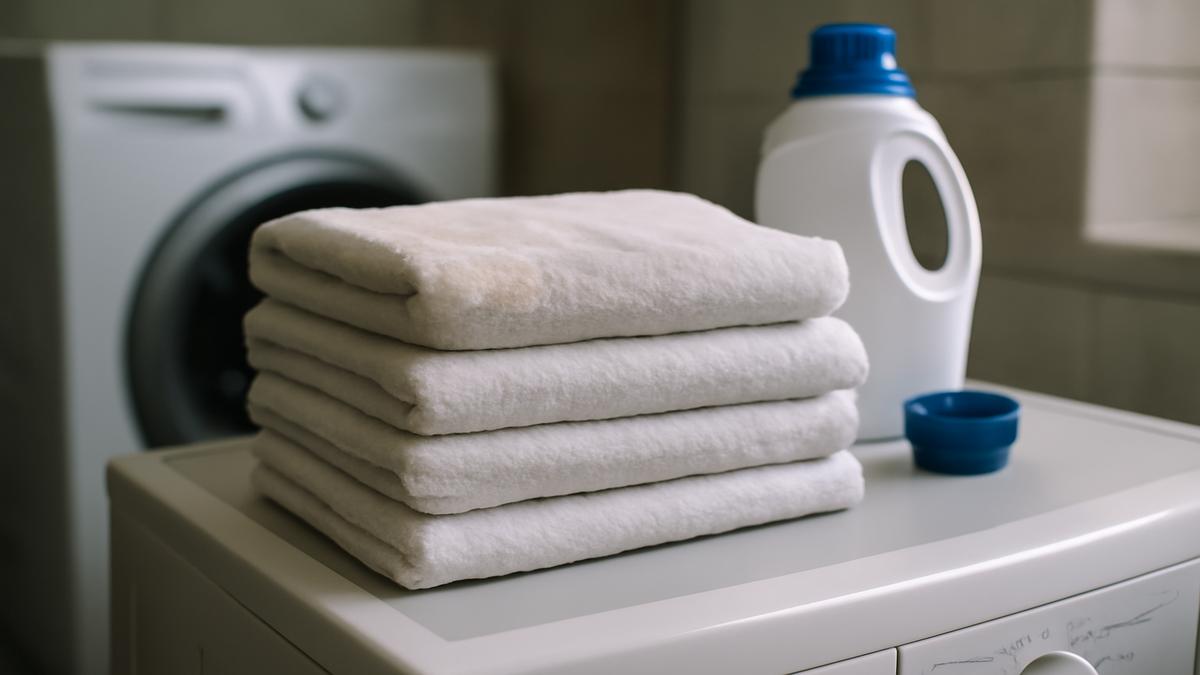
The first time you notice it, you think you’re imagining things. You’ve just stepped out of a hot shower, skin still humming from the water, and you reach for a freshly washed towel. It’s soft, warm from the bathroom radiator, seemingly clean. You press it to your face and there it is: that faint, sour, swampy smell. Not strong enough to knock you over, but unmistakable. A little tang of old gym bag. You frown, sniff again, and your brain does a confused double‑take. But I just washed these. With extra detergent, even. How can a towel smell musty after one use?
The quiet swamp living in your towel
Here’s the uncomfortable truth: your towel isn’t just fabric. It’s a sponge for your life. Every time you dry off, it soaks up water, yes, but also skin cells, natural oils, a little sweat, trace amounts of whatever you picked up from your day. On its own, that’s not a problem. Nature is built to recycle our leftovers.
The trouble begins when we add two things to this mix: darkness and time. A damp towel on a hook in a small bathroom is basically a tiny, private wetland. Warm, moist, poorly ventilated, often bunched up so the inner folds never really see dry air. If you imagine zooming in, it looks less like laundry and more like a lush micro‑jungle of bacteria and mildew, happily feasting on your skin cells.
So far, still not shocking. You already know that damp equals musty. But there’s one more character in this story, and it’s hiding in plain sight on your laundry shelf — the hero you trust the most, that big bottle of detergent with the bright label and the promise of “mountain fresh” or “ocean breeze.” This is where the plot twists.
Because for most people who are constantly battling smelly towels, the main culprit isn’t that their towels are particularly dirty. It’s that their detergent is quietly sabotaging the wash.
The detergent myth that makes towels stink
Somewhere between commercials, old habits, and the desire to make laundry feel productive, many of us absorbed a simple belief: more detergent = cleaner clothes. It’s almost instinctive. Your towels smell? Add a little more detergent. Still musty? Top off the detergent cap, maybe even pour straight from the bottle “just this once.” Heavier load, stronger wash, right?
But washing machines don’t work like a movie makeover montage. They’re more like carefully measured chemistry experiments. Every cycle only has so much water, so much agitation, and so many rinses. When we stuff in extra detergent, it doesn’t magically translate to extra cleanliness. What we usually get instead is residue — a clingy, invisible film that wraps itself around every fiber of your towel.
This residue is made up of detergent that never quite rinsed away. It clings to fabric like a thin coat of soap scum on a shower wall. On top of that, if you use fabric softener, that adds another layer of coating. Your towel might smell strongly perfumed when it comes out of the dryer, but under that fragrance is a mix of partially rinsed detergent, softener, and whatever the last wash didn’t quite remove.
Now picture that coated towel hanging in a humid bathroom. The fibers are less absorbent because they’re clogged. The towel stays damper longer because it can’t breathe as well. And nestled in the residue is exactly what bacteria love: trapped moisture, leftover body oils, a bit of fragrance to mask things, and just enough shelter to thrive. The next day, when you reach for “freshly washed” towels, you’re not really smelling clean cotton. You’re smelling life in slow, sour motion.
The invisible film you can feel (and smell)
If you’re wondering whether detergent build‑up is really happening to your towels, there are a few subtle signs you can notice without a microscope.
- Your towels feel a little stiff or waxy instead of fluffy.
- They get soaked and heavy quickly but don’t seem to dry your skin very well.
- They smell fine straight from the dryer, but go musty after just one or two uses.
- Even freshly washed towels develop that “wet dog” or sour smell after just a few minutes hanging up.
All of that points to the same quiet problem: residue. Which leads to the mistake almost everyone makes — thinking the cure is more detergent.
Why less detergent means cleaner towels
It feels backward. Counterintuitive. Maybe even wrong. But if you want towels that don’t turn musty overnight, the single most powerful change you can make is this: use less detergent, not more.
Most modern washing machines, especially high‑efficiency (HE) models, are designed to work with very small amounts of detergent. Their sensors, water levels, and wash cycles assume you’re measuring carefully. Those big caps on detergent bottles? They’re often marked with lines, but the default human instinct is to fill them. Detergent companies benefit from this. Your towels do not.
When you use more detergent than your machine can properly rinse out, you end up with layers of leftover soap that never completely leave the fabric. Over weeks or months, this builds into a sticky base layer that clings hard to towel fibers. Every time you wash, instead of stripping that layer away, you add to it.
But when you start dialing back the detergent, something interesting happens. The wash water has an easier job. There’s enough cleaning power to lift dirt and oils, but not so much that it overwhelms the rinse cycles. Bit by bit, each wash starts to remove old build‑up instead of coating new layers on top.
Your towels begin to feel lighter. They dry faster. The fake “clean” smell of perfume gives way to either nothing at all (which is what true clean actually smells like) or a faint, natural scent of cotton. And most importantly, they stop turning swampy after one shower.
How much detergent your towels actually need
Every washer and detergent brand is a little different, but as a general guide, you probably need far less than you think. In many households, you can cut the amount on the bottle’s suggested line by a third to half and still get cleaner towels.
| Load Type | Machine Type | Typical Detergent Used | What Usually Works Better |
|---|---|---|---|
| Full load of towels | High‑efficiency (HE) | Cap filled to line 2–3 | About 1/2 of line 1 |
| Medium load of towels | High‑efficiency (HE) | Cap to line 1–2 | 1–2 tablespoons |
| Small towel refresh load | Top‑loader or HE | Line 1 “just in case” | 1 tablespoon or less |
If that sounds tiny, it is — and that’s the point. We’ve been trained to think that visible suds equal cleansing power. But in a controlled machine, suds often just mean “too much.” Those foamy bubbles you see through the door? They can interfere with proper agitation and rinsing. Clean doesn’t need to look dramatic to be real.
When your towels need a reset
If your towels have been through months or years of generous detergent pours, they usually need more than a gentle course correction. They need a reset — one good, deliberate break from the cycle of build‑up.
This isn’t complicated, but it feels almost ceremonial, like giving your towels a long drink of fresh mountain air after they’ve lived beside a freeway.
A simple “strip and reset” approach
Here’s a straightforward way to peel off that invisible film and start clean:
- Wash once, without detergent.
Put your towels in the washer with warm or hot water (check the care tag first). Skip detergent entirely. The goal here is to rinse, not add. - Add an extra rinse cycle if your machine allows.
This helps flush out whatever old suds and residue get loosened up. - Dry thoroughly, with heat.
Run the dryer until the towels are completely dry — not “almost.” Damp corners are mildew’s favorite real estate. - Then, do a regular wash with much less detergent than you’re used to.
Think: a tablespoon for an average HE load. No fabric softener.
You might be surprised during that first no‑detergent wash to see a few suds in the drum. That’s not new soap. That’s old detergent finally letting go.
This isn’t something you need to repeat every week. Once your towels are reset and you’ve adjusted your detergent habits, they should stay fresher far longer — as long as you give them space to dry between uses.
The role of air, heat, and patience
Even perfectly washed towels can sour if they never really dry. In some homes, especially small apartments or bathrooms with no windows, air behaves like a reluctant guest. It lingers, heavy and humid, just circling the room and barely brushing past your towels.
If you hang a folded, still‑damp towel over a hook, the center of that fold can stay mysteriously wet hours after the edges feel dry. That damp, out‑of‑sight core is where the funk begins. It’s like leaving a slice of bread outside and being surprised when mold prefers the shaded side.
This is where a little everyday choreography makes a big difference:
- Unfold towels fully on the rack so as much surface area as possible is exposed to air.
- Use wide towel bars or over‑the‑door racks instead of hooks whenever you can.
- Open the bathroom door after showers to let moist air escape and drier air wander in.
- If you have an exhaust fan, run it during and for a while after your shower.
Think of your towels as small, damp landscapes that need sunlight and wind, even if they’re getting it artificially. When they dry fast, bacteria don’t get the long, luxurious window of time they need to bloom into that telltale scent.
Why fabric softener backfires on towels
There’s one more common habit that quietly works against you: liquid fabric softener or dryer sheets on towels. These products are designed to coat fibers to make them feel smoother and reduce static. On dress shirts or sheets, that can feel pleasant. On towels, it’s like wrapping each absorbent loop in a tiny raincoat.
That coating does two things your towels don’t need:
- It makes them less absorbent, so they stay wetter longer after use.
- It adds yet another layer of residue that traps smells instead of releasing them.
If you’re attached to a certain softness, try skipping softener for a few towel loads and see how they feel and smell after a week of use. Many people find their towels actually feel better — drier, lighter, and surprisingly fluffy once they’re free of layers of coating.
Rethinking what “clean” smells like
Part of why musty towels sneak up on us is psychological. We’ve been sold an idea of clean that’s loud and perfumed. A cloud of fragrance when you open the dryer door feels reassuring. But scent is not the same as cleanliness; it’s often a costume thrown over what’s still lingering.
A truly clean towel, freshly washed with the right amount of detergent and dried thoroughly, doesn’t have to smell like lavender fields or alpine forests. It might smell like almost nothing at all — a faint, neutral cotton note. A whisper, not a billboard.
When you start using less detergent, and your towels stop carrying that heavy, chemically “fresh” scent, there can be a disorienting moment. Does this mean they’re not clean? But the test isn’t in the sniff right out of the dryer. It’s in the day after. The second shower. The third. If your towel still smells neutral or gently clean after you’ve used and hung it a couple of times, that’s the quiet success you’re looking for.
The musty smell after one use is your towel trying to tell you a story: about being over‑soaped and under‑rinsed, about never quite drying between days, about having to breathe through layers of residue. When you listen and make small adjustments — less detergent, more space, better drying — the story changes. The towel becomes what it was meant to be: simple, reliable, forgettable in the best possible way.
FAQs
Why do my towels smell musty even after I just washed them?
They likely have detergent and softener build‑up trapped in the fibers. That residue holds onto moisture and body oils, creating the perfect environment for bacteria to grow, which causes a musty or sour smell soon after use.
Should I use more detergent if my towels smell bad?
No. Using more detergent usually makes the problem worse by leaving even more residue behind. The solution is typically to use less detergent and, at first, to run a reset wash with no detergent to rinse away old build‑up.
Is hot water better for preventing musty towel smells?
Hot water can help dissolve oils and residues more effectively, which can reduce odor. However, you should always follow the care label. Warm water often strikes a good balance between cleaning power and fabric longevity.
Can I use fabric softener on towels?
It’s best to avoid it. Fabric softener and dryer sheets coat fibers, reducing absorbency and trapping odors. This can cause towels to stay damp longer and smell musty faster.
How often should I wash my towels?
Most bath towels do well with a wash every three to four uses, as long as they dry thoroughly between uses. If your bathroom is very humid or your towels don’t dry fully, you may need to wash them more often.
How can I tell if I’m using too much detergent?
Signs include towels feeling stiff or coated, visible suds left in the washer, strong artificial fragrance, or laundry that smells musty again soon after use. Cutting your usual amount of detergent in half is a good place to start.
What’s a quick fix if a towel smells musty right now?
Rewash it with warm or hot water and no detergent, add an extra rinse if you can, then dry it completely on high heat. After that, stick to smaller amounts of detergent in future washes and let the towel dry fully between uses.

Hello, I’m Mathew, and I write articles about useful Home Tricks: simple solutions, saving time and useful for every day.