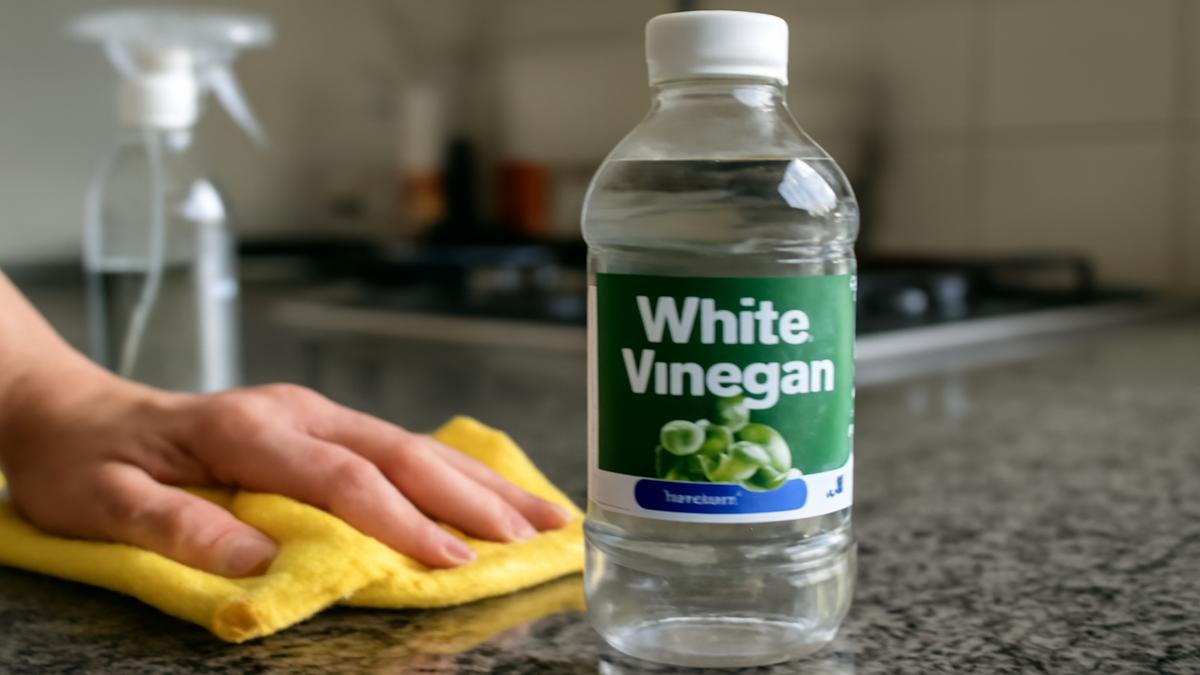
The sharp, almost sweet tang hits your nose before you even twist the cap. It’s familiar—memories of chip shops, of pickled onions in grandma’s pantry, of steaming salt-and-vinegar crisps tipped into a bowl. But here, in the bright strip‑lit aisle of a supermarket cleaning section, the label doesn’t say “malt vinegar” or “distilled vinegar” or anything that sounds remotely edible. It just says, in bold, minimal lettering: Cleaning Vinegar. The promise is simple: no chemicals, no fuss, eco‑friendly sparkle in a bottle. But what if that promise is—quite literally—diluted?
The day I realised my “eco” cleaning routine was a bit of a con
It started with a kettle. A stubborn, sulking, limescale‑encrusted kettle whose element had turned from silver to chalky white despite my very best “natural home” intentions. I’d been dutifully tipping a branded “cleaning vinegar” into it every few weeks, feeling virtuous and vaguely smug as I watched the bubbles fizz and the scum lift. Except lately, the scum wasn’t lifting.
The ritual had become a performance. I’d pour, wait, swish, rinse… and the same pale crust would stare back at me, clinging to the metal like barnacles. The descaling took forever. The kettle still hissed angrily. My tea tasted faintly metallic. Something, clearly, was off.
Later that week, at a friend’s house—one of those people whose kitchen taps look like they’ve just been unboxed—she pulled a plain, squat bottle from under the sink, the kind you’d expect to find near the pickles rather than the bleach.
“You’re still using that branded ‘cleaning vinegar’?” she asked, half amusement, half pity. “Stop. It’s basically water in a greenwashed outfit. Get the 99p supermarket stuff instead.”
She poured a glug of her own vinegar into her kettle. The smell was more assertive, not harsh exactly, but sharper, like a slap of sea air on a windy pier. “Smell that?” she said. “That’s 8% acetic acid. Most of those fancy ‘cleaning’ ones? Four or five percent at best. Some are literally food vinegar diluted and relabelled at double the price.”
We watched the inside of her kettle come alive—tiny storms of fizzing bubbles stripping away the chalk in minutes. I didn’t say much. I was too busy mentally tallying how much money I’d poured down the sink in weak, overpriced vinegar water, all because the label had a leaf on it and the word “eco.”
What “cleaning vinegar” really is (and why it keeps letting you down)
The myth is gorgeous, isn’t it? A single, saintly bottle under the sink doing everything: windows, floors, bathrooms, limescale, soap scum, even odours. Swap your chemical-laden sprays for this one clear potion and the planet will applaud.
In reality, vinegar is simple: acetic acid plus water. That’s it. The useful bit—the bit that dissolves limescale, lifts soap scum, freshens drains, and makes glass sparkle—is the acetic acid. And here’s where the quiet trickery begins.
Most traditional kitchen vinegar sold for food use is about 5% acetic acid. Stronger cleaning vinegars sit around 6–10%. That extra few percent doesn’t sound like much, but in the real, grimy world of taps and tiles, it’s the difference between “wipe and walk away” and “scrub until you question your life choices.”
Yet many branded “cleaning vinegars” marketed as eco and gentle are barely more acidic than basic food vinegar. Some are the same strength. A few are even weaker, padded with “fragrance,” colour, or just fancy branding—then sold at triple the price you’d pay for a no‑nonsense supermarket bottle. The word “cleaning” is doing the heavy lifting, not the vinegar.
Pick one up and look closely at the small print next time. You may see wording like “contains x% acetic acid,” often hovering humbly around 4–6%. It’s like buying “concentrated” orange squash and discovering it’s mostly tap water and vibes.
Your £1 supermarket vinegar, meanwhile, might be quietly sitting at 8% acetic acid, no botanicals, no marketing poetry, just sheer, nose‑tingling efficiency. Less packaging fluff, more actual cleaning.
The quiet hero: the unbranded £1 vinegar on the bottom shelf
My turning point came in the budget aisle, where design dreams go to die. No earth tones, no matte labels, no hand‑lettered fonts. Just a short, stubby bottle with a screw cap and a label that looked like it was printed in a hurry. It simply said: White Vinegar – Extra Strength. Underneath, in tiny print, the magic number: 8%.
I chucked it in my basket. Ninety-nine pence. Cheaper than the “eco” cleaner I’d been buying, with twice the cleaning power. It felt like discovering that the shy, quiet kid in class could play the piano like a virtuoso.
Back home, I decided to stage a small, vinegar-fuelled revolution.
The kettle test
I filled the kettle just above the limescale line with water, poured in a generous slosh of the £1 vinegar, and set it to boil. The smell rose with the steam—brisk, humid, a bit like the inside of a fish‑and‑chip shop on a rainy night—but it wasn’t as eye‑watering as I’d feared.
As the water bubbled, the chalky crust seemed to melt, floating off in cloudy ribbons. No half‑hearted fizzing. No need to swirl and repeat three times. When I poured it out, the metal beneath shone back at me, smooth and clean, like someone had swapped my kettle for a new one.
The bathroom trial
The bathroom taps and shower screen were next—where hard water had left its pale rings and speckled ghosts, like the outline of every shower we’d ever taken. I decanted some vinegar into a spray bottle, misted it over the glass and chrome, and left it to sit while I opened the window and let the cool outside air mix with the vinegar tang.
Ten minutes later, the limescale wiped off with a cloth. No dramatic scrubbing. The glass felt smooth under my fingertips, squeaky and almost silky, like fresh river stones. I hadn’t seen the bathroom gleam like that in months.
The forgotten fridge shelf
There was a sticky patch under the jam jar in the fridge—that vague, undefined horror that collects at the back and defies casual wiping. I soaked a clean cloth with diluted vinegar, pressed it over the patch, counted slowly to thirty, and pulled it away. The residue lifted in one go, leaving behind a faint, fresh sharpness that made the entire fridge smell… clean, not perfumed.
Not heroic, not glamorous. Just effective. And every time I reached for that stocky little bottle, I felt oddly chastened. All those months of paying extra for weak “cleaning vinegar,” all those earnest labels promising purity and power—when the real workhorse had been quietly waiting on the lowest shelf for a pound.
A quick comparison: fake cleaning vinegar vs the £1 workhorse
Not all cleaning vinegars are total duds, but enough of them are underpowered that it’s worth knowing exactly what you’re getting. Here’s how the over‑marketed stuff often stacks up against the budget bottle.
| Feature | Typical “Fake” Cleaning Vinegar | £1 Supermarket Extra‑Strength Vinegar |
|---|---|---|
| Acetic acid strength | Often 4–6% | Commonly 7–8% (sometimes labelled “extra strength”) |
| Price per litre | Frequently 2–4× higher | Around £0.70–£1.00 |
| Branding | “Eco”, “natural”, “non‑toxic” with soft colours and imagery | Plain label, minimal design, often on low shelf |
| Extra ingredients | May contain fragrance, dyes, or surfactants | Usually just vinegar and water |
| Performance on limescale & soap scum | Slow, often needs repeated applications | Fast, more dissolving power per spray |
The upshot? You’re often paying a premium for a weaker product wrapped in a prettier story. Strip off the story, and the unromantic £1 bottle wins, quietly, every time.
How to actually use that £1 vinegar so it earns its place under your sink
Part of the magic is in the method. Even the strongest vinegar won’t do much if you fling it at grime and wipe immediately. Let it sit. Let it soak. Let the acetic acid do its slow, dissolving work while you wander off and put the kettle on (now blissfully scale‑free).
1. Descale your kettle and coffee machine
- Fill your kettle halfway with water.
- Add enough supermarket vinegar to cover the limescale line (roughly a 1:1 mix for heavy buildup).
- Boil once, then leave to cool for 30–60 minutes.
- Pour out, rinse thoroughly, and boil again with plain water to clear the scent.
For coffee machines with manual descaling instructions, swap the branded descaler for a similarly diluted vinegar solution if the manufacturer allows it.
2. Taps, shower heads, and glass doors
- Spray undiluted extra‑strength vinegar on taps and glass (avoid natural stone).
- For shower heads, remove and soak in a bowl of vinegar for 30–60 minutes.
- Wipe with a soft cloth or non‑scratch sponge; rinse well.
3. Floors and surfaces (that like acid)
- For tiles, laminate, and sealed vinyl: mix 1 part vinegar with 4–5 parts warm water in a bucket.
- Mop as usual, wringing out well to avoid over‑wetting.
Avoid wood that isn’t sealed, natural stone, or surfaces where the manufacturer warns against acidic cleaners.
4. The fridge, bins, and mystery odours
- Mix equal parts water and vinegar in a spray bottle.
- Wipe down fridge shelves and bin interiors.
- For lingering smells, leave a small open bowl of vinegar in the room for a few hours—its scent fades as it absorbs others.
5. Windows and mirrors
- Mix 1 part vinegar with 3 parts water.
- Spray sparingly onto glass.
- Wipe with a lint‑free cloth or scrunched newspaper for that satisfying streak‑free finish.
All of this costs less than a posh takeaway coffee. No neon colours, no choking floral fumes, no cupboard stuffed with single‑purpose sprays.
Where vinegar doesn’t belong (and what it can’t do)
It’s tempting, once you’ve had a few victories, to see vinegar as a miracle liquid. But it’s not a universal solution, and it’s not magic. It’s an acid—useful, but not omnipotent.
You should avoid vinegar on:
- Natural stone (marble, granite, limestone) – it can etch and dull the surface.
- Real wood and waxed finishes – the acid can damage finishes over time.
- Certain rubber seals and metals – prolonged exposure can corrode or weaken.
And there’s one more myth to gently retire: vinegar is not a heavy‑duty disinfectant in the same league as properly formulated cleaners. It does have mild antimicrobial properties, enough for everyday freshness, but if you’re dealing with raw meat contamination or serious hygiene concerns, use a product specifically designed to disinfect according to its instructions.
Think of vinegar as your everyday workhorse, not your emergency hazmat response team.
The deeper satisfaction of not being fooled
There’s something oddly grounding about cleaning with this plain, assertive liquid that your great‑grandparents would recognise. No slick trigger bottles promising “Ocean Breeze” or “Alpine Meadow,” just a clear solution that stings your nose slightly and leaves behind honest, quiet cleanliness.
In a world where so much is packaged and re‑packaged, diluted and rebranded, there’s a small, fierce pleasure in choosing the unglamorous option that actually works. The £1 supermarket vinegar doesn’t try to charm you. It just gets on with the job: lifting, dissolving, cutting through the mineral ghosts of your tap water and the sticky history of last week’s dinner.
And every time you walk past a shelf full of sleek “eco cleaning vinegar” bottles—priced like skincare, perfumed like air fresheners—you’ll know: you’re not the target anymore. You’ve read the small print. You know the smell of the real thing.
Stop cleaning with pretend vinegar dressed up in soft colours and kind words. Reach down to the unassuming bottom shelf, pick up the sturdy little bottle for a pound, and let the sharp, honest scent of extra‑strength supermarket vinegar do what it’s always been able to do—quietly, efficiently, without fanfare.
FAQs
Is cleaning vinegar the same as regular vinegar?
Not always. Many “cleaning vinegars” are just regular 5% vinegar with rebranding, but some are stronger (6–10%). Always check the acetic acid percentage on the label. A plain supermarket bottle marked 7–8% often cleans better than branded products.
Can I use cheap supermarket vinegar for all my cleaning?
You can use it for most everyday tasks: descaling kettles, cleaning taps, glass, tiles, bins, and fridge interiors. Avoid natural stone, unfinished wood, and surfaces where acidic cleaners are specifically warned against.
Is vinegar safe around children and pets?
In normal cleaning dilutions, yes, it’s generally safer than many harsh chemicals. Keep the bottle out of reach, don’t let children or pets ingest it, and ventilate rooms so the smell doesn’t overwhelm them.
Why does the £1 supermarket vinegar work better than my eco cleaning spray?
Because cleaning power depends on acetic acid strength, not branding. Many eco sprays and “fake” cleaning vinegars are weaker or heavily diluted. A no‑frills 7–8% supermarket vinegar simply has more dissolving power per drop.
How do I know if my current cleaning vinegar is “fake” or weak?
Check the label for acetic acid percentage and ingredients. If it’s 5% or lower, heavily scented, and much more expensive than plain supermarket vinegar, you’re likely paying for packaging rather than performance.
Can I mix vinegar with baking soda for extra cleaning power?
You can use them in sequence (baking soda first, then vinegar) for a fizzy lift in sinks or drains, but once they react, they mostly turn into water and carbon dioxide. Don’t rely on the mixture as stronger chemistry—it’s the mechanical fizz plus mild abrasion doing the work.
Will the vinegar smell linger in my home?
The sharp scent usually fades as it dries, often within an hour or so, especially with a window open. If it bothers you, dilute more for light cleaning or use it in well‑ventilated spaces.

Hello, I’m Mathew, and I write articles about useful Home Tricks: simple solutions, saving time and useful for every day.