The first cucumber went soft on a Tuesday. It had been perfect the day before: cool, glossy, that deep green that makes you think of backyard vines and summer evenings. You’d dropped it into the crisper drawer like you always do, shut the fridge door, and forgot about it until dinner the next night. When you pulled it out, the skin was rubbery, the ends were drooping, and a faint, sour smell whispered that it was already past its prime. You hesitated over the trash can, annoyed, guilty, and just a little bit confused. How could something go bad that fast in the place that’s supposed to keep food fresh?
The quiet mistake almost everyone makes with cucumbers
For years, you’ve probably done exactly what most people do: bring cucumbers home, slide them into a produce bag (maybe still a bit damp from the store misting system), and tuck them obediently into the refrigerator. You might even feel virtuous doing it—cold equals fresh, right?
That’s the quiet little misunderstanding that’s been costing you crispness all along.
Cucumbers are not really fridge creatures. They’re summer fruit—botanically, yes, they’re fruit—raised for warm air, gentle shade, and a balance of moisture that feels more like a mild afternoon on the porch than the deep chill of your refrigerator. When you chill them too much, too fast, and let them sit in damp plastic, you set them up for what food scientists politely call “chilling injury.” You and I call it: mush.
But the solution isn’t some fancy storage gadget or expensive specialized container. It’s a simple shift in where—and how—you let your cucumbers live their short little lives. There is a spot on your kitchen counter that can keep them crisp for days longer than the fridge. And once you start using it, it will change the way you look at that glossy green pile in your grocery cart.
The counter spot your cucumbers have been waiting for
Imagine this: You come home from the market on a warm afternoon. The bag rustles as you unload—tomatoes, bread, a bunch of leafy greens—but the cucumbers you place carefully to one side. Instead of reflexively opening the fridge, you turn toward the window.
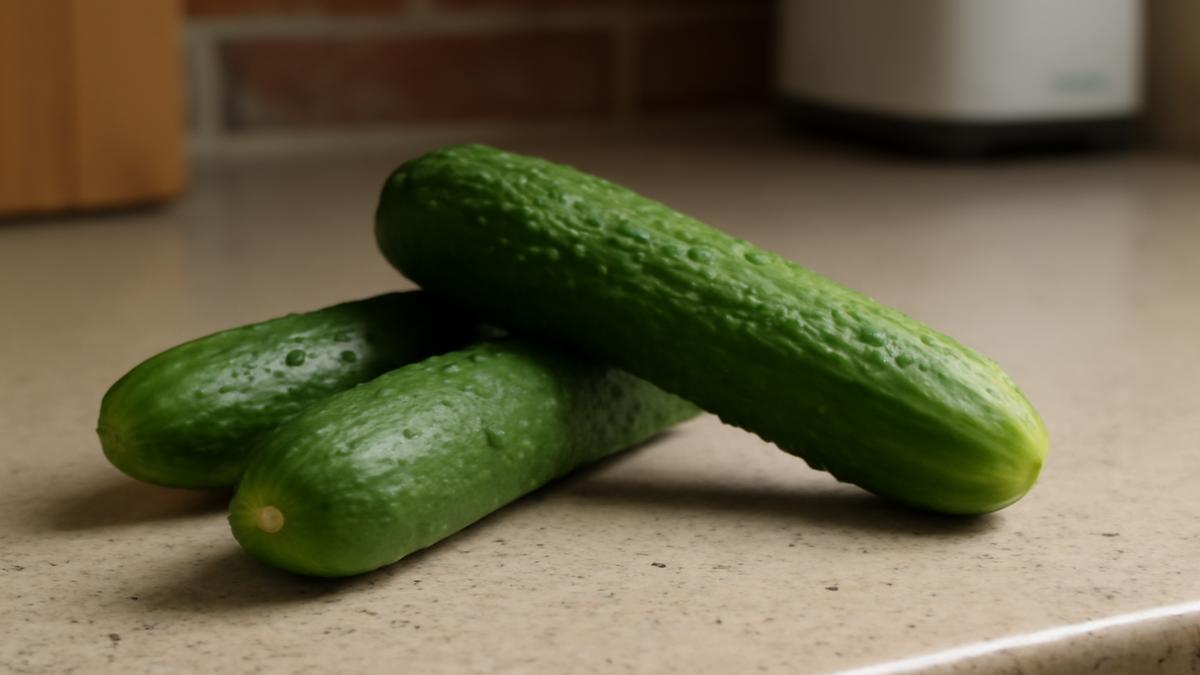
There’s a part of your counter that never gets blasted by direct sun, that rarely feels the heat from the oven or stovetop. Maybe it’s a corner near a cool, shaded wall, or that narrow stretch between the fruit bowl and the coffee maker. It doesn’t have to be large. It just has to be quiet.
That quiet, shaded patch of counter is where cucumbers thrive. Not freezing cold. Not blazing hot. Just calm, steady room temperature. It’s the place where they can breathe, gently release moisture, and hold onto their snap for up to four times longer than they would in the chilly chaos of your fridge drawer.
When you lay them there—dry, unwashed, out of their plastic sleeves—you can almost feel the difference. They don’t fog up with condensation. Their skins don’t tighten and then wrinkle like they do in the cold. Instead, they look relaxed, almost at ease, like they know they’ve come home to the right climate.
The science hiding in that simple spot
Cucumbers are about 95% water, and their cell walls are delicate. In the refrigerator, especially at typical home settings (often a few degrees colder than ideal), those cells get stressed. Exposure to temperatures below about 10°C (50°F) triggers chilling injury: pitting, water-soaked spots, and that soft, sad bend you feel when you pick up a tired cuke.
On the counter, in a moderate, stable environment away from heat and sun, the cucumber’s cells stay more intact. You’re not shocking them with cold or trapping them in a humid plastic prison. You’re letting them sit in conditions closer to the ones they grew in: cool shade, gentle air, no frostbite in sight.
How to set up the perfect cucumber corner
You don’t need to redesign your kitchen. You just need to pay attention to how it feels, the same way you notice where the afternoon light pools or where your cat insists on napping.
Step 1: Find the “shade line” of your kitchen
Stand in your kitchen around midday and again in late afternoon. Watch where the sunlight falls. Where does the harsh light stop and the soft shade begin? That’s your starting point. You want a counter spot that:
- Never gets direct sunbeams
- Isn’t right next to the stove, oven, toaster, or dishwasher
- Doesn’t sit above a frequently running appliance that radiates heat
- Feels relatively cool if you rest your hand there for a few seconds
Step 2: Give cucumbers some breathing room
Once you’ve claimed your cucumber corner, treat it like a tiny pantry garden plot. Lay the cucumbers in a single layer, not piled up. If your counter is slick or gets splashes, put down a folded paper towel or a clean, dry tea towel as a landing pad. Avoid bowls or deep baskets; they trap humidity and encourage rot.
The cucumbers should feel like they could roll away at any moment—not snug and smothered, but free and airy. If you listen closely to your own kitchen rhythms, you’ll find a spot where they can sit quietly, just at the edge of your daily motion but always within sight, a green reminder that freshness doesn’t have to hide behind a cold door.
Step 3: Handle them like something alive, not just another ingredient
There’s a small ritual that turns this from a storage trick into a habit: when you bring cucumbers home, take ten seconds with each one.
- Pat them dry if they’re damp from misting or condensation.
- Don’t wash them yet. Water sneaks into tiny scars and speeds decay.
- Check for any soft spots; eat those first, store the strongest ones longer.
- Lay them with a bit of space between each, like you’re planting them on that towel.
It feels almost like tending. And in a way, it is: you’re extending the life they started in a field somewhere, giving them a few more days to be at their best before the knife meets the cutting board.
How much longer do cucumbers really last on the counter?
If you’re used to fishing limp cucumbers out of the fridge after three or four days, the difference can feel downright magical. In a mild, shaded counter spot, a firm, fresh cucumber can often hold its crispness for a week or more. Under the same conditions in a cold, damp fridge drawer, it may start going soft in as little as two or three days.
Here’s a simple comparison table you can glance at on your phone the next time you’re unloading groceries:
| Storage Method | Typical Texture Life | Common Problems |
|---|---|---|
| Fridge, plastic bag, crisper drawer | 2–4 days before soft spots | Condensation, slimy ends, chilling injury |
| Fridge, loosely wrapped in towel | 4–6 days with moderate crispness | Gradual rubbery texture |
| Shaded counter spot, single layer | 7–10 days, firm and snappy | Possible slight surface wrinkles after a week |
| Shaded counter + light cloth cover | Up to 10–12 days, good salad quality | Drying at stem ends if air is very arid |
“Four times longer” sounds dramatic until you actually watch it happen. Day three, your fridge cucumber is starting to dull at the edges, while the one on the counter still snaps like a green icicle when you cut into it. Day seven, you slice the counter cucumber for a salad and it still squeaks faintly against the knife—an unbelievably satisfying sound when you’ve grown used to soggy slices.
Listening to your cucumbers with your senses
Once you stop hiding cucumbers in the fridge, you notice them more. They’re right there—little green timekeepers quietly ticking through the week. And you start to read them with your senses the way you read the sky before a storm.
Look: Color and sheen tell their story
Fresh cucumbers glow a bit. Their skin is rich, almost glossy, and even in shade you can see a gentle shine. As they age, that shine softens. Fine wrinkles gather near the ends. A slightly dull, matte finish means they’re moving from perfect for raw salads to better for quick pickles or chilled soups.
On the counter, those changes are gradual and visible. In the fridge, they sneak up on you in silence until one day you reach for a cucumber-shaped disappointment.
Touch: The bend test
Gently cradle the cucumber at both ends and press inward, just a bit. A fresh one feels like there’s a tiny spring running through its center—firm, reactive, no give. As it ages, it starts to bow under pressure, almost like a tired back. This is your cue to move it to the front of the dinner queue.
On the counter, that bend arrives later. You’ll often find that a week-old cucumber stored well on your shaded spot still has more backbone than a four-day-old one from the fridge.
Smell and sound: Subtle but real
Fresh cucumbers smell like cut grass and cold water when you slice into them. If there’s any sourness, sharpness, or a hint of fermentation at the stem ends before you even cut, they’re on their way out—or already there.
And sound? Pay attention the next time you chop. That crisp, almost squeaky cut is the audio version of peak freshness. When that sound goes from crisp crack to quiet thud, you know the cells inside have started to collapse.
Making the most of every cucumber you buy
Storing cucumbers in the right place buys you time, but what you do with that time is where the pleasure really lives. When they’re no longer racing the clock against mush, you can choose meals based on mood instead of panic.
Plan a little “cucumber arc” for the week
Think of your cucumbers like a little storyline across your days:
- Days 1–3: Eat them raw when they’re at peak snap. Toss into salads, slice for sandwiches, pile thick rounds next to a bowl of hummus.
- Days 4–6: Use for dishes where they share the stage. Diced into yogurt with herbs, folded into grain bowls, or layered into rice paper rolls.
- Days 7–10: Turn the last ones into quick pickles, cold cucumber soup, or finely chopped salsa-style sides where a tiny bit of softness is no tragedy.
Your shaded counter spot makes that arc possible. Instead of a narrow two-day window of “good enough,” you have nearly a week of “fantastic” and another few days of “still totally useful.” The trash can stays empty. Your meals feel more flexible. You actually enjoy the cucumbers you paid for.
A small environmental kindness hiding in your kitchen
There’s another quiet benefit to evicting cucumbers from the fridge: you’re using your cold storage more consciously. Every unnecessary thing in your fridge draws energy to keep cool. Every vegetable you lose to premature spoilage represents more energy, water, and labor wasted long before it reached your cutting board.
By giving cucumbers a calm place on the counter, you’re not just saving yourself from rubbery salads. You’re tightening the circle of your own little food ecosystem. A few fewer fridge trips. A few fewer sad, forgotten vegetables. A deeper respect for the particular needs of each thing you bring into your home.
When the fridge still has a role (because life happens)
Some days are too hot. Some kitchens are too bright. Some weeks, life gets away from you and that cucumber you meant to slice on Wednesday is still staring at you on Saturday morning.
On sweltering summer days, or in very warm homes where “room temperature” is more like a sauna, you can still use the fridge—but think of it as a backup, not the default.
- If your kitchen is consistently above 27°C (80°F), keep cucumbers on the shaded counter for the first few days, then move any you won’t use soon to the fridge.
- When you do use the fridge, wrap cucumbers loosely in a dry tea towel or paper towel, then place them in the crisper drawer. The fabric buffers them from the cold and collects condensation.
- Try not to store them directly against the back wall of the fridge, where temperatures are often coldest.
Think of it as a dance between two environments: the counter for comfort and flavor, the fridge for emergencies and heat waves. But if you give the counter first dibs, you’ll still stretch their crispness far beyond what you’re used to.
Let your kitchen become a place of small, clever changes
Once you see how dramatically one little shift—moving cucumbers from fridge to shaded counter—changes their lifespan, it’s hard not to get curious about everything else. What if tomatoes, bread, or herbs each have their own perfect “corner climate”? What if your kitchen isn’t just a place where you store food, but a landscape of micro-habitats, each tuned to keep something alive and vibrant a bit longer?
The cucumbers are where you start. Next time you come home with a bag of them, don’t reach for the fridge handle automatically. Pause. Find that quiet patch of counter that feels like afternoon shade in a summer garden. Lay them there gently. Give them space. Let them breathe.
Then, a few days later, when you slice into one and it still breaks beneath your knife with that cool, refreshing snap, you’ll taste it—this tiny rebellion against waste, this small, smart partnership with the nature of the things you eat.
And you’ll wonder, with a little thrill: what else have I been chilling that really wants to live in the light?
Frequently Asked Questions
Can I always store cucumbers on the counter, no matter the season?
You can store cucumbers on the counter as long as your kitchen stays reasonably cool—ideally below about 25–27°C (77–80°F) and out of direct sunlight. In very hot or humid conditions, keep them on the counter for the first few days, then move any remaining cucumbers to the fridge, loosely wrapped in a towel.
Should I wash cucumbers before putting them on the counter?
No. It’s better to store cucumbers unwashed. Excess moisture from washing can seep into small skin imperfections and speed up spoilage. Instead, store them dry and wash them just before cutting or eating.
Is it safe to eat cucumbers stored at room temperature for a week?
Yes, as long as they look, smell, and feel normal. If the skin is intact, there’s no mold, no sour smell, and the cucumber still feels reasonably firm, it’s safe to eat. If in doubt—strong off-odors, sliminess, or major soft spots—compost or discard it.
What if my cucumbers came wrapped in plastic from the store?
If they’re individually wrapped “English” cucumbers, you can leave the plastic on but still store them on a shaded counter, as that wrap is designed to reduce moisture loss. If they’re in loose plastic bags, remove the bags, pat them dry if damp, and store them uncovered or on a towel in your cucumber corner.
Can sliced cucumbers stay on the counter too?
No. Once a cucumber is cut, it should be refrigerated. Place slices or chunks in an airtight container in the fridge and eat them within a day or two for best texture. The counter method is best for whole, uncut cucumbers.
How do I know I’ve found the right counter spot?
The right spot is shaded, away from heat sources, and feels slightly cooler than the rest of the room. It doesn’t get blasted by afternoon sun, and it’s not next to the stove, oven, or a frequently running appliance. If your cucumbers stay firm and glossy for most of a week, you’ve found their sweet spot.
Why have I always heard that all produce belongs in the fridge?
Refrigerators became a convenient default for “keeping things fresh,” but not all fruits and vegetables evolved to handle constant cold. Cucumbers, tomatoes, some stone fruits, and even bread often fare better at moderate room temperatures. The fridge is a powerful tool, but not always the right habitat—and cucumbers are one of the clearest examples.

Hello, I’m Mathew, and I write articles about useful Home Tricks: simple solutions, saving time and useful for every day.