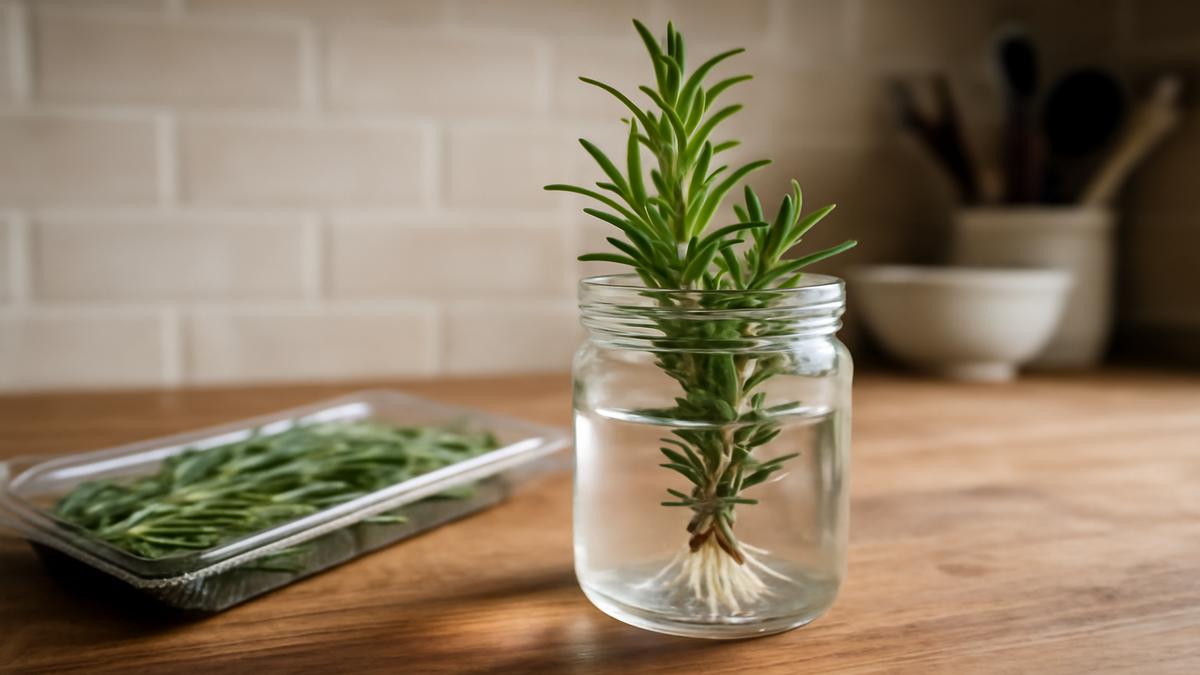
The rosemary on the kitchen counter was already dying when the idea arrived—one of those thin, drooping supermarket bundles rubber-banded at the waist, smelling like a mountainside but looking like it had made a long and difficult journey. You know the ones. They ride home in the corner of the grocery bag, shed a few needles on the car seat, then collapse in the crisper drawer a day or two later. This time, instead of surrendering it to the inevitable, we gave it a glass jar, a little patience, and a sunlit windowsill. And that’s where the quiet magic started—where one small pack of rosemary stopped being disposable and became the beginning of a never‑ending harvest.
The Day the “Disposable” Herb Fought Back
It usually begins with a recipe. Maybe it’s roast potatoes that promise to be “life-changing” or a lemon-rosemary chicken that everyone swears by. You stand in the herb section, fingers brushing over the familiar green labels, and reach for rosemary because it smells like memory—like holidays, like wild hills, like something sturdy and evergreen that surely must outlast the flimsy plastic bag it comes in.
But you already know how this story usually goes. You pay a premium for a small clump of cut stems. You use three or four sprigs. The rest slowly fade—the leaves curl, the stems darken at the ends, and by the weekend you’re tossing what’s left into the compost bin with a sigh. It feels wasteful, but it’s become routine.
Now imagine this same bundle not as a one-time ingredient, but as the mother plant of a miniature indoor rosemary forest. No garden required. No terracotta pots. No potting mix trailing across the kitchen floor. Just a jar, some water, a sunny spot, and a little attention.
This isn’t a gardening project in the traditional sense. It’s more like befriending a branch of the wild and convincing it to stay. A little water, a little light, and suddenly the cut stems you thought were done living begin to push out white roots like threads of silk. One supermarket pack transforms from a short-lived purchase into a quiet, evergreen companion on your counter—ready to flavor dinner, perfume the room, and send up new growth every time you snip it back.
The Simple Jar Hack That Changes Everything
At its core, the jar hack feels almost suspiciously simple. It starts with a choice: when you bring that pack of rosemary home, you don’t treat it like a bouquet doomed to wilt. You greet it like a guest planning to stay.
Spread the stems out on the counter and really look at them. Some will be woody and tough at the base; others a little greener, more flexible. You want the ones that feel like they’re in the sweet spot—a bit firm, but not brittle, with leaves dense and fragrant from tip to nearly the bottom. These are your candidates for rebirth.
You strip the lower third of needles away, revealing clean stem. Under your fingers, the scent releases—sharp, resinous, piney and almost peppery. The kitchen briefly smells like a hillside in late summer, and for a moment you forget you’re standing in front of a stainless-steel sink instead of an open field.
Then comes the jar. Any clear glass will do—a small jam jar, a squat juice bottle, even a drinking glass—so long as it’s tall enough to keep the leaves out of the water. You fill it with fresh, cool water, then slip the bare stems in, letting only the stripped section sit under the surface. Cluster them loosely; they’re companions, not prisoners.
When you set the jar on a bright windowsill, something quiet but extraordinary begins to happen. The water cradles the stems. Light moves through the glass in a slow shimmer over the course of the day. And within a week or two, if the rosemary is in the mood, thin pale roots begin to appear—timid at first, then braver, splitting and multiplying, filling the water with pale, drifting threads.
Why Rosemary Cooperates
Rosemary is, by nature, persistent. It’s used to rocky soils and dry winds, to clinging to cliffs and hillside terraces. It doesn’t give up easily. When you place cut stems in water, you’re giving that natural stubbornness a chance to re-route itself. Instead of surrendering, the plant quietly starts constructing a new system of survival.
The water trick does something else too: it makes the invisible visible. You don’t have to wonder if the cuttings are taking, like you would if they were buried in soil. The roots are there, transparent and delicate, proof that this is working. It turns rooting from a mysterious horticultural process into a kind of daily, living science experiment on your kitchen windowsill.
How to Turn One Bundle into a Lifelong Harvest
Though the process is simple, a few gentle details can mean the difference between a jar of limp stems and a thriving cluster of future plants. Think of this as tending rather than “doing it right.” Rosemary responds best to care that’s consistent but not fussy.
Step 1: Choosing the Right Stems
When you open your supermarket pack, sort through like you’re meeting a group of strangers at a party and deciding who’s most likely to stick around. Look for:
- Stems at least 8–12 cm long.
- Firm, green needles that don’t fall off when brushed.
- Bases that aren’t brown, squishy, or blackened.
If the bottom of a stem looks tired or discolored, trim it cleanly with a sharp knife or scissors just above the damage, creating a fresh cut.
Step 2: Preparing the Stems
Hold each stem by its tip and gently run your fingers downward along the lower half, popping the leaves off in tidy little bursts. This is practical—you don’t want leaves rotting under the water—but it’s also strangely soothing. The released scent hangs in the air, weaving itself into your clothes and the cutting board. You might find yourself thinking, “How did I ever throw this away without a second thought?”
Step 3: Setting Up the Jar
Fill your clean jar with just enough water to cover the lower, leafless section of each stem. If the whole stem is submerged, it’s an invitation for rot. Be sure the water line stays below the lowest remaining leaves.
Place the jar where it will receive bright, indirect light—a kitchen window is ideal, especially one that gets morning sun. Rosemary loves light, but water in glass can magnify strong midday rays into something harsher than it needs. Soft, steady light is plenty.
Step 4: The Quiet Daily Ritual
Every couple of days, visit the jar. Top up or replace the water if it’s cloudy or low. This tiny ritual can slide into your routine as easily as rinsing a mug or wiping the counter. It’s not work, exactly; it’s more like a nod to the plant’s continued efforts.
Within 7–14 days, you’ll likely see root nubs forming, small pale bumps on the submerged portion of the stem. They’ll lengthen into filaments that drift and tangle, eventually forming a modest root system strong enough to support new growth.
Step 5: From Jar to “Jar Garden”
Here’s where the hack bends the usual rulebook. Traditionally, you’d move rooted cuttings into soil. You still can. But you don’t have to—not if your aim is a steady supply of kitchen-ready sprigs rather than a sprawling bush on the patio.
You can keep your rosemary growing in the jar long-term, so long as you:
- Change the water weekly to keep it fresh.
- Trim the stems lightly rather than hacking them down.
- Rotate the jar so all sides see the light.
The stems will continue to root more densely and push out new leaves. When they start to look a little leggy, a gentle snip encourages side shoots and thicker, bushier growth.
Living with a Windowsill Rosemary Forest
Once the rosemary gets comfortable, something subtle but beautiful happens in your kitchen. The jar stops being an experiment and becomes a fixture—a small, green lighthouse in the clutter of daily life.
Morning light hits the glass and throws quiet reflections on the counter. The water catches the sky’s color: soft gray on rainy days, warm amber in the late afternoon. The stems, no longer anonymous grocery-store castoffs, stand with a kind of presence. They look purposeful, like they belong here.
You start to develop a rhythm with them. Walking past with a mug of tea, you notice a burst of new pale growth at the tips. When you cook, you lean in and pinch a sprig between two fingers, inhaling before you snip. A roasted tray of vegetables isn’t just seasoned; it’s linked directly to the small ecosystem on your sill.
There’s a kind of companionship to it. You’re not just an eater of plants but a keeper of them. You begin to see the supermarket herb section differently, too. Instead of “use and discard,” you see potential—tiny, portable forests waiting to be adopted.
| Step | What You Do | What Rosemary Does |
|---|---|---|
| 1. Sort | Pick the firmest, greenest stems from the supermarket pack. | Holds on to its essential oils and vigor. |
| 2. Strip | Remove lower leaves, leaving a bare section of stem. | Prepares clean surfaces that can form roots. |
| 3. Jar | Place stems in water, leaves above the surface. | Starts healing the cut ends and sensing moisture. |
| 4. Wait | Change water regularly, keep in bright, gentle light. | Sends out pale roots and new leaf growth. |
| 5. Harvest | Snip sprigs as needed, encouraging side shoots. | Thickens, branches, and keeps producing. |
Why This One Small Habit Feels So Satisfying
There’s the obvious answer: you save money. Rosemary isn’t cheap when it’s packaged in tidy plastic sleeves and sold as if it were as temporary as a bouquet of flowers. Once you’ve rooted even half a pack, you may find yourself rarely, if ever, buying it again.
But the deeper satisfaction lives somewhere else. In a world where so much feels fast and disposable, keeping a jar of living rosemary on your sill is a small, quiet rebellion. It says: this doesn’t have to be waste. This can be more.
Instead of throwing away limp stems, you extend their story. The plant becomes part of your daily environment, not just a flavor note in your dinner. You start to notice light more—how the stems lean toward it, how the leaves darken into richer green with time. You notice seasons, even indoors: the way winter light is weaker, the way summer makes the plant almost hum with growth.
There’s also a sensory richness to it. Each time you brush the leaves, a veil of scent lifts—the herb’s way of reminding you that it’s still very much alive. The kitchen, often a place of haste and necessity, gains an anchor point of slowness and continuity.
Beyond Rosemary: A Gateway Plant
Once you’ve seen what a supermarket bundle can become, it’s hard not to get curious about others. Mint, thyme, oregano, even basil (with a slightly different care routine) respond to similar treatment. The jar on the windowsill might become two jars, then three. A row of salvaged glass, each vessel cradling something green, each plant with a story that didn’t have to end at the checkout lane.
But rosemary is a particularly inviting place to start. It’s forgiving. It roots readily. It keeps its structure and scent for a long time. It asks little and gives much: flavor, fragrance, and the subtle satisfaction of seeing something thrive under your hand.
Keeping It Going: Your Everlasting Pack
“Forever” in nature isn’t a straight line. Stems age. Some fail to root. Others root beautifully but tire after months. That’s fine. The “forever” of this jar hack isn’t about immortality; it’s about continuity.
Each time your jar produces strong, healthy stems, you can take cuttings from those and start new jars—or, if you like soil under fingernails, pot them up in small containers. One supermarket pack can become a chain of plants, each generation renewed from the last, spreading from water to pot to maybe one day, if you have the space, a scrubby little shrub outdoors.
Your kitchen becomes part of a quiet propagation line. Store-bought becomes home-kept. Disposable becomes perennial. You’re not just the consumer at the end of the chain but the caretaker in the middle of it.
And perhaps the loveliest part is that this practice folds itself easily into ordinary life. No big schedule, no special equipment. Just a jar, some water, light, and the willingness to pause for a few seconds every so often and pay attention to something green.
One day, you may find yourself standing over a pan of sizzling potatoes, tossing in a handful of chopped rosemary that began as a supermarket impulse buy months ago. The scent rises, warm and familiar. You glance at the jar on the sill, where new stems are already reaching for the light, and realize: you haven’t bought rosemary in ages. Instead, you’ve been growing your own miniature, evergreen story—one that begins, improbably, in the herb aisle and keeps unfolding in a sunlit glass jar.
Frequently Asked Questions
How long does it take supermarket rosemary to root in water?
Most stems begin forming visible roots within 7–14 days, though cooler rooms or weaker light can slow this down. You’ll usually have a usable root system within 3–4 weeks.
Can I keep rosemary in water forever, or do I have to plant it in soil?
You can keep rosemary in water for many months, sometimes longer, as long as you change the water regularly and provide good light. Eventually, some stems may do better in soil, but for ongoing kitchen use, a long-term jar “garden” works well.
Why are the stems turning black at the bottom?
Blackened, mushy stems usually mean they’ve rotted. This can happen if leaves are submerged, the water isn’t changed often enough, or the jar is in a very hot, direct-sun spot. Remove any rotting stems, refresh the water, and keep only bare stem sections below the waterline.
How often should I change the water in the jar?
Top it up as needed, and fully change it at least once a week. If the water looks cloudy or smells off, change it immediately. Clean, fresh water keeps roots healthy and prevents rot.
Can I still use the rosemary leaves while the stems are rooting?
Yes, you can lightly harvest from the tops, especially once the stems have started forming roots. Just avoid stripping them too heavily; leave enough leaves for the plant to photosynthesize and keep growing.
What kind of light does jar-grown rosemary need?
Bright, indirect light is ideal. A windowsill with morning or late-afternoon sun works well. Very strong midday sun through glass can overheat the water, so a slightly filtered or east-facing window is often best.
Will this work with any supermarket rosemary, even if it’s been in the fridge?
Often yes, as long as the stems are still firm and green. Let cold stems come to room temperature, trim the ends, and proceed with the jar method. Fresher packs root more reliably, but even slightly older ones sometimes surprise you with their resilience.

Hello, I’m Mathew, and I write articles about useful Home Tricks: simple solutions, saving time and useful for every day.