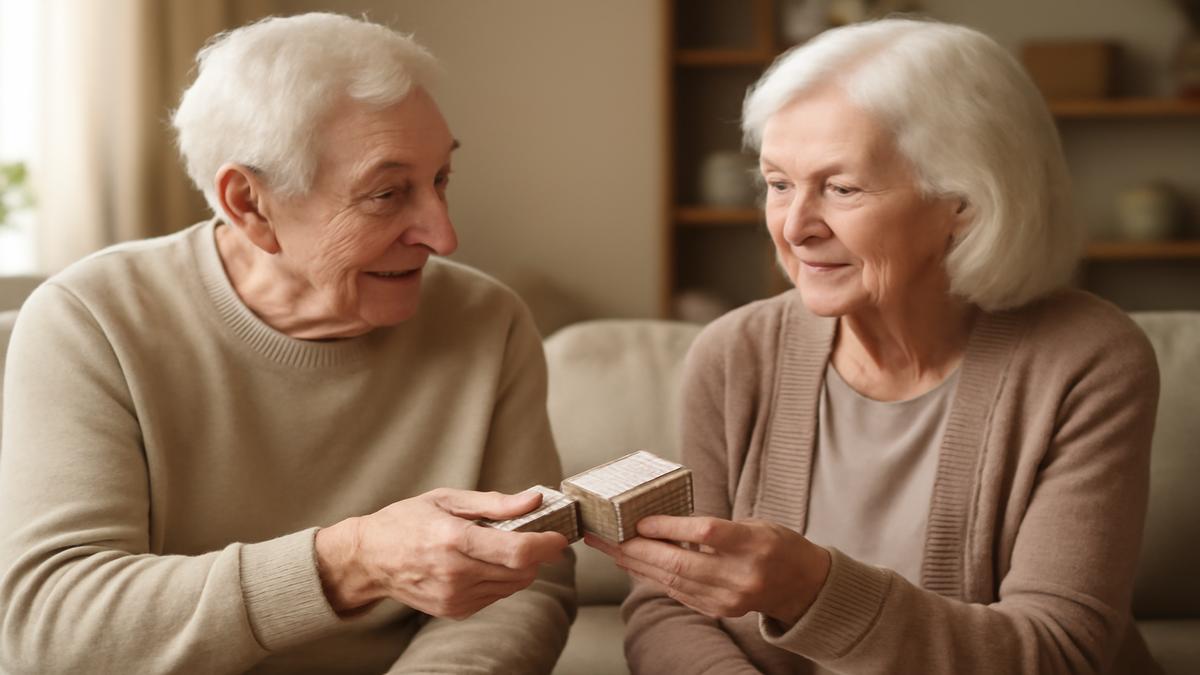
The letter arrived on a Tuesday, folded neatly between a gardening catalogue and a takeaway menu. On the envelope, in looping blue ink, it simply said: “For Emily – for your future.” When she opened it at the kitchen table, her grandfather’s familiar handwriting spilled out, talking about the year 2026, about “a little-known rule,” and about how he might be able to give her £27,000 without a penny going to the taxman. Outside, rain mottled the window. Inside, the kitchen smelled of toast and marmalade, and somewhere between the kettle’s hiss and the ticking clock, the word “loophole” began to sound less like a trick and more like a door quietly opening.
The quiet revolution in the family kitchen
Across the UK, conversations like that are starting in the most ordinary of rooms. Around scrubbed pine tables, on sagging sofas, in conservatories warmed by thin winter light, grandparents are wondering what their money is really for. They’ve watched house prices climb into the stratosphere, seen student debt turn from a passing worry into a lifelong shadow, and noticed that the old reassurance—“things will be easier for the next generation”—no longer quite rings true.
The 2026 tax-year rules are changing the tone of those conversations in a subtle but powerful way. Hidden inside the dense hedgerows of HMRC guidance is a combination of allowances that, when woven together carefully, let a grandparent give away up to £27,000 completely tax-free in a single tax year. No inheritance tax (IHT), no income tax, no capital gains tax—just a clean, legal transfer of wealth from one generation to the next.
This isn’t a headline-grabbing government scheme, branded with a snappy name and glossy ads on the tube. It’s more like a quiet path through the woodland: faintly marked, easily missed, but entirely legitimate once you know where to step. And for families who recognise it in time, 2026 could be the year money stops being an abstract number on a bank statement and becomes something you can actually feel: a front door key in a grandchild’s palm, the weight of textbooks for a degree they can afford, the smell of paint in a first baby’s nursery.
The 27k “loophole” that isn’t cheating the system
Let’s call this “loophole” what it really is: a set of long-standing rules, designed to recognise that life, love, and money don’t move in tidy, taxable lines. The magic of £27,000 isn’t conjured from nowhere; it’s the careful stacking of different exemptions and allowances that already exist—and which too many people never use.
Imagine a grandparent in 2026, sitting with a notepad, a cup of tea, and a determination to help. Here’s how that £27,000 can appear, brick by brick:
1. The annual £3,000 IHT exemption
Every tax year, any person can give away £3,000 that’s instantly exempt from inheritance tax. It doesn’t get counted back into their estate if they die within seven years; it’s simply outside the IHT net forever.
2. The previous year’s unused exemption
If they didn’t use that £3,000 allowance in the previous tax year, they can carry it forward. Suddenly, that’s £6,000 of gifts, cleanly outside the inheritance tax radar.
3. Small gifts of up to £250 per person
You can give up to £250 to as many different people as you like in a tax year, as long as they’re not already benefiting from the £3,000 exemption. For a grandparent with a flock of grandchildren, nieces, nephews or even godchildren, that adds up quickly.
4. Gifts from “surplus income”
This one is the least understood, and often the most powerful. If a grandparent’s regular income—pensions, investments, rental income—comfortably exceeds what they need for a normal standard of living, they can give away the surplus, and those gifts can be exempt from inheritance tax immediately. The key is that these payments need to be:
- Made from income, not capital
- Regular or part of a pattern (for example, £500 a month)
- Not leaving the giver short of funds for their own needs
For many comfortably-off retirees, that surplus income might be in the thousands each year. Multiply that by twelve months and it suddenly becomes a major lifeline to younger family members—especially in a year like 2026, when those monthly amounts can deliberately be structured and timed.
5. Large gifts using the 7-year rule
Beyond all exemptions, anyone can give almost any amount away as a “potentially exempt transfer”. Survive for seven years after the gift, and it escapes inheritance tax entirely. Even if the giver dies within that window, there’s a sliding scale (taper relief) after three years that can reduce any tax. Many grandparents, especially those in good health, look at that seven-year path and think: “Why am I waiting?”
Now picture all of that layered together. A grandparent in 2026 could combine:
- £6,000 from current and previous annual exemptions
- Several £250 small gifts to different grandchildren or family members
- A structured series of monthly gifts from surplus income throughout the year
- On top, a larger one-off gift that’s covered by the seven-year rule
By the time those pieces are fitted, £27,000 can pass between generations with no immediate tax and, if done thoughtfully, no future tax either. No smoke, no mirrors—just knowing the rules well enough to play the game as it was written.
The 2026 landscape: why timing matters
2026 isn’t just another year on the calendar. Demographic and financial currents are colliding: the long shadow of frozen IHT thresholds, rising property values, and the continuing pressure on younger adults facing high rents, deposits, and living costs.
Frozen inheritance tax bands mean more ordinary families are drifting into the IHT net without ever realising it. A three-bed house bought for a song in the 1980s, plus a lifetime of careful saving, can now push an estate beyond the £325,000 nil-rate band—and sometimes well beyond, even with residence allowances. Every pound over those thresholds faces a potential 40% tax on death.
So when a grandparent starts thinking about 2026, they aren’t just thinking in the abstract. They’re thinking in concrete, sensory terms: the hallway lamp in a house their family might have to sell to pay a tax bill; the creak of the stairs where grandchildren have raced up and down. The question becomes: would you rather see your money working in your loved ones’ lives now, or risk a third of it being siphoned away later?
A year in the life of a generous grandparent
Imagine Margaret. She’s 76, widowed, with a modest but solid pension and some investment income. Her small detached house in the outskirts of Bristol has quietly climbed in value over the years. Her grandson, Tom, is 24 and trying to pull together a deposit for his first flat while paying off his student loan and watching supermarket prices inch higher almost every month.
On New Year’s Day 2026, as weak sunlight leaks through the curtains, Margaret sits at the round dining table she’s had for 40 years, a mug of tea leaving its familiar ring on an old coaster. The radio hums in the background. A notebook lies open, filled with numbers, underlined dates, and, at the top of the page, in firm handwriting: “Gifts for the kids – do it while I’m here to see it.”
She speaks with a financial adviser—someone who listens more than they talk—and realises three important things:
- Her regular income is comfortably more than she needs.
- Her estate, largely thanks to her house, will nudge into IHT territory if she does nothing.
- There is nothing in the rules that says she has to wait until she dies to help.
They map out a plan for 2026:
- £3,000 to Tom using that year’s annual exemption
- £3,000 carried over from the unused allowance from the previous year
- Several £250 gifts to younger relatives for birthdays—small in each case, but meaningful and fully exempt
- A monthly standing order from her surplus pension income: £500 into Tom’s savings account, clearly documented as “gift from income”
- An additional one-off £10,000 gift, structured as a potentially exempt transfer she is confident she’ll outlive, or at least partially soften via taper relief
Across 12 months, the regular income gifts alone add up to £6,000. Combined with the £6,000 annual exemptions, the small payments and the larger lump sum, the total package sits around the £27,000 mark—enough for a serious deposit in many parts of the country, or to transform the trajectory of his finances.
None of this feels abstract. When the first monthly transfer lands in Tom’s account, he calls her, voice half stunned, half hopeful. “Nan… are you sure?” he asks, staring at the new balance on his phone as if it might disappear. She laughs, a warm crackle down the line. “I want to see you use it,” she says, picturing him standing in a kitchen that doesn’t exist yet, one he’ll call his own.
How the numbers might look in real life
It helps to see the 2026 possibilities laid out clearly. Imagine a grandparent using different allowances in one tax year:
| Type of Gift | Amount (Example) | Why It’s Tax-Free |
|---|---|---|
| 2026 annual IHT exemption | £3,000 | Standard yearly allowance, immediately outside the estate. |
| Unused 2025 exemption carried forward | £3,000 | Can be used in addition to the current year’s exemption. |
| Small gifts (£250 each to 4 relatives) | £1,000 | Within the £250-per-person small gift allowance. |
| Regular gifts from surplus income (£500/month) | £6,000 | Exempt if truly from surplus income and part of a pattern. |
| One-off larger gift (PET under 7-year rule) | £14,000 | No IHT if the giver survives 7 years; potential taper relief after 3. |
| Total 2026 gifts | £27,000 | Structured to be fully tax-free or potentially exempt. |
The precise mix will differ for every family, but the principle is the same: understand the rules, fit them to your real life, and let the numbers serve the story you actually want to live.
More than money: what these gifts really do
When you listen closely to grandparents talking about this 2026 opportunity, the word “legacy” comes up often. Not in the stiff, formal sense of legal documents and executors, but in a softer, more immediate way. They talk about wanting to know that their years of careful saving weren’t just an abstract exercise—that the pennies they turned into pounds, and the pounds into a home, can now become something tangible in their grandchildren’s lives.
The effects ripple out in ways no tax manual can quite capture. A lump sum for a deposit might mean:
- A young couple leaving a damp rented flat and stepping into a space that smells of fresh plaster and new beginnings
- A student able to choose a course for love, not just for salary potential
- A young family able to move closer to work or better schools, shaving time off long commutes and turning it into bedtime stories instead
For the giver, there’s an emotional texture to it all. Instead of wealth transferring in a silent, posthumous wave, it becomes a shared experience: standing beside a grandchild on the day they get their keys; sitting in a café, hearing about a degree offer that suddenly feels financially possible; watching anxiety loosen its grip on a young parent’s face.
Is there risk? Of course. Life doesn’t come with guarantees. Health can change, markets can wobble, families can fracture. That’s why no one should empty their savings recklessly or give beyond what they can truly spare. But when done thoughtfully, with advice and honest conversations, these 2026 gifts can turn money into something rarer: a sense of continuity, of a family holding hands across time.
The practicalities: keeping it clean and clear
The magic of £27,000 tax-free rests on one unfashionable word: records. For a gift to be treated the way you intend, you have to be able to show your workings if HMRC ever asks. In real life, that can be simple:
- Keep a notebook or digital file noting each gift: date, amount, who it went to, and which allowance it uses.
- For gifts from surplus income, record your regular income and typical spending to show you’re not depriving yourself.
- Use clear references on bank transfers (“Gift to Emma – 2026 annual allowance”).
- Tell your executors and your family what you’ve done and why. Silence breeds confusion; shared understanding prevents it.
There’s a rhythm to it once you start. Gifts stop being one-off panics and instead become part of the financial seasons of each year, as ordinary as renewing the car insurance or buying winter coats.
2026 as a turning point, not a one-off trick
There’s something compelling about a specific year. It focuses the mind. “In 2026,” people say, “we’ll finally sort the will.” Or “In 2026, we’ll help with the deposit.” The danger is in seeing it as a one-time stunt rather than the beginning of an ongoing pattern.
The real power of this £27,000 pathway is that it can become a habit, not a headline. A grandparent who begins structuring gifts in 2026 might continue—within their comfort and means—for years, gently reducing a future inheritance tax bill while actively changing the lives of people they love.
Each tax year brings a fresh £3,000 exemption. Each year might bring new surplus income to share. Each year, the seven-year clock on earlier larger gifts ticks further along, loosening the potential grip of future tax. And each year, those gifts could be doing something very ordinary and very beautiful: buying time, choices, and a bit of breathing room for a generation that often feels squeezed from all sides.
Back at that kitchen table, the letter in Emily’s hand might someday become a story she tells her own children: about the year her granddad quietly rearranged the furniture of their lives using rules that were always there, waiting to be noticed. The ink on the paper may fade; the warmth of what it set in motion will not.
FAQs: The 2026 £27k tax-free gifting opportunity
Is the £27,000 figure an official government allowance?
No. There is no single “£27,000 allowance” in law. The figure comes from combining several existing rules—annual IHT exemptions, small gift exemptions, regular gifts from surplus income, and larger potentially exempt transfers—into one planned year of giving.
Does my grandchild have to pay any tax on these gifts?
In most cases, no. Gifts of cash from individuals are not income for the recipient, so they aren’t usually subject to income tax. The main tax to consider is inheritance tax on the giver’s estate, which is where these allowances and the seven-year rule come in.
What happens if I die within seven years of a larger gift?
The gift may be counted back into your estate for inheritance tax purposes. If your estate then exceeds the IHT threshold, tax might be due. After three years, taper relief can reduce the tax on that particular gift. Smaller gifts covered by exemptions are unaffected.
How do I prove a gift was from “surplus income”?
Keep evidence of your regular income (pension statements, bank statements) and your normal spending. Make the gifts in a regular, recognisable pattern (for example, monthly or yearly), and document your intention that these are ongoing gifts from income rather than one-off capital transfers.
Can I change my mind after making a gift?
Normally, no. A genuine gift is something you give up control of; you can’t demand it back later without creating complications. That’s why it’s essential not to give more than you can comfortably afford, and to think about your own long-term care and costs before gifting.
Do I need a solicitor or financial adviser to do this?
You are not legally required to use an adviser, but professional advice can be very helpful, especially if your estate is likely to exceed IHT thresholds or if you’re planning large gifts. They can help you document everything correctly and avoid unintentional problems.
Is this likely to change after 2026?
Tax rules can change with new budgets and governments. The allowances described have been in place for years, but thresholds and details can shift. It’s wise to check the current HMRC guidance or speak to a professional before making major gifts in or after 2026.

Hello, I’m Mathew, and I write articles about useful Home Tricks: simple solutions, saving time and useful for every day.




