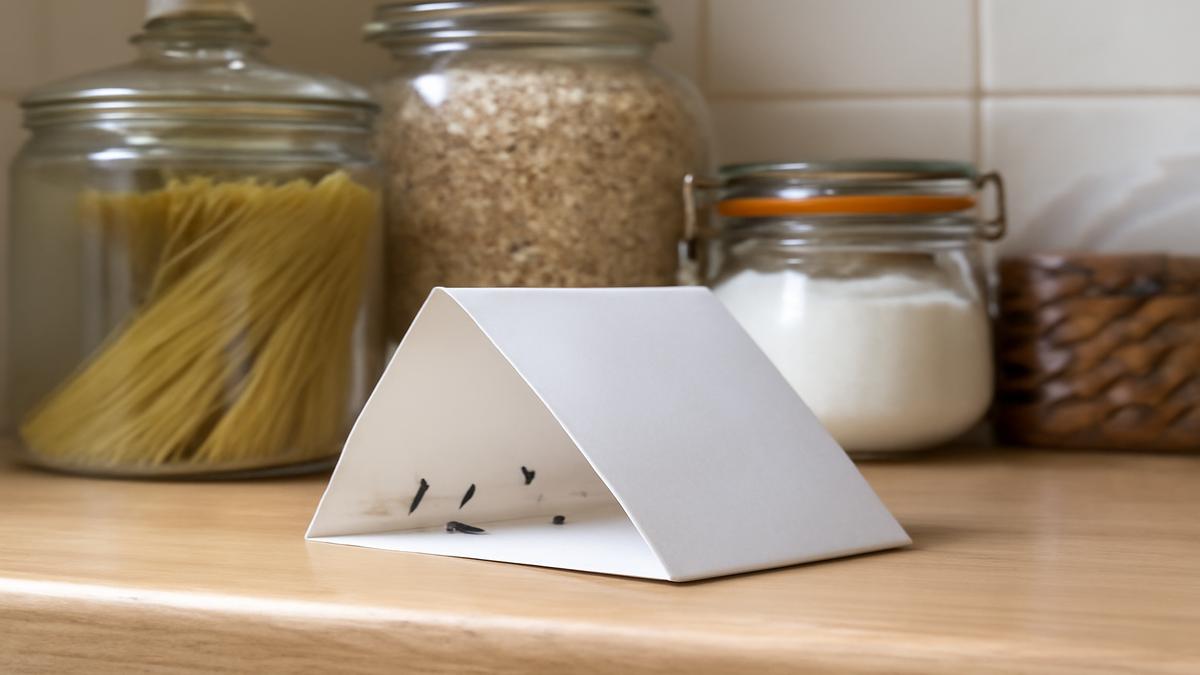
The first time I noticed the moth, it was hovering like a tiny ghost above the jar of almonds. It seemed harmless, almost delicate, its wings soft and silvery in the kitchen light. I watched it for a moment, tried to cup it in my hands, missed, and went back to stirring a pan of onions. By the time I finished cooking dinner, I’d forgotten all about it. That was my mistake.
A week later, one moth became three. Then seven. Then I opened a packet of flour and felt my stomach drop. A faint webbing clung to the inside of the bag. Little beige grains moved ever so slightly, like the food itself was breathing. I slammed it shut, backed away, and did the only sensible thing: I panicked.
If you’re reading this, you probably know that panic. You’ve seen the telltale flutter when you open a cupboard. You’ve thrown away food you were looking forward to using. You’ve wiped shelves until your arms ached, only to find another moth drifting through the air a few days later. Somewhere between the first sighting and the third bag of oats in the bin, the whole situation stops being a mere annoyance and becomes something else entirely: personal.
The Quiet Invasion in Your Cupboard
Pantry moths don’t arrive like other pests. There is no single dramatic discovery of an obvious nest, no sudden flurry of wings when you open the door. Instead, they appear like an unsettling magic trick: a moth here, a moth there, and then, almost overnight, an infestation. These are usually Indian meal moths, and they specialize in turning your dry food into a nursery.
They come in with your groceries, hidden in grains, nuts, flour, seeds, pet food, even those rustic-looking bags of specialty rice. Their larvae are pale, soft-bodied and, frankly, revolting when you finally spot one squirming across the rim of a jar. They’re persistent, adaptable, and very good at making you feel like your home is somehow unclean, even when you know it isn’t.
So you do what most of us do. You stand in the cleaning aisle of a supermarket staring at rows of sprays and traps. The traps look promising—sleek, branded, confidently labeled. But then you check the price. Four, five, sometimes ten pounds for a few cardboard triangles and a sticky pad. You buy them anyway, because food is expensive, and you want your kitchen back.
Sometimes they work, sometimes they don’t. But there’s a quieter, simpler, decidedly less glamorous approach—one that costs you about twenty pence and a few minutes, and taps into something pantry moths can’t resist.
The 20p Trap: Simple, Sticky, and Weirdly Satisfying
The trap that actually works is not pretty. It’s not something you’d proudly display during a kitchen tour. It’s a makeshift, slightly scruffy experiment that feels more like a school science project than a proper solution. But it does something important: it uses the moths’ own instincts against them, with ingredients you probably already have.
Here’s the surprising truth: you don’t need fancy pheromone traps to make a serious dent in your moth population. Pantry moths, like most creatures, are opportunists. They are drawn to the smell of fermentation, sweetness, and the promise of food. With a little bit of stickiness and a touch of sour, you can create a tiny, irresistible death pool for them.
What You Need (and Why It Costs About 20p)
You can improvise with what’s in your kitchen, but at its simplest, this trap uses:
- A shallow jar lid, ramekin, or bottle cap
- A splash of vinegar (any basic vinegar will do)
- A few drops of washing-up liquid
- A teaspoon of something sweet: sugar, honey, or syrup
- A small piece of overripe fruit, or even a bit of wine or cider if you have it
Most of this costs you nothing if it’s already in your home. Even if you had to buy a bit of sugar and vinegar, the cost per trap is around the price of a handful of pennies. The magic isn’t in the expense; it’s in the combination: sour, sweet, slightly fermenty, and topped with a thin film of soap that breaks the water tension so the moths sink instead of skating away.
The result is a quiet little pool, tucked into the darkest corners of your cupboard, where moths go to investigate and never quite make it back out.
How to Make the Trap (and Where to Hide It)
There is a small pleasure in making something that works with your own hands, especially when it’s going to war for you. The process is almost meditative—measured, deliberate, and oddly satisfying.
Step-by-Step Trap Recipe
Find a shallow container: a jar lid, an old tealight tin, a tiny saucer. The shallower it is, the easier it is for the moths to tumble in.
- Pour in a thin layer of vinegar—just enough to cover the bottom.
- Add a teaspoon of sugar, honey, or syrup and stir lightly.
- Add a few drops of washing-up liquid and swirl. You don’t want foam, just a broken surface.
- If you have it, drop in a small piece of overripe fruit or a splash of leftover wine, cider, or beer. This isn’t essential, but it strengthens the lure.
That’s it. Your trap is ready. It won’t look impressive, but you’ll feel very differently in a day or two when you examine it again.
Where to Put It
Pantry moths like the same things we do: quiet, dry, undisturbed shelves. They roam by night, fluttering along the corners of cupboards and the edges of containers. To exploit that, place your traps:
- At the back corners of pantry shelves
- Near bags of flour, grains, or cereal (but not directly under where they can spill in)
- Inside cupboards where you’ve seen moths hovering
- On the topmost shelf, where they often gather unnoticed
Use multiple small traps rather than one big dramatic one. Think of them as quiet sentries, stationed across your cupboard landscape. Check them every few days. When the liquid starts to dry out or gets full of moths, tip the contents down the sink, rinse, and refill.
The Trap vs The Store-Bought Solutions
There’s a particular kind of satisfaction in knowing you beat an infestation with something you made for pennies instead of spending a small fortune on branded glue and cardboard. To understand why this little 20p trap works so well, it helps to compare it with the usual suspects lining the shelves of the supermarket.
| Option | Approx. Cost | How It Works | Pros | Cons |
|---|---|---|---|---|
| Homemade 20p liquid trap | ~£0.20 per trap | Attracts moths with sweet/fermented scent; soap breaks surface so they drown | Very cheap; ingredients on hand; chemical-free; easy to refresh | Less precise than pheromone traps; needs regular checking |
| Pheromone glue traps | £4–£10 per pack | Lure male moths with synthetic pheromones; they stick and die | Species-specific; good population monitor | More expensive; can dry out; doesn’t directly catch larvae |
| Sprays/insecticides | £3–£8 per bottle | Kills on contact or leaves a residue | Fast knockdown of visible adults | Chemical residues near food; doesn’t solve source; can miss hidden eggs |
| Doing nothing | £0 (at first) | Let nature take its course… in your cereal | No effort | Food waste; ongoing infestation; unpleasant surprises |
Homemade traps aren’t about perfection—they’re about leverage. They won’t catch every single moth. But they will catch enough to break the cycle, especially if you pair them with something most people avoid until it’s absolutely unavoidable: a ruthless pantry audit.
The Unavoidable Bit: Decluttering the Moth Hotel
It would be comforting if the traps alone solved the whole problem. Set them down, close the cupboard, and let them work while you get on with your life. And to be fair, they do a lot. But pantry moths have a way of exploiting every forgotten bag and backup packet you’ve shoved behind the pasta.
This is the part where you become an inspector in your own kitchen. You pull everything out—every bag, every jar, every box and tub—and set it on the counter. It feels dramatic, like an overreaction, until you find the first quiet horror:
- A tiny web hugging the corner of a flour bag
- A pale larva in the crease of a cereal box
- Fine powder at the bottom of a packet that should be intact
Your job is simple, if not completely painless: identify the breeding grounds, and end them. Anything with visible webbing, movement, or suspicious clumping goes straight to the bin. Don’t be sentimental. That artisanal bag of spelt flour you forgot three months ago is not worth another two months of moths.
Dry goods that seem clean but are in soft packaging—paper, thin plastic—are worth a closer look. If you’re not sure, you can freeze them for a few days to kill any hidden eggs or larvae, then transfer them to airtight containers. Glass jars with rubber seals, sturdy plastic boxes with snap lids, metal tins with tight rims—these are how you stop turning your pantry into a day-care for moths.
As you work, the kitchen starts to smell like a cross between nostalgia and resolve: spices, grains, faint detergent from your wiped shelves. There is satisfaction in putting everything back cleaner, more organized, and properly sealed. Your traps wait quietly in the corners, ready for any latecomers.
Living With the Traps (and Winning Slowly)
The first night after you place your traps, you might glance into the cupboard a few times, expecting something dramatic. But they work in slow motion. Moths are largely active at night, when your kitchen is silent and dark, when the cupboard is undisturbed. They drift along the shelves, find the faint, sour-sweet smell, and investigate.
The real moment comes a day or two later, when you kneel down, slide a trap toward the light, and see the proof. Tiny, delicate bodies floating in a film of cloudy liquid. It’s not pretty, but it is deeply, deeply satisfying.
The goal is not to exterminate every last moth in a single night, but to starve the population of breeding adults. With each moth that vanishes into the trap, you’re removing dozens—sometimes hundreds—of eggs from the future. Paired with your sealed containers and cleared-out infested food, the balance of power starts to tilt.
You keep the traps topped up. You refresh them every week or so, or sooner if they’re full. You get in the habit of giving your pantry a quick visual scan when you grab the oats or pasta. A fluttering moth becomes a rare sighting, not a daily irritation.
There comes a quiet morning, weeks later, when you realize you haven’t seen a moth in days. Then weeks. The traps collect dust instead of bodies. You keep one or two around anyway, like tiny, silent insurance policies tucked into the corners of your cupboard life.
Why This Scrappy Little Trap Feels So Good
There’s something oddly empowering about this homemade solution. Not just because it’s cheap, or because it works, but because it invites you back into a more direct relationship with your home. You’re no longer the passive consumer of products that promise the world; you’re the slightly stubborn, quietly resourceful person who turned a bit of vinegar, sugar, and soap into a tool that changed the balance.
In a culture that loves sleek fixes and hidden systems, a 20p pantry moth trap feels charmingly subversive. It’s not perfect. It’s never going to look like it belongs in a glossy kitchen catalogue. But when you open your cupboard at night, hear the gentle clink of jars, and don’t see a single moth tracing ghostly patterns in the air, it’s hard not to feel a little victorious.
The moths will come again someday—brought in on a bag of lentils, a box of birdseed, a forgotten packet of nuts. But now you know the signs, and you know what to do. You’ll spot the first one, sigh softly, and then, without panic, reach for a jar lid, a splash of vinegar, a spoonful of sugar.
Because sometimes the thing that actually works isn’t the most expensive, or the most high-tech. Sometimes it’s the little bowl in the back of the cupboard, quietly doing its work, one moth at a time.
Frequently Asked Questions
How long does the homemade pantry moth trap take to start working?
Usually within 24–72 hours. You might see one or two moths the first day, then more as they discover the scent. Keep the trap active for several weeks to catch multiple generations.
Is this trap safe to use around food?
Yes, as long as you keep it in a stable spot where it can’t spill into your food. The ingredients are basic household items, but you should still keep the liquid away from anything you’re going to eat.
Will this trap kill moth eggs and larvae too?
No. The trap mainly targets adult moths. To deal with eggs and larvae, you need to throw away visibly infested food, wipe shelves, and store dry goods in airtight containers. Freezing suspicious items can also help.
Do I still need store-bought pheromone traps?
Not necessarily. Many people manage infestations with homemade traps plus good pantry hygiene. Pheromone traps can be a useful extra if your infestation is severe, but they’re not essential for most situations.
How often should I change the trap mixture?
About once a week, or sooner if it starts to dry out or fill up with moths. Fresh liquid keeps the scent strong and the surface effective at trapping them.
Can I use something other than vinegar?
Yes. Some people use wine, cider, or even beer with a bit of added sugar and washing-up liquid. Vinegar is cheap and reliable, but the key is a slightly sweet, fermenty smell plus the soap to break surface tension.
How do I know when the infestation is really gone?
When you stop seeing adult moths in your kitchen and traps remain empty for several weeks, you’ve likely broken the cycle. Keep your food in sealed containers and leave a trap or two quietly in place as a long-term early-warning system.

Hello, I’m Mathew, and I write articles about useful Home Tricks: simple solutions, saving time and useful for every day.