By the time the sky turned that soft, in–between blue — not quite day, not quite night — I was already dreading bedtime. You’d think exhaustion would make sleep easier, but there I was again, staring at the ceiling, rehearsing old conversations, mentally rewriting emails I hadn’t even sent. My brain didn’t care what time the clock glow whispered; it was wide awake, restless, full of static.
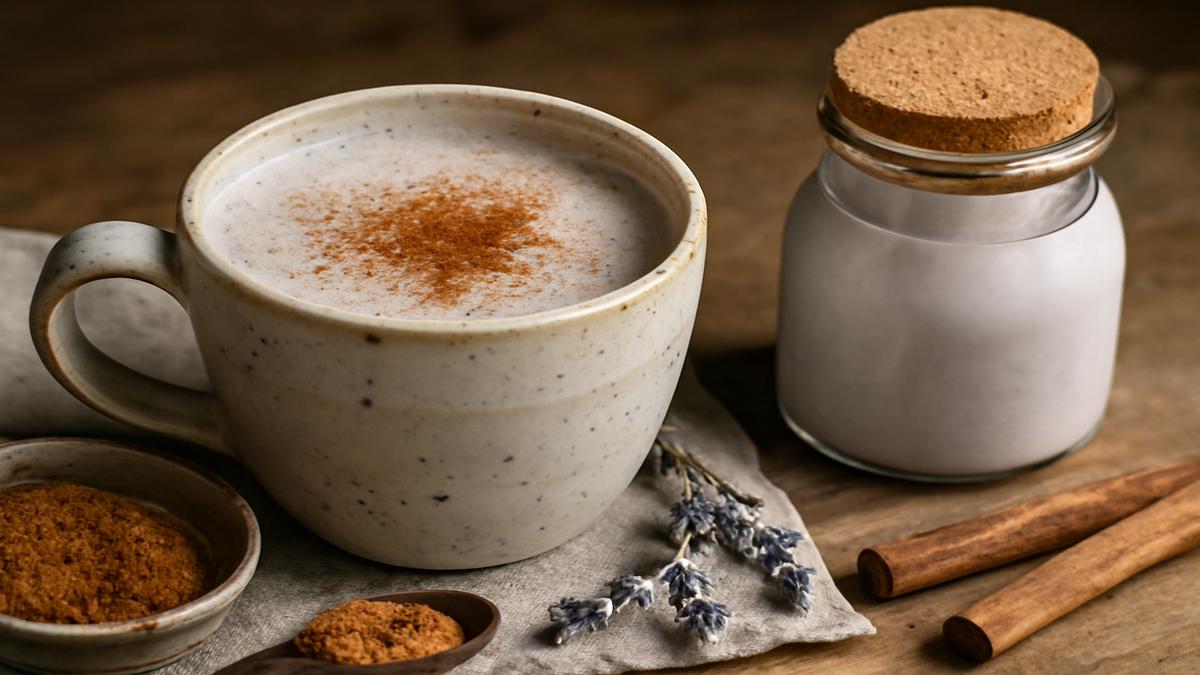
One evening, a friend texted me a photo that looked like it belonged in some dreamy, witchy cookbook: a mug of pale, fragrant milk glowing under lamplight, steam swirling like a tiny fog. “Moon milk,” the message said. “Knocks me out faster than sleeping pills. Try it.”
I rolled my eyes — a cup of warm milk, really? But the next night, standing barefoot in the kitchen with the windows open to the summer crickets, I gave in. I heated the milk slowly, added honey, spices, and a pinch of something I’d only ever seen in herbal shops. The scent rose up — floral, earthy, comforting in a way I couldn’t name. Ten sips in, the world felt softer at the edges. By the time I crawled into bed, it wasn’t a fight anymore. My body knew: sleep was coming, and it would be deep.
What Exactly Is “Moon Milk,” Anyway?
Moon milk sounds like something whispered around campfires: part folk magic, part lullaby. In reality, it’s a warm, spiced milk drink with roots tangled in centuries of herbal and Ayurvedic traditions, gently updated for our insomnia–ridden age. Think of it as a small, nightly ritual disguised as a comforting beverage — and also, quietly, a plant–powered sleep aid.
The basic idea is simple: you combine warm milk (dairy or plant–based), natural sweetener, and a blend of herbs and spices known for their calming, sedative, or stress–soothing properties. You drink it about 30 to 60 minutes before bed, and, if you get the mix right, it can ease you into sleep in a way that feels less like being knocked out and more like being gently led away from the noise of your day.
Sleeping pills hit like a hammer. They shut things off. Moon milk, when you tune it to your own nervous system, feels more like a dimmer switch. Your mental brightness fades slowly, your thoughts grow quieter, and your muscles, held tight all day like fists, finally start to unfurl.
There’s something else going on here, too — something our bodies remember even if we’ve stopped paying attention: warmth, sweetness, scent, repetition. A nightly cup signals to your nervous system that the day is over. It’s the adult version of being tucked in with a story, a soft light, and someone humming quietly in the next room.
The Knockout Recipe: A Sleepier Spin on a Classic Comfort
This particular moon milk recipe isn’t just pretty to look at — it’s stacked with ingredients that, together, can make your eyelids heavier than any over–the–counter sleep aid. Let’s build it layer by layer, the way you might layer a blanket on a cool night.
First, the milk. You can use whole cow’s milk if it agrees with you — the natural fats make it feel especially luxurious, and the tryptophan content doesn’t hurt. For a vegan version, unsweetened almond milk or oat milk are excellent; both warm well and carry spices beautifully.
Next comes the quiet alchemy: gentle herbs, soft spices, a little fat, and a little sweetness. Here’s the core formula you can start with, then adjust to taste and sensitivity.
| Ingredient | Amount (1 serving) | Why it helps you sleep |
|---|---|---|
| Milk (dairy, oat, or almond) | 1 cup (240 ml) | Warmth + tryptophan; soothing, comforting base |
| Ashwagandha powder * | 1/4 to 1/2 tsp | Adaptogen that calms stress and can lower nighttime anxiety |
| Ground cinnamon | 1/4 tsp | Warm, sweet spice that steadies blood sugar and feels cozy |
| Ground nutmeg | A pinch (1/16 tsp) | Traditional sedative spice in tiny doses |
| Cardamom (ground or lightly crushed pods) | A pinch or 1 pod | Floral note that relaxes and aids digestion |
| Raw honey or maple syrup | 1–2 tsp, to taste | Gentle sweetness helps tryptophan reach the brain |
| Coconut oil or ghee (optional) | 1/2 tsp | Healthy fat that makes it richer and more satiating |
*Always talk to a healthcare provider before using ashwagandha if you’re pregnant, breastfeeding, taking medications, or have thyroid or autoimmune conditions.
The process is almost embarrassingly simple. Pour the milk into a small saucepan. Whisk in the ashwagandha, cinnamon, nutmeg, and cardamom. Warm over low to medium heat until it’s steaming but not boiling, stirring slowly — there’s something oddly meditative about watching the surface ripple and thicken. Take it off the burner, stir in your honey or maple syrup and that small spoon of ghee or coconut oil if you’re using it. Taste. Adjust. Pour into your favorite heavy mug, the one that fills your hands just right. Then do something radical: go sit somewhere quiet and drink it like it’s the only thing on your to–do list.
The Science Hiding Inside the Steam
It’s tempting to think moon milk works only because it’s cozy. And yes, the comfort factor is powerful on its own — the brain loves patterns, ritual, and predictable moments of safety. But quite a few of the ingredients carry their own sleepy superpowers, smuggled inside their fragrance and flavor.
Warm milk has long been associated with sleep, and not just in children’s bedtime stories. It contains tryptophan, an amino acid your body uses to make serotonin, which in turn becomes melatonin — the hormone that tells your body when it’s time to sleep. While the tryptophan content in a single cup isn’t miraculous, pair it with a tiny bit of sugar (like honey), and you support its pathway into the brain.
Then there’s ashwagandha, a scruffy little root that’s earned a star on the wellness stage for its role as an adaptogen — a plant that seems to help the body handle stress more evenly. Some modern studies suggest it can improve sleep quality and reduce anxiety, especially in people who feel constantly wound–up. Instead of flipping an off–switch, it’s like quietly turning down the volume on your body’s alarm bells.
Nutmeg, in very small amounts, carries compounds that are mildly sedative. Too much is a bad idea — it can cause unpleasant side effects — but that shy, dusty pinch you add to moon milk is enough to lend a soft, drowsy undertone. Cinnamon and cardamom, meanwhile, support digestion and warmth. If you’ve ever tried falling asleep with a bloated, unsettled stomach, you know how quickly that can sabotage even the best intentions.
And underneath all the biochemistry, there’s this quieter truth: when you pause your evening to stand over a pot, measure spices, watch the milk steam, stir in a slow figure–eight, you are gently informing your body that the era of doing has ended. The day has begun the long exhale into night.
Building a Moonlit Ritual: How to Make It Work Better Than Pills
Here’s the thing: if you slam this drink back in three gulps while doom–scrolling under fluorescent lights, it probably won’t save you. Moon milk is most potent when it’s woven into a small, repeatable ritual that tells your nervous system, “We’re safe now. You can stand down.”
Imagine this as a gentle script you repeat most nights, especially when sleep has felt slippery:
- About an hour before bed, dim the lights. Let the room shift toward evening mode.
- Put your phone in another room, on a shelf, in a drawer — anywhere but your hand.
- Head to the kitchen in your socks or bare feet. Notice the coolness of the floor, the hush in the house.
- Make your moon milk slowly. Inhale the first bloom of cinnamon as it hits warm milk. Listen for the faint clink of your spoon against the pot.
- When it’s ready, take it somewhere soft: the corner of the couch, your favorite chair, the side of your bed.
- Drink it in small sips while you read something gentle, or simply stare out at the night sky if you can see it.
That repetition is not a luxury or an aesthetic; it’s a language your body understands. Over time, the scent alone — that warm cloud of milk, honey, and spice — can become enough to trigger the cascade: shoulders dropping, breath deepening, thoughts unwinding their grip.
This is what separates it from sleeping pills. Pills don’t ask you to participate. They simply impose sleep. Moon milk offers an invitation: come home to your body, one small, steaming cup at a time.
Customizing Your Cup: Gentle Twists for Different Kinds of Sleeplessness
No two nights are exactly the same, and neither are two insomniacs. Some of us can’t fall asleep because our minds are sprinting. Others wake at 3 a.m., marooned in a strange, lonely calm. One of the quiet pleasures of moon milk is how easily it can be tuned to your particular kind of restlessness.
If your mind races as soon as your head hits the pillow, keep the ashwagandha but make the overall flavor profile softer and more floral. Swap nutmeg for a tiny splash of vanilla and a few dried lavender buds (strain them out before drinking). Lavender has a long reputation for coaxing anxiety down from its ledge; in steam form, it whispers straight into the limbic system, the emotional center of the brain.
If you tend to wake in the middle of the night with a rumbling stomach or a sense of unease, anchor your moon milk a bit more firmly. Oat milk works especially well here, with its natural creaminess. Keep the cinnamon and cardamom, and consider adding a thin slice of fresh ginger while it warms, straining it before drinking. Ginger isn’t sedative, but it works like a tiny, internal fireplace, settling the stomach and reassuring the body that all systems are okay.
If sugar makes your sleep wonky, leave out the honey and sweeten instead with a couple of crushed dates heated in the milk and then strained, or simply train your tastebuds toward the gentle sweetness of the spices themselves. The goal is comfort, not a dessert disguised as medicine.
You can also play with color and mood. A pinch of turmeric and a twist of black pepper turns your moon milk a golden, sunrise hue — strangely fitting for a drink taken at night, like a reminder that morning is already on its way and you don’t have to drag it closer by worrying. Turmeric’s anti–inflammatory properties won’t knock you out, but they may help your body repair more easily during rest.
Safety, Boundaries, and Knowing When to Ask for Help
For all its sensory magic, moon milk is still, at heart, a cup of warm, spiced milk. It’s not a pharmaceutical, and it’s not a cure–all. If your insomnia has teeth — if it’s chronic, severe, or tangled up with depression, chronic pain, trauma, or other conditions — a bedtime drink, no matter how lovingly made, can only go so far. It can be a support, not a substitute for real medical care.
A few practical boundaries keep this ritual firmly in the realm of “helpful” rather than “complicated”:
- If you’re pregnant, breastfeeding, on medications, or living with hormonal, thyroid, or autoimmune disorders, talk to a healthcare provider before using herbs like ashwagandha regularly.
- Use only a small pinch of nutmeg. More is not better. High doses can cause nausea, dizziness, and other serious side effects.
- If you’re lactose–intolerant or sensitive to dairy, choose a plant milk that feels good in your body. You want your sleep drink to soothe you, not send you into a digestive spiral.
- Give your body at least a couple of weeks to respond. Many people feel a difference quickly, but the real magic often comes from consistency.
If, after all of that, you’re still staring down the dark hours more often than not, let moon milk stay in your life as a comfort — and also reach out for help. Sometimes the bravest, kindest thing we do for ourselves is admit that our sleep, our minds, our aching hearts need more than home remedies and quiet hope.
When the Night Finally Softens
The first time the recipe really worked, I almost missed it. I’d made my cup just after ten, steam rising in small swirls as the house quieted around me. Outside, the moon was swollen and bright, hanging just above the neighbor’s roofline like a watchful eye. I sat in my usual chair, fingers wrapped around the mug, and listened to the low hum of the refrigerator and the distant whoosh of a passing car.
The milk tasted like a memory I couldn’t quite place — something from childhood, maybe, or from a life where bedtime wasn’t a battle but a promise. Halfway through the cup, my shoulders dropped. Three–quarters of the way in, my jaw unclenched, my thoughts stopped arranging themselves into lists.
By the time the mug was empty, the world had gone gentle. No cinematic blackout, no sudden switch — just a thick, heavy calm that made walking to bed feel like wading through warm water. I remember lying down. I don’t remember the moment sleep took me.
When I woke, it was to pale light edging around the curtains and the quiet shock of realizing: I hadn’t seen the clock once all night. No 1:47 a.m. bargaining with the universe, no 3:12 a.m. anger, no 4:36 a.m. resignation. Just a long, unbroken drift through the dark and back again.
That’s what this so–called “moon milk that knocks you out faster than sleeping pills” really offers: not a blunt force blow to consciousness, but a bridge — from the bright, jangling overwhelm of the day to the cool, luminous quiet of night. A way to remember that your body, despite everything, still knows how to rest, if you give it warmth and time and a little plant–based encouragement.
Some nights it will work like a charm; others, it may simply make the hours softer around the edges. Either way, that small act — standing over a pot, stirring the same slow circle, lifting the mug to your lips while the moon climbs higher outside — is its own kind of medicine. A nightly love letter to the part of you that is so very tired, and so deeply deserving of real rest.
FAQ: Moon Milk & Better Sleep
How long before bed should I drink moon milk?
Most people do best sipping it 30–60 minutes before bedtime. That gives your body time to respond to the warmth, herbs, and ritual without feeling rushed.
Can I drink moon milk every night?
Yes, many people enjoy it nightly as part of a sleep routine. If you’re using ashwagandha or other herbs regularly, it’s wise to check in with a healthcare provider, especially if you have existing health conditions.
Will moon milk make me groggy in the morning?
Typically, no. Unlike many sleeping pills, moon milk tends to support a more natural sleep cycle. If you feel groggy, try a smaller serving or reduce sedative spices like nutmeg.
Can kids drink moon milk?
Children can enjoy a simple version made with warm milk, a little honey (for kids over one year old), cinnamon, and vanilla. Avoid herbs like ashwagandha and keep nutmeg extremely light or omit it for young children. When in doubt, ask a pediatrician.
What if I don’t like the taste of ashwagandha?
Ashwagandha can taste slightly bitter and earthy. Start with 1/8 teaspoon, blend it well, and lean on cinnamon, vanilla, or a touch of honey to round out the flavor. You can also skip it and rely on the warmth, spices, and ritual alone.
Is moon milk safe with my medications?
It depends. While warm spiced milk is generally gentle, herbs like ashwagandha can interact with certain medications or conditions. If you’re on prescriptions or managing chronic health issues, talk to your healthcare provider before adding herbal ingredients.
How long does it take to notice a difference in my sleep?
Some people feel calmer the very first night. For others, the big shift comes after a week or two of consistent use, as the ritual and ingredients work together. Think of it as training your body to remember how to wind down again, one quiet cup at a time.

Hello, I’m Mathew, and I write articles about useful Home Tricks: simple solutions, saving time and useful for every day.