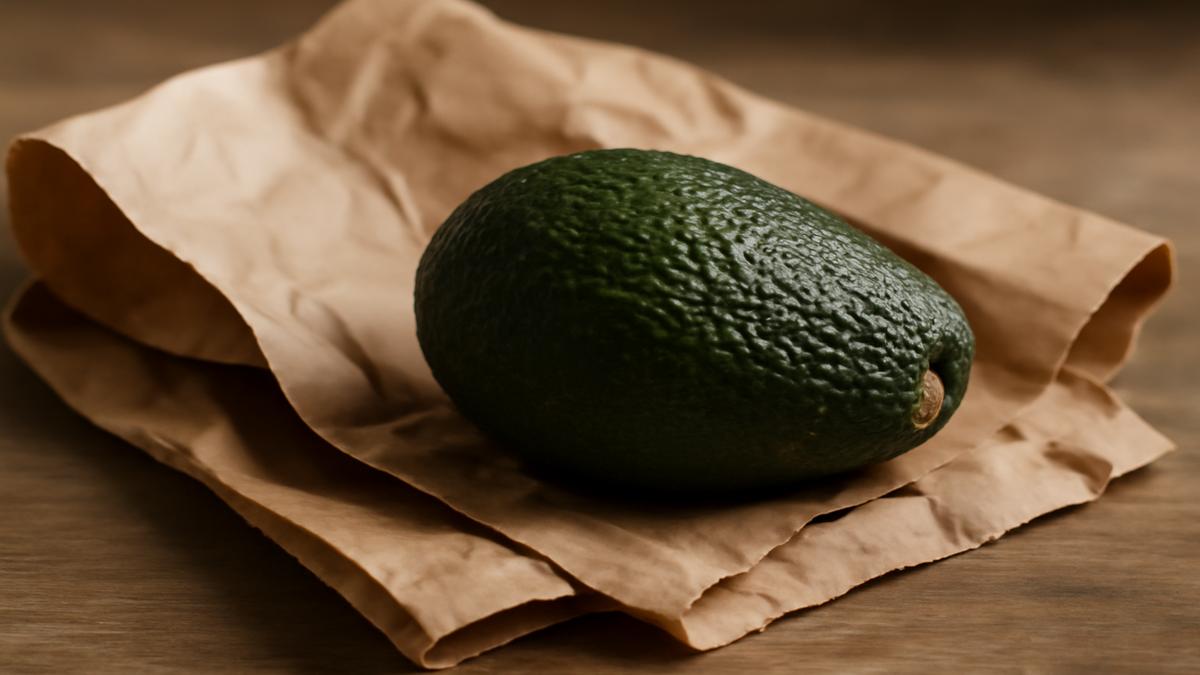
The avocado sits there on your counter like a small green promise. You bought it hard as a stone, imagining soft slices on toast, creamy cubes in salad, maybe guacamole for that gathering on Saturday. Everyone knows the trick, you tell yourself. Just pop it in a paper bag, fold the top, and wait. Two days, maybe three, and it’ll be perfect. Except this one isn’t. It goes from rock-hard to weirdly rubbery, then blotchy, then brown near the stem while the rest is still stubbornly firm. You open it anyway, and the knife resists, squeaks even, before hitting a heart of pale, tasteless flesh. What went wrong? You did the paper bag thing, didn’t you?
The Myth of the Magic Paper Bag
Somewhere along the way, the paper bag became a kind of kitchen folklore—handed down through recipes, food blogs, and innocent phone calls from well-meaning relatives. “Just toss it in a bag with a banana,” they say, as if this is the culinary equivalent of a cheat code. The promise is seductive: a shortcut through the slow, quiet mystery of ripening.
And there is some truth in it. Fruits like avocados, bananas, apples, and pears release ethylene gas, a plant hormone that helps trigger ripening. A paper bag traps that gas around the fruit, nudging it along a little faster, nudging those cells to soften and sweeten. In theory, it’s clever. In practice, it’s often where things go sideways.
The trouble begins when a simple, sometimes-useful trick turns into a blunt rule: All hard avocados belong in a paper bag. Every last one. No questions asked. No matter how green, no matter how long they’ve been off the tree or what kind of journey they took to get to your supermarket. We skip the quiet diagnostics: How does it feel? How does it look? How old might it be? Instead, we reach for the bag like a reflex.
That reflex turns something alive and gradual into a rushed, clumsy process. The avocado stops being a fruit and becomes a project—and that’s when it begins to fail you.
What’s Actually Going On Inside That Tough Green Shell
Imagine, for a moment, the avocado as a living time capsule. When it’s picked, it’s not ripe yet—avocados famously ripen after harvest. Inside, its cells are dense and organized, the fats still firm, the starches and sugars still shifting and rearranging themselves in slow motion. The seed rests at the center like a sleeping ember that never quite wakes.
Ripening is not just getting soft; it’s a cascade. Enzymes wake up, breaking down cell walls and turning rigid structures into supple, buttery flesh. Starches convert into sugars. Aromas build. Color shifts just enough. Texture becomes something the knife can enter with a gentle sigh, not a crunch.
Ethylene gas—yes, that thing the paper bag is supposed to trap—plays a central role in this. But it’s not a magic on/off switch, and more of it is not always better. Ripening also depends on temperature, time, the fruit’s maturity when it was harvested, and even how it was handled on its journey to your kitchen. Picture it like an orchestra: ethylene is just the conductor, not every instrument.
When you tuck that tight, rock-hard avocado into a bag, you’re effectively turning up the volume on the conductor while ignoring whether the musicians are even in their seats yet. If the fruit is too immature or has been stored too cold, that orchestra is out of tune, groggy, or frankly not ready to play. Instead of graceful ripening, you get a messy rush: patches of soft next to streaks of hard, brown fibers, maybe dark lines near the skin while the middle refuses to cooperate.
The Paper Bag Mistake Everyone Makes
The mistake isn’t that people use a paper bag. It’s when they use it blindly.
Here’s what usually happens. You come home with a bag of groceries and a plan. You bought your avocados early—gold star for thinking ahead. They’re firm, maybe a little too glossy, and you’ve heard it takes a few days, so you reach for the paper bag. You add a banana or an apple because somewhere online you read that it “speeds things up.” You fold the top and set it on the counter. Then you wait, and you don’t check. Because the bag has become a guarantee, not a tool.
Inside that folded bag, time doesn’t just pass; it compounds. Ethylene builds up. Temperature might rise a bit, especially if the bag sits near the stove or in a sunlit corner. Moisture from the fruit condenses just enough to create a slightly humid microclimate. It feels cozy and efficient, like a tiny ripening greenhouse.
But avocados are not assembly-line products; they’re individuals with their own histories. One might have been picked on the early side; another may have spent too long in cold storage. Under the same sealed conditions, they don’t ripen in harmony. One overripens at the stem end, where ethylene tends to accumulate. Another breaks down internally before the outside gives you any warning. You open them at “day three,” because that’s what everyone says, and find one mottled and stringy, another chalky and flavorless.
The real paper bag mistake is thinking it’s a schedule, not a conversation. You put the avocado in and stop listening to what it’s telling you through its skin, its scent, and its feel. You assume more trapped gas means better ripening, when in reality it often just means more uneven ripening.
The Quiet Language of a Ripening Avocado
There’s a slower, more grounded way to think about this. Instead of seeing your avocado as something to hurry, imagine it as something to watch. A small, daily ritual. Touch it. Look at it. Notice it changing.
When you first bring it home, feel the firmness from top to bottom. Really notice it, even if it seems silly. Press very gently near the stem—this is where softness will start showing up first. Take in its color: is it bright, almost reflective green, or deeper, more matte, with hints of dark emerald or even purplish tones? Observe that little nub of stem at the top—is it tightly sealed, or does it look slightly loosened?
Over the next day or two, repeat the ritual. A perfect avocado doesn’t just surrender all at once; it yields reluctantly, then graciously. The skin may darken a bit, but color alone is not enough. The most reliable sign is the feel: a soft give like pressing on the palm of your hand beneath your thumb, not the mush of a bruise and not the stiffness of a knuckle.
Smell is subtler, but if you lean in close near the stem, a ripe avocado sometimes gives off a faint, nutty scent—nothing sharp or sour. If it smells strong, almost vinegary or oddly sweet, it’s veering toward overripe.
This, more than any hack or bag or neighbor’s advice, is the heart of ripening: simple, repeated attention. An avocado will tell you where it’s at; the question is whether you’re paying attention long enough to hear it.
When the Paper Bag Helps—and When It Hurts
So should you ditch the paper bag forever? Not necessarily. It’s not the villain; it’s a tool that needs limits.
Used thoughtfully, a paper bag can help if your avocado is already on its way—slightly firm, not rock-hard, with a duller skin and just the faintest give under your fingers. In that state, it’s like giving a gentle nudge to something that’s already moving. A day or so in a loosely closed bag with a banana can shave off some time without forcing the fruit into chaos.
Where things go wrong is when you treat the bag as a universal solution:
- Putting very immature, hard, shiny avocados straight into a bag.
- Adding too many ethylene-heavy fruits (lots of bananas or apples).
- Leaving the bag sealed and untouched for days without checking.
- Placing the bag in a hot spot—next to the oven, under direct sunlight.
In those conditions, the avocado is pushed to soften before its internal chemistry is ready. The result? A body that collapses while the flavor lags behind, or a dark, stringy interior masked by a still-decent exterior.
Sometimes, the best move is no bag at all. A cool corner of your kitchen counter, away from heat and sun, is often the most respectful place to let an avocado find its way. Touch it daily; when it begins to soften, you can choose: let it finish at room temperature or, if it’s nearly there and you’re not ready for it yet, move it to the fridge to slow the process.
A Simple Comparison: Bag vs. No Bag
To see how much this small choice can matter, consider this quick comparison. These are general time frames and can shift with temperature and variety, but they show the pattern:
| Method | Starting Condition | Approx. Time to Ripen | Common Outcome |
|---|---|---|---|
| Counter, no bag | Very firm, bright, glossy green | 4–7 days | Slow, even ripening; easier to monitor |
| Paper bag, loosely folded | Firm but slightly duller skin; barely any give | 2–4 days | Faster ripening; good if checked daily |
| Paper bag with banana or apple | Already starting to soften slightly | 1–3 days | Very fast; higher risk of overripening if ignored |
| Fridge storage | Just ripe (yields gently to pressure) | Lasts 2–4 more days | Ripening slows; texture and flavor hold longer |
The pattern is clear: the paper bag can be a useful accelerator, but the more you intensify the conditions, the more often the avocado crosses that fine line from “perfectly ripe” to “what happened to this?”
How to Actually Get the Avocado You’re Dreaming Of
The path to that dream avocado isn’t complicated, but it is more about presence than hacks. Think of it as a small practice in living at the pace of real things instead of the pace of shortcuts.
Here’s a gentle guide—less of a set of rules, more of a rhythm to follow:
- Choose with intention, not urgency. If you need an avocado today, buy one that already yields gently to pressure near the stem. If you’re shopping early in the week for the weekend, choose firmer ones with darker, matte skin and no deep blemishes.
- Start on the counter, not in a bag. Let every avocado spend at least a day or two simply resting at room temperature so you can get to know its baseline behavior. This alone teaches you a lot.
- Check once a day. A tiny ritual: press lightly with your thumb near the top; look at the color; notice any scent. This tells you more than any “3 days in a bag” advice ever will.
- Use the paper bag as a nudge, not a crutch. If, after a couple of days, your avocado is still too firm but clearly advancing—slightly duller, perhaps the faintest give—then and only then consider a bag. Fold it loosely. Add one banana or apple at most, and keep checking daily.
- Shift to the fridge at peak ripeness. When your avocado feels perfectly ripe but your plans change, slide it into the refrigerator. The cool temperature slows the process, giving you another two or three days of good eating.
Each of these steps revolves around one idea: stay in contact with the fruit. Don’t exile it to a paper cave and hope for the best.
The Deeper Cost of the Paper Bag Habit
There’s another layer to this, one that reaches beyond your kitchen counter. Every failed avocado has a story that began on a tree somewhere far away—branches reaching into bright skies, a farmer’s early morning rounds, soil, water, time. It’s easy to forget this when you’re staring at a brown, unusable mess on your cutting board, frustrated and hungry.
Over-ripened, under-ripened, and wasted avocados are not just personal disappointments; they’re part of a bigger pattern of waste. When we lean on crude shortcuts instead of curiosity, we end up throwing away not just money but effort, energy, and the quiet labor of people and ecosystems we’ll never meet.
Letting a fruit ripen thoughtfully is a small act of respect—for the plant that grew it, for the hands that picked it, and for your own time and attention. It’s slower, yes. But slowness is not the enemy of modern life we make it out to be. Sometimes, it’s the thing that brings us back to our senses.
So the next time you’re tempted to toss a rock-hard avocado into a paper bag and forget about it, pause. Hold it in your palm. Feel its weight, its stubbornness, its potential. Ask it where it’s at, instead of telling it where to be. The best avocados, the ones that make you close your eyes when you taste them, are almost always the ones you watched and waited for—lightly, attentively, without hurrying them into someone else’s timeline.
Frequently Asked Questions
Why did my avocado turn brown inside even though it felt firm outside?
Internal browning often means the avocado was exposed to too much ethylene or too high a temperature after harvest. A tightly closed paper bag, especially with other fruits, can accelerate internal breakdown before the outside softens, so it feels firm but is already overripe inside.
Is it ever okay to use a paper bag to ripen avocados?
Yes—if the avocado is already slightly mature and starting to soften. In that case, a loosely folded paper bag can speed things up a bit. The key is to check the fruit every day and avoid adding too many ethylene-heavy fruits like bananas.
How can I tell if an avocado is ripe without cutting it?
Gently press near the stem with your thumb. A ripe avocado yields softly but doesn’t feel mushy. The skin is usually darker and more matte, and the small stem cap may loosen easily. There should be no strong or sour smell.
What should I do if my avocado is ripe but I’m not ready to use it?
Place it in the refrigerator. The cool temperature slows the ripening process and can keep a perfectly ripe avocado in good condition for about 2–4 more days.
Does putting avocados in the fridge when they’re still hard stop them from ripening?
It doesn’t stop ripening completely, but it can slow it to a crawl and sometimes affect texture and flavor. It’s better to let avocados start ripening at room temperature and only refrigerate them once they’re close to or at the ideal ripeness.

Hello, I’m Mathew, and I write articles about useful Home Tricks: simple solutions, saving time and useful for every day.