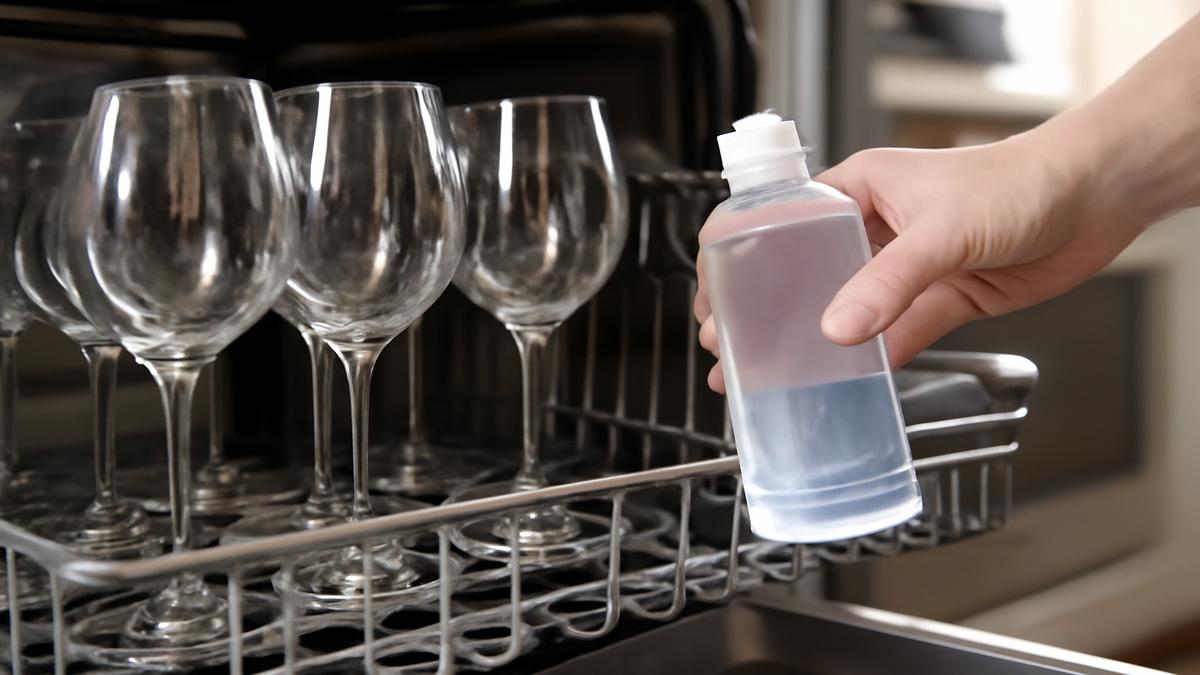
The first time I noticed it, the afternoon light had slipped in low through the kitchen window, that soft golden kind that makes everything look gentler than it really is. I opened the dishwasher, ready for the small, daily satisfaction of stacking away clean dishes, and instead felt my shoulders drop. The wine glasses—those tall, thin ones we’d bought for “special occasions”—looked tired. Not dirty, exactly. Just…clouded. The rims were etched with a ghostly haze, the bowls dulled like someone had breathed on them and walked away. The everyday tumblers weren’t much better: faint spots, dull reflections, that stubborn film that never quite rinses off. The machine had done its job. But it hadn’t done justice.
When the Sparkle Quietly Disappears
If you’ve ever pulled a glass from the dishwasher and held it against the light, you probably know that small, unsettling disappointment. It’s not dramatic. No one gasps. Your guests won’t stage an intervention for your cloudy glasses. But there’s a slow erosion of joy in it—a tiny betrayal of that magical promise every dishwasher whispers when you press Start: “Relax. I’ve got this.”
Over time, the change creeps in. At first, it’s just one or two glasses looking a bit off after a big dinner. Maybe you blame the cycle, or the cheap wine, or the fact that someone stacked things too close together. The next week, you notice the good crystal is beginning to look like the everyday stuff. Then one morning, half-awake and reaching for a simple water glass, you see it: dull, patchy, older than it has any right to look.
Most people shrug, live with it, or quietly replace entire cupboards of glassware every few years, hoping the next set will somehow resist the invisible forces at work in the rinse cycle. Others go down the rabbit hole: changing detergents, testing every “eco,” “intense,” and “glass care” setting, running empty cycles, fiddling with the salt reservoir, deep-cleaning the filter, even hand-polishing individual glasses with a microfiber cloth like tiny, transparent mirrors. Some give up and hand-wash everything that matters, leaving the dishwasher for the workhorse items—plates, cutlery, kids’ plastic bowls—and silently resenting it for not being the magic box it advertised itself to be.
But what if the solution isn’t a new machine, or a more expensive detergent, or treating your glasses like fragile relics from an ancient temple? What if the thing that keeps your glasses sparkling, cycle after cycle, doesn’t come in a gleaming bottle with the word “Rinse Aid” on it at all?
The Secret Guest in the Rinse Cycle
This story really begins the day a neighbor stopped by with a mason jar and a half–amused, half–mischievous expression. “You’re going to think this is ridiculous,” she said, setting the jar on my counter. Clear liquid, faintly sharp smell, something between a salad dressing and a science experiment. “But this,” she tapped the glass, “is why my glasses still look like they did when I bought them. Add it to your rinse cycle. Just once. See what happens.”
Inside the jar was something absurdly ordinary: plain white vinegar. The same stuff that sits, ignored, in the back of kitchen cupboards, called into duty only for pickles, forgotten recipes, and the occasional sink deodorizing session. The idea seemed almost insulting in its simplicity. Vinegar? In the dishwasher? I pictured frothy chaos, explosive bubbles, the machine sputtering and grinding to a halt in a cloud of acidic steam. But she shrugged. “We’ve been doing it for years. Just a small amount. Your glasses will shine like they’re auditioning for a commercial.”
That night, with a weird, almost conspiratorial thrill, I poured a modest measure into the rinse aid compartment and topped off a small bowl on the top rack for good measure. I loaded the usual assortment: two wine glasses, some cloudy tumblers, a scattering of old chipped mugs. Closed the door. Pressed Start.
The next morning, the moment I opened the dishwasher felt—absurdly—like opening a gift. Warm vapor rolled out, carrying the faint tang of whatever the detergent claimed to smell like: lemon, or ocean breeze, or “Arctic Fresh” (whatever that is). I reached for a glass, still hot, and held it to the window.
The haze was gone.
Not less obvious. Not slightly improved. Gone. The glass had that almost shocking, wet kind of clarity, the sort that seems to pull light into its walls and send it back out in tiny, clean flashes. It looked not just clean, but new—like something slid freshly out of its packaging and into real life. The rim caught the low morning sun and lit up like a strand of icy thread. My neighbor had said I’d notice a difference. She hadn’t warned me about the subtle sense of awe.
The Quiet Science Behind the Shine
Vinegar’s magic isn’t actually magic. It’s chemistry, wearing work boots. Most of the cloudy film on glasses is a mixture of mineral deposits and detergent residue. Hard water leaves behind microscopic mineral crystals—calcium, magnesium, and their pesky friends—that cling to every surface they meet. Over time, they build up, layer upon layer, until your once-sparkling glass looks like it’s been breathing dusty air.
Detergents, especially the powerful, modern “all-in-one” kind, are designed to cut grease and grime, not to play nicely with stubborn minerals. That’s where rinse aids come in—they help water sheet off rather than bead up, so fewer spots are left behind. But if your water is particularly hard, or your glasses have already become slightly etched or filmed, even the best commercial rinse aid can feel like it’s arriving late to the party.
Vinegar is, at heart, diluted acetic acid. Gentle, but effective. It softens that mineral build-up, breaks it apart, and helps wash it away before it has the chance to settle into a permanent dullness. In the rinse cycle—when the machine is just swishing away the last traces of detergent and debris—vinegar steps in quietly, turning what would have been a standard rinse into a kind of micro spa treatment for your glassware.
How to Invite Vinegar Into Your Dishwasher (Without Drama)
There’s something reverent about adding a simple, humble ingredient to a highly engineered machine and watching it out-perform the glossy, brand-name bottles. But if you’re going to introduce vinegar to your dishwasher, a bit of care goes a long way. No drama, no damage—just more sparkle, every time.
| Step | What To Do | Why It Matters |
|---|---|---|
| 1 | Use plain white distilled vinegar, not flavored or colored types. | Avoid sugar, colorants, and residues that can actually dirty your machine. |
| 2 | Pour 1/4–1/2 cup into a dishwasher-safe bowl or cup on the top rack. | This lets vinegar slowly release during the rinse, instead of washing away at once. |
| 3 | Run your regular cycle with your usual detergent. | You’re not replacing detergent—vinegar is a rinse ally, not a lone hero. |
| 4 | Open the door when the cycle finishes and let steam escape. | Quick venting helps prevent new condensation spots from forming. |
| 5 | Repeat every few loads, or whenever glasses start to lose their edge. | Keeps mineral buildup from making a comeback. |
Some people pour vinegar directly into the rinse aid compartment. You can do that, cautiously, if your manufacturer doesn’t warn against it—but the small-bowl-on-the-top-rack method is gentler. It doesn’t sit inside seals or plastic parts for long stretches, and it still delivers plenty of power during those final, crucial minutes when the water is hottest and the glass is most ready to release what it’s holding onto.
If you listen closely when the rinse starts, you can almost imagine it—the soft swirl of hot water, the faint, invisible sigh of minerals finally letting go, the glass clearing itself the way a sky does after rain.
Not Just Cleaner — Actually Younger
There’s another part of this story that’s easy to miss: the difference between cleaning and preserving. Once minerals have etched tiny scars into glass, they don’t truly vanish. That frosty, never-quite-clear look that some glasses develop after years of washing? That’s not dirt—it’s damage. Microscopic pitting and roughness that no amount of elbow grease will buff away.
Vinegar can’t reverse that kind of etching. But what it can do, beautifully, is stall its arrival. By stripping away minerals before they have the chance to harden and bite into the surface, it keeps your glasses closer to the condition they were in when you first brought them home. Less grit scraping against them, fewer harsh deposits, less invisible abrasion.
So when people say, half-jokingly, “My glasses look brand new again,” what they’re really noticing is an absence: the absence of all the tiny, quiet insults that dishwashers and hard water throw at glass over time. Vinegar, added at just the right moment, acts almost like a shield. Not dramatic. Not loud. Just there, doing its quiet work in the steam and heat.
A Tiny Ritual With a Big Emotional Payoff
It’s easy to dismiss all this as a small domestic trick—a clever hack for neat-freaks and detail lovers. But there’s something deeper hiding inside the habit of making glasses sparkle again. It’s about how small upgrades to the everyday can shift how you feel in a room, at a table, in your own home.
Think of those long, slow Sunday lunches with friends; sunlight lying flat across the table, a bottle of wine breathing itself open. Someone reaches for a glass. It’s clear, flawless, catching light along the rim as they pour. It makes the color of the drink more vivid, the moment itself somehow sharper. Nobody thinks, “Ah, the rinse cycle is clearly optimized.” They just feel it: the subtle sense that care was taken, that the moment is worthy of attention.
Or the late-night glass of water, taken half-awake in a kitchen that feels like another world. You flick on a single overhead light. The glass you reach for doesn’t fight the light with streaks and fog—it meets it with a clean, soft gleam. There’s a quiet dignity in that, a small reassurance that even on the most ordinary nights, something is being tended to.
We are surrounded by objects that do their jobs without beauty. A clear glass isn’t necessary for hydration. A streak-free surface won’t fix a hard day. But when the everyday objects around you show signs of care, they speak to something else: that life isn’t just about getting through the list, but about how the list feels while you’re doing it.
Listening to Your Dishwasher’s Stories
Every machine in a home slowly collects stories. The dishwasher knows every rushed family breakfast, every quiet solo dinner, every celebration with too many dessert plates to count. But it also keeps a chemical history—how hard the water runs in your city, how generous you are with detergent, how often you ask it to handle greasy roasts versus delicate crystal.
If you’ve ever opened it mid-cycle, you’ve seen its private weather system: clouds of steam, beads of water traveling at speed, the odd fork clattering loose, a forgotten plastic lid drifting like a lost boat. In that busy microclimate, vinegar becomes a kind of invisible weather shift—softening the rain, clearing the air.
Run your hand along the inside of the door after a few vinegar-assisted cycles, and you might notice it, too: the faint slickness is gone, a clean, even feel replacing it. The machine breathes easier. The heating element looks less burdened by chalky buildup. Your dishwasher, in some small way, is more itself again—able to do what it was designed to do without constantly wrestling the ghosts of minerals past.
Making It a Habit, Not a One-Off Miracle
The first time you add vinegar to the rinse cycle, there’s a little bit of magic. The “before and after” is dramatic enough to feel like a trick. But the real power of this tiny ritual lies in repetition. Slip it into your rhythm of cleaning the kitchen the way you refill dish soap or wipe down the stove. Not every time, but often enough that your glasses never cross that invisible threshold from “slightly off” to “permanently dulled.”
Maybe for you, it becomes a once-a-week thing: Sunday evenings, as the last plates from the weekend shuffle into the racks. Or perhaps you save it for the “good load”—the one after guests, when the champagne flutes and long-stemmed glasses and favorite mugs jostle together on the top rack, waiting their turn in the hot, swirling dark.
There’s something deeply satisfying about knowing that this little effort isn’t complicated, expensive, or time-consuming. You’re not learning a new skill, not overhauling a routine, not buying a specialized product bottled to look smarter than it is. You’re reaching for an old staple—something your grandmother might have kept under the sink—and giving it a new place in the order of the day.
And each time you open that dishwasher after a vinegar-assisted rinse, you’re rewarded not just with clean dishes, but with a kind of quiet, visual proof: you didn’t settle. You nudged the ordinary a bit closer to beautiful.
Frequently Asked Questions
Can I use vinegar in every single rinse cycle?
You can, but it’s usually not necessary. Using vinegar once every few loads, or whenever you notice glasses starting to look dull, is often enough. If your water is very hard, you might use it more frequently, but aim for balance so you’re not bathing your machine’s rubber and plastic parts in acid constantly.
Will vinegar damage my dishwasher?
Used in small amounts—a quarter to half a cup in a bowl on the top rack—vinegar is generally safe. Avoid filling the entire rinse aid compartment with strong vinegar on a permanent basis, especially if your manufacturer warns against acidic additives. Occasional use in a container is a gentle option.
Is vinegar a replacement for rinse aid?
Not exactly. Vinegar helps with mineral deposits and film, while commercial rinse aids are designed to improve sheeting and drying. Some people happily use vinegar alone; others use both. If your glasses are chronically cloudy, vinegar is the missing piece that standard rinse aid can’t always provide by itself.
Can vinegar fix glasses that are already permanently etched?
No. If the glass surface is already damaged—microscopically rough, scratched, or frosted—vinegar can’t undo that. It can remove remaining mineral deposits and make etched glasses look cleaner, but it can’t restore true, factory-fresh clarity. That’s why starting early, before etching sets in, is so helpful.
Does it matter what kind of vinegar I use?
Yes. Use plain white distilled vinegar. Avoid apple cider, red wine, or balsamic vinegars—anything with color, sugar, or added flavor. Those can stain or leave unwanted residues in your dishwasher and on your dishes.
Will my dishes smell like vinegar afterward?
No, not if you use a modest amount. The hot water and full rinse cycle rinse away the sharp smell. When you open the door, you might catch the faintest ghost of it for a second, but your dried glasses and plates won’t carry any noticeable scent.
Can I use vinegar if I have delicate patterns or gold rims on my glasses?
For anything hand-painted, gold-rimmed, or marked “hand wash only,” it’s safest to keep those pieces out of the dishwasher altogether. Vinegar isn’t the main risk there—the heat and detergent are. For regular everyday glassware, simple patterns, and most modern pieces, vinegar in the rinse cycle is fine.

Hello, I’m Mathew, and I write articles about useful Home Tricks: simple solutions, saving time and useful for every day.