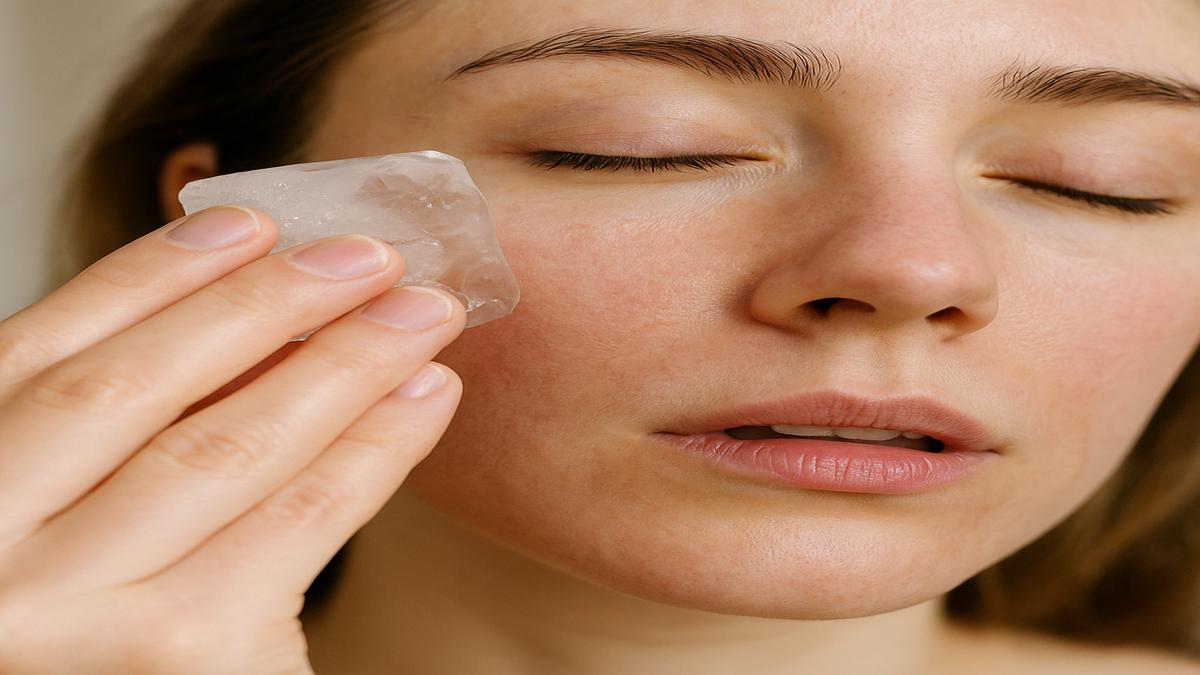
The first thing you notice is the cold. Not the polite chill of an air-conditioned room, but a sharp, clean cold that bites your skin and wakes up every nerve ending like a lightning bolt. It’s 7:02 a.m., you’ve slept badly, your reflection looks like it belongs to someone who cried through an entire red-eye flight, and there it is on the kitchen counter: a single ice cube, sweating quietly in a glass bowl. Nine minutes from now, if the rumors are true, your face will look less like “I binge-watched until 2 a.m.” and more like “I sleep eight hours, drink spring water, and have my life together.”
The Tiny Frosty Secret Behind Red-Carpet Faces
If you’ve ever scrolled past a red-carpet photo and thought, How do they all look so awake, so smooth, so… lifted? you’re not alone. There’s a quiet ritual happening in hotel rooms, trailers, and dressing rooms long before the flashbulbs go off. It doesn’t involve a $300 serum or a 14-step routine that requires a degree in chemistry. More often than not, it’s something pulled straight out of the minibar: ice.
Makeup artists whisper about it. Facialists recommend it in hushed, conspiratorial tones: the “ice cube facial.” It sounds almost too simple. Glide ice over your face for a few minutes, and puffiness retreats, pores look tighter, and your skin takes on that elusive, well-rested glow. Some celebrities reportedly do it every morning; others save it for emergencies—early call times, long flights, last-minute events.
There’s something disarming about the idea, isn’t there? In a world overflowing with high-tech beauty gadgets and ingredients with names you can’t pronounce, the secret weapon is the same thing clinking around in your water glass. Accessible, almost childishly simple, and yet—visually, undeniably—effective.
The Nine-Minute Ritual: How the Ice Cube Facial Actually Feels
Forget sterile instructions for a moment and step into the experience. Imagine: the house is quiet. The morning light is soft, not yet brutal. You wrap a single ice cube in a thin cotton cloth or paper towel—one layer, maybe two, just enough that the cube doesn’t cling too fiercely to your skin. Your sink is dotted with stray droplets, the mirror still slightly fogged from your shower.
You bring the wrapped cube to the center of your forehead. The first touch is shocking—cold that feels like a jolt. Your instinct is to pull away, but you don’t. You breathe for a beat, then begin slow, circular motion, drawing tiny rain circles across your skin. Within thirty seconds, your face feels awake in a way no coffee can replicate. Your temples tingle. Your eyes open a bit wider.
You trace the path down the bridge of your nose, around the curves beside your nostrils where shadows and redness like to gather. Over the apples of your cheeks, the cube glides more easily as the surface begins to melt. The cloth grows damp, the ice shrinks almost imperceptibly. You linger under the eyes, moving lightly, never pressing hard. Those little under-eye moons of puffiness—the ones that tell on you before you’ve said a word—begin to recede under the cold’s persuasion.
By the time you reach your jawline, three or four minutes have passed. The cool has moved from shocking to strangely soothing, like dipping your feet in a mountain stream. You frame your face with the ice: along the jaw, under the chin, a slow sweep up toward the ears where lymph fluid quietly pools after long nights. Your fingers are numb now, but your skin feels alive, flushed from the rush of blood returning after the cold.
The cube finally gives up its last sliver of solid form around the eight- or nine-minute mark. Your face is damp, slightly pink, more sculpted in the mirror. Not a different face—but your face with the volume turned back to “well-rested.”
The Science of Calm: Why Cold Changes Your Face So Quickly
Although it feels like a little magic trick, what happens during an ice cube facial is grounded in simple biology. Your skin, it turns out, is very responsive to temperature—in particular, to cold.
When you move ice over your face, the chilly surface causes your blood vessels to constrict, a reaction called vasoconstriction. This narrowing of the vessels does two major things you can actually see:
- It reduces puffiness: Less blood and fluid rush to the area temporarily, meaning that swollen under-eyes and sleepy cheeks look more refined.
- It tones down redness: Because the vessels are constricted, flushing and blotchiness often appear softer, especially around the nose and cheeks.
Then, as your skin warms back up afterward, the blood vessels gently dilate again. Fresh blood flows in, carrying oxygen and nutrients. This rebound effect can leave your face looking more radiant and awake, as if someone turned up the vibrancy filter one subtle notch.
Cold also has a mild numbing effect. It can soothe irritation from a breakout or calm down the sting after an overzealous exfoliation (though you should be cautious with very sensitive or compromised skin). By tightening the surface of your skin temporarily, ice gives the illusion of smaller pores—your actual pore size doesn’t change, but the surrounding tissue firms up, making them less noticeable.
That’s the secret behind why celebrities lean on it before makeup: smoother-looking, de-puffed skin is an easier canvas. Concealer creases less. Foundation sits flatter. Light catches the high points of the face just a little more cleanly.
How to Do an Ice Cube Facial (Without Hurting Your Skin)
If you’ve ever grabbed an ice cube straight from the freezer and held it to your skin for too long, you know it can feel almost burning-cold. The goal is to flirt with the edge of refreshing, not dive into frostbite territory. Here’s a simple, skin-kind way to try the nine-minute ritual at home:
- Cleanse your face first. Remove makeup, sunscreen, and oil so the cold can work on bare skin, and you’re not pushing residue around.
- Wrap the ice. Take one standard ice cube and wrap it in a thin, clean cloth or a single-layer paper towel. Never apply hard ice directly to your skin, especially not for prolonged periods.
- Move constantly. Glide the ice in gentle circles or upward strokes—forehead, cheeks, jawline, around (not into) the eye area. Don’t park the ice in one spot; keep it traveling.
- Time it right. Anywhere from 5 to 9 minutes is plenty. If your skin starts to feel painfully cold or overly numb, stop.
- Pat, don’t rub, to dry. Let your skin air-dry for a few seconds, or gently press with a soft towel. Then follow with a hydrating serum and moisturizer while your skin is still cool and slightly damp.
Everything about this ritual is adjustable. Sensitive skin might only tolerate two or three minutes. Oilier skin might love the full nine. Like any nature-inspired practice, it’s less about strict rules and more about listening to what your body tells you in real time.
Ice, But Make It Fancy: Variations Celebrities Swear By
Of course, this is Hollywood we’re talking about. Leave a simple trick in their hands long enough, and it will evolve. The basic ice cube might be the backbone, but there are whispers of custom trays, herbal infusions, and freezer rituals that sound like potion-brewing in an alpine spa.
Here are a few variations that stay within the “simple but elevated” lane:
| Ice Type | What’s In It | Why People Use It |
|---|---|---|
| Classic Water Ice | Plain filtered water | Most gentle, suitable for nearly all skin types, easy to make. |
| Green Tea Ice | Brewed and cooled green tea | Antioxidant boost; some find it helps with dullness and tired-looking skin. |
| Cucumber Ice | Blended cucumber juice with water | Extra soothing and refreshing, especially for puffy under-eyes. |
| Chamomile Ice | Cooled chamomile tea | Gentle option for easily irritated skin; a calming twist on the ritual. |
| Aloe Vera Ice | Diluted aloe gel and water | Popular after sun exposure; may feel soothing on hot, flushed skin. |
Some stylists fill silicone molds with cooled green tea, then pop them out before big shoots. Others swear by tiny cylindrical ice sticks for better control around the nose and eye contours. You might see jade or stainless-steel facial tools chilling in an ice bucket backstage, mimicking the effect without the drip.
The real point, though, is that the magic isn’t in exotic ingredients. It’s in the temperature. Whether your cube is infused with cucumber or just plain freezer frost, what your skin responds to, almost immediately, is the sudden drop in surface temperature and the way your circulation answers back.
Safety Notes: When to Skip or Soften the Cold
As enjoyable as this looks on TikTok or in a vanity trailer, not every face is a good candidate for a straight-up ice ritual. Some boundaries are kind, and wise, to keep.
- Extremely sensitive or reactive skin: If your face flushes bright red from a gentle breeze, go easy. Try cool—not ice-cold—water splashes or chilled (not frozen) tools instead.
- Conditions like rosacea: Sudden temperature shifts can aggravate flare-ups for some people. A dermatologist’s guidance is essential here.
- Broken skin or active eczema: Avoid direct cold exposure; the area needs calm and barrier repair, not stimulation.
- Time and pressure: More is not better. Pressing hard or staying in one spot for too long can irritate, not help.
Think of the ice cube facial like a wild mountain stream—you don’t stand in it unmoving for half an hour; you dip in, wake up, and step back out.
From Vanity Trailer to Bathroom Sink: Making It a Real-World Habit
Part of the charm of the ice cube facial is that it fits into actual human mornings, not just the curated schedules of people with personal chefs and on-call aestheticians. Nine minutes can feel luxurious or completely impossible depending on your day, but the ritual is flexible enough to shrink and stretch.
Some people turn it into a weekend treat—a slow Sunday practice with a cup of tea, a quiet playlist, and a promise to themselves to be gentle, just for those few minutes. Others slip it into the tight seams of a weekday: two or three minutes while coffee brews, a quick glide over under-eyes before a webcam meeting.
Here’s how to make it doable, not daunting:
- Freeze small cubes. Use mini ice trays; smaller cubes melt slower and feel more controlled on the face.
- Prepare your wrap. Keep a soft cloth in the bathroom so you’re not hunting for paper towels with a melting cube in your hand.
- Pair it with something you already do. Ice while your moisturizer sinks into your neck and chest, or while an audio message plays from a friend.
- Don’t chase perfection. Two thoughtful minutes are better than skipping it because you don’t have nine.
Eventually, this can stop feeling like “a hack” and start feeling like a micro-ritual: a simple daily nod to your own face, the one that meets the world long before your words do.
Layering Your Routine Around the Cold
There’s a quiet choreography in how products and temperature interact. Ice first, or serum first? Moisturizer before or after? A few guiding ideas:
- Start clean. Clean skin allows the cold to reach evenly, and you avoid trapping dirt or makeup.
- Ice, then lightweight hydration. Once you’ve finished icing and gently patted your face, apply a simple hydrating serum (like hyaluronic acid if your skin loves it), then moisturizer.
- Sunscreen last in the morning. After your skin has warmed back to normal and your moisturizer has settled, apply sunscreen before stepping out.
- Keep actives simple on icing days. If you’ve gone heavy on exfoliants or retinoids, think about dialing the ice back or skipping it so you don’t double up on stimulation.
Over time, you may notice that your “emergency” mornings—post-flight, post-cry, post-stress—feel more manageable. Instead of staring down a swollen reflection with resignation, you have something quiet and practical to reach for. Not a cure-all, not a miracle, but a tangible nudge in the direction of “I’m okay.”
The Psychology of a Cold Start: Why This Tiny Ritual Feels Bigger Than It Is
Beauty practices are rarely just about the surface. There’s a reason a nine-minute ice cube can feel like a reset for more than your face.
Cold is a pattern interrupt. It snaps you out of autopilot—the way a plunge into a cold lake instantly erases wandering thoughts. For a few minutes, there is only the shock, the sensation, the focus on breath. You can’t doom-scroll and ice your face properly at the same time. Your hands are occupied, your mirror is in front of you, your attention—if only temporarily—returns home to your own body.
That, perhaps, is the real quiet luxury behind this celebrity trick. The red-carpet effect isn’t just the de-puffed under-eye or the taut angle of a jawline. It’s the way a person looks when they’ve taken a few deliberate minutes to be with themselves before being seen by everyone else.
Standing at your own sink with a melting cube, you’re not so far from that trailer or hotel room. The world will come knocking either way. But in those chilled, tingling moments, you have claimed a boundary—a tiny, frosty circle of time that belongs only to you.
FAQs About Ice Cube Facials
How often can I do an ice cube facial?
Many people find that 3–4 times per week is a sweet spot. Some tolerate gentle daily icing, especially if they keep sessions short (2–5 minutes). Pay attention to any signs of irritation, tightness, or increased redness and scale back if needed.
Can ice cube facials really reduce puffiness in 9 minutes?
They can noticeably soften puffiness in that timeframe for many people, especially under the eyes and along the jawline. The vasoconstriction from the cold quickly reduces fluid and swelling, though the effect is temporary and works best for mild to moderate puffiness.
Will this get rid of dark circles?
Ice can temporarily brighten the under-eye area by reducing swelling and improving circulation, which may make dark circles look less intense. However, it won’t erase dark circles caused by genetics, deep pigmentation, or very thin skin.
Is it safe to put ice directly on my skin?
It’s safer to avoid direct contact. Always wrap the cube in a thin cloth or paper towel. Uncovered ice held to one spot can be too harsh and may cause irritation or, in extreme cases, cold burn.
Can I do an ice cube facial if I have acne?
Ice can sometimes help calm redness and swelling around breakouts, but it should be used gently and briefly. Avoid pressing hard on inflamed pimples, and never ice over open lesions. If your acne is severe or cystic, talk to a dermatologist first.
Should I ice my face before or after skincare products?
Do it after cleansing, on bare skin. Once you’re done and your face is lightly patted dry, apply your serum and moisturizer. This sequence lets the cold work directly on the skin without diluting or moving products around.
Can I use frozen spoons or metal tools instead of ice cubes?
Yes, chilled metal spoons or facial tools can offer a similar de-puffing effect with less mess. Just don’t freeze them to extreme temperatures; you want cool, not painfully cold. Move them gently over the skin just as you would with ice.
How long do the results last?
You’ll typically see a fresher, less puffy look for several hours. The effect isn’t permanent, but it can carry you through an event, meeting, or a photo-heavy day. Consistent use may help your skin look generally calmer over time, but it’s not a replacement for sleep, hydration, and overall care.

Hello, I’m Mathew, and I write articles about useful Home Tricks: simple solutions, saving time and useful for every day.