The first spoonful is always a surprise. It hits your tongue cool and sour, like a sip of mountain air, then blooms into something creamy, tangy, faintly sweet. If you close your eyes, you can almost hear a quiet fizz — a living food still whispering with microscopic life. It’s not a pill, not a pricey powder in a shiny jar, not a gummy bear disguised as wellness. It’s just… breakfast. Ordinary, unremarkable-looking, sitting in a humble tub in your fridge: real, fermented yogurt.
The Secret City Living in Your Breakfast Bowl
Inside every spoonful of traditionally cultured yogurt is a teeming metropolis of bacteria — billions of them, alive and busy. Compared to many commercial probiotic supplements that might offer one, two, maybe ten strains of bacteria, a good old-fashioned yogurt can contain dozens. Some artisanal batches even test at ten times the live cultures found in an average capsule.
Imagine looking down through a microscope: a starry sky of tiny forms drifting, clustering, dividing. Lactobacillus, Bifidobacterium, Streptococcus thermophilus — beautifully unpronounceable names for helpers that have been traveling through human guts for thousands of years. Long before pharmacies glowed with shelves of $40 probiotic bottles, people were coaxing milk into tangy clouds of yogurt on windowsills, in clay pots, in goatskin bags hung from tent poles and cottage rafters.
Modern wellness culture has taught us to seek health in concentrated, expensive forms — to believe that the higher the price tag, the more potent the magic. But your gut microbiome doesn’t read brand labels. It responds to something much simpler: real food, prepared the old way, alive with friendly microbes that know exactly what to do once they arrive in your digestive system.
And that is where yogurt quietly outshines the vast majority of those glossy probiotic bottles.
The Problem With Probiotic Pills (That Nobody Mentions on the Label)
Walk into any supermarket or drugstore and you’ll find a rainbow wall of probiotic supplements: capsules, tablets, gummies, drink shots. They promise balance, immunity, digestion, glowing skin. Labels shout things like “10 billion CFU!” and “16 strains!” and “Delayed-release technology!” It feels scientific, advanced, a step beyond what your grandmother might have eaten.
But there are a few awkward truths that rarely make the marketing copy:
- Not all strains survive the journey. Many probiotic bacteria are delicate. Acidic stomach juice, heat, long shipping, and storage can dramatically reduce how many of those “billions” are still alive by the time you swallow them, and then again by the time they reach your gut.
- Many supplements are one-note. A surprising number of products rely on just a couple of easy-to-manufacture strains. Helpful? Sometimes. Rich, diverse ecosystem for your gut? Not really.
- They’re often isolated from food. In nature — and in traditional diets — bacteria come packaged in food, surrounded by fats, proteins, and sugars that help protect them, feed them, and deliver them slowly. A capsule is a shortcut, and your body can tell.
- They can be wildly expensive. A month of high-end probiotics can easily cost far more than a month of high-quality yogurt, even if you’re buying organic, grass-fed, or artisanal brands.
None of this means probiotics are useless. In certain medical situations and under professional guidance, they can be valuable tools. But for everyday, foundational gut health — the kind that shapes your mood, your energy, your digestion, even the way your immune system reacts to a rainy Tuesday — your daily breakfast can quietly deliver more, for less.
Yogurt: A Living Tradition With 10× More Life
The magic begins with something very simple: milk and time. A starter culture of live bacteria is stirred into warm milk, then left in a cozy corner. Over hours, the bacteria feast on lactose (milk sugar), producing lactic acid. The milk thickens, tangles into creamy curds, and takes on that familiar tangy scent — clean, a little wild, like the air in a cheese cave.
In many traditional styles, this process invites not just a couple of lab-picked strains, but a whole cast of bacterial characters, each contributing its own flavor, texture, and potential benefit. Some heirloom cultures may contain far more bacteria per spoonful than the average probiotic capsule — and importantly, they’re backed by millennia of safe, daily human use.
The result is a food that doesn’t just sprinkle your gut with a small handful of carefully selected guests; it hosts a feast. Each bite delivers:
- Billions of live cultures in conditions they evolved to thrive in — mixed with fats, sugars, and proteins that help them survive your digestive system.
- Fermentation byproducts like short-chain fatty acids and bioactive peptides that supplements rarely offer.
- Gently pre-digested nutrients (lactose is partly broken down, proteins are modified), which can make yogurt easier to tolerate than the milk it came from.
And then there’s the sensory joy: the clink of the spoon against the bowl, the way fresh fruit bleeds color into the white, the subtle sigh of a just-opened jar. No capsule can compete with that.
The Key: Not All Yogurt Is Created Equal
There’s a catch, of course. Not every tub that says “yogurt” on the front delivers this living abundance. Some commercial versions are more like soft, sweet puddings with a few leftover bacteria, heavily sugared and thickened with starches or gums.
To harness that 10× bacterial bounty, look and listen for a few clues:
- “Live and active cultures” on the label. This phrase (or a similar local standard) is your starting point. The more detail a brand offers about strains and counts, the more they usually care.
- Minimal ingredients. Ideally: milk (or cream, or both) and live cultures. Maybe a little salt. Anything beyond that — flavors, sugars, thickeners — belongs in the “dessert” category, not the “daily probiotic powerhouse” category.
- Plain over flavored. You can always add your own honey, fruit, or spices; you can’t take sugar out once it’s in. Excess sugar can feed less-friendly gut microbes, undercutting the whole point.
- Tang and texture. Real fermented yogurt should taste distinctly tangy, with a clean finish. It may separate slightly (a bit of clear whey on top) — that’s a good sign, not a flaw.
When you find the one that makes your mouth wake up and your body quietly say yes, you’ll know you’ve stepped beyond the world of synthetic wellness and into something older, grounded, trustworthy.
How Your Gut Knows the Difference
We talk about the “gut microbiome” as if it’s a lab project, but it’s more like a wild forest. Bacteria, yeasts, viruses, and archaea interact in complex networks. They talk to each other with chemical signals, trade genes, compete, cooperate. They also talk to you: sending signals along the vagus nerve to your brain, training your immune cells, shaping how you extract nutrition from food.
Into this forest, you can toss a few isolated species in a capsule… or you can send in a small caravan of travelers arriving in their native habitat: fermented food.
When live cultures arrive wrapped in yogurt, several useful things happen:
- The food matrix offers shelter. The fats and proteins in yogurt help buffer the bacteria against stomach acid, improving their survival rate to the intestines.
- They bring their own snacks. The fermentation process leaves behind compounds the bacteria use to survive and thrive — like bringing a packed lunch instead of arriving empty-handed.
- Your body recognizes the pattern. Humans have co-evolved with fermented foods. Our digestive and immune systems understand this combination of signals: lactic acid, specific bacterial patterns, milk proteins changed by fermentation. It’s a familiar “this is food, this is safe, this is helpful” message.
Regularly eating fermented foods like yogurt has been linked in research to more diverse gut microbiomes and better markers of metabolic and immune health. You’re not just adding a few new bacterial faces; you’re nurturing a more vibrant, resilient ecosystem.
A Quick Look: Yogurt vs. Typical Probiotic Capsule
Here’s a simplified comparison to make the picture clearer:
| Feature | Good Yogurt (1 serving) | Common Probiotic Capsule |
|---|---|---|
| Live bacteria | Billions of CFU, often multiple strains, in a food matrix | Billions of CFU, typically a few selected strains |
| Supportive nutrients | Protein, fats, calcium, B vitamins, fermentation byproducts | Minimal; often just carrier powders and capsule material |
| Cost per day | Usually low to moderate, even for high-quality brands | Often moderate to high for reputable products |
| Pleasure factor | Creamy, tangy, versatile breakfast or snack | Swallow-and-forget pill or gummy |
| Cultural history | Thousands of years as a staple food | Decades as a supplement category |
Turning Your Morning Bowl Into a Probiotic Ritual
Picture your breakfast table tomorrow morning. Maybe light is slanting in through the window, catching grains of dust that drift like slow snow. The kettle is murmuring. The house is quiet except for a distant car, a bird, the soft clatter of a spoon.
On the table: a plain ceramic bowl, a jar or tub of yogurt, and a few simple companions — a ripe peach, a handful of berries, maybe some soaked oats, a drizzle of honey, a sprinkle of seeds.
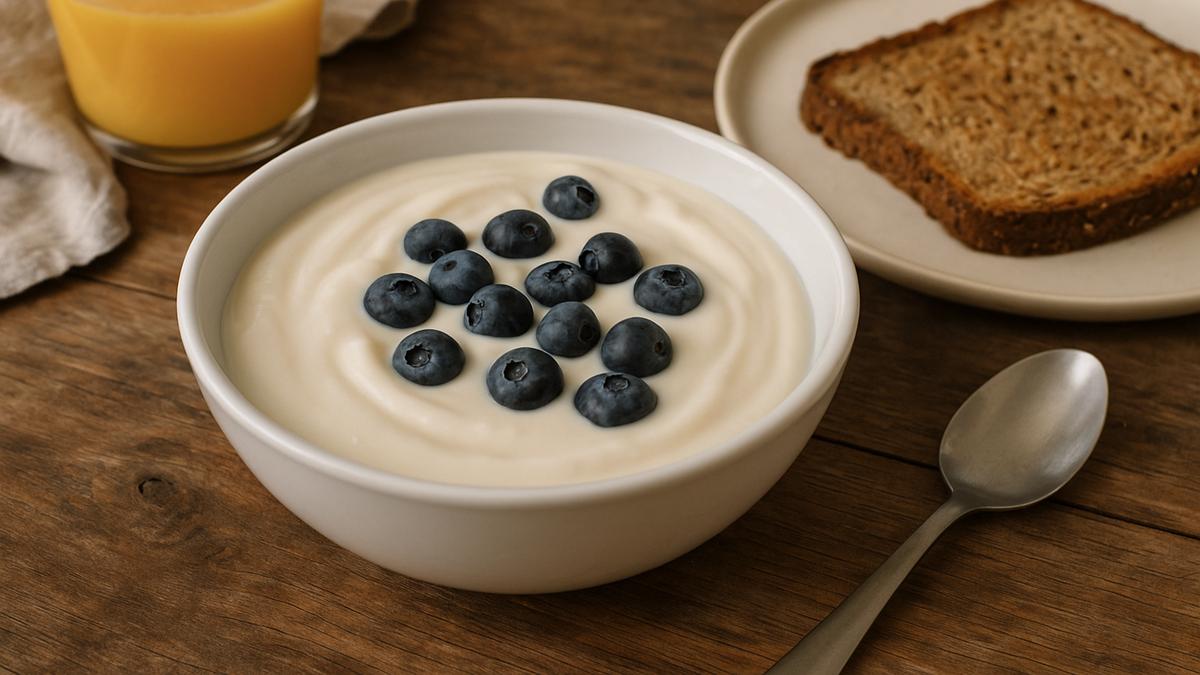
You scoop yogurt into the bowl; it lands with a soft, heavy sound, leaving smooth white peaks. The scent is clean and faintly sharp. You add fruit, maybe a dusting of cinnamon. Nothing about this scene screams “therapy” or “health hack.” And yet your microbiome is paying close attention.
Over time, a small, consistent ritual like this can reshape your inner landscape far more effectively than a short-lived course of capsules. Why?
- Consistency beats intensity. Your gut thrives on regular patterns. A daily serving of live yogurt is like steady rainfall for the microbial forest inside you.
- Food context matters. When yogurt is combined with fiber-rich toppings — oats, chia seeds, fruit, nuts — you’re delivering both probiotics (the bacteria) and prebiotics (the fibers that feed them).
- Ritual anchors behavior. The sensory pleasure of the meal — the creaminess, the tang, the quiet moment to yourself — makes it easier to keep coming back than remembering another supplement bottle.
Over weeks and months, this simple routine can support smoother digestion, more stable energy, and that subtle but unmistakable sense that your body is being cared for in a way that’s both primal and modern.
What If Dairy Doesn’t Love You Back?
Not everyone’s relationship with dairy is simple. Some people are lactose intolerant; others are sensitive to specific milk proteins. Yogurt can still sometimes be a surprising ally because fermentation partially breaks down lactose and changes the structure of proteins, making it easier to tolerate than milk.
That said, your body’s feedback is the only opinion that counts. If even high-quality yogurt doesn’t feel good, there are cousins in the fermented family that can offer similar benefits:
- Unsweetened plant-based yogurts with added live cultures (look carefully at the label to ensure real fermentation, not just thickeners and flavors).
- Fermented vegetables like sauerkraut or kimchi, eaten in small daily portions.
- Kefir (dairy or non-dairy), a drinkable cousin of yogurt with even more strains of bacteria and yeasts.
The key idea holds: living, fermented foods, regularly enjoyed, can often out-perform an expensive pill.
Stop Outsourcing Your Microbiome to Marketing
There’s something quietly radical about pushing aside the glossy bottle and reaching instead for a bowl of food your great-grandparents would recognize. In a culture that constantly suggests we need something extra — a super-concentrated, ultra-purified, lab-verified fix — yogurt is an almost subversive reminder that your body is built to thrive on the ordinary made well.
The next time you’re standing in that probiotic aisle, reading claims and squinting at strain names, you might picture instead a simpler scene: a small, farm-style kitchen, a pot of cooling milk, a spoonful of yesterday’s yogurt gently stirred in, a cloth laid over the top. A few hours later, a new batch is ready: alive, abundant, enough for everyone at the table.
Your gut doesn’t need perfection. It needs presence — a steady stream of real, living foods that whisper to your cells: this is how we’ve always done it. This is the quiet magic of fermentation. This is the village of microbes that arrives not with a sales pitch, but with breakfast.
So maybe you keep your capsules, or maybe you finish the bottle and don’t replace it. Either way, you can step into tomorrow morning knowing there’s a far more ancient, generous probiotic source already waiting in your fridge. Peel back the lid. Stir. Taste. Let your body — not the marketing — decide what feels right.
FAQ
Is yogurt really better than probiotic supplements?
“Better” depends on your situation, but for most generally healthy people, regularly eating live-culture yogurt provides a wider range of bacteria plus nutrients, in a form your body evolved to handle. It’s often more sustainable and affordable than daily supplements.
How much yogurt should I eat for gut health?
Many people do well with about 1/2 to 1 cup (roughly 120–240 ml) per day. Starting with a smaller amount and increasing gradually lets your body adjust to the influx of live cultures.
What’s the best kind of yogurt to buy?
Look for plain, unsweetened yogurt with “live and active cultures” on the label and minimal ingredients (ideally just milk and cultures). Choose the texture (Greek, regular, whole milk, low-fat) that you enjoy and that feels good in your body.
Can I get too many probiotics from yogurt?
If you’re new to fermented foods, large amounts can cause temporary bloating or gassiness as your microbiome shifts. Starting small and increasing slowly usually prevents discomfort. In healthy people, it’s rare to “overdo” yogurt in a harmful way.
Is homemade yogurt as good as store-bought?
Homemade yogurt, when made safely with a good starter, can be excellent — often richer in live cultures and easier to customize. Just be sure to follow safe fermentation practices and clean equipment.
Does flavored yogurt still have probiotics?
Many flavored yogurts do contain live cultures, but they may also be high in sugar or additives. If you want both taste and benefits, buying plain yogurt and adding your own fruit, spices, or a little honey gives you more control.
What if I’m lactose intolerant?
Some lactose-intolerant people tolerate yogurt well because the bacteria partially digest lactose. Look for long-fermented, tangier yogurt, which typically has less lactose. If that still doesn’t work, try lactose-free or plant-based yogurts with live cultures.

Hello, I’m Mathew, and I write articles about useful Home Tricks: simple solutions, saving time and useful for every day.