The sound came first—an odd, mucousy glug echoing from the laundry room, like the machine was trying to swallow something it didn’t quite understand. You probably wouldn’t have noticed it over the usual household soundtrack: a kettle hissing in the kitchen, a phone buzzing on the counter, a dog barking two houses down. But there it was, a wet, sticky gulp buried under the gentle churn of soapy water and spinning denim.
You open the washer when the cycle finishes and a faint, plasticky perfume hits your nose. The laundry pods you love—those neat, glassy little bubbles of color—have done their job, or so it seems. The clothes smell fresh, soft under your fingers, warm from the final spin. You toss them into the dryer and close the lid on something you can’t quite see yet: the slow, quiet mistake that’s already started eating away at the inside of your washing machine.
The Beautiful Little Monster in the Laundry Room
On their own, laundry pods are tiny marvels: concentrated detergent, bright colors, a slick casing that melts away in water. They’re like candy for adults who care about tidy shelves and aesthetic satisfaction. No more messy caps or leaky bottles, no more scoops buried in powder. Just toss, slam the door, press start.
But here’s the thing—what looks clean and simple on the outside often isn’t so simple on the inside. There’s a hidden dance happening in your washing machine drum: the temperature of the water, the pressure of the spin, the level of suds, the softness of the fabrics, the twist and tangle of heavy loads. A laundry pod is meant to dissolve and disperse in all this chaos. Except sometimes, it doesn’t.
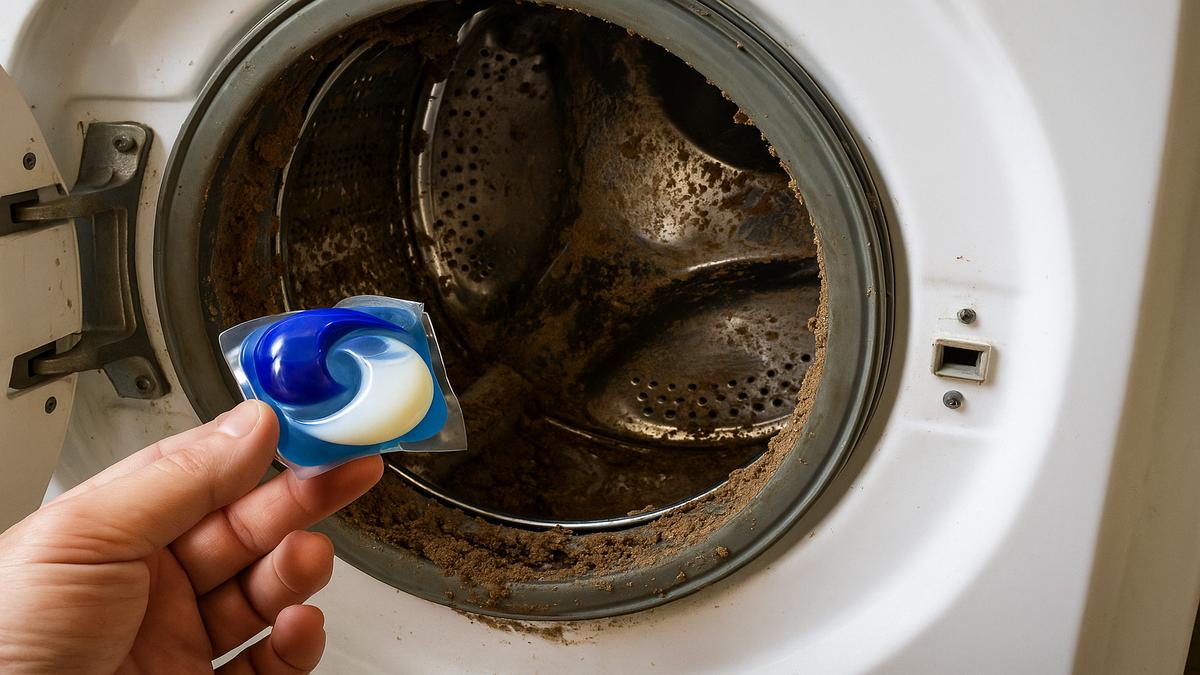
If you’ve ever opened the washer to find a half-melted pod carcass, a smear of neon goo stuck to a towel, or a rubbery film streaked across a sleeve, you’ve seen the first warning sign. But what you didn’t see was where the rest of that half-dissolved pod ended up. Some of it stayed behind—in the cold corners and dark crevices of your machine, exactly where trouble likes to grow.
Where the Pod Really Goes When You Press Start
Imagine being inside the washer for a second. Water gushes in. The drum rolls with a heavy, shrugging motion. Your laundry pod drops into the whirl like an astronaut, soft shell hitting damp fabric, then sinking toward the bottom. In a perfect world, the pod hits just enough water, at just the right temperature, with just the right freedom of movement to crack open, dissolve completely, and wash away.
But real-world loads are messy and random. The pod might wedge itself into a tangle of jeans and hoodies. It might get trapped against the door glass in a front loader or pinned to the bottom of the drum in a top loader beneath a pile of towels. If the water never truly floods around it—or if the water is too cold, or the cycle too short—it doesn’t fully dissolve.
To your eyes, the clothes might look fine. Maybe one sock has a weird, slippery patch, or a pillowcase feels tacky. You shrug, toss it into the dryer, and move on. Yet while your laundry heads for the warmth, small clots of detergent and softened pod film slide deeper into the machine’s secret anatomy:
- They smear along the rubber door gasket.
- They creep into the tiny holes in the drum.
- They cling, half-dissolved, to the outer tub.
- They slip into drainage paths and hoses where the water flows slower and cooler.
In those sheltered, often lukewarm spaces, that pretty, dissolvable film becomes something else entirely: residue.
The Sticky Science of a Silent Problem
Pods are wrapped in polyvinyl alcohol (PVA), a water-soluble film engineered to melt and vanish. It is, in theory, biodegradable and harmless. But “water-soluble” doesn’t mean “instant vapor.” It means the film will break down under the right conditions—sufficient water, sufficient agitation, and, crucially, sufficient time.
Short eco-cycles, cold washes, overstuffed drums, and pods tossed directly on a dry pile of clothing all work against that ideal chemistry. Instead of dissolving properly, parts of the pod turn into a gelatinous layer, like the skin on cooled soup. That layer is astonishingly good at catching everything else that shouldn’t linger in your machine:
- Lint and fibers from clothing
- Body oils, skin cells, and hair
- Mineral deposits from hard water
- Leftover detergent from previous washes
Layer by layer, a microscopic film becomes a visible slime. And once slime exists, biology shows up to the party: bacteria, mold, mildew. They colonize the residue, feeding off whatever organic matter is trapped there. Now your washing machine—the machine you trust to make things clean—is quietly cultivating its own small ecosystem.
The Damage You Can’t Smell—Yet
At first, there’s no obvious sign of trouble. Your clothes smell okay. The machine sounds normal. But the damage has already begun.
Bacteria and mold don’t just make things smell bad; they alter the chemistry of the surfaces they grow on. They release acids, gases, and pigments that stain rubber, corrode metal, and warp plastic. Meanwhile, that sticky pod residue thickens into sludge inside hoses and behind the drum—the places you never see unless you pull the entire machine apart.
Here’s what can start happening in just a few weeks of frequent pod misuse:
- Drainage slows down: Residue clogs the narrowest parts of the drainage paths, forcing the pump to work overtime every cycle.
- The pump strains and overheats: Sludge and trapped hair wrap around the impeller, making it less efficient.
- Rubber seals degrade: Pod residue mixed with bacteria and trapped detergent eats at door gaskets, making them brittle or slimy.
- Smells creep in: At first, it’s just an odd dampness. Then a sharp, sour scent. Eventually, a full-on swampy stench coming from “clean” laundry.
By the time most people notice the smell, the problem is no longer superficial. It’s structural.
How a Few Weeks Turn Into a Shortened Lifespan
Modern washing machines are already under a lot of pressure. They’re made with thinner metals, smarter electronics, and tighter tolerances. They’re efficient, but not invincible. Add sludge from half-dissolved pods and you’re pushing the system beyond what it was designed to endure.
Technicians often describe the inside of problem machines the same way: the rubber is streaked with greasy residue, the hoses are lined with a waxy film, and the space between the inner and outer drum smells like a wet basement. Some machines under heavy, frequent use can start showing these symptoms in as little as a month or two when pods are used badly—especially with low-temperature, short cycles.
And the repair costs? They’re not friendly. Pumps, gaskets, and hoses might be replaceable, but cleaning out the internal tub and drain paths is labor-intensive. Many people simply give up and replace the machine entirely, never realizing their beloved, convenient pods were quietly sabotaging its insides with every load.
The Tiny Habit That Makes Pods Dangerous
The strange truth is this: the pods themselves aren’t the villain. It’s how they’re used.
There’s one simple, widespread habit that turns laundry pods into a washing machine’s worst enemy: tossing the pod directly on top of a big, dry pile of clothes and selecting a quick, low-temp cycle.
From the outside, it feels efficient. You save energy, save time, save fuss. But inside the drum, the pod never truly enters the water flow. It gets mashed into fabric, softened but not dispersed, then smeared into the hidden corners of the machine. The cycle ends long before the casing can completely dissolve and be flushed away.
Other small decisions pile onto the problem:
- Running almost everything on cold, including heavy, greasy loads.
- Using more pods than necessary for very dirty clothes.
- Skipping regular maintenance cycles because “the washer cleans itself.”
Each of these might feel harmless. Together, they create exactly the conditions under which pods do the most damage in the shortest time.
Pods vs. Liquid vs. Powder: A Quick Reality Check
It helps to understand how pods compare to traditional detergents—not in marketing, but in behavior inside your machine:
| Type | Dissolving Reliability | Residue Risk | Best Use |
|---|---|---|---|
| Pods | Good in warm water, enough time, not overloaded | High if pod is trapped, cold wash, or short cycle | Standard loads, proper placement, regular maintenance |
| Liquid | Very good; disperses quickly even in cold | Medium; overdosing can cause film and mold | Cold washes, mixed loads, pre-treating stains |
| Powder | Variable; can clump in very cold or low-water cycles | Medium; undissolved grains can cake in drawer or drum | Warm or hot cycles, hard water with proper dosing |
Pods are not inherently worse than liquid or powder—but they are less forgiving when the cycle, water level, or load size isn’t right.
How to Use Pods Without Destroying Your Machine
If you love the easy, tactile satisfaction of dropping a pod into the washer, you don’t necessarily have to stop. You just have to treat that small, gleaming capsule with the respect it quietly demands. A few small shifts in habit can keep your machine safe from the silent sludge building up behind the drum.
1. Where You Place the Pod Matters More Than You Think
Instead of tossing the pod on top of dry clothes, place it directly into the empty drum first. Let it sit at the bottom. Then add your laundry on top.
This gives the pod the best chance to be hit by the first rush of incoming water. It won’t be smothered in fabric from the start, and the casing can begin to dissolve while the clothes are still getting wet.
2. Rethink Cold, Quick Cycles for Heavy Loads
Cold washes are gentle on fabrics and energy bills, but they make life harder for pod films. For:
- Very dirty clothes
- Thick fabrics like towels or jeans
- Heavily loaded drums
use at least a warm setting and avoid the shortest cycles. The goal isn’t scalding water—it’s enough warmth and time to let the pod dissolve completely and rinse away.
3. Don’t Overload Your Machine
If you can’t slide your hand comfortably between the top of the laundry pile and the drum, it’s probably too full. An overstuffed washer restricts movement and water flow, which are both essential for a pod to disperse properly.
Overloading doesn’t just hurt cleaning performance; it also compresses the pod into fabrics, turning it into a sticky paste that coats clothes and internal parts instead of dissolving into the water.
4. Run a Regular Hot Maintenance Wash
Even with perfect pod use, some residue is almost inevitable. Give your machine a way to fight back. Once a month—or more often if you wash daily—run an empty cycle on the hottest setting with:
- No laundry
- No pods
- Either a washing machine cleaner, or a simple dose of white vinegar followed by a second rinse (if your manufacturer allows it)
This hot, aggressive cycle helps break down films, flush hidden corners, and discourage mold and bacteria from settling in. Think of it as a deep breath of clean water for the machine that spends its life cleaning for you.
5. Listen, Look, and Smell for Early Warnings
The sooner you catch residue problems, the easier they are to fix. Pay attention to:
- Visible slime or streaks on the door gasket or inside the drum.
- Pods not fully dissolving—little ghost skins or colored smears on fabric.
- Slow draining or water left in the drum after the cycle.
- Musty odor from the machine even when it’s empty.
Any of these are early signs that the pod film and detergent residue are starting to outstay their welcome. Step in fast with a drum clean, gasket wipe-down, and a small reset of your habits.
Rewriting the Story of Your Laundry Room
Behind every humming machine, there’s a quiet story unfolding—of water and friction, heat and chemistry, tiny decisions and their long shadows. Laundry pods slid into our routines because they looked so tidy, so contained, so obviously “better” than sloshing jugs and dusty powders. And in many ways, they are clever. They’re concentrated, space-saving, kid-proofed (in theory), and satisfying to use.
But convenience often hides complexity. Inside the shell of each pod is not just soap, but a relationship with your washer’s insides—a relationship that can sour fast if ignored. In just a few weeks of careless use, that slick, dissolvable film can begin building a secret underworld of residue, slime, and strain that shortens your machine’s life by years.
It doesn’t take panic or perfectionism to fix this. It takes attention. A pod placed in the drum before the clothes. A cycle warm enough and long enough for real dissolving. A machine given its own time to be cleaned. A willingness to listen when it starts making new sounds or giving off strange scents.
Every time you press start, you’re not just washing clothes. You’re setting off a chain reaction inside steel and rubber and water. The machine doesn’t complain right away—not for days or weeks. It just glugs a little differently. Drains a little slower. Smells a little off. Then one day, it stops mid-cycle, and the repair person peers inside and quietly confirms what your nose suspected: something has been living in there, building in layers, for a long time.
You don’t have to give up those jewel-like pods that line your shelf. You only have to use them with a small, respectful awareness of what they really are: powerful, concentrated, and unforgiving when misunderstood. In the soft roar of the spin cycle, there’s a choice being made—between a machine that dies tired and clogged before its time, and one that hums along for years, clean on the inside in ways you’ll never have to see.
All from a single, glossy, dissolvable bubble.
Frequently Asked Questions
Do laundry pods really damage washing machines?
Pods don’t automatically damage machines, but improper use can create residue that clogs hoses, stresses pumps, and encourages mold growth. Over time, this can shorten your washer’s lifespan and lead to costly repairs.
Why do my laundry pods sometimes not dissolve completely?
Common reasons include cold water, very short or low-water cycles, overloading the drum, or placing the pod on top of a dry pile of clothes instead of in the empty drum. All of these reduce the pod’s contact with moving water.
Is it better to use liquid detergent instead of pods?
Liquid detergent is more forgiving in cold and short cycles, and it doesn’t rely on a dissolving film. However, overusing liquid can still cause buildup. Pods are fine if you use them correctly; liquid may be a safer choice if you always wash on cold and quick settings.
How can I tell if pod residue is already building up in my washer?
Look for slimy or sticky areas on the door gasket, strange streaks inside the drum, undissolved pod remnants on clothes, musty smells, or water draining more slowly than usual. These are all early warning signs of residue accumulation.
How often should I run a cleaning cycle on my washing machine?
If you use pods regularly, running a hot maintenance wash about once a month is a good habit. If you do laundry daily or notice early signs of odor or buildup, you may want to clean it every two to three weeks.
Can using more than one pod at a time cause problems?
Yes, using more pods than recommended increases the amount of detergent and film in the drum. If they don’t all dissolve and rinse away fully, the extra residue can accelerate buildup inside your machine.
Are pods safe for cold washes at all?
They can be, but they’re more risky in very cold, quick cycles. If you must use cold, choose a cycle with adequate time and avoid overloading. Consider alternating with liquid detergent for heavily soiled loads done on cold.

Hello, I’m Mathew, and I write articles about useful Home Tricks: simple solutions, saving time and useful for every day.