The walking surface that protects knees best
The old man on the trail was the first to say it out loud. He paused beside me where the path left the paved parking lot and slipped into the woods, his hand resting on a pair of trekking poles as if they were extra legs he’d been issued late in life. “You know,” he said, nodding toward the forest floor, “your knees can tell the difference before your brain does.” Then he stepped off the asphalt and onto the dirt, and his whole body seemed to exhale.
When the Ground Fights Back
If you’ve ever ended a walk with a dull, throbbing ache beneath your kneecaps, you already know this story in your bones. Maybe it was a long city stroll on sun-baked sidewalks, or a jog along a coastal promenade where concrete and ocean traded blows beneath your feet. By the time you got home, the romance of “getting your steps in” had been replaced with a quiet negotiation: stairs or elevator?
The surface under our feet is so ever-present that it fades from attention—until something hurts. We blame our age, our weight, our shoes, our lack of stretching. We search for “runner’s knee” or “patellofemoral pain” at midnight and wonder if we’re just not built for movement anymore. But beneath all those reasons is a simple, physical truth: every step is a conversation between your body and the ground. And some surfaces shout, while others listen.
Our knees occupy a precarious middle-management role in the body. Hips make the big decisions, ankles handle sudden changes, but knees, stuck between them, absorb the fallout from every impact. Cartilage cushions, ligaments guide, tendons tether—but none of them were designed with endless concrete in mind. Imagine a tiny shock wave rising through your heel, shooting up your tibia, and blooming inside your knee like a silent firework, thousands of times per walk. Over days, years, decades, that adds up.
So when people ask, “What walking surface protects knees best?” they’re not just asking about exercise. They’re asking how to keep moving through the world—through cities and forests and seasons—without feeling like each step pulls a small tax from their future mobility.
The Quiet Science Beneath Every Step
Scientists who study human movement like to talk about “ground reaction forces.” In human terms: how hard the ground hits you back when you hit it. The harder and less forgiving the surface, the bigger that rebound shock. Think of dropping a ceramic mug onto concrete versus onto a soft lawn. One scenario ends in fragments. The other might not leave a mark.
Our bodies are not ceramic mugs, thankfully. Muscles and tendons act like built-in shock absorbers. Joints flex; feet spread and roll. But they have limits. And on unforgiving surfaces, more of that shock finds its way into the knees.
Here’s the twist: no single perfect number captures how safe a surface is. Too soft, and your muscles have to work overtime just to keep you stable, which can fatigue them and allow your form to collapse—also tough on the knees. Too hard, and there’s no forgiveness, no give, just impact. The “best” surface lives somewhere in the middle: firm enough to support, soft enough to yield.
To make sense of it all, it helps to look at the common surfaces we walk on in everyday life and how they feel to a body that hopes to go the distance.
What Your Knees Feel on Different Surfaces
Below is a comparative look at common walking surfaces and how they tend to treat your knees. It won’t replace your own experience, but it can explain why some walks leave you refreshed and others leave you limping.
| Surface | Impact on Knees | Stability | Best For |
|---|---|---|---|
| Concrete | Highest impact; very little shock absorption | Very stable, predictable | Short, casual walks; not ideal for sensitive knees |
| Asphalt | Slightly less harsh than concrete | Stable; can be uneven or cracked | Moderate walks, running if form and shoes are good |
| Packed Dirt Trail | Lower impact; natural cushioning | Varies; roots and rocks demand attention | Regular walking, hiking; generally knee-friendly |
| Fine Gravel Path | Moderate impact; some give underfoot | Can shift; slight instability | Leisure walks; good compromise when even |
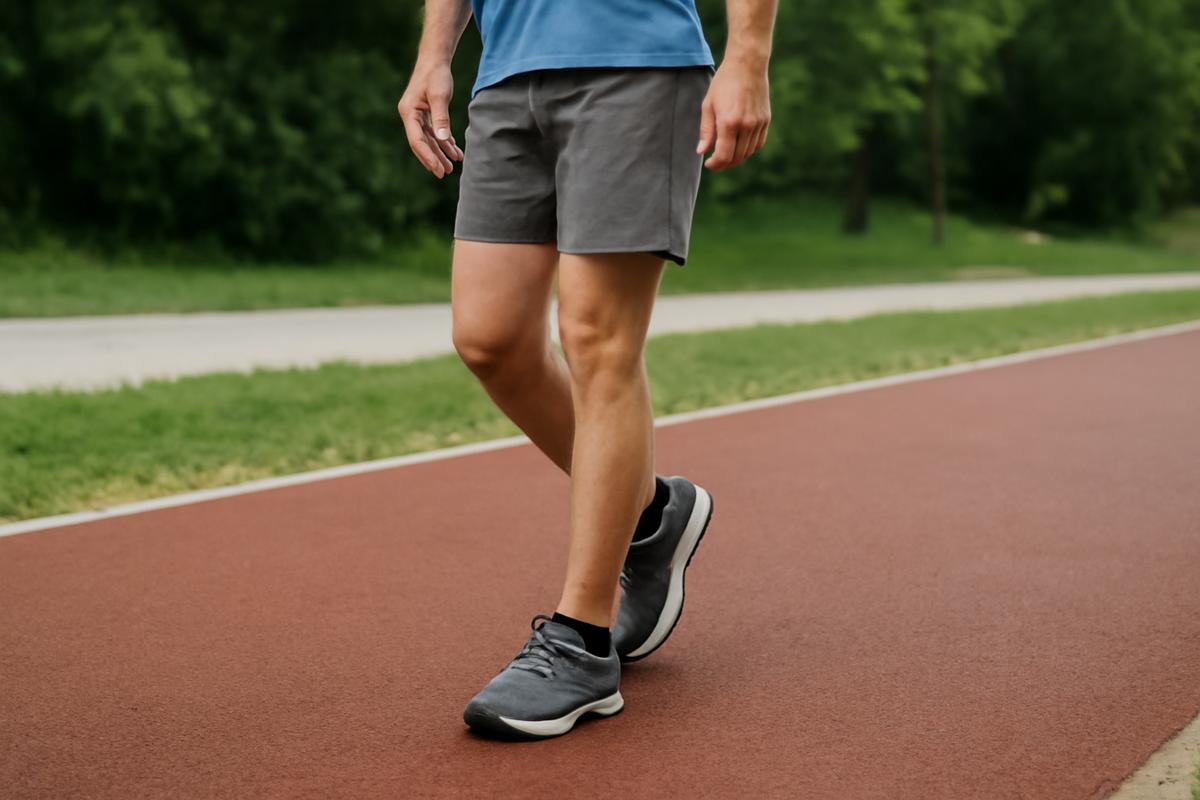
| Rubberized Track | Low to moderate impact; designed for shock absorption | Even, predictable surface | Brisk walking, interval training; knee-conscious workouts |
| Short Grass (even ground) | Gentle impact; natural cushioning | Can hide dips; moderate stability | Barefoot strolling, light walking, play |
| Sand (firm wet) | Low impact; soft landing | Challenging; muscles work harder to stabilize | Short, mindful walks; strength and balance work |
| Sand (dry deep) | Very low impact; but high muscular demand | Unstable; easy to twist or overload knees if tired | Brief, gentle strolling if knees and ankles are strong |
The Surfaces That Love Your Knees Back
Imagine walking through a park at dusk. The day’s heat still shimmers above the parking lot, but as soon as your shoes leave the pavement and touch the trail, something subtle but unmistakable happens. Your steps sound different—less slap, more hush. Your ankles start to explore, micro-adjusting to the contours of the dirt. Your knees notice the difference before you consciously do.
Among all the surfaces we wander across, three tend to rise to the top for knee-friendliness: packed dirt, rubberized tracks, and even, short grass. They each protect in their own way.
Packed dirt trails—the kind you find in well-used parks and forests—may be the closest match to what our bodies were originally designed for. There’s a faint springiness underfoot, a softness that takes the edge off each landing. When tree roots and stones do appear, they demand your attention. That alertness, that constant small negotiation with the ground, wakes up the deep stabilizing muscles around your knees and hips. When those muscles are awake and engaged, your joints don’t have to absorb every surprise alone.
Rubberized tracks, usually circling school sports fields or stadiums, are human-made love letters to joints. They cushion, they rebound, they offer a perfectly predictable path with no hidden holes. For people who want structured exercise—brisk walking, interval sessions, measured laps—they can be a sanctuary. Each step sinks in just a whisper, then springs you forward, spreading the impact over a slightly longer time so your knees don’t get hit with such a sharp peak of force.
Short, even grass introduces a soft, sensory richness underfoot: the faint resistance of blades, the subtle give of soil. It can be a gentle playground for knees, especially when the underlying ground is relatively flat. It encourages a slightly shorter stride and softer landing, the way you might automatically move if you were barefoot and protecting tender skin.
What unites these surfaces is that they meet your body halfway. They don’t demand perfection from your mechanics. They forgive small missteps. They invite movement instead of punishing it.
The Trouble With Concrete Convenience
Of course, life doesn’t happen only on forest paths and athletic tracks. Most of us live our days on concrete: sidewalks, shopping centers, office floors, train platforms. Concrete is civilization poured into shape—durable, cheap, easy to clean, indifferent to weather. For knees, though, it’s an unyielding partner.
On concrete, every step is a negotiation with a surface that refuses to participate. It doesn’t sink, it doesn’t flex, it doesn’t share the load. The entire conversation of impact is forced upward, into your footwear, your ankles, your knees, your hips. The cumulative strain shows up slowly: a twinge near the kneecap when you hurry across the street; a dull ache on the inside of the joint when you climb stairs; stiffness when you stand after a long sit, knees briefly uncooperative.
Yet concrete has its advantages. It’s flat and predictable. It rarely hides surprises that twist ankles or topple balance. For someone rehabbing an injury, that predictability can feel safe. The trick is not demonizing concrete, but learning how to buffer its harshness. Good shoes with generous cushioning and a little rocker shape at the forefoot can make each heel strike less abrupt. Shortening your stride and landing more “under your body” rather than far out in front can drastically reduce braking forces at the knee. Even a slight forward lean and soft, bent-knee landings make concrete less combative.
Asphalt—those dark, tar-smelling roads and paths—is a small step in the right direction. It has a bit more give, especially in summer heat, though not as much as marketing sometimes promises. Your knees will feel the difference on a long walk or gentle run, but the surface is still fundamentally hard. Think of it as concrete’s slightly more considerate cousin, not a full ally.
Soft Isn’t Always Safe
It’s tempting to think: if hard is bad, soft must be good. Then you step onto deep, dry sand at the beach and your body gently disagrees. The sand receives every step with a luxurious sigh, your foot sinking as if into a memory foam mattress. It feels dreamy—for a while. But as the walk stretches on, your calves start to burn, your ankles wobble more dramatically, and your knees begin to track and twist in ways they’re not used to.
Excessively soft or unstable surfaces demand a surprising amount of control from the body. Muscles work harder just to keep you upright. That effort can be strengthening in small doses—fantastic, even, for building joint-supporting resilience. But it’s not inherently knee-protective, especially if you’re tired, deconditioned, or already prone to pain.
Thick, squishy foam flooring can have the same paradox. It feels cushioned at first touch, but prolonged standing or walking on it can exhaust stabilizers around the knees and hips. Your joints end up working overtime to make sense of a shifting base.
The best-kind-of-soft lives in a middle ground: think firm sand close to the water line, not ankle-deep dunes; short grass over solid soil, not boggy fields; dirt that’s been pressed into reliable paths by countless footsteps, not fresh mud after rain. Your knees are happiest when the ground cooperates but doesn’t collapse.
The Best Surface Is Also the Best Story
Ask ten orthopedic specialists what surface protects knees best and you’ll hear overlapping answers: firm, slightly compliant, even, and predictable. In practical terms, that means rubberized tracks and packed dirt trails usually win. But if you widen the lens from joints alone to the whole human experience, something else becomes clear: the most joint-friendly surfaces often draw us into environments that nourish far more than cartilage.
On a shaded park path, you don’t just receive kinder impacts. You escape the visual clutter of traffic, the constant edge of noise. Your gaze lifts from screens to tree canopies, to birds skimming through gaps in leaves. Your breathing syncs with your steps in a way that rarely happens on a busy street corner. The surface underfoot and the world around you form a single, gentle invitation: come back tomorrow. Keep moving. Let this be sustainable.
When you walk laps on a local track at sunrise, you’re not just sparing your knees; you’re entering a small ritual space. Each circuit becomes a looped story: same curve, same straightaway, different sky. You notice which regulars show up with you. The soft repetition can soothe the nervous system as surely as it cushions your joints.
Even a simple strip of grass around an apartment building can change how your body interprets the day. Taking the long way around, choosing the softer edge rather than the central concrete path, signals to your knees and your mind: I’m willing to add ten seconds to be a little kinder to myself.
Over time, those tiny acts of kindness accumulate like interest in a savings account. Each decision to seek out a forgiving surface, to cut across the park instead of the parking lot, is a quiet investment in your future ability to chase grandchildren, climb unfamiliar staircases, or simply rise from a chair without wincing.
Listening to Your Knees as You Choose Your Path
There is no single, universal answer that fits every person, every joint, every history of injury. Some knees that have weathered meniscus tears or surgeries may crave the predictability of a track more than the playful unevenness of a forest trail. Others, stiff from desk years and cement commutes, may blossom when finally given dirt and grass. The best walking surface for your knees is not just a material; it’s a relationship—between your history, your current strength, and your willingness to adapt.
One way to discover your personal sweet spot is almost embarrassingly simple: walk the same distance on different surfaces and pay close attention to how your knees feel not just immediately afterward, but the next morning. That delayed whisper often tells the truest story. Start with short experiments—fifteen or twenty minutes on a track, a park path, a sidewalk—and notice: Where do you feel springy? Where do you feel jarred? Where do you feel subtly braced, as if your body doesn’t quite trust the ground?
Another lever you can gently adjust is footwear. A forgiving surface paired with unforgiving shoes (stiff soles, compressed cushioning, poor fit) can undermine its benefits. Conversely, well-cushioned, supportive shoes can make harsher surfaces bearable in moderation. Think of shoes as translators between your body and the ground: the better the translation, the kinder the conversation.
And then there is form. Regardless of surface, knees rejoice when strides are a bit shorter, landings are quieter, and you move as if you’re trying not to wake a sleeping child. That softness, that intention, turns any ground—trail, track, sidewalk—into something a little gentler.
But when all else is equal, when you have a choice between concrete and earth, between harsh and forgiving, your knees will almost always whisper the same suggestion: step off the pavement. Follow the curve of the path into the trees. Let each step land on a surface that doesn’t fight you. Let the ground under you share the work of carrying you forward, so that walking can feel less like a negotiation and more like what it was meant to be: a quiet, enduring partnership between body and world.
FAQs About Knee-Friendly Walking Surfaces
What walking surface is generally best for protecting knees?
Firm, slightly cushioned surfaces like packed dirt trails and rubberized running tracks are usually best. They provide enough support to keep you stable while also absorbing some of the impact that would otherwise stress your knees.
Is walking on concrete really that bad for knees?
Concrete isn’t automatically harmful, but it’s one of the harshest common surfaces because it doesn’t absorb impact. Long distances, fast paces, poor footwear, or existing knee issues can turn concrete into a problem. Short walks with good shoes and soft landings are usually fine for most people.
Is grass a good surface if I have knee pain?
Short, even grass over firm soil can be quite knee-friendly thanks to its natural cushioning. The main risk is hidden holes or uneven patches that can twist ankles or knees. If the ground is smooth and visible, it can be a gentle choice.
Are treadmills better for knees than outdoor sidewalks?
Most treadmills have some built-in cushioning, so they’re often kinder than concrete or old, hard asphalt. The belt also moves beneath you, slightly reducing braking forces at the knee. However, repetitive motion in exactly the same pattern can be tiring over very long sessions, so variety still matters.
Is sand good or bad for knee health?
Firm, wet sand close to the waterline can be gentle on knees because it cushions impact. Deep, dry sand is tougher: it’s unstable and demands a lot from your muscles and joints. Short, mindful walks can be beneficial, but long treks in deep sand may overload tired or vulnerable knees.
How important are shoes compared with the surface?
Both matter. A forgiving surface with poor shoes can still bother your knees, while excellent, cushioned footwear can make harsher surfaces more tolerable. Ideally, combine a knee-friendly surface with well-fitting, supportive shoes for the best protection.
Can changing my walking form reduce knee pain regardless of surface?
Yes. Shortening your stride, landing more under your body rather than far in front, keeping a slight knee bend, and aiming for quieter, softer steps all reduce impact on the knees. Good form can make almost any surface safer, though softer surfaces still offer a clear advantage over time.

Hello, I’m Mathew, and I write articles about useful Home Tricks: simple solutions, saving time and useful for every day.