The foot soak that softens calluses fast
By the time the day had finished rubbing its weight into your feet, the sky outside the window had turned the color of steeped tea. You kicked off your shoes and the air found your skin with something close to relief. There they were again—the hardened edges, the grayish-yellow pads on your heels and along your big toes, the places that had quietly taken every step you didn’t want to think about. Calluses are like tree rings for humans; they tell a story of miles walked, floors scrubbed, children chased, trains caught, workouts survived. But tonight, for once, you’re not interested in endurance. You want softness. You want that feeling of bare feet gliding over sheets, not snagging them.
The Evening Your Feet Finally Exhale
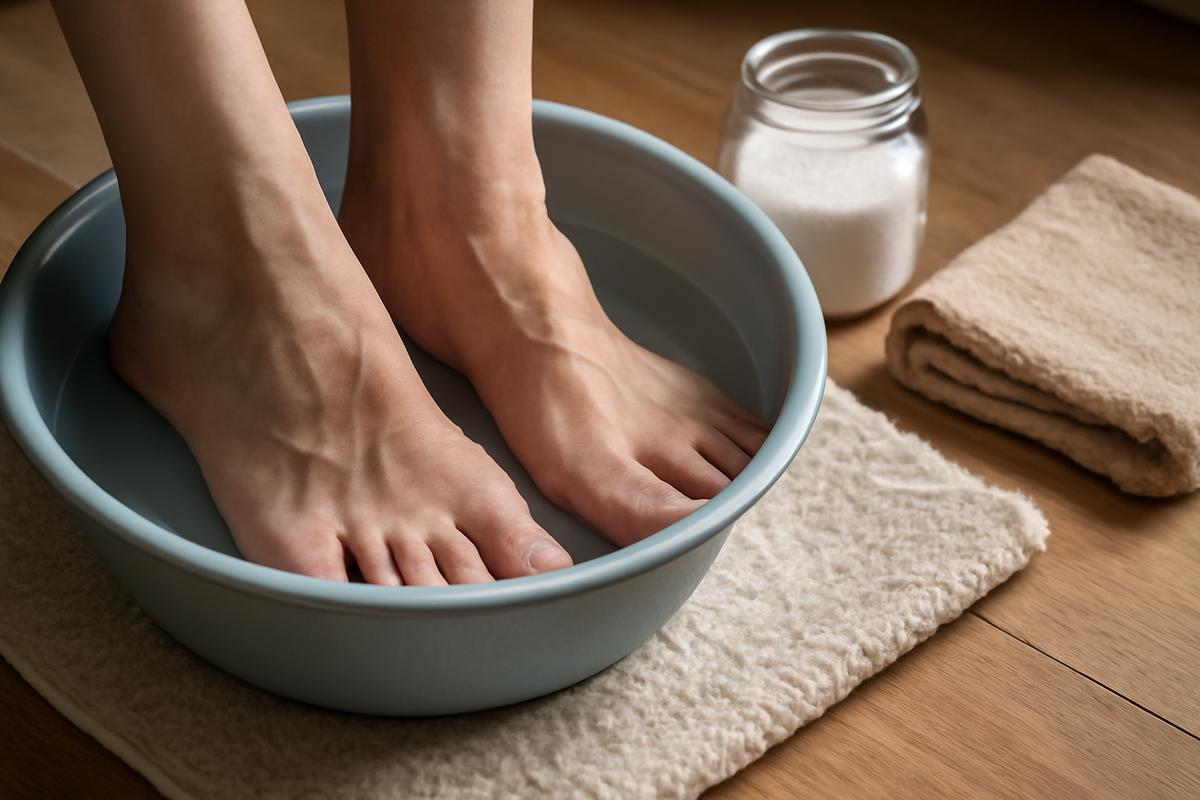
You fill a basin, nothing fancy—an old enamel bowl, a plastic tub that once lived under the bed, even a wide salad bowl pressed into unusual service. The water runs warm, then warmer, until steam begins to twist up in thin, loose ribbons. The sound alone is calming, a low hiss like breath through pursed lips. You swirl your hand through and feel the heat lick your skin. Too hot. You wait. You listen to the small quiet of the room, the hum of an appliance in another space, the far-off traffic like a tide you’re no longer obligated to enter.
Your feet hover at the rim. Those calluses look suddenly ancient in this soft evening light—chalky, cracked in places, stubborn. You remember every tip you’ve heard about softening them: thick creams at night, rough pumice stones in the shower, the slow grind of habit. All useful, all real. But tonight you want something faster, more immediate, like opening a window in a stuffy room. A foot soak can be that window, if you build it right.
When your skin finally agrees with the temperature, you slide your feet in. There’s that moment of flinch, the sharp awareness of heat climbing your arches, then the slow surrender as your muscles decide this is safe. Warm water on tired feet is surprisingly intimate. You become suddenly aware of every tendon, every tiny bone, the way your toes spread just a little as they settle. It’s not just about hygiene or grooming now; it’s about letting a part of your body you mostly ignore become the center of your attention.
The Science Hiding in a Simple Soak
Behind this gentle ritual, there’s a small, practical bit of chemistry at work. Calluses are made of thickened layers of keratin—the same protein that builds your nails and hair. They form as your body’s quiet defense system, padding the areas that take the most pressure and friction. Helpful, yes, but they can overshoot: hard, uncomfortable, occasionally painful, sometimes cracking deep enough to sting with each step.
To soften them quickly, you don’t actually need an arsenal of harsh tools. What you need is a way to loosen the bonds between those compacted skin cells. Enter a deceptively humble trio: warm water, salts, and acids so mild they hide in your kitchen and bathroom cabinets. When they meet, they start dismantling that tough outer layer, gently but effectively, giving you a chance to smooth it away without a battle.
The Foot Soak That Softens Calluses Fast
Imagine a recipe that feels half spa treatment, half slow evening ritual. At its heart, your soak needs three things:
- Heat that’s comforting, not scalding
- Minerals and salts to help draw out roughness and relax muscle tension
- A mild exfoliating boost to loosen the hardened skin
Here’s a simple formula you can build in minutes, from the same world where you keep your bath salts and baking ingredients:
- Warm water – enough to cover your feet up to the ankles
- Epsom salt (or sea salt) – 1/2 to 1 cup
- Baking soda – 2 to 3 tablespoons
- Apple cider vinegar or lemon juice – 2 to 4 tablespoons (for an acid boost)
- A splash of gentle liquid soap – for cleansing and slip
- A few drops of essential oil (optional) – lavender for calming, peppermint for cooling, tea tree for a clean, herbaceous note
You dissolve the Epsom salts first, watching them melt into the water like snowflakes disappearing on a car windshield. Baking soda follows, clouding the water slightly, softening its feel. Then the acid: a modest pour of apple cider vinegar or a squeeze of lemon. The water shifts faintly, a ghost of scent lifting to your nose—sharp, bright, a little medicinal, a little kitchen. If you add essential oils, the air above the basin becomes its own small weather system, fragrant and personal.
| Ingredient | Purpose | Suggested Amount |
|---|---|---|
| Warm water | Hydrates and plumps skin, opens pores | Enough to cover feet to ankles |
| Epsom or sea salt | Softens skin, eases tension, mild detox effect | 1/2 – 1 cup |
| Baking soda | Gently loosens dead skin, deodorizes | 2 – 3 tbsp |
| Apple cider vinegar or lemon | Light exfoliating acid, helps break down calluses | 2 – 4 tbsp |
| Gentle liquid soap | Cleanses, helps oils disperse | 1 – 2 tsp |
| Essential oils (optional) | Aromatherapy, extra freshness | 3 – 6 drops |
What It Feels Like When Calluses Start to Let Go
The first five minutes are all about sensation. The warm water creeps into the small cracks and ridges of your heels. Blood flow wakes up in places that felt numb from standing or sitting too long. If you close your eyes, you can actually feel the outline of your foot relax—arches dropping a little, toes uncurling, ankles loosening as if unbuttoning themselves.
Somewhere between minute eight and minute twelve, the calluses begin to shift. Not dramatically; they don’t dissolve in froth or peel like sunburned skin. Instead, they gradually give up their stiffness. The edges soften, losing that sharp, brittle edge that can catch on socks or bed linens. If you run your thumb gently along your heel under the water, you may notice it: the leathery feel turning more like damp, malleable clay.
This is where patience becomes your secret weapon. The soak doesn’t have to be long—15 to 20 minutes is usually enough—but letting that time pass without rushing is what makes this a “fast” method in the larger story of callus care. It’s the difference between hacking at hard skin with a file and persuading it to unhook itself from your body’s surface, layer by layer.
If your mind wanders, let it. The steam carries small fragments of your day up and away; conversations you wish you’d had differently, emails you didn’t send, the errands you didn’t quite manage. Your feet stay where they are, underwater, silently working their way back to softness.
The Gentle Reveal: What to Do Right After
When your timer chimes—or your intuition nudges—you ease your feet back into the cooler air. They look a little flushed, like they’ve just come in from a slow walk in summer. The calluses, though, tell a different story now. They’re paler in some places, plumped with water, more give under your fingertips.
This is the moment for the quiet tools: a soft towel, a pumice stone or foot file with fine grit, maybe a washcloth folded double. No scraping, no frantic sanding. You pat your feet dry, leaving them just a little damp, and then work with the softened skin, not against it.
- Use small, circular motions on the thickest areas of your heels and the balls of your feet.
- Pay attention to sensation; stop if you feel anything sharper than a dull tug.
- Rinse or shake the pumice frequently to keep it effective.
You’ll see tiny curls and specks of dead skin lifting away, revealing something smoother beneath—like dust wiped from an old window. Progress may look modest in the moment, but under your fingers the surface starts to change. Where there was stiffness, there is now a faint softness, almost like eraser rubber instead of stone.
After this, the final stroke: moisture. A rich, dense cream or even a simple oil (jojoba, sweet almond, olive in a pinch) massaged into your feet while the pores are still relaxed from the heat. This is you telling your skin, “We’re done with defense for tonight. You can stand down.” You press your thumbs into your arches, sweep along your instep, circle the heel. The act of caring for your feet becomes its own reward, separate from vanity, closer to respect.
Why This Soak Works Faster Than You Think
“Fast” is a relative word when it comes to the body. Calluses don’t form overnight, and they won’t vanish in a single basin of fragrant water. What this soak can do, though, is dramatically speed up that first stage of change. Instead of slowly wearing down hard patches over weeks with dry filing, you create conditions where the outer layers are willing to part ways in one evening.
The warm water swells the skin cells and opens the gate. Epsom and sea salts increase circulation and help draw out some of the stiffness. Baking soda’s mild alkalinity disrupts the grip of dead cells. The gentle acids from vinegar or lemon nudge the keratin to loosen. Together, they create an environment where roughness no longer feels inevitable.
Repeated a few times a week, this ritual becomes less about “fixing” and more about maintenance. The calluses never get to build that old, thick armor again because you keep inviting them to soften, again and again, before they become a problem. You move from emergency repair to quiet upkeep.
And there’s something subtly empowering about having a fast, tangible way to change how your feet feel. You might still walk the same miles, stand the same hours, chase the same obligations. But now, at the end of the day, you have a way to reclaim your feet from the story of wear and tear.
Making the Ritual Yours
The core ingredients of this soak are simple, but everything around it can be tailored to your life and your senses.
- For the minimalist: Just warm water, Epsom salt, and a little soap still make a powerful trio. Strip it down to what you can grab in thirty seconds, and keep the basin tucked in a closet for fast use.
- For the scent lover: Blend lavender and orange essential oils for a sunset mood, or tea tree and peppermint for a forest-fresh coolness. Let the scent carry you out of your day’s worries.
- For the sore-footed worker or athlete: Increase the Epsom salt, keep the water slightly warmer (but always safe), and rest your calves on a rolled towel behind the basin for extra support.
- For sensitive skin: Skip the acids at first. Let warm water, salt, and baking soda do the work. Add the vinegar or lemon in tiny increments only if your skin tolerates it.
Ritual is what transforms a mere habit into something you look forward to. Maybe you light a candle. Maybe you put on a favorite playlist, or listen to a quiet podcast, or embrace the hush. The basin becomes a small, round lake of your own making, and your only task is to let your feet disappear beneath the surface and forget, for a moment, what it means to carry you all day.
From One Evening to a New Relationship With Your Feet
By the time you’re ready to stand again, the world feels a little different underfoot. The floorboards, the tiles, the rug—they all meet you with less friction, less complaint. Your calluses haven’t disappeared; they’ve simply softened, transformed from sharp shields to pliable padding. That is enough for one night.
If you repeat this soak just two or three times a week—short, consistent, unrushed—it becomes a quiet collaboration with your own body. Over time, the thickest patches shrink. Fissures along the heels heal and stay healed. Shoes feel more welcoming. Barefoot mornings become less about bracing for impact and more about feeling cool air and soft fabric.
There’s also a subtle mental shift that happens when you give your feet this kind of attention. You notice when you’ve been standing too long, when your shoes no longer serve you, when your posture is begging for an adjustment. The soak trains you to listen. It’s no longer just about the cosmetic satisfaction of smoother heels; it’s about re-establishing a dialogue with the part of you that meets the earth first.
Some nights you’ll skip it. Life will be loud, the basin too far away, the clock too unforgiving. That’s fine. The beauty of this little “fast softening” ritual is that it’s always ready to welcome you back. The ingredients don’t expire quickly. The water still runs warm. Your feet are still there, still carrying you, still waiting for their evening by the bowl.
And the next time you step out of that soak, toweling away the steam and tracing the new softness along your heels, you might feel something else as well: a small, grounded gratitude—for every mile you’ve walked and for the simple, homegrown alchemy that lets you step more gently into the miles still to come.
Frequently Asked Questions
How often should I do this foot soak to soften calluses?
For noticeable softening, aim for 2–3 times per week at first. Once your calluses are thinner and smoother, once a week is usually enough for maintenance.
How long should I soak my feet each time?
Fifteen to twenty minutes is a sweet spot for most people. Less than 10 minutes often isn’t enough to fully soften the calluses; more than 30 can over-soak and wrinkle the skin.
Can I do this if I have very cracked heels?
You can, but be gentle. Keep the water warm, not hot, and avoid aggressive filing on deep cracks. Focus on softening with the soak, pat dry carefully, and follow with a thick moisturizer. If cracks are painful, bleeding, or not improving, see a medical professional.
Is it safe if I have diabetes or circulation problems?
If you have diabetes, neuropathy, or poor circulation, talk with your healthcare provider before doing any foot soaks or using pumice stones. Your skin may be more fragile, and small injuries can take longer to heal.
Can I replace Epsom salt with regular table salt?
You can use sea salt or coarse salt for a similar softening and relaxing effect. Regular table salt works in a pinch, but Epsom or sea salt tends to feel more soothing and is often preferred for soaks.
Do I have to use vinegar or lemon juice?
No. They simply add a gentle exfoliating boost. If your skin is sensitive or you dislike the scent, you can leave them out and still get softening benefits from warm water, salt, and baking soda.
When will I see results?
Many people feel a difference after just one soak plus gentle filing—calluses feel less harsh and more flexible. Visible smoothing usually builds over several sessions, especially if you moisturize after each soak and avoid harsh friction from ill-fitting shoes.

Hello, I’m Mathew, and I write articles about useful Home Tricks: simple solutions, saving time and useful for every day.