The stretching mistake that strains knees
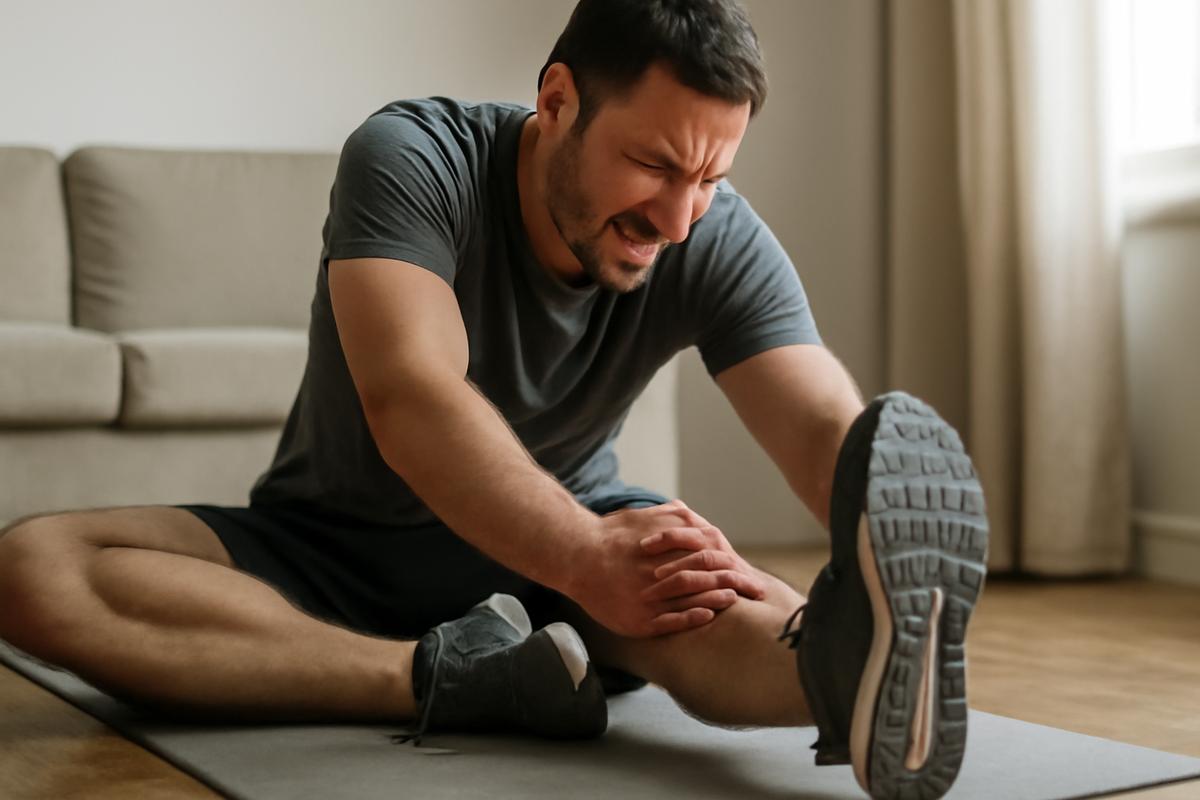
The first time my knee made that awful, rubber-band-pop sound, I wasn’t even running, jumping, or doing anything heroic. I was stretching. In a quiet studio with soft music and eucalyptus in the air, I was trying to “be good to my body.” My left leg was out straight, heel dug into the mat, toes yanked toward my face by a resistance band. I felt that familiar pull along the back of my thigh—the one all the blogs and instructors insisted was “good for you.” So I leaned in. Just a little more. Just past that invisible line between “ahh” and “uh-oh.” And then my knee spoke up in a language I would spend the next year trying to understand.
The stretch we’ve been taught to love (that your knees quietly hate)
If you’ve ever sat on the floor with your legs straight out, reached for your toes, and told yourself you were “loosening your hamstrings,” you already know the stretch I’m talking about. It shows up everywhere: in school gym classes, cooldowns after a run, yoga warm-ups, physical education programs from the 80s still floating around like ghosts. It’s so common it feels like law: to be flexible, you must fold over your straight legs and chase your toes.
We accept it the way we accept certain myths about posture or crunches. We keep doing it because everyone else is doing it. It looks harmless—peaceful, even. But if you watch closely, especially in a group class, you’ll see something subtle and slightly grim: faces tightening, jaws clenching, people breathing as if they’re pushing a stalled car up a hill. And under that effort, under that long lever of a straight leg, your knee joint is quietly taking notes.
Most of us never question it. Tight hamstrings? Straighten the legs and stretch harder. Low back pain? Teacher says, “Fold over your legs, it will help.” Running issues? “You need to stretch your hamstrings more.” The solution is always the same, and the knee is always in the middle of it—the literal hinge between our good intentions and our body’s complicated realities.
The hidden mechanics: why a simple stretch can turn into a strain
To understand why this seemingly innocent stretch can bother your knees, you have to zoom in and imagine the joint not as a single thing, but as a crowded intersection. Bones, cartilage, ligaments, tendons, and muscles all meet there, each with their own job and their own limits.
Your hamstring muscles don’t just live on the back of your thigh. They cross the back of your knee and attach to the lower leg. When you sit with your legs straight and lock your knees, then pull yourself forward—or worse, pull your foot toward you with a strap—you’re not only stretching the muscles. You’re also tugging on the structures around the knee that are busy trying to keep everything aligned and stable.
The knee is designed for movement, but not for forceful twisting, wrenching, or aggressive levering. With the leg fully straight and the foot yanked back, here’s what starts to happen beneath the skin:
- The hamstrings pull on the back of the knee, like someone tilting a picture frame from one side.
- The joint surfaces are compressed in awkward ways, especially if your hips don’t bend easily.
- If your hips or low back are stiff, your body steals the extra range from somewhere… often the knee.
- Ligaments around the knee may be stretched, not in a healthy, gradual way, but in a “please stop” kind of way.
And if you’re hypermobile, or have a history of knee pain, or simply love to “feel a deep stretch,” you’re even more at risk of turning a simple hamstring stretch into a slow, grinding argument with your joints.
How the “straight-leg stretch” quietly trains your body to cheat
Here’s the twist: the stretch you think is helping often trains your body to move in ways that make you more vulnerable. That straight-leg, fold-forward move feels like it’s all about the hamstring, but it’s really about a whole kinetic chain learning questionable habits.
When you sit tall on the floor with straight legs, many people can’t actually tilt the pelvis forward very much. So the body improvises:
- The low back rounds, like a turtle shell, to make it seem like you’re “going farther.”
- The shoulders collapse, giving the illusion of depth without real hip movement.
- The knees lock or even hyperextend, turning into passive anchors instead of dynamic joints.
You walk away thinking, “That was a good stretch,” because you felt intensity. But intensity isn’t always insight. The hamstrings may not be the ones taking the brunt of that force. Instead, the pull is being spread through your low back and the delicate structures of the knee.
Over time, this can create a pattern: stiff hips, overworked low back, complaining knees. Then, when you run, hike, climb stairs, or squat, your body defaults to what it has been rehearsing. The hamstrings don’t share load smoothly. The knee doesn’t track as well. The back picks up the slack. You’re no longer just stretching; you’re rehearsing strain.
Where you feel it vs. where the problem really is
The most confusing part? Knee strain from stretching doesn’t always appear right away, like a sharp stab of pain as soon as you reach forward. Often it’s quieter, layered, and late to the party. You might notice things like:
- A vague ache at the back or sides of the knee after stretching.
- Knees feeling “tired” or “heavy” when walking downstairs later in the day.
- A pinching at the front of the knee when you try to straighten your leg fully.
- A sense that one leg is “not cooperating” when you lunge or squat.
It’s easy to miss the connection. The stretch felt noble. The pain shows up later, during some random, ordinary moment, and the brain doesn’t always link those two events. So we usually blame the last thing we did that seemed more dramatic: a long hike, a fast run, that time you carried groceries up three flights of stairs.
But our bodies are accumulators. They remember the millions of little moments of load and leverage. That innocent habit of yanking your toes back with straight legs might be the quiet drip that eventually overflows the bucket.
A gentler way to lengthen that doesn’t sacrifice the knee
The answer isn’t to stop stretching altogether. It’s to stretch smarter—to shift the focus away from forcing and toward listening, and to give your knees the backup they’ve been begging for. The real goal isn’t flexibility for its own sake; it’s ease of movement, shared load, and strength where it counts.
Try these shifts in how you approach your hamstrings and the back of your legs:
- Slight bend at the knee: Instead of fully straightening, keep a small, soft bend. Think “unlocked,” not “bent like a squat.” This takes direct strain off the joint.
- Lead from the hips, not the chest: When you fold forward, imagine your sit bones rolling back and your pelvis tipping, like you’re gently pouring water from a bowl. If your low back is rounding first, you’ve gone too far.
- Use props without yanking: A strap, towel, or yoga belt can be helpful, but use it to guide, not to drag yourself deeper. If your hands are white-knuckling, your knees are probably bargaining.
- Support your spine: Sit on a folded blanket, cushion, or yoga block. Elevating your hips allows them to tilt more easily, so the stretch goes where you want it to—into the muscles, not the joints.
These changes can make the stretch feel different—less extreme, less “heroic.” You might even feel like you’re doing less. That’s usually a good sign. Real progress in mobility often feels like clarity, not drama.
Simple alternatives that are kinder to your knees
Instead of the classic straight-leg toe-reach, there are gentler, smarter ways to lengthen the back of the leg that don’t hang your knees out to dry. Think of these as stretching with your knees’ consent.
- Wall or doorway hamstring stretch
Lie on your back near a wall and place one heel on the wall with the knee slightly bent. Slide the heel up the wall until you feel a mild stretch. The floor supports your back, your pelvis stays more neutral, and your knee is not fighting gravity while locked out. - Single-leg stretch on a chair
Stand facing a chair and place one heel on the seat, knee softly bent. Hinge forward from the hips with a long spine. You control the angle by shifting your hips, not by wrenching the foot toward you. You can lightly flex the ankle if it feels okay, but never to the point of knee discomfort. - Bent-knee hamstring release
Lie on your back, draw one knee toward your chest, and then slowly straighten the leg toward the ceiling, stopping as soon as you feel a stretch you can breathe into. Bend and straighten slowly, as if you’re polishing the range of motion rather than chasing the deepest pull.
Each of these options respects the knee as a participant, not a prisoner. They let you explore sensation instead of brute-forcing it.
How strength quietly protects your knees more than stretching ever will
There’s another part of this conversation that often gets left out in the romanticized world of deep stretches and long exhalations: strong muscles are some of the best joint protectors you’ll ever have. Flexibility is helpful, but stability is what lets you actually use that flexibility in real life without fear.
Your hamstrings, quadriceps, glutes, and calf muscles all share the work of supporting the knee. When one group is weak or disengaged, the others scramble to compensate. Add repetitive, joint-heavy stretching on top of that, and you get a joint that’s being asked to stabilize in situations it was never trained for.
Simple, well-chosen strength work can change the way your knees feel during and after stretching. Think of it as giving your joints a support crew.
| Area | Helpful Exercise | Why It Helps Your Knees |
|---|---|---|
| Hamstrings | Bridges with heels on the floor | Builds strength in the back of the thigh so the knee isn’t the only thing resisting load. |
| Quadriceps | Slow, controlled sit-to-stands from a chair | Improves front-of-thigh strength and support around the kneecap. |
| Glutes | Mini squats or step-ups | Helps hips share the workload, reducing stress on the knees when you bend. |
| Calves | Gentle heel raises | Supports ankle and lower leg function, improving overall alignment through the knee. |
When you blend this kind of strength work with kinder stretching, something shifts. The knee is no longer being pulled from all sides by tight, undertrained muscles. Instead, it’s settled into a better-supported, better-organized system.
Listening for your knees’ early warnings
You don’t need an MRI or a medical chart to know when a stretch is too much. Your body is fluent in small signals—you just have to be willing to hear them before they become shouting matches.
As you stretch, especially around the knees, pay attention to:
- Location of sensation: A stretchy feeling high on the back of the thigh is one thing. A sharp or pinching sensation in the back, front, or sides of the knee is a red flag.
- Quality of sensation: Gentle, melting pressure is fine. Stabbing, burning, tingling, or pulling “inside the joint” is your cue to back out.
- After-effects: If your knee feels worse an hour or a day after you stretch, not better, that’s data—valuable data. Something about your form, depth, or choice of stretch needs a rethink.
None of this means you’re fragile. It means you’re paying attention. The most resilient movers aren’t the ones who ignore discomfort; they’re the ones who adjust early and often, long before pain becomes a permanent guest.
Rewriting the story of your stretch
Imagine this: you unroll your mat or clear a space on your living room floor—not to prove your flexibility, but to explore how your body moves today. You sit down, maybe on a folded blanket, and extend one leg. Instead of snapping the knee straight and grabbing for your toes like a prize, you pause.
You soften the knee, just enough so it isn’t locked. You take a breath. You tilt your pelvis gently, like you’re sending your sit bones back behind you. You lean forward only until you feel a whisper of stretch—no more. Imagine turning the volume down so low that you actually have room to notice what’s happening.
The pull is there, but it’s not shouting. Your knee feels present, but not threatened. You can breathe easily. You’re not fighting yourself. You’re not chasing an image of some hyper-flexible stranger on a magazine cover. You’re in conversation with your own nervous system, your own tissues, your own history of movement.
This is the opposite of the stretching mistake that strains knees. Not just technically—though yes, you’re protecting the joint by staying out of the locked-leg, hard-pull danger zone—but philosophically. You’re no longer treating your body as a stubborn object to be forced into compliance. You’re treating it as a living landscape, full of nuance, weather, and seasons.
And landscapes do better with attention than with conquest.
Over weeks and months, this kind of approach stacks up quietly. The hamstrings gain range without feeling attacked. The knee participates in movement instead of being twisted into it. You might notice it when you walk downstairs and feel more stable, or when you hike and your knees don’t warm up with that old familiar complaint. You built that. Not by forcing, but by listening.
The next time you see a group all folding over their straight legs, hands yanking on feet like levers, you may still join them—but you’ll do it differently. A soft bend. A careful hinge. A curious mind. And somewhere, deep in the complex hinge of bone, ligament, and cartilage, your knees will quietly thank you.
FAQ: The stretching mistake that strains knees
Is it always bad to stretch with straight legs?
Not always. Many people can safely stretch with relatively straight legs, especially if they have good hip mobility, strong supporting muscles, and no history of knee issues. The problem comes when the knees are locked or hyperextended, the hips are stiff, and the person forces themselves deeper with straps or aggressive pulling. A slight bend in the knee, combined with a controlled hip hinge, usually makes the same stretch much safer.
How do I know if my hamstring stretch is hurting my knees?
Pay attention to where you feel the strongest sensation. If it’s mainly in the muscle belly at the back of your thigh, and the feeling is a gentle, controllable stretch, you’re probably on safe ground. If you feel sharpness, pinching, or pulling inside or around the knee—especially at the back or sides—or if your knee aches later in the day after stretching, it’s a sign that your form, depth, or choice of stretch needs adjusting.
Should I stop stretching my hamstrings if my knees hurt?
You may need to stop the specific stretch that causes discomfort, but not all hamstring stretching forever. Switch to more joint-friendly options, like lying on your back with your leg up a wall, or using a bent-knee variation. If knee pain persists, or if you’ve had a previous knee injury, it’s wise to consult a healthcare professional or qualified movement specialist for individualized guidance.
Can stronger legs really reduce knee strain from stretching?
Yes. Strength in the hamstrings, quadriceps, glutes, and calves helps stabilize the knee and distribute forces more evenly across the joint. When those muscles share the load, the knee is less likely to be pulled or twisted into vulnerable positions during stretching or daily movement. Even simple bodyweight exercises, done regularly and with good form, can make a noticeable difference.
How intense should a safe stretch feel?
A safe stretch should feel like mild to moderate tension that you can breathe through and hold without clenching your jaw or fists. On a scale of 1 to 10, where 1 is barely noticeable and 10 is intolerable pain, aim around a 3 or 4. More intensity doesn’t necessarily mean more benefit; often it just means more irritation for your joints and nervous system.
Is using a strap or band always a bad idea?
No. Straps and bands are just tools—they can help or harm depending on how you use them. If you use a strap to bring your leg into a range you can comfortably control, while keeping a soft knee and breathing calmly, it can be very useful. If you’re yanking hard, holding your breath, or chasing pain, the strap becomes a way to overpower your body’s limits instead of gently nudging them.
What’s one simple change I can make today to protect my knees while stretching?
Start by unlocking your knees in every hamstring stretch. Keep a small, natural bend instead of forcing the leg completely straight. Combine that with the intention to move from your hips rather than collapsing from your low back. That one shift alone can take a surprising amount of pressure off your knees while still giving your muscles the signal to lengthen.

Hello, I’m Mathew, and I write articles about useful Home Tricks: simple solutions, saving time and useful for every day.