Why your house feels darker in winter
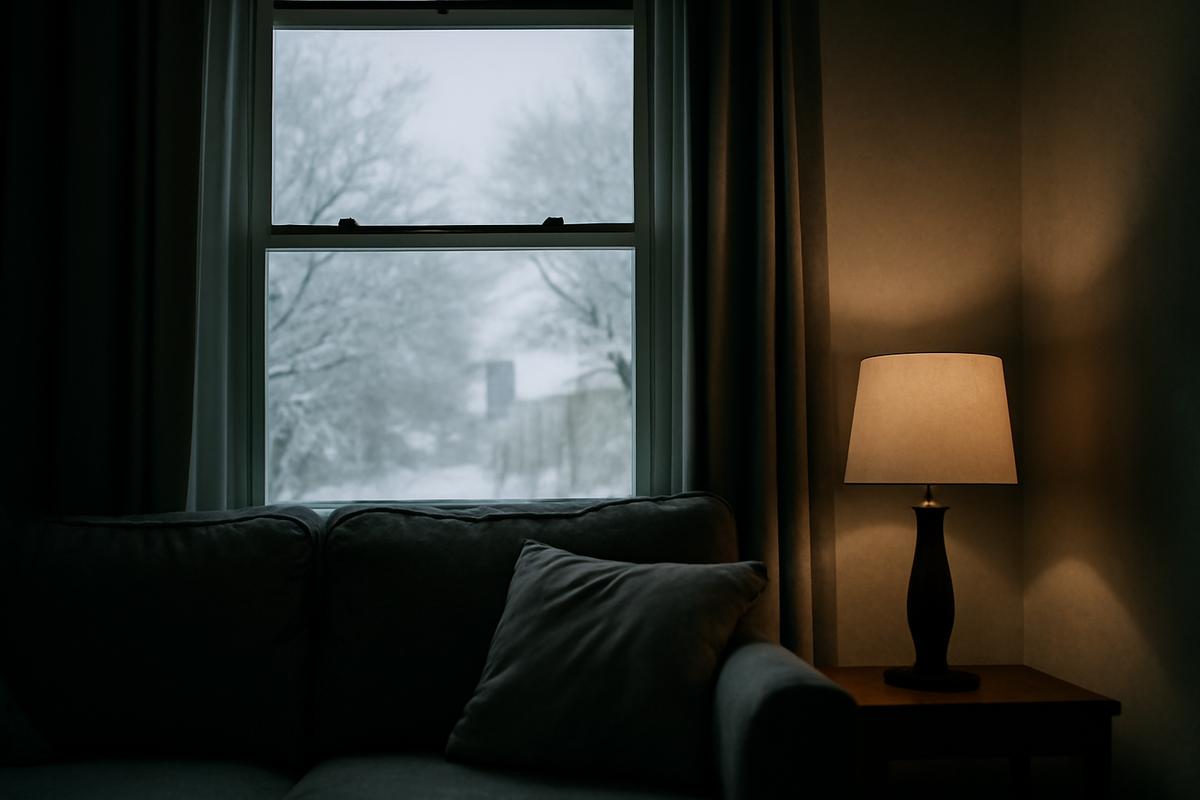
The first thing you notice is not the cold, but the dimness. One morning in late November, you pad into the kitchen, flick the switch out of habit, and the room still feels strangely gray, as if the walls have moved closer overnight. The mug in your hand looks dull instead of bright. The window you loved all summer has become a sheet of pewter. A thought tiptoes in: Was it always this dark in here?
The Quiet Tilt of the Planet
Winter darkness doesn’t arrive with a crash. It seeps in, almost politely. The Earth tilts, the sun slides lower in the sky, and every window in your home starts catching light at a different angle. You don’t see the tilt, but you feel its consequences each time you walk from room to room, wondering when your house started to look like a washed-out photograph.
In summer, the sun behaves like an enthusiastic guest, barging in early, hanging around late, spilling light into every corner it can find. By December in the northern hemisphere, that guest has become more reserved, lingering near the horizon, ducking behind roofs, trees, and neighboring buildings long before it reaches your living room. The same windows that once blazed with golden light now serve mostly to remind you how soon dusk is coming.
The angle of the sun is the quiet culprit. When it rides high, rays pour down almost directly, slipping deep into your rooms. In winter, the shallow angle means sunlight skims across the tops of houses and treetops, or grazes your window for only a short slice of the day. You might notice one luminous stripe of light tracking across a single wall in the afternoon, like a spotlight on a stage, while the rest of the room stays stubbornly dim.
It’s easy to forget that the amount of usable daylight you receive isn’t just about how many hours the sun is above the horizon. It’s about how much of that time the sun can actually “see” through your windows. A line of tall pines, the apartment block across the street, even the angle of your own roof can steal huge portions of light in winter—because the sun is too low to look over their shoulders. So you find yourself reaching for lamps earlier and earlier, sensing a heaviness in the air that summer never has.
The Subtle Tricks of Winter Light
Winter light is not only less abundant; it’s different. On clear days it can be piercingly bright outdoors, almost metallic, yet inside your home it turns thin and weak. This is partly because the sun’s rays travel a longer path through the atmosphere when it’s low in the sky. More scattering, more filtering, more softening. The result is a cool, pale light that feels emotionally distant compared to the syrupy, golden light of late afternoon in June.
That cooler tint changes how everything looks indoors. White walls that glowed warm in August suddenly seem dingy or gray. Wood floors lose their honeyed depth. Your favorite plant, once dramatically illuminated, now slumps in a corner like a forgotten prop. Winter light shows fewer colors; it mutes them, flattens them, drains the saturation from your surroundings. Even if the brightness, measured by a sensor, hasn’t dropped as much as you think, your perception of brightness absolutely has.
Your eyes and brain are used to subtle cues: warm light feels like sunlight, which feels “bright.” Cool light feels like shade, which your brain quietly files under “dim.” So that same number of lumens on a winter morning seems weaker, sleepier, like a tired fluorescent tube in an old office. You might find yourself constantly nudging up the brightness on screens, turning on an extra lamp, or moving closer to the window just to read a label.
And then there are the clouds. In many places, winter skies are more often overcast, acting like an enormous diffuser. Outdoors, this can be beautiful: the world turns into a soft, shadowless photograph. Indoors, though, that diffuse light has to fight its way through glass, curtains, blinds, and grime. By the time it reaches your book, your cutting board, your laptop keyboard, it feels as if half its strength has been siphoned off.
The Stuff Between You and the Sun
Walk slowly from one room to another on a winter afternoon and you may start to notice how many small obstacles sit between your interior and the sky. That thin film on the window you ignored all summer? In July, the sun bulldozed through it. In January, it’s another veil between you and the light.
Dust on windowpanes, moisture in double-glazed units, minor scratches, and microscopic grime all scatter and absorb light. A little scattering doesn’t matter when daylight is abundant, but in winter every small loss feels significant. Curtains that once felt airy now seem heavy; blinds that you half-lowered to keep out intense heat now stand like tiny fences against precious brightness. Even plants clustered near the window—your loyal green army—can form a gentle screen, softening the already meager glow that manages to break through.
Step outside your home and the story continues. Bare trees, ironically, can sometimes help by letting more light pass through; but neighboring houses, fences, garden sheds, and carports steal low-angle sunlight ruthlessly. The balcony above yours might cast a surprisingly long shadow across your windows in December, even if it was a non-issue in June. The same architecture, same street, same neighborhood—completely different light geometry.
Indoors, furniture placement plays its part. That tall bookshelf you pushed near the window for “better reading light” in summer might now function as a wall, casting long shadows across the room. Dark sofas, black TV screens, and heavy artwork absorb rather than reflect what little daylight exists. In winter, the visual center of gravity of a room often shifts downward and inward: away from the windows, toward blankets, screens, and lamps. You don’t just see less light—you arrange your life further away from it.
The Hidden Numbers of Winter Brightness
Few of us measure light in our homes, but imagine for a moment that you could. Think of lux—the unit for illuminance, the amount of light falling on a surface. A sunny summer day outdoors might give you 100,000 lux. In winter, even on a bright day, that might drop to 20,000–30,000. Indoors it falls dramatically farther.
In a typical home, a bright summer room near a window might easily reach 1,000–2,000 lux by a window at midday. The same room, at the same clock time, in winter?
| Location in Room | Summer Midday (approx. lux) | Winter Midday (approx. lux) |
|---|---|---|
| Right by a sunny window | 1,000 – 2,000 | 300 – 700 |
| Middle of a bright room | 300 – 500 | 100 – 250 |
| Corner away from windows | 100 – 200 | 20 – 80 |
Most people feel comfortable reading at around 300 lux. Many corners of a winter home never get close to that, even at midday. What you experience as “winter gloom” is often just a quiet, relentless slide below the brightness your eyes crave.
The Way Your Eyes and Brain Conspire
Our eyes do marvelous things in the dark. The pupils open wider; light-sensitive cells switch into night mode. You’ve probably experienced the shock of stepping outside from a dim interior on an overcast day and thinking, Whoa, it’s so bright, even though by camera standards it’s not actually that bright.
But adaptation has its limits—and it comes with emotional side effects. When light is low but not quite dark, your body receives mixed messages. Your brain reads the time on the clock and insists it’s afternoon. Your eyes, straining in the pale light, whisper that it might be closer to dusk. That dissonance is part of why winter afternoons can feel sleepy, slow, and quietly heavy. Your body starts pumping out more melatonin earlier; serotonin levels may dip; the edges of your day blur.
It’s not only about how much light hits your desk or your book. It’s about how much hits a very small but crucial cluster of brain cells that keep track of day and night. These cells respond especially strongly to blue-enriched light—typical of bright daylight. In winter, when you spend more time indoors under warm lamps and overcast skies, those cells don’t get the same signal of “daytime” strength. You can sit right beside a lamp, feel technically “well-lit,” and still have your internal clock acting like it’s late evening.
Your perception of brightness is also relative. If you spend more time looking at screens—phones, tablets, TVs—your eyes adapt to their luminous glow. Suddenly, the real world beyond the glass seems that much darker by comparison. You put your phone down, look up, and notice the room as a hushed cave of grays. It may not be objectively darker than an hour ago, but relative to the little sun in your hand, it feels it.
The Color of Things in the Half-Light
There’s another, more subtle layer. In lower light, we lose some of our color sensitivity. The rich red of a cushion, the vibrancy of a book cover, the green of a plant—all slide gently toward muddy, uncertain tones as brightness drops. Your brain interprets these dulled colors as part of a broader narrative of dimness. You don’t just see less; you see less intensely.
So even if your home hasn’t changed in any structural way—no new buildings, no extra trees—winter can still feel like someone turned the saturation down on your life. The world outside the window is mostly browns and grays; inside, your carefully chosen palette speaks in a quieter voice. Darkness, in this sense, is not only about light. It’s about contrast, clarity, sharpness—all dialed down a notch or two.
How Your Habits Make Winter Darker
Interestingly, some of the things you do to cope with winter can deepen the feeling of darkness without you realizing it. You close the curtains earlier to keep out the chill leaking through the glass. You pull furniture closer together, creating snug zones of comfort around rugs and coffee tables, away from potentially drafty windows. You pile on blankets in dark, textured fabrics that soak up light like sponges.
Lights that once were purely functional become emotional beacons: the warm pool over the kitchen table, the amber glow of a lamp in the corner, the flicker of a candle. You begin to live in islands of light floating in a darkened sea. The spaces between these islands—hallways, landings, entryways—feel even gloomier in contrast. You learn to dart through them, like a child scared of the dark, spending almost no lingering time in the in-between zones of your home.
There is comfort in this, of course. Humans have always gathered around fires, lamps, hearths, letting the world beyond fade into shadow. But there is also a cost. You spend less time at windows, less time in the brightest parts of the house. The cumulative result can be a winter in which you encounter surprisingly little real brightness, even on days when the sun does its best through the cold sky.
Layered onto this is the way you use artificial light. A single harsh ceiling fixture can make a room feel oddly flat, full of glare but still “dark” in mood, because it creates sharp contrasts and hard shadows. Your eye bounces between bright bulbs and dim corners, never entirely satisfied. In contrast, a scattering of smaller, diffuse light sources mixed with daylight feels more like a natural gradient—and your brain reads it as more genuinely bright, even if the numbers on a light meter are similar.
The Emotional Weather Indoors
When people say, “My house feels so dark in winter,” they are rarely talking only about what a photographer would measure. They’re describing emotional weather: a climate of mood, energy, and perception that happens to ride on the back of photons.
Darkness amplifies sound—the ticking clock, the hum of the fridge, the muffled traffic outside. It makes spaces feel smaller, more self-contained. For some, that’s deliciously cozy; for others, it borders on claustrophobic. Winter darkness invites introspection, but it can also feed rumination. You notice the scuffs on the floor, the clutter in the corner, the to-do list you’ve been avoiding. Under generous summer light, these things seem manageable, almost charming; under winter gray, they can look heavier, like evidence of something you’re failing to keep up with.
So when you walk through your darker winter home, you’re not just responding to less daylight. You’re responding to the stories that darkness whispers: about time passing, about days shrinking, about the distance between you and the wider living world. Light connects you outward. Dimness draws you inward. Too much of either can feel off-balance.
Turning Toward the Light You Have
It’s tempting to think the only solution is more bulbs, more lumens, more switches flicked on. And sometimes that helps—good lighting design matters. But part of making peace with a darker winter home is understanding that you’re living inside a rhythm larger than your walls.
The Earth’s tilt will not be persuaded to change; the sun will not climb higher just because you’re tired of gray mornings. Yet within that grand geometry, small choices can change your lived experience enormously. Cleaning windows in late autumn can feel almost ceremonial, a quiet act of making space for light. Pulling furniture a little farther from windows, choosing lighter textiles for the darkest rooms, nudging a favorite chair closer to the sliver of afternoon sun—all these are ways of saying, I see you to the winter light that does arrive.
You might notice that certain hours of the day are unexpectedly generous. Maybe ten to eleven in the morning brings a slant of brightness through the side window; perhaps three in the afternoon brushes your dining table with light, just for twenty minutes. Aligning small rituals with those fleeting windows—having coffee, reading, standing there to stretch—transforms them from accidents into anchors.
Artificial light can be invited to work with daylight rather than against it: a warm lamp beside a cool window, a softly glowing wall washer that brightens the ceiling and mimics the open sky. Instead of blasting one overhead bulb, layering gentle sources at different heights creates a sense of depth and spaciousness. The room feels less like a cave and more like an overcast, but still livable, afternoon.
Most importantly, noticing the darkness rather than simply resenting it can shift your relationship with it. Your house feels darker in winter because the planet is quietly turning, drawing your part of the world closer to night and then, slowly, back toward morning. You are moving through a season, not stuck in a permanent state. The gray kitchen, the muted living room, the shadowed hallway are brief chapters in a story that will tilt again, bringing back the brash, unstoppable light of summer. For now, you live in the half-light—softer, slower, stranger—and your house is simply telling you the truth of where you are in the year.
Frequently Asked Questions
Why does my house feel darker even when I turn on the same lights I use in summer?
In winter, the contrast between outdoor daylight and indoor light changes. Your eyes adapt to lower natural light, and the cooler, grayer daylight makes warm indoor bulbs feel dimmer by comparison. With less daylight bouncing off walls and surfaces, your artificial lights have to work harder, so the same fixtures can suddenly feel underpowered.
Is my house actually darker in winter, or does it just feel that way?
Both. Shorter days and a lower sun angle mean less daylight reaches your windows, especially if buildings or trees block the low sun. Cloudier weather also reduces brightness. On top of that, your perception shifts: cooler light, duller colors, and more time on bright screens all make the rest of the house feel darker than it did in summer.
Do dirty windows really make a noticeable difference in winter light?
Yes, especially in winter. When daylight is already limited, any extra scattering or blocking of light becomes more obvious. A film of dirt, condensation marks, or tiny scratches can noticeably soften the light that enters. Cleaning windows before the darkest months can make rooms feel brighter without adding a single new lamp.
Why do some rooms feel much darker than others in winter?
Room orientation, window size, and what’s outside each window all play a role. North-facing rooms (in the northern hemisphere) get no direct sun, while south-facing ones may still enjoy low-angle light. Trees, neighboring buildings, porches, and balconies can shade certain windows more in winter. Dark furnishings and layouts that block windows amplify the difference between rooms.
Can changing my interior colors really help with winter darkness?
It won’t change the amount of light entering, but it can strongly affect how bright a space feels. Lighter walls, pale rugs, and reflective surfaces bounce available light around, making a room seem more open. Dark fabrics and heavy textures absorb light, deepening the sense of gloom. Even swapping a few items—like cushion covers or a dark throw—can subtly shift the mood in your favor.

Hello, I’m Mathew, and I write articles about useful Home Tricks: simple solutions, saving time and useful for every day.