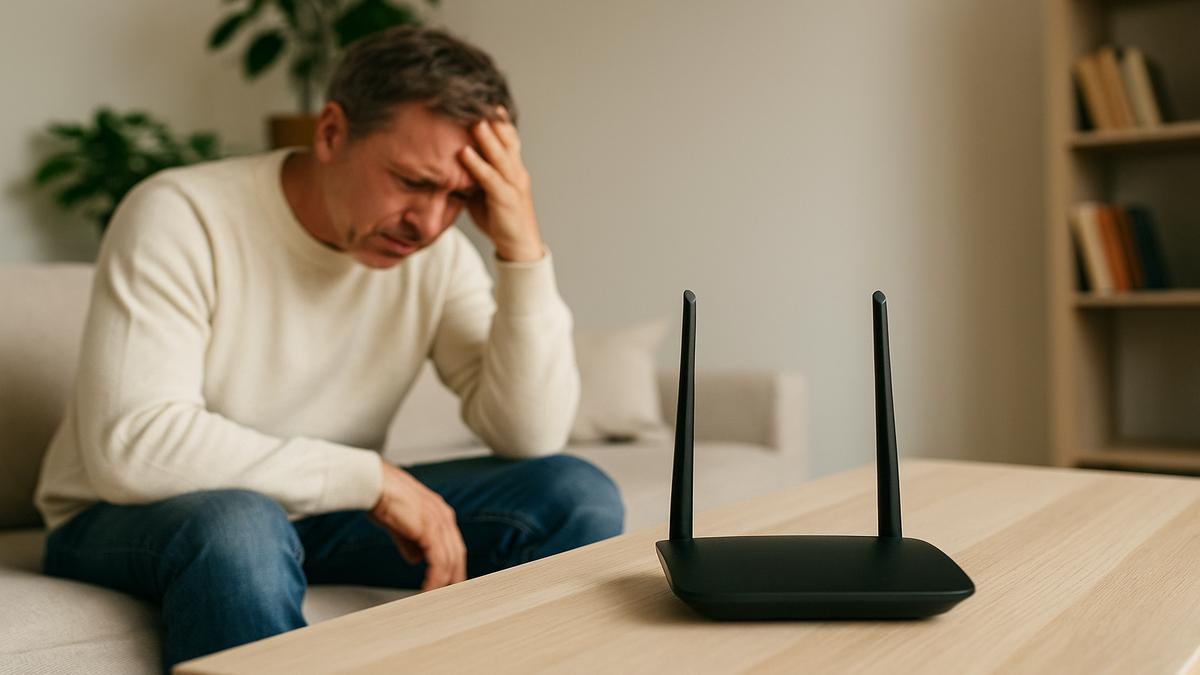
The hum of the apartment used to sound different at night. The fridge sighed, the pipes clicked, the neighbor’s television murmured through the wall like a distant river of voices. But lately, something else had crept in—a jittering restlessness that settled behind the eyes and under the skin. You might know this feeling: a low-grade hum of unease, a mind that won’t slow down, a body that can’t fully exhale. You tell yourself it’s the news, the deadlines, the endless notifications. But then one evening, in a fit of reorganizing your living room, you unplug the Wi-Fi router, slide it a few feet farther from the couch, and… something shifts.
It’s subtle at first. The air feels a little less buzzy. Your chest loosens. That soft, frazzled static in the back of your mind starts to thin out. It almost feels like when you finally silence a TV that had been on too low to notice, but loud enough to exhaust you. You sit back down, not really expecting anything grand, but your body knows before your brain catches up: there is suddenly more calm in the room.
When the Internet Lives on Your Nightstand
Walk through a modern home, and you’ll often find the same quiet, blinking heart beating at its center: the router. Curled wires, little antennae, the faint glow of LEDs trying to be unassuming. It’s tucked behind your framed photos, perched on the shelf above your bed, or stationed proudly beside the TV like just another gadget in the family.
We treat routers like background props, invisible as long as the Wi-Fi is strong. But consider, for a moment, the places where yours has lived. On your work desk, inches from your head for eight-hour days. On your bedroom dresser, humming its invisible language through the darkness while you sleep. Wedged into a corner between a chair and a plant, because “that’s where the cable outlet is.”
You sit an arm’s length away, scrolling, emailing, streaming. Your nervous system doesn’t see the router, but it feels your environment. Every light, every buzz, every small sense of pressure or openness in the air gets processed and stored. You may not consciously think, “This little blinking box is making me tense.” But your body keeps a careful ledger of everything that surrounds it.
Modern life has a way of piling stimulants onto that ledger: bright screens late at night, notification pings, fluorescent lights, the vibrating phone under your pillow. The router is just another piece in that sensory puzzle—one more signal-emitting object parked close to the space where you work, rest, or try to heal from your day.
You Don’t Need to Fear the Signal to Respect Your Space
This isn’t about panic, and it’s not about fear-mongering. Wi-Fi signals—radiofrequency waves—are non-ionizing radiation, vastly less energetic than X-rays or UV light. Regulatory bodies set exposure limits based on current evidence, and a single home router is well below those thresholds in everyday use. But living well in a wired world is not just about lab measurements—it’s also about the subtle art of how your mind and body relate to your surroundings.
Think about the last time you were in a room cluttered with cables, screens, and blinking indicators. Even if nothing was technically “unsafe,” didn’t your shoulders instinctively lift a little? Compare that to the exhale you feel when you step into a calm living room, where surfaces are soft, objects are minimal, and nothing is buzzing in the corner. Our nervous system is exquisitely tuned to atmosphere, and our devices quietly contribute to that atmosphere whether we admit it or not.
When your router sits inches from your pillow or right beside your chair, it’s not just transmitting data; it’s broadcasting “always on” energy into your psychic landscape. You glance at it, consciously or not, and it whispers: more emails, more alerts, more things to do. Even its tiny blinking lights are a kind of language—activity, traffic, demand. Your brain, already strained by constant connectivity, picks up the message: stay alert, stay engaged, don’t fully power down.
Moving your router even three feet farther away may not sound like much, but for your body’s sense of personal space, it can be the difference between feeling crowded and feeling at ease. That extra radius tells your nervous system, “You’re allowed a little more distance from the digital thrum.” It’s not a cure-all, but it’s a surprisingly potent signal of permission.
The Three-Foot Radius of Calm
Think about the invisible bubble you keep around your body—the space you don’t like strangers entering, the distance you naturally hold during conversation. That “comfort radius” exists for a reason. It’s where your brain decides: safe or threatened, calm or vigilant.
For many people, routers, phones, and screens have quietly colonized this intimate zone. They live on our laps, in our pockets, on the coffee table where we rest our feet. We’ve allowed them into the circle our nervous system reserves for loved ones and true rest.
So when we talk about “move it three feet,” we’re really talking about re-drawing that circle. Three feet is often enough to push the router out of your direct personal bubble while still keeping your connection strong. Your phone still works, your shows still stream, but your body doesn’t feel like it’s sharing the couch with a tiny glowing command center.
What changes when you reclaim that radius? For some people: fewer tension headaches in the evening. For others: falling asleep a bit faster, or waking up a little less wired. Not miracles—just small shifts that accumulate, like turning down a dimmer switch you hadn’t realized was on the brightest setting.
Sensory Design: Your Home as a Nervous System Sanctuary
Step back and imagine your home not as a storage unit for your belongings but as an ecosystem for your attention. Everywhere you look, something is either softening your nervous system or sharpening it. The placement of your router, of all things, is part of this design language.
Sit in your favorite chair and slowly turn your head. What do you see? Wires snaking out from power strips? A tangle of chargers on the floor? A router squatting on the side table, lights flickering like a tiny nightclub? Notice the subtle tightening in your jaw or the way your gaze doesn’t quite settle.
Now imagine that same scene stripped back. The cables are tucked away. The table beside you holds a plant, a book, maybe a warm lamp. The router lives a little farther off, discreet and quiet, on a higher shelf or in a hallway niche. It’s still there. It still works. But it’s not in your lap, not in your line of sight every time you look up from your thoughts.
Your environment is always talking to your body. A clean corner says: you can rest here. A tangled gadget shrine says: you have more to manage. When your router sits right inside your intimate space—especially in rooms like the bedroom or your reading nook—it becomes one more voice in that chorus of “on, on, on.”
By nudging it just three feet away, you’re rebalancing a conversation you didn’t realize you were having. You’re telling your own mind: the outside world can wait at the edge of the room while you breathe here at the center.
Finding a Better Home for the Heartbeat of Your Wi-Fi
You don’t need to call an electrician or tear open your walls to make this shift. Often, a few practical tweaks create an immediate sense of ease. Think of it as rearranging furniture for your nervous system.
| Current Spot | Subtle Stress Signal | Calmer Alternative (Move ~3 Feet) |
|---|---|---|
| On your nightstand beside your pillow | Sleep space feels like a workstation | Across the room on a shelf or dresser, away from the bed |
| On the coffee table next to the couch | Living area feels like a control center | On a sideboard against the wall or high on a media unit |
| On your desk right by your laptop | Work zone feels more frantic and crowded | Behind you on a shelf or in a corner cabinet |
| On the floor by your feet | Creates a low-level itch of clutter and cables | Mounted at waist or chest height on a stable surface |
You don’t have to exile your router to a far-flung closet where the signal dies in the bathroom. Just treat it like what it is: a functional tool, not a roommate. Give it a home that respects your comfort zone.
Listen to the Room After You Move It
The next time you have a quiet afternoon, try a small experiment. Unplug the router. Lift it—feel its surprising weight in your hands, this small box that carries so much of your day through it. Then walk it just three or four feet away from where it was. Maybe you set it on a hallway table instead of next to the bed. Maybe you tuck it behind a plant on a higher shelf. Plug it back in. Wait for the lights to blink alive again.
Now, don’t rush back to your usual scroll. Instead, stand in the original spot. Close your eyes for a moment. Notice how the air feels. Notice whether your chest feels a shade lighter, your head a touch clearer. Walk slowly around the room, as though you’re getting to know a space you’ve just moved into. What’s changed, even slightly?
Then, live with this new arrangement for a few days. Pay attention to the nights. Does your heart pound a bit less as you’re drifting off? Do you fall asleep without replaying emails in your mind? In the daytime, do you step into that room and feel a fraction more relief, like someone turned down a background fan?
Our brains are not always good at connecting cause and effect when the effect is subtle. But our bodies notice. They track patterns: “When I sit here now, I fidget less.” “When I read in bed, I’m more absorbed and less twitchy.” Sometimes, the smallest environmental edits yield the most surprising emotional returns, because they’re correcting a stressor you never named.
Beyond the Router: Editing the Buzz
Once you feel the difference a three-foot move can make, you may find yourself looking at other things differently. The phone charging on the bed instead of across the room. The laptop forever open on the kitchen table. The television glowing after midnight. You begin to sense how many tiny electronic suns orbit the center of your life, all tugging a little on your mental tides.
Moving your router is not an anti-technology manifesto. It’s an invitation to renegotiate your terms with the gadgets that shape your days. To ask: where should the heartbeat of my digital life actually live so that my human life can breathe?
You might decide to designate certain zones of the house as “quiet fields”—spaces where screens and signal-heavy devices don’t cross the line. A reading chair. The bed. The spot by the window where you drink your coffee. The router’s new home, three feet farther away, becomes part of the boundary that protects these small sanctuaries.
What you’re really doing is re-teaching your nervous system that calm is allowed here. That not every corner of your home belongs to the glow and the ping. That the invisible noise of connectivity has its proper place—and it is not pressed up against your heartbeat.
Let the Invisible World Step Back
In a forest at dusk, there is a different kind of network—root systems sharing nutrients, fungal threads passing messages between trees, invisible exchanges humming beneath the leaves. You can’t see any of it, but you can feel the effect: a steadiness in the air, a calm so complete it rearranges your breathing.
Our homes hold networks too: of data, of light, of constant connection. They don’t have to be enemies of calm. But they do ask us to be more intentional than perhaps any generation before us. When we let devices creep to the edges of our pillows and the corners of our attention, we surrender that quiet, forest-like quality our rooms could have.
Moving your Wi-Fi router three feet is not a magic trick. It is a gesture—a way of saying to yourself: I get to decide how close this world of “always on” comes to my skin. I get to set the distance between my body and the blinking things that bind me to my to-do list.
And sometimes, that small practical act is enough to open a larger door. You might find yourself dimming the lights a little earlier, silencing notifications at dinner, putting the phone on the dresser instead of under the pillow. Each small shift widens the circle of calm around you, until your home feels less like a control room and more like a clearing in the woods, where the signals of the world whisper at the edges, and you—finally—are at the quiet center.
Frequently Asked Questions
Does moving my router really affect anxiety levels?
For many people, yes—indirectly. The change often comes from reducing visual clutter, getting devices out of personal space, and softening the feeling of “constant connectivity.” The result can be a noticeable drop in low-level tension or mental restlessness.
Is Wi-Fi radiation dangerous in my home?
Current evidence and safety standards suggest that typical home Wi-Fi routers operate well within recommended exposure limits. The anxiety connection here is less about outright danger and more about how the presence and placement of devices influence your sense of calm.
How far should my router be from where I sleep?
Aim to keep your router at least a few feet—ideally across the room—from your bed. This helps preserve your sleeping space as a mental and sensory sanctuary, not an extension of your digital workspace.
Will moving the router three feet hurt my Wi-Fi speed?
In most homes, shifting the router a few feet will not significantly affect speed or coverage, as long as it stays reasonably central and not blocked by heavy walls or metal objects. You can always test signal strength on your phone in key rooms after moving it.
What if I have no other place to put the router?
Even small adjustments help. Elevate it off the floor, turn it so lights are less visible, or place a non-metal object (like a plant or book stack) between it and your resting spot. The goal is to reclaim a bit of breathing room, not to achieve perfection.

Hello, I’m Mathew, and I write articles about useful Home Tricks: simple solutions, saving time and useful for every day.