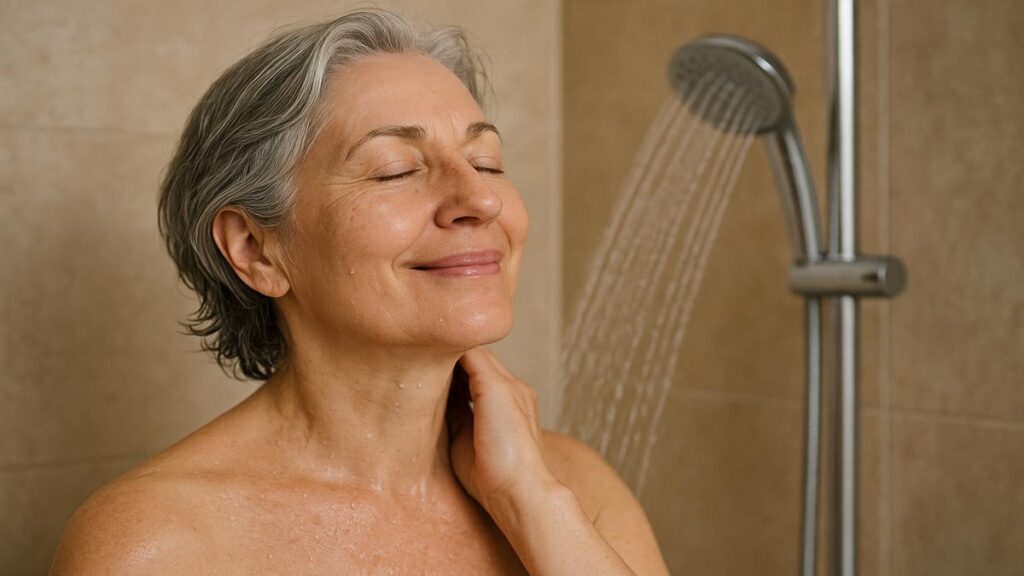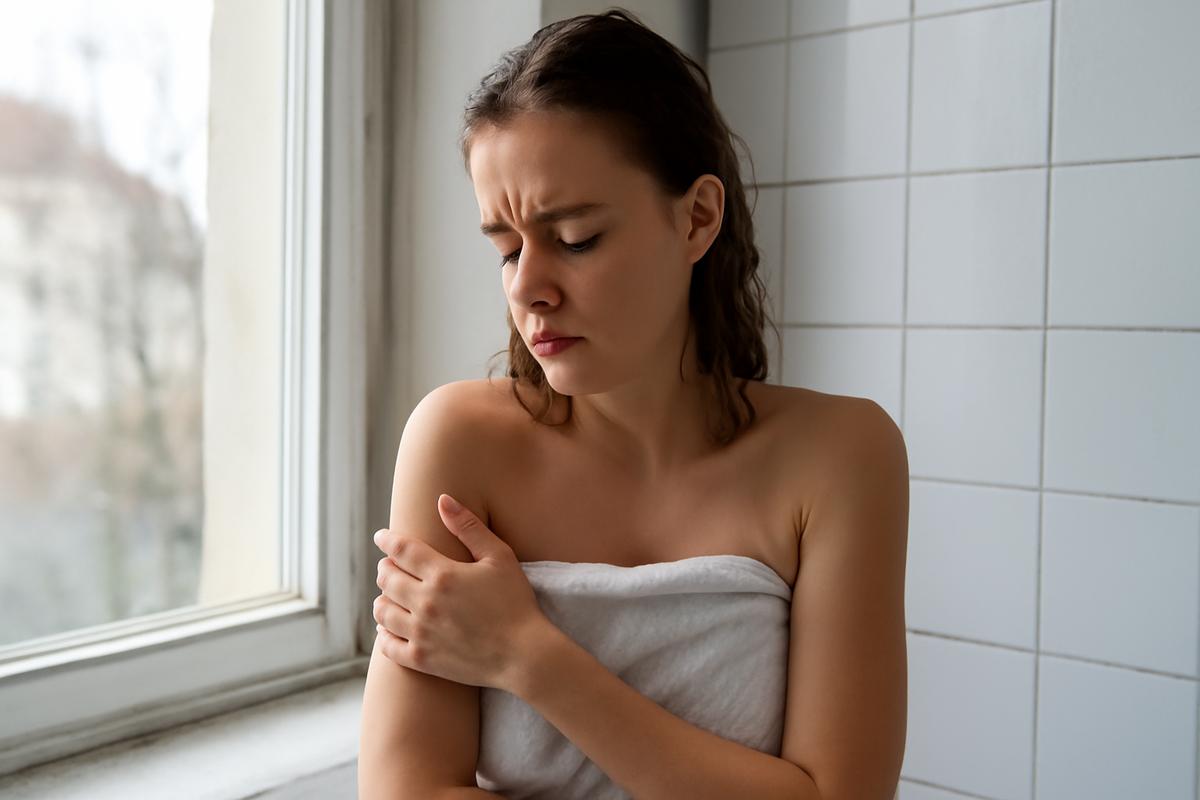
The bathroom is still fogged over when you step out—the mirror a ghostly blur, the tiles shining with tiny beads of water. Your skin is flushed pink from the heat, steam curling off your shoulders like you’ve walked out of a cloud. For a moment, it’s perfect. The world is quiet, the shower has done its work, and you feel loose and heavy and pleasantly emptied out. Then, in the time it takes to reach for your towel, a draft sneaks along the floor and crawls up your legs. A shiver darts across your spine. You wrap yourself tighter, but somehow, impossibly, you feel colder now than before you turned the water on.
When Heat Tricks the Body
It doesn’t seem fair, does it? You step into the shower because you’re chilled to the bone, hoping the scalding water will chase the cold away, and yet the moment you turn the tap off, you’re shaking. It feels like a betrayal—by your bathroom, by your own skin, by the universe’s rules of comfort.
But your body is not confused. In its quiet, biological way, it’s following a clear script—one written by physics, blood flow, and evolution. The same hot water that feels like sanctuary is actually setting you up for that sudden after-shower chill.
To understand why, imagine your body as a careful negotiator constantly balancing heat and cold. In every moment, it’s trying to keep your core—your heart, lungs, organs—at a steady, safe temperature. Your skin is the bargaining surface, where compromises are struck with the world outside: a little heat lost here, a little conserved there. A hot shower? It’s like an unexpected plot twist in the negotiation.
The warmth of the water convinces your blood vessels near the skin’s surface to open up. This widening, called vasodilation, is soothing. More blood flows close to the surface, making you feel flushed and warm. While you’re under the stream, this feels glorious. The bathroom is steamy, your skin is slick with water, and your brain reads all of this as cozy.
Then you turn the water off, and the scene changes faster than your body can adapt.
The Sudden Silence After the Shower
Listen closely to that moment right after you’ve shut off the water. There’s a strange stillness. The roar of the shower stops, and the droplets on your skin seem louder, heavier, colder. The steam begins to thin, lazily drifting upwards, and the air around you—suddenly no longer warmed by constant hot water—reveals its true temperature.
Your skin, still damp and exposed, is now at the mercy of evaporation. And evaporation, though invisible, is one of the most powerful cooling forces in your daily life. Those tiny beads of water that moments ago felt comforting are now stealing your heat as they vanish into the air.
It’s the same principle that makes sweat such an effective cooling system. When water changes from liquid to vapor, it needs energy. It pulls that energy in the form of heat from the nearest available source—your skin. As water on your body evaporates, it quietly sips warmth away from you, turning your surface temperature down notch by notch.
Your body, which had just obligingly sent warm blood rushing toward your skin thanks to the hot water, is now losing that heat faster than it can reclaim it. You’ve created the perfect storm for feeling chilled: widened blood vessels, wet skin, and cooler bathroom air working together in a kind of accidental conspiracy.
The Skin as a Battlefield
Think of your skin as a landscape after rain. When the shower stops, it’s covered in warm puddles that begin to thin and fade. The air around you becomes like a quiet wind moving over a wet field, drawing moisture up and away. You might not feel the individual molecules moving, but your nervous system certainly notices the tug of lost heat.
That first shiver? It’s not just you being “sensitive.” It’s your body firing up backup systems. Shivering is a last-resort attempt to make heat quickly—tiny muscle contractions burning energy to protect your core temperature. In the wild, this reaction might have kicked in after being caught in a cold rain. Now, it just happens after a hot shower in your tiled sanctuary.
The Illusion of Lasting Warmth
Part of what makes the after-shower chill feel so intense is contrast. While you’re under that hot cascade, your body’s thermostat gets spoiled. The warmth is constant, generous, and just a little bit excessive. Your skin temperature rises beyond its usual level of balance. When that external heat source disappears, anything below that new high suddenly feels punishingly cold.
It’s similar to the experience of stepping out of a heated pool into mild summer air. The air might actually be warm, but compared to the water that hugged your skin, it feels sharp and bare. Your senses don’t measure absolute temperature. They measure change.
That’s what happens after your hot shower. You’re not just going from “warm” to “room temperature.” You’re going from superheated to “normal,” and normal can feel like a slap in the face.
Why Hotter Isn’t Always Better
There’s another twist: if you like your showers very hot, you might be setting yourself up for an even harsher comedown. When the water is extremely warm, your body responds more dramatically. Blood vessels stretch open further; your skin heats more intensely. You may even start to sweat under the spray—a sign that your body thinks it’s overheating.
Then, when you step out, your system has to slam on the brakes. Vasodilation begins to reverse. Your body tries to pull warm blood back toward your core to protect essential organs. That shift away from your skin can make your extremities—your hands, your feet, your arms—feel especially cold.
If you’ve ever noticed that your fingers go icy after a shower, even in a warm house, that’s part of what’s happening. Your circulation is in the middle of a fast adjustment, and your perception lags just enough for your brain to interpret it as sudden chill rather than quiet recalibration.
Where the Air Joins the Story
Of course, your body isn’t the only character in this small drama. Your bathroom itself plays a crucial role—the size of the space, the temperature of the air, the presence of drafts, even the material of your floor and walls. These details all fold into the sensory story of why you feel so shockingly cold the moment the shower ends.
Walk onto a cold tile floor with wet feet, and you learn swiftly that surfaces can steal heat as efficiently as air. The ceramic or stone beneath you is a hungry neighbor, pulling warmth from the soles of your feet through conduction. Meanwhile, the air, no longer boosted by fresh steam, slips back to whatever the rest of the house is—often much cooler.
And if there’s even the slightest draft sneaking under the door or through a cracked window, your wet skin will feel it as a cutting breeze. Moving air increases evaporation speed, which in turn increases cooling. The same principle that helps a handheld fan make you feel fresh on a summer day turns cruel on a winter morning when you’re dripping and exposed in a small, echoing room.
A Quick Look at the Culprits
Several simple factors work together to create that distinctive post-shower chill:
| Factor | What It Does | How It Makes You Colder |
|---|---|---|
| Wet Skin | Holds water that evaporates after the shower | Evaporation pulls heat away from your skin |
| Hot Water | Dilates blood vessels near the surface | Increases heat loss once water is off |
| Bathroom Air | Cools quickly when the shower stops | Creates a stark contrast with your heated skin |
| Drafts & Vent Fans | Move air across wet skin | Speed up evaporation and cooling |
| Very Long Showers | Overheat your skin and surface blood flow | Make the drop in temperature feel more dramatic |
Put these together, and the mystery becomes much less mysterious. Your body is simply following the rules of thermodynamics and physiology, even when it feels like it’s personally out to get you.
The Secret Lives of Your Blood Vessels
Beneath your skin, an invisible choreography plays out every time you step into the shower. Your blood vessels are the dancers, expanding, narrowing, and shifting flow in response to temperature changes you barely register consciously.
In the cold, your body practices a kind of defensive minimalism. Blood vessels in your skin constrict, reducing flow to the surface. This keeps precious heat tucked away in your core, even if your hands and feet complain. In the heat—like during a hot shower—the opposite happens. The vessels relax, widening to let warm blood spread through your skin where it can release heat into the environment.
This widening feels pleasant. It’s part of why you feel relaxed and heavy-limbed in hot water. Your body is being given permission to loosen, and your circulation responds. But the moment you step into cooler air, that relaxed state becomes a liability. Your wide-open surface network becomes a sprawling avenue for heat to escape.
The Tug-of-War Between Core and Surface
After your shower, your body starts a tug-of-war between your skin and your core. Your brain senses the drop in skin temperature and recognizes a potential threat: If we keep losing heat like this, the core temperature might fall. So, it begins to reverse course. Surface vessels narrow again, inch by inch, trying to trap warmth deeper inside.
This doesn’t happen all at once. There’s a short window where you’re losing heat rapidly from your skin while your body is still transitioning its strategy. That limbo is precisely when you’re standing there wrapped in a damp towel thinking, Why am I colder now than before?
Your perception of cold isn’t just about actual body temperature; it’s about rate of change. Rapid cooling—even over a small temperature difference—can feel more brutal than a higher but stable chill. After a hot shower, you’re riding that steep downward slope, and your nerves are broadcasting every degree lost as a tiny alarm bell.
Small Rituals That Change Everything
Though the science behind the chill is fairly unforgiving, your daily rituals don’t have to be. With a few small tweaks, you can turn the post-shower moment from something you brace for into something you quietly enjoy.
Start with the simplest move: don’t give evaporation a head start. Instead of standing still and air-drying while scrolling on your phone or lost in your thoughts, reach for the towel immediately. The faster you pat away surface water, the less fuel the air has to steal your heat. It doesn’t have to be a frantic scrub—just firm, deliberate contact, trading wet shine for a soft, dry hush.
Then there’s the air itself. If you can safely nudge your bathroom temperature up before you step into the shower—by closing the door, using a space heater made for bathrooms, or simply timing your shower after others have warmed the room—you soften the contrast waiting for you later. Warmer air means slower heat loss, and the moment of stepping out feels less like stepping off a cliff.
Rewriting the End of the Shower Story
You can even use your shower’s final minute as a transition zone. Some people find that gradually lowering the water temperature before they step out reduces the shock. The last few breaths of lukewarm water give your body time to adjust its blood flow, narrowing the vessels bit by bit instead of demanding they pivot in a single instant.
And then there are the small luxuries: a robe waiting on a hook close by rather than across the room, a bath mat that’s soft and insulating instead of thin and chilly, socks pulled on sooner rather than later. None of these change the laws of physics, but they work with them, giving your body layers of insulation just as it’s trying to reclaim its lost warmth.
These are the details that turn a bare, utilitarian routine into a ritual of care. The heat of the shower no longer has to be followed by a grim, rushed scramble against the cold. Instead, you build an arc: rising warmth, gentle transition, easeful landing.
The Quiet Wisdom of Listening to Temperature
Underneath all this—beneath the steam, the shivers, the rituals—there’s a quieter story about how our bodies talk to us. Feeling cold after a hot shower is not a sign of weakness or hypersensitivity. It’s a perfectly tuned response from a system that has spent your entire life trying to keep you alive at a narrow, precise internal temperature.
Your skin, with its nerves and receptors, is like a storyteller of the world outside you. It alerts you to too much heat, too much cold, too much change, long before your core temperature swings into danger. The chill you feel stepping out of the shower is that storyteller raising its voice for just a moment, saying: We moved fast. Let’s steady ourselves.
Next time you finish a hot shower and that familiar cold creeps in, you might notice more than just discomfort. You might feel the faint echo of ancient survival strategies, of bodies adapting to rain, river, and wind long before tiled bathrooms and chrome fixtures existed. In your brief shiver, there’s a thread that stretches back through countless winters and countless streams.
And with a towel within arm’s reach, a robe waiting, and maybe a slightly less blazing water temperature, you can honor that story without having to suffer through it.
FAQ
Why do I feel colder after a hot shower than after a lukewarm one?
Hotter water widens your blood vessels more and warms your skin more intensely. When you step into cooler air, you lose that surface heat quickly through evaporation and conduction, so the contrast feels much sharper than it does after a milder, lukewarm shower.
Does the length of my shower affect how cold I feel afterward?
Yes. Longer hot showers give your skin more time to heat up and your blood vessels more time to dilate. That means more heat is available to be lost quickly when you step out, which can make the post-shower chill more noticeable.
Can a cold or cool rinse at the end really help?
For many people, it does. Gradually cooling the water in the last minute helps your blood vessels begin to constrict again before you’re exposed to cooler air. That softer transition can reduce the sense of shock and sometimes the intensity of the chill.
Why do my feet and hands get especially cold after a shower?
Your body prioritizes keeping your core warm. When the air feels cool after a shower, blood flow is pulled away from your extremities to protect vital organs. That shift can make hands and feet feel particularly icy, especially on cold floors.
What can I do to feel less cold after showering?
Dry off promptly, keep your bathroom as warm and draft-free as possible, use a soft bath mat, have a robe or clothes within arm’s reach, and consider slightly cooler or shorter showers. These small changes work with your body’s natural responses to help you stay more comfortably warm.

Hello, I’m Mathew, and I write articles about useful Home Tricks: simple solutions, saving time and useful for every day.