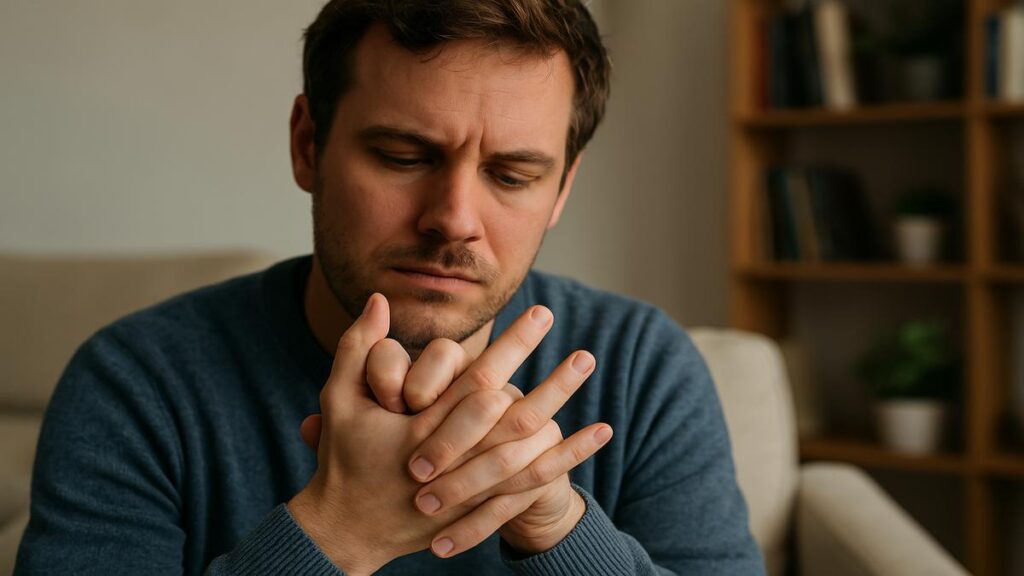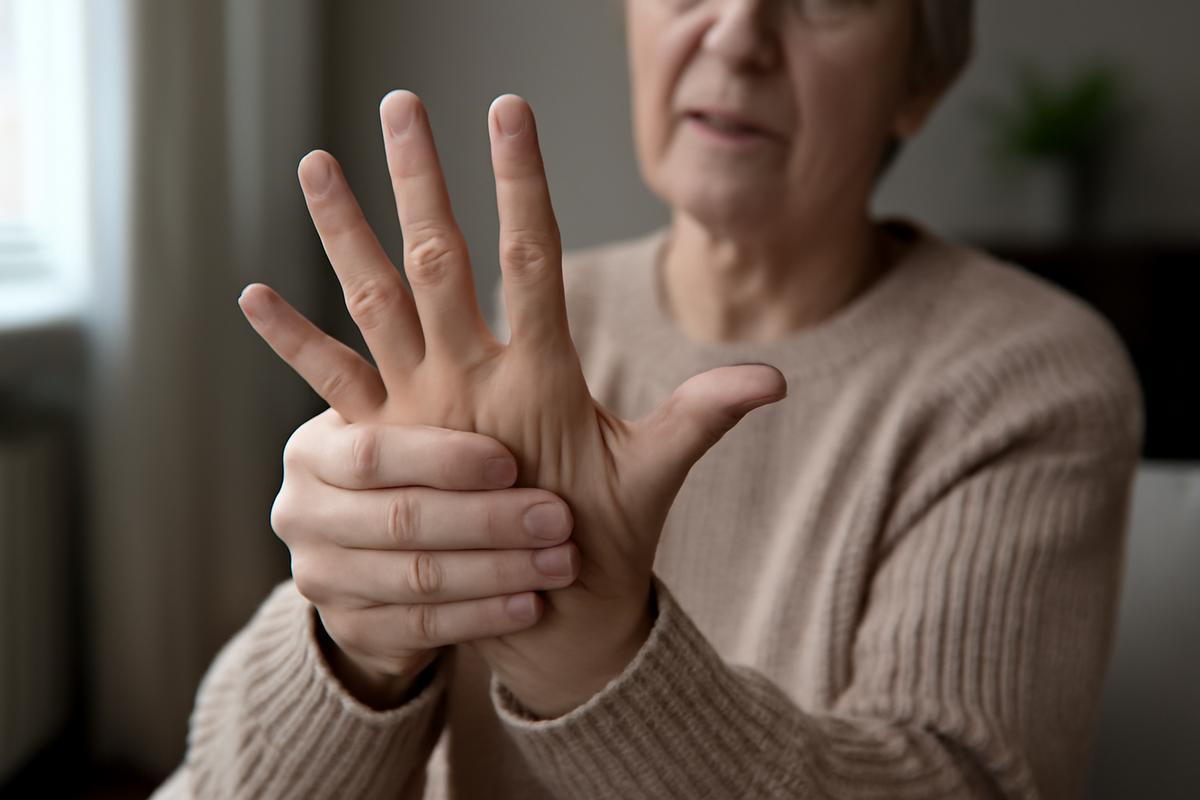
The first real cold snap always announces itself in your hands. One morning, somewhere between the kettle’s whistle and the first sip of tea, your fingers feel like someone has swapped them for carved candles—pale, stiff, a little useless. You stand there, cupping the mug, willing the heat to seep into your knuckles, and you wonder when something as simple as buttoning a shirt or turning a key started to feel like work. Winter sneaks up on your joints like that, quietly, until the small things begin to hurt.
For a lot of people, this is just “how winter is.” Fingers grow numb and clumsy, rings feel too tight, jar lids become formidable opponents. Maybe you rub your hands together, maybe you run hot water over them and flex until they surrender. But there’s a quiet, almost invisible habit—small enough to slip into a busy day—that can keep those cold-season aches from hardening into a yearly ritual. A daily rhythm that belongs as much to winter as wool socks or stew simmering on the stove.
The winter of wooden hands
Think about your hands as they move through a typical cold day. You wake up, check your phone, scroll through messages. Your thumbs and index fingers become tiny, overworked specialists. The rest of the hand just… waits. Then you head out into the icy air, shoulders hunched, fingers packed into gloves around a steering wheel, a dog’s leash, a crowded train pole. The tendons along your palms and the small joints in your knuckles contract against the cold, holding on, bracing.
Inside, the story isn’t much different. We type, click, swipe, tap. Our hands are in motion, but it’s a narrow, repetitive motion, like walking a single hallway of a sprawling house and ignoring all the other rooms. The unused spaces stiffen and grow dusty. The joints in the middle and base of each finger, the tiny muscles that spread your fingers wide like a starfish, the tendons that curl your hand into a soft fist—these are the rooms we forget to visit.
In winter, blood naturally retreats from the surface of the skin to keep your core warm. Your fingers become the furthest outposts, living on the frontier of your circulation. It’s not that your body doesn’t care about them; it’s that, in a triage of warmth, they’re not top of the list. The result? Less warmth, less blood flow, less lubrication in the joints. Movement feels like wading through syrup.
If you sit quietly sometime—on a bus, at your desk, in bed before sleep—and really notice your hands, you might catch little clues. A resistant knuckle when you make a fist. A dull ache at the base of your thumb when you pinch. That one finger that complains when you twist a doorknob. Not yet pain, maybe, but a suggestion: use me differently, or lose me slowly.
The daily habit most people skip (that your fingers crave)
Here’s the twist: the thing that most reliably keeps fingers from turning into wooden pegs in winter is not a fancy gadget, not a supplement, not a pair of space-age gloves. It’s something refreshingly ordinary, almost embarrassingly simple.
The daily habit that protects your fingers in winter is a brief, intentional ritual of full-range finger and hand movement—all joints, all directions—done consistently, once or twice a day.
That’s it. Not a random wiggle or absent-minded stretch while you’re watching TV. A few focused minutes where every finger is invited to move, warm, and remember what it feels like to be fully alive. Think of it as brushing your teeth—but for your hands. Not dramatic, not glamorous. But miss it for a few days and you’ll feel the difference.
This is how one woman I met, an illustrator named Mara, learned it the hard way. Every winter, by early December, her fingers would feel thick and stubborn. Drawing became a negotiation. Her lines grew shakier, not from lack of skill, but from uncooperative joints. She tried heated gloves, spice teas, even those disposable hand warmers tucked into her sleeves. They helped, but only temporarily. Then her physical therapist gave her a simple instruction: “Treat your fingers like you treat your teeth. They get a ritual, every day, whether you feel like it or not.”
She started with five minutes in the morning, wrapping her hands around a warm mug, then moving through small, deliberate exercises. It felt silly at first, like she was practicing scales before a concert that wasn’t happening. But by the third week of winter, she noticed her usual stiffness hadn’t arrived. The ritual had done something quietly profound: it had turned her hands from seasonal victims into active participants.
Listening to the small language of your joints
There’s a kind of intimacy that comes from paying attention to your hands. Most of us only notice them when they fail—when they drop, ache, fumble. But fingers speak earlier, and more subtly, if we’re listening.
The daily hand ritual begins before any stretching or flexing. It begins with noticing. Take a moment to simply hold your hands out in front of you. Let them hang from your wrists like they’re tired from a long day, even if it’s morning. What do they feel like from the inside? Heavy? Buzzing? Numb? Prickly with cold? This is your starting map.
Now, without forcing anything, slowly curl your fingers into a loose fist, then open them wide, like you’re reaching through cold lake water. Do this a few times. Notice which fingers are eager, which lag behind, which crackle or complain. You’re not judging, just taking inventory.
When you build a habit around this kind of gentle listening, you start catching problems early. The thumb that gets tight after too much scrolling. The ring finger that resents prolonged keyboard marathons. Instead of waiting until you’re in full-on pain, you meet those small whispers with care. Winter, with its sharp air and shorter days, is when those whispers tend to get louder. Your habit becomes a daily way of answering back, “I hear you. Let’s move.”
This is the delicate but powerful heart of the practice: using movement not as punishment or performance, but as a warm conversation between you and the fine machinery of your own hands.
The ritual: a small winter ceremony for your fingers
You don’t need equipment, special clothing, or much time. You need two things: a bit of warmth and a willingness to move slowly. Many people anchor this ritual to something they already do—brewing morning coffee, sitting at a desk, waiting for dinner to simmer.
Imagine this as a short, repeatable winter ceremony:
1. Invite warmth first
Cold metal doesn’t bend; it snaps. Your hands are kinder than that, but the idea is similar. Start by wrapping your fingers around something warm: a mug of tea, a bowl of soup, a hot water bottle, or simply running your hands under comfortably warm (not scalding) water. Let the heat soak in for 60–90 seconds. Feel it creep into your palms and the backs of your hands, chasing away that hollow winter chill.
2. Wake the wrists
Hold your forearm still with one hand and let the other wrist slowly circle, like you’re drawing a small sun in the air. Five slow circles in one direction, then five the other. This wakes up the tendons that run into your fingers, like gently shaking out the roots before tending to the leaves.
3. Slow fists, slow stars
Now, slowly curl your fingers into a soft fist, thumb resting outside, not pinned under. Squeeze very gently—not a test of strength, just a friendly hug for your own palm. Then open your hand into a “star,” stretching your fingers apart as if you’re trying to leave faint fingerprints on the air around you. Repeat 8–10 times, breathing steadily. The motion should feel smooth, like tide going in and out.
4. Finger-by-finger waves
Hold your hand out flat, palm facing down. Starting with your thumb, slowly bend just that finger down toward your palm, then straighten it again. Move to your index finger, then middle, ring, and pinky. Go one by one, like you’re playing the world’s slowest piano. Do this twice on each hand. You may notice one finger feels lazy or clunky—that’s the one that’s been dozing through your days.
5. Thumb circles and gentle pinches
Touch the tip of your thumb to the tip of each finger in turn, forming an “O” shape. Do it lightly, as if you’re handling the thinnest paper. Then slide your thumb down to the base of each finger, giving a tiny, comfortable pinch at the joint—not painful, just enough that the joint remembers it exists.
6. Palm stretch and curl
Place one hand in front of you, palm facing away, as if you’re stopping traffic. With your other hand, gently pull back on the fingers, stretching the underside of your wrist and palm. Hold for 10–15 seconds, then ease off. Flip your hand (palm facing you now) and curl the fingers down, gently guiding them into more flexion, stretching the back of the hand. Another 10–15 seconds. Swap sides.
Done with care, the entire ritual takes about five minutes, ten if you linger. The magic isn’t in doing it perfectly; it’s in doing it daily. This repeated full-range movement encourages more blood flow, keeps the synovial fluid in your joints from turning sluggish, reminds cramped muscles they have length and space. Over time, your fingers stop bracing against winter, and start moving through it.
How to fit the ritual into a busy day
The number one reason people abandon helpful habits is not because they don’t work, but because they don’t fit. The trick is to attach your finger ritual to something that already happens, like a coat hook for new behavior.
| Existing Moment | How to Attach the Habit |
|---|---|
| Morning hot drink | Do the full hand ritual while your tea or coffee cools slightly. |
| Starting work | Make it your “log-in ritual” before you touch the keyboard or mouse. |
| Lunch break | Use the first five minutes after eating for finger waves and stretches. |
| Evening TV or reading | Do slow fists and star-hands during the opening credits or between chapters. |
| Getting into bed | End your day by stretching your hands along with your neck and back. |
If five minutes still feels like too much, start with two. Do just the slow fists and finger waves. The real power is not in duration, but in repetition over time. Your hands don’t need heroics; they need reliability.
Why movement matters more than blankets
It’s tempting to think warmth alone will solve stiff fingers: thicker gloves, hotter water, another layer tucked into your sleeves. Warmth helps, absolutely. But warmth without movement is like sunlight on a frozen pond—the surface glows, but the ice still holds.
Inside every joint are tissues that thrive on being compressed and released, like a sponge drawing in fresh water. When you move your fingers through their full range, especially after they’re gently warmed, you create little waves of pressure that encourage circulation. Blood brings warmth, yes, but also nourishment—oxygen, nutrients, the small repair materials that keep cartilage and tendons from wearing down too fast.
When all you do is clench (against cold, against stress, against a steering wheel in traffic), you’re rehearsing tightness. The nervous system, ever efficient, decides that this is the default. The next time you reach for something, it chooses the familiar path: stiff, limited movement. The daily hand ritual interrupts that pattern. It says, “Here is another way. Here is wide, smooth, supple.”
Over weeks, this matters. The brain updates its map of your hands. Movements that once felt awkward become fluid. Joints that complained at dawn begin staying quiet until bedtime. You may still wear gloves, tuck your hands into pockets, wrap them in blankets on the couch. But underneath all that insulation is a living, practiced mobility that doesn’t vanish with the first frost.
This is especially important if you live with conditions like early osteoarthritis, mild carpal tunnel, or the vague “my hands just get bad in winter” diagnosis. You’re not curing anything with five minutes a day, but you are improving the environment your joints live in. You’re giving them the best possible chance to age slowly and comfortably, rather than hurriedly and resentfully.
Making it feel like care, not a chore
There’s a quiet difference between a habit you drag yourself through and one that feels like a small act of kindness. The movements might look the same from the outside, but the experience from the inside is worlds apart.
To keep your daily hand ritual from becoming another item on an endless to-do list, dress it up a little. Pair it with something that genuinely feels good: your favorite morning playlist, a candle on your desk, the first deep breaths you’ve taken all day. Move slowly enough that you can enjoy the warmth spreading into your palms, the subtle release of tension across your knuckles.
Think of it the way gardeners think of checking on their plants. It’s not just work; it’s a chance to see what’s changed—to catch new growth, or tiny problems before they become big ones. Some days your fingers will feel light and nimble; other days they’ll be stubborn and clunky. Both kinds of days are welcome. The practice is not about forcing them to behave, but about staying in relationship with them.
Over time, this changes how you move through winter in general. You might notice you grip your steering wheel less like a life raft and more like a familiar tool. You might catch yourself loosening your hold on grocery bags, rearranging your computer setup so your wrists aren’t always bent, pausing to stretch before you tackle a sink full of dishes. The ritual seeps into the rest of your life, quietly rewiring how you treat the hardest-working parts of your body.
Let winter be a season, not a sentence
Stiff fingers in winter feel, to many, like an inevitability. “That’s just what happens when you get older,” people say, blowing into their cupped hands. Or, “My joints hate the cold.” There is some truth in that—age and weather both leave their signatures. But inevitability is often just habit dressed up as destiny.
Imagine instead that winter becomes the season your hands feel most cared for. The time of year when, instead of shrinking away from the cold and hoping for the best, you lean into a daily rhythm of warmth and movement. The outside world might be hard and glittering with frost, but inside your gloves, inside your home, there is a quiet, practiced liquidity to your fingers. They still bend. They still reach. They still remember.
You don’t have to overhaul your life to get there. You don’t need to master elaborate routines or memorize long sequences. All you need is a small, steady promise: Every day, I will move my hands fully, for a few minutes, on purpose. On the days you keep that promise, your fingers will notice. On the days you miss it, they’ll forgive you—but they’ll also remind you, the next time you struggle with a zipper or wake to aching knuckles, why the habit matters.
Winter will keep coming. The air will keep sharpening, the radiators will keep clanking to life, the trees will return to their bare-boned silhouettes. But your hands don’t have to follow the same script, year after year. Wrapped around a warm mug, slowly waking each joint and tendon, you can write them a softer one.
Five minutes. A little heat. A ritual of movement. It’s small enough to fit between sips of tea, powerful enough to change how you meet the cold. The season will still be winter. Your fingers don’t have to be.
Frequently Asked Questions
How long does it take for this daily habit to make a difference?
Many people notice subtle improvements—less morning stiffness, easier gripping—within one to two weeks of consistent daily practice. More lasting changes in flexibility and comfort typically emerge over four to six weeks of sticking with the ritual.
Can this help if I already have arthritis in my fingers?
Gentle, full-range movement can often help arthritic joints feel less stiff and painful, especially in cold weather. However, it’s important to move within a comfortable range and avoid forcing any motion that causes sharp pain. If you have moderate to severe arthritis, consult a healthcare professional or hand therapist for personalized guidance.
What if my fingers hurt too much to do all the exercises?
Start small. Begin with warmth alone, then add just one or two movements that feel tolerable, such as slow opening and closing of the hand or gentle thumb-to-finger touches. You can gradually add more as your comfort improves. Pain is a signal to ease up, not power through.
Is once a day enough, or should I do this multiple times?
Once a day, done consistently, is significantly better than doing nothing and is often enough to prevent winter stiffness. If your hands are very sensitive to cold or you use them heavily for work, adding a second short session—morning and evening—can provide extra benefit.
Do I still need gloves and other warming methods if I do this ritual?
Yes. This daily habit works best as part of an overall strategy: wearing appropriate gloves outdoors, avoiding prolonged exposure to extreme cold, taking breaks from repetitive hand tasks, and keeping your whole body warm. The ritual adds active circulation and mobility to the passive warmth that clothing provides.

Hello, I’m Mathew, and I write articles about useful Home Tricks: simple solutions, saving time and useful for every day.