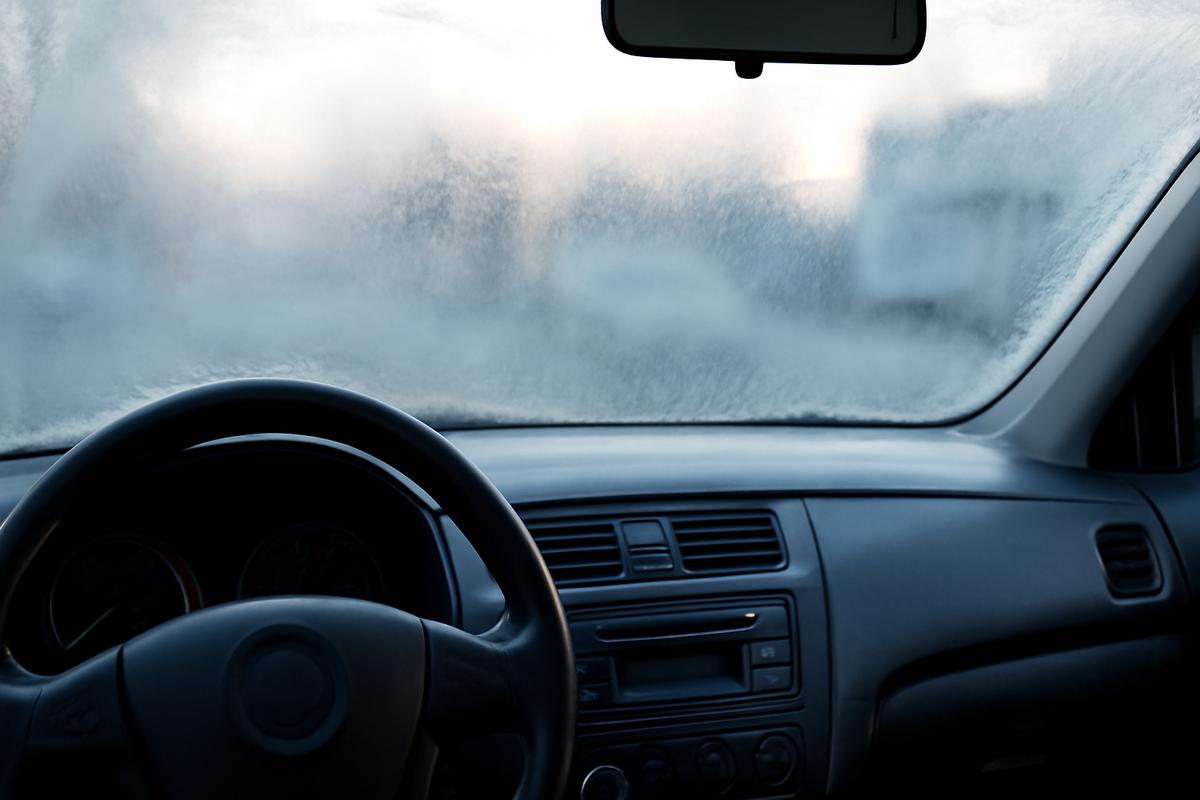
The first time it happens each year, it always feels like a small betrayal. You close the car door against the sharp, needling cold, turn the key, and wait for the engine to clear its throat. Outside, the world is winter-still: breath hanging like tiny ghosts, frost tracing delicate hieroglyphs along the edges of the windshield. For a moment, everything is quiet. Then, as you exhale, it begins—the glass clouds over, soft and milky, swallowing the world in a slow, creeping blur. Streetlights dissolve into hazy halos. The car shrinks to a dim cocoon of fabric and plastic and your own breath. And suddenly, on a bitterly cold morning when you’re already late, you’re trapped inside your own rolling fog bank, waving a sleeve at the glass like that might somehow help.
The Invisible Weather Inside Your Car
If you’ve ever sat in a parked car on a freezing morning and watched the windshield fog up as fast as you can wipe it, you’ve witnessed a tiny weather system come alive inside a few cubic meters of space. It feels personal and frustrating, but what’s happening on that glass is simply physics—moisture, temperature, and surface interaction playing out like a miniature atmosphere right in front of you.
Think of your car as a tiny climate capsule. Outside, the air is cold and often dry, especially in winter when the moisture has been wrung out by freezing temperatures. Inside, though, it’s a different world: you bring in snow on your boots, dampness in your clothes, warm breath, coffee in to-go cups, maybe a wet dog in the back seat. All that moisture, trapped within four doors and a roof, quietly builds an invisible mist of humidity around you.
Now add a cold pane of glass into that space. Your windshield and windows are like cliffs plunged into icy water—they’re usually the coldest surfaces inside your car because they’re in direct contact with the outside air. As your warm, moist breath and the accumulated humidity swirl past them, the air next to the glass cools quickly. Cooler air can’t hold as much water vapor. When it reaches its limit—what scientists call the “dew point”—that vapor turns into countless tiny droplets that cling to the glass. That’s your fog.
It’s easy to think of fog as a smudge or a film, but it’s actually a floating landscape of microscopic water beads. They bend and scatter light, softening the sharp edges of the world outside until everything looks distant and dreamy—beautiful, maybe, unless you’re trying to see the brake lights of the car in front of you.
Cold Months, Warm Bodies: The Perfect Storm
Internal fogging doesn’t happen only in winter, but it becomes relentless in the cold months because that’s when the contrast is highest: the outside world is brutally chilly, and the inside of your car is a pocket of damp warmth. Every breath you take, every wet scarf you throw onto the seat, every snow-packed boot you plant on the floor mat contributes to the growing pool of moisture in the air.
On a January morning, you might step into the car carrying invisible weather with you. The fibers of your coat cling to icy crystals that start melting the moment they feel the cabin’s relative warmth. Those droplets seep into your mats and carpet, whispering up into the air as vapor. Your shoes tread in road slush, which soaks into the floor like a slow, stubborn spill. Maybe you set a steaming travel mug in the cup holder, its breathy curls of vapor unfurling toward the windshield. In a few minutes of quiet driving, you’ve built a tiny cloud factory.
Meanwhile, your windows sit there like stone-cold mirrors pressed against the skin of winter. From the outside, frost or lingering dew may be resting on the glass, but from the inside, the surface is even colder than the air wrapping around your cheeks. The moisture you’ve brought with you drifts toward that chilled glass, cools, condenses, and lays itself down as that frustrating blur. The colder it is outside, the faster it happens. The smaller the car, the quicker the humidity builds. A packed car on a ski trip, stuffed with snow gear and bodies and breath? That’s basically a humid greenhouse trying to see through a block of ice.
Defrost buttons and air vents can feel like feeble defenses against this quiet invasion, especially when you’re in a rush. But the car isn’t conspiring against you; it’s just obeying some simple rules. Understanding those rules makes the ritual of winter driving a little less mysterious and a lot less maddening.
What’s Really Going On: A Gentle Bit of Science
You don’t need a physics degree to grasp why your car fogs up, but the science behind it is oddly satisfying, like learning the trick to a magic show you’ve watched a hundred times. At the heart of it all is a simple balance between three things: temperature, humidity, and surface conditions.
Air is like a sponge that holds water in the form of vapor. Warm air is a generous sponge; it can hold a lot. Cold air is miserly; it holds very little. When warm, moist air meets a cold surface, its capacity to hold water shrinks suddenly. The extra water has to go somewhere, so it condenses—shifts from invisible vapor into liquid droplets that collect on whatever cold surface it encounters. In your car, those surfaces are almost always the windows.
Every breath you exhale carries more water than you might imagine. On a cold day, when you watch your breath plume in front of you outside, you’re seeing that moisture condense in midair as it hits the frigid atmosphere. Inside the car, that same breath doesn’t turn into a visible cloud right away; it spreads, softens, and settles into the air until the humidity grows and grows. At some point, the air near the cold glass hits its saturation point, and that familiar milky film spreads over the windshield.
There’s a reason this happens more when you first start driving: the cabin air warms quickly from your body heat and breath, but the glass warms slowly. There’s a mismatch—a tiny storm front at the boundary where warm interior air hits bone-cold glass. Until both the air and the glass reach a new equilibrium, fog is your constant, hazy companion.
Sometimes, you’ll even notice a strange, almost oily pattern to the fog, especially if your windshield isn’t squeaky clean. Residues from interior cleaners, plastic off-gassing, road film, or even cigarette smoke can give moisture something to grip onto, exaggerating the effect. Instead of forming a smooth, faint mist, the droplets cluster, streak, and spread, making it even harder to see and even more annoying to wipe away.
The Little Things That Make Fog Worse
Not all winter mornings are equal. Some days, your windshield behaves—foggy at the edges, maybe, but mostly manageable. Other days, it feels like your car is determined to blind you from the inside out. That’s because a handful of quiet, ordinary details can nudge your car’s tiny microclimate from “slightly damp” to “indoor cloud forest.”
Moisture trapped in your car’s fabrics is a big culprit. Floor mats sopping with melted snow can be slow-release humidity bombs. Carpets that never quite dry out between commutes keep feeding water into the air, especially when the heater starts pushing warm air around your feet. Even that forgotten gym bag, full of sweat-damp clothes, is adding to the moisture load. The more water inside the cabin, the faster the fog forms and the thicker it gets.
Then there’s recirculation mode—the tempting little button with the arrow doing a loop inside a car-shaped icon. On a blazing summer day, it helps keep the cool air trapped inside. In winter, though, it can quietly sabotage your visibility. When recirculation is on, the car keeps cycling the same damp air through the cabin. Your breath, the melting snow, the coffee steam—they all just spin in a loop, ratcheting the humidity higher, until every surface of glass is begging to mist over.
Even your own habits play a role: hopping into the car after a shower with damp hair, leaving wet coats draped over seats, ignoring the fogged-up side windows because you’re focused on the windshield—all of it adds up. And so does time. The longer a car spends in cold conditions, shut tight with no chance to air out, the more moisture is waiting to leap into fog the moment you flip on the heat and start to breathe.
Why the Defogger Feels Slow—and What It’s Actually Doing
There’s a particular kind of impatience reserved for winter mornings: the anxious tapping of fingers on the steering wheel while the vents exhale a reluctant stream of lukewarm air onto the glass. You hit the defog button, hear the fan boost, and somehow the windshield just…gets foggier for a moment before it even begins to clear. It feels wrong, but it’s actually proof that the system is working with the physics, not against it.
When you activate your car’s defog or defrost setting, you’re doing two important things at once: directing warm air onto the glass and, usually, turning on the air conditioning compressor—even in winter. That seems counterintuitive until you remember that air conditioning is less about cold and more about drying. The AC pulls moisture from the air, wringing it out on the evaporator coil like a towel over a sink. The air that then blows across your windshield is drier, even as it warms up.
At first, that warm air can briefly increase the humidity right near the glass as it nudges more vapor out of the cabin air. The fog may thicken, bloom, and reach up the glass in swirls. But as the AC quietly scrubs moisture out of the air and the glass starts to warm, the dew point shifts. The air next to the window can hold more water without condensing it, so the droplets retreat, bead, and vanish. It’s like slowly lifting a veil.
This is also why cracking a window can feel miraculous, even in biting cold. Opening the glass a finger’s width allows the steamy, humid interior air to escape and invites the drier, colder outside air in. That new air, despite being frigid, often contains less moisture than what’s been lingering around your face and dashboard. The total humidity drops, giving your windows a fighting chance.
If your car never seems to fully clear, or if the fog returns almost as soon as you turn the fan down, it might mean your system isn’t drying the air as well as it should. A neglected cabin air filter can restrict airflow, while an AC system low on refrigerant might not be pulling out as much moisture as it once did. In older vehicles, seals and weather stripping can leak, letting in dampness that lingers stubbornly in the upholstery and under the carpets.
Why Your Side Windows and Mirrors Join the Party
The windshield gets most of your attention—and for safety, it should—but the side windows and mirrors have their own quiet rituals in winter. You may notice your door glass fogging even after the windshield has cleared, or your side mirrors beading with tiny droplets that scatter headlights into a shimmering blur.
Side windows are often less directly heated than the windshield. The air flowing from your vents tends to favor the front glass, leaving door windows at the mercy of whatever warmth happens to drift their way. They’re also closer to your breath and body when you turn your head or speak, catching little bursts of warm, moist air. That’s why the glass beside your face often fogs fastest, sketching the faint outline of where you’ve been sitting with ghostly precision.
Mirrors, too, tell their own side story. Some are electrically heated, silently radiating just enough warmth to keep fog and frost at bay. Others just endure, their cold surfaces flashing in and out of clarity as droplets form and roll away. A single crowded intersection, illuminated by the glare of headlights and streetlamps, can turn those damp mirrors into abstract art—beautiful, if you’re not trying to change lanes.
What ties all of this together is the same principle: the dance of moisture and cold surfaces in a small, enclosed space. Your car is none other than a tiny weather laboratory, and in winter, every pane of glass is a front line.
Taming the Indoor Cloud: Practical, Gentle Fixes
Once you see your foggy windshield as natural weather instead of a personal attack, the ways to calm it start to feel less like desperate hacks and more like gentle nudges. You’re not fighting your car; you’re helping it reach a calmer climate.
The first ally is ventilation. Whenever you’re battling fog, turn off recirculation. Let the car breathe. Switching to fresh-air mode lets damp indoor air escape and invites drier outdoor air in, even if it stings a little at first. Pair that with the defog setting, which usually combines heat and air conditioning, and you’ve both lowered the humidity and warmed the glass—the perfect double act.
Small habits make a quiet difference. Knock snow off your boots before you climb in. Shake excess slush from floor mats now and then, or even bring them inside to dry overnight. Hang wet coats outside the car instead of across the seats, and don’t leave damp gear in the trunk for days. The less moisture your cabin materials soak up, the less your windows will fog the moment the temperature drops.
Keeping the inside of your glass clean may be the most underrated trick of all. A thin film of grime or residue gives condensed water places to cling, turning that light mist into thick, patchy haze. Wiping the glass with a good, residue-free cleaner makes it harder for droplets to grab on, so they spread more evenly and stay thinner—and that means better visibility, even when the air gets humid.
If you live where winter feels endless, you might even consider moisture absorbers inside the car—simple desiccant packs or canisters left on the dashboard or under a seat. They work slowly, drawing extra moisture out of the air while the car sits overnight. It’s not a cure-all, but it can tilt the balance in your favor on the iciest mornings.
Internal Fog vs. External Fog: Two Sides of the Same Glass
There’s a small moment of confusion that happens when your car fogs up on the outside instead of the inside. On certain cool, damp evenings or early autumn mornings, you might start driving only to realize the haze is on the exterior of the windshield. You swipe the inside with your sleeve; nothing changes. It’s like the weather has chosen the wrong side.
External fog forms when the air outside is humid and slightly warmer than your cooled-down glass. Dew collects on the outer surface, softening the world just as internal condensation does. The fix is different, too: you’ll need wipers, washer fluid, or a few moments of air directed toward the glass from the outside, sometimes combined with a bit of heat, to bring the temperatures back into balance.
Internal fog, the wintertime nuisance, is the opposite: warmer, humid air inside the car meets colder glass. It’s almost poetic—the same pane of glass mediating between two battling climates, sometimes blurring from one side, sometimes the other, always reminding you how thin the barrier is between your small moving shelter and the weather beyond.
A Tiny Climate You Carry With You
By the time you reach the end of your winter commute, the glass usually clears. The engine has settled into its steady rhythm, the heater sighs warmly, and the car’s little indoor weather system has stabilized. The fog lifts, and the world outside sharpens back into its crisp, winter edges—bare trees, salt-streaked curbs, the pale, low sun.
What began as an annoyance is, in a quieter way, a reminder. Your car is not just metal and mechanics; it’s a capsule of moving air, warmed by your presence, dampened by your breath, shaped by every small habit you bring with you. Each fogged window is a fleeting portrait of that interaction, a record of warmth meeting cold on a clear, fragile surface.
So the next time your windshield clouds over as you pull the door shut against the bitter dark of a January morning, you’ll know: this isn’t your car misbehaving. It’s your own small weather system, reacting exactly as nature designed. And with a bit of understanding—some fresh air here, a tap of the defog setting there—you can guide that tiny climate back toward clarity, watching as the mist thins and the road ahead emerges, line by line, from the fog.
Quick Reference: Why Your Car Fogs Up Inside
| Cause | What’s Happening | How It Affects Fog |
|---|---|---|
| Cold glass surfaces | Windows stay much colder than cabin air in winter. | Moist air condenses on glass, creating fog. |
| Warm, moist breath | Every exhale adds invisible water vapor to the air. | Increases humidity until dew point is reached at the glass. |
| Wet clothes, boots, and mats | Melted snow and damp fabrics slowly release moisture. | Keeps the cabin air humid, causing persistent fogging. |
| Recirculation mode | Air keeps looping inside without fresh, dry outside air. | Humidity builds up, exaggerating fogging on all windows. |
| Dirty interior glass | Residues give moisture more to cling to. | Fog appears thicker, patchier, and harder to clear. |
| Defog/defrost setting | Uses warm, dried air (often with AC) aimed at the glass. | Reduces humidity and warms the glass, clearing fog gradually. |
FAQ: Internal Car Fog in Cold Months
Why does my car fog up faster when there are more people inside?
Each person breathes out warm, moist air, and brings in extra moisture on clothing, shoes, and hair. In a small enclosed space like a car, that added humidity quickly pushes the air toward its dew point, so condensation forms faster on the cold windows.
Is it bad to use the air conditioner in winter to clear fog?
No. In fact, it’s helpful. The AC system doesn’t just cool; it dries the air. Using it with warm temperature settings helps reduce humidity inside the cabin, which clears internal fog more efficiently without making you uncomfortably cold.
Why does my windshield fog on the outside sometimes instead of the inside?
External fog forms when the outside air is humid and slightly warmer than your cooled windshield, often after a cool night followed by a damp morning. Moisture condenses on the outside surface. You’ll usually need wipers, washer fluid, or a few moments of airflow and gentle heat to balance the temperature and clear it.
Can a dirty cabin air filter make fogging worse?
Yes. A clogged cabin air filter can restrict airflow through your ventilation system, making it harder for the defog/defrost function to move enough dry air across the windshield. That can slow down the clearing process and make fogging feel more stubborn.
Why does the fog sometimes return after I thought I cleared it?
If the cabin is still very humid—because of wet mats, damp clothes, or recirculation mode—fog can reappear once the glass cools down again or the airflow decreases. Reducing the overall moisture inside the car and keeping fresh-air mode on helps prevent the fog from returning so quickly.
Do anti-fog products really work on car windows?
Some anti-fog treatments can help by changing how water droplets form on the glass, encouraging a thinner, more transparent film. They’re not a complete solution, though. You’ll still need good ventilation, dry air, and clean glass to keep internal fogging under control.
Could a leak or water intrusion be causing chronic fogging?
It’s possible. If your car smells musty, carpets stay damp, or you see water pooling under mats or in the trunk, leaks around doors, windows, or the heater core might be feeding constant moisture into the cabin. In those cases, fixing the source of the dampness is essential to stop chronic internal fogging.

Hello, I’m Mathew, and I write articles about useful Home Tricks: simple solutions, saving time and useful for every day.