The first time I tasted a slice of bread that had been frozen for three months and somehow still tasted like it came out of a bakery oven an hour ago, I didn’t believe it. It had that delicate crackle when I tore it open, the crust whispering apart, the crumb still tender and springy. There was no telltale freezer smell, no sad, dry chewiness. Just warm butter sinking into soft pockets, the way bread is supposed to be. And the secret that made it possible was not a gadget, not a high-end freezer, not a special brand of flour. It was a bag. Actually, the way that bag was used.
The Problem Hiding in Your Freezer
Open your freezer and look at your bread situation. Be honest. Is there a half-eaten loaf shoved into a thin supermarket bag, its plastic rim twisted into a stressed knot? Maybe you’ve got a paper bag folded over in a hopeful little cuff, or a zip-top bag that’s been opened and closed so many times it’s starting to look fogged and tired. Somewhere in there, slices lean at strange angles, a little frosted, a little mysterious. How long have they been there? Two weeks? Two months? Who knows.
Freezing bread sounds so simple that we almost never question how we’re doing it. Toss it in a bag, chuck it in the cold, done. But the reality is, most of us are freezing bread in exactly the way that guarantees it will taste like a ghost of itself when we come back for it. The crust turns tough, the crumb dries, the flavors flatten. It’s not that freezing is the enemy. It’s how we do it.
Here’s the quiet truth: bread is fragile. The same delicate structure that makes good bread stretchy, soft, and aromatic is also what makes it prone to freezer burn, staling, and weird smells. And yet, when we understand what’s actually happening inside that loaf—and how one simple bag trick can change the game—you can keep bread bakery-fresh for up to three months without feeling like you’re eating leftovers.
The Science Behind Bread That Stays Beautiful
Let’s step inside a loaf of bread for a second. When it first cools after baking, the starches and proteins are perfectly aligned in this soft, pillowy network that traps moisture. That’s why fresh bread feels springy under your fingers and smells like warmth and toast and yeast and possibility. Over time, even at room temperature, these starches start to recrystallize. Moisture migrates. Bread goes from tender to firm, then to dry, then to something that makes pretty decent croutons.
Freezing slows this staling process way down. Cold temperatures lock the structure in place. But there’s a catch: your freezer is basically a desert made of ice and moving air. The cold air wants moisture, and if your bread isn’t properly protected, it becomes a donor. That’s freezer burn—little ice crystals, dry patches, off smells. Add in oxygen that seeps through thin or torn packaging, and your bread gets oxidized, stale, and sad.
So the question becomes: how do you freeze bread in a way that prevents moisture loss, shields it from air, and preserves the texture and flavor the way a bakery would want you to taste it?
The answer is less about fancy tools and more about treating bread like the fragile, living memory it is. And that’s where the double-bag trick comes in.
The Bag Trick: How Bakeries Would Freeze Bread at Home
Imagine you’re tucking your bread into bed for a long winter’s nap. You wouldn’t just throw a thin sheet over it and hope for the best. You’d layer it. You’d keep out the drafts. You’d give it some breathing room, then seal in the comfort. That’s basically what this trick does—only for your bread.
Step 1: Slice and Cool Before Anything Else
Start with bread that’s fully cooled to room temperature. If it’s even slightly warm when it goes into the freezer, that gentle warmth turns into condensation, which becomes ice crystals, which later become soggy patches or dry pockets when you thaw it.
Now decide how you want to eat it later. If you’re a toast person, slice the loaf completely. If you like to tear off hunks or use it for sandwiches, you might divide the loaf into big sections—halves or thirds. Whatever you choose, think in “use-sized” portions. You only want to defrost what you’ll eat within a day or two.
Step 2: Wrap in a First Protective Skin
Take each portion or a stack of slices and wrap them tightly in something that hugs close:
- Uncoated parchment paper
- Beeswax wrap
- Plastic wrap (if that’s what you have)
This “first skin” is what keeps the surface of the bread from directly facing the freezer air. Don’t crush the bread, but do press out excess air. Think snug, not strangled.
Step 3: The Bag Trick—Double Barrier, Minimal Air
Here’s the move that changes everything.
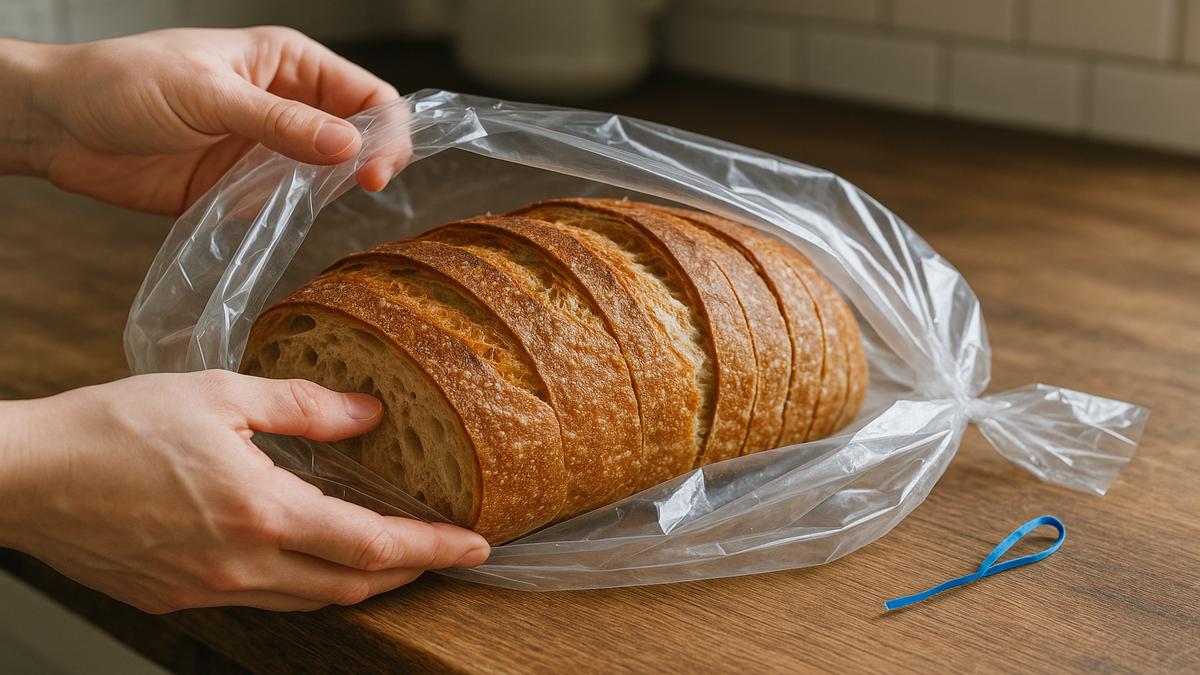
Place your wrapped bread into a sturdy, reusable freezer bag—something thicker than the flimsy plastic your loaf came home in. Press out as much air as you can, either by gently squeezing or by using the water displacement method: seal the bag most of the way, lower it into a bowl of water so the water pushes air up and out, then seal the last inch.
Now, and this is the part most people skip, slip that first bag into a second freezer bag or reusable silicone bag. You don’t have to press every molecule of air out this time; you just want a second shield. Seal it well.
This double-bag layer does three crucial things:
- It blocks freezer odors from sneaking in.
- It drastically reduces moisture loss, so your bread doesn’t dry out.
- It buffers against temperature swings when you open and shut the freezer door.
Label the outer bag with the date. That’s it. You’ve given your bread its own tiny climate, safe from the harsh world outside.
Step 4: Freeze Fast, Store Smart
Lay the bag flat in a single layer at first, so slices or chunks freeze quickly and evenly. Once they’re solid, you can stand them upright like books on a shelf or stack them like tiles. Just avoid burying bread near heavily scented foods—like fish or garlic—no matter how well it’s wrapped. Over months, a freezer is a patient storyteller, and smells will wander.
How This Trick Changes Your Mornings
The real magic of this method isn’t just that it technically works. It’s the way it folds itself into your life. Picture this: you wake up on a Tuesday in late winter, and it’s still dark outside. The kitchen is hushed, the air a little cool on your bare feet. You open the freezer and pull out a bag that you tucked away weeks ago.
Inside, slices of seeded sourdough or buttery brioche or rugged whole grain are neatly stacked like a promise. You open the outer bag, then the inner, and there’s no rush of frosty smell, no whitish crust of ice. Just bread. Still soft inside, ready for the toaster or the pan.
Drop a frozen slice into the toaster and listen. It crackles softly as frost gives way to warmth. When it pops, the edges have reacquired their delicate crispness, the center is soft, and when you press a fingertip into it, it springs back. A sheen of butter, a drizzle of honey, maybe a slice of cheese. And you realize that this bread, which you bought or baked months ago, hasn’t become “freezer bread” at all. It’s just…bread.
Thawing Without Ruining the Magic
Freezing bread right is half the story. Thawing it well finishes the tale. Fortunately, the rules are simple and kind to your schedule.
- For slices: Toast straight from frozen. No need to thaw first. Use a slightly lower setting than usual, then pop it back in for a shorter second cycle if needed. This keeps the outside from scorching while the inside warms through.
- For chunks or half-loaves: Take them out of the freezer bag but leave them in their first wrapped layer. Let them thaw at room temperature for 1–3 hours, depending on size.
- For full loaves: Thaw at room temperature, still wrapped, then re-crisp in a 160–170°C (320–340°F) oven for 8–12 minutes to wake up the crust.
The wrapping matters here. Leaving the first layer on while thawing lets moisture redistribute gently inside the loaf rather than racing out into the open air.
How Long Does It Really Stay “Bakery-Fresh”?
If you’ve only ever tossed bread into the freezer in a lone, thin bag, the idea of three months might sound exaggerated. But with this double-bag trick and proper slicing and wrapping, three months is a very comfortable window for most styles of bread: sourdough, sandwich loaves, baguettes, enriched doughs like challah or brioche.
Is there a difference between bread frozen for one week versus three months? Yes—but it’s subtle. Over time, even well-protected bread gradually loses a bit of delicacy. Yet compared to an unwrapped or poorly wrapped loaf left just a few weeks in the freezer, the improvement is night and day. The key is the protective microclimate you’ve created around your bread: less air, fewer temperature shocks, almost no moisture migration.
Here’s a quick comparison to see what kind of results you can expect when you change your freezing habits:
| Freezer Method | What Happens to the Bread | Taste & Texture After 2–3 Months |
|---|---|---|
| Thin store bag, loosely tied | Lots of airflow, moisture escapes, freezer odors creep in | Dry, cardboardy, off-smell, tough crust |
| Single freezer bag, no pre-wrap | Better barrier, but air and ice crystals still form on surface | Edible, slightly dry, noticeable “freezer” taste |
| Wrapped + single freezer bag | Good protection from dehydration and odors | Quite good, minor loss of delicacy |
| Wrapped + double freezer bag (bag trick) | Excellent shield from air, moisture loss, and temperature swings | Soft crumb, crispable crust, close to bakery-fresh |
Making the Habit Stick
Once you feel how much better frozen bread can be, it stops being a backup plan and starts becoming a quiet luxury. It lets you buy that beautiful crusty loaf from the farmer’s market without guilt. You don’t have to race against staling. You can slice, wrap, and tuck most of it away for some future morning you haven’t met yet.
A few simple shifts help this habit become second nature:
- Freeze early, not late. Don’t wait until the bread is already going stale. Freeze it the day you buy it or the day you bake it, once it’s fully cool.
- Think in portions. Ask yourself: “How much will I eat in two days?” Freeze the rest in wrapped, double-bagged bundles.
- Keep a “freezer bread” zone. Dedicate a small area where bread lives, away from strong-smelling foods.
- Reuse the outer bag. Use the inner layer for direct contact, the outer for protection. You can label, reuse, and rotate.
Before long, freezing bread well feels less like an extra chore and more like an act of kindness to your future self. A little envelope of comfort, waiting to be rediscovered.
FAQs
How long can I really keep bread in the freezer with this method?
Using the wrap-plus-double-bag method, most breads stay in excellent condition for up to three months. After that, they’re still safe to eat but may slowly lose some flavor and tenderness.
Do I have to slice the bread before freezing?
You don’t have to, but slicing first is more convenient. Slices can go straight from freezer to toaster. For crusty boules or artisan loaves, you can freeze in halves or quarters if you prefer, then thaw and warm them in the oven.
Can I use paper bags instead of plastic or silicone bags?
Paper bags alone don’t offer enough protection from moisture loss or freezer odors. You can wrap bread in parchment or paper as a first layer, but you’ll still want a well-sealed outer freezer bag.
What if I don’t have freezer-specific bags?
Regular plastic bags are better than nothing, but they’re thinner and let in more air over time. If that’s what you have, double up and press out as much air as possible. When you can, switch to thicker freezer bags or reusable silicone bags for better results.
Why does my frozen bread sometimes taste like the freezer?
That flavor comes from exposure to air and absorbing surrounding odors. The double-bag method minimizes both. Make sure bags are well sealed and keep bread away from heavily scented items.
Can I refreeze bread once it’s thawed?
It’s best not to. Each freeze-thaw cycle changes the crumb structure and dries the bread more. Freeze in sensible portions so you only thaw what you’ll use within a day or two.
Is this method good for all kinds of bread?
Yes, it works well for most types: sourdough, sandwich loaves, whole grain, brioche, challah, and rolls. Extremely delicate pastries or breads with lots of toppings may need gentler handling, but the bag trick still helps preserve their quality.
Do I need a vacuum sealer for best results?
No. A vacuum sealer can help, but it’s not necessary. Careful wrapping, pressing out air, and using the double-bag method create more than enough protection for three months of storage.

Hello, I’m Mathew, and I write articles about useful Home Tricks: simple solutions, saving time and useful for every day.