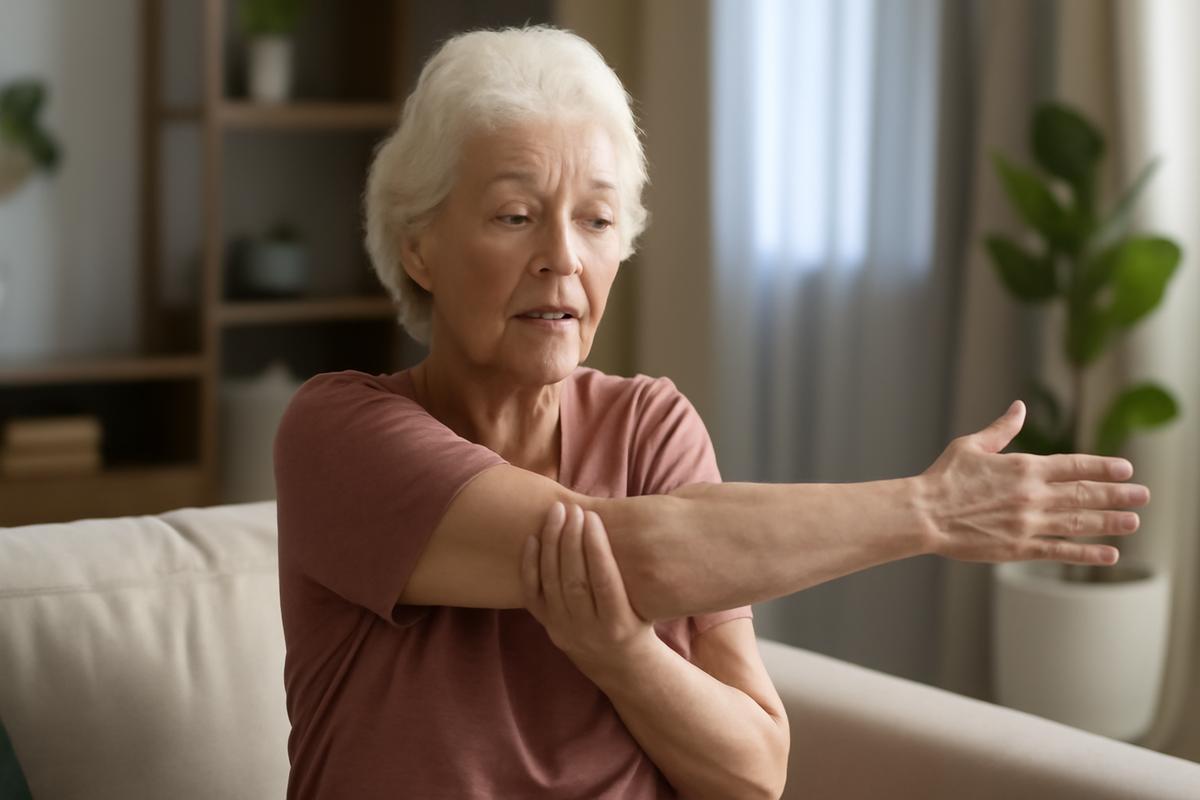
The first thing Doris noticed was the silence. Not the quiet of an empty house, but the soft hush of the early morning—before the kettle boiled, before the neighborhood dogs started their commentary on the mailman, before the world remembered it was supposed to hurry. She sat at the edge of her bed, one slipper on, one slipper missing, and her lower back humming its familiar, dull complaint.
“I used to jump out of bed,” she muttered, half to herself and half to the dusty light filtering through the curtains. Her body didn’t exactly hurt; it just felt…shorter, compressed, like someone had quietly taken a few inches from her overnight. She twisted a little to reach her sock on the floor and froze, that quiet hum in her hip suddenly tightening into a warning. A tiny flash of panic, a sharp inhale, then stillness.
This was how her days began now. Carefully. Cautiously. Negotiating with muscles and joints that once did their job silently, invisibly, asking for nothing in return. At seventy-three, Doris walked daily, stretched “when she remembered,” and had a neat little calendar her doctor would be proud of—checkmarks for movement, hydration, and medications. But there was one stretch she never did. One move she thought was “for people who did yoga in tight pants,” not for grandmothers with grocery lists and grandchildren who liked to race her to the end of the driveway.
She didn’t know yet that this single skipped stretch—the one she’d shrugged off for years—was quietly stealing her balance, her confidence, her easy grace. It was waiting for her in the tightness of her hips, in the stiffness in her lower back, in the way her stride had shortened without her fully noticing. It was the stretch nearly every senior skips…and most eventually regret.
The Forgotten Stretch Hiding in Plain Sight
Ask a group of older adults what they stretch, and you’ll hear the usual suspects: calves, hamstrings, maybe the shoulders if they’re feeling ambitious. Ankles get a bit of a roll. Neck gets a gentle circle. And then, that’s that. They move on with the day, feeling like they’ve done their due diligence.
What almost never makes the list? The hip flexors.
These are the muscles at the front of your hips—the ones that help you lift your knees, climb stairs, stand up from a chair, and walk with a steady, confident stride. They are deceptively small, often quiet, and almost always overlooked. Yet they hold a remarkable amount of power over how your whole body moves.
Picture them as the hinges on a well-loved garden gate. You rarely think about them—until, one day, the gate doesn’t swing as far or as freely. It catches. It squeaks. It doesn’t open all the way anymore. You might oil the handle, fix the latch, repaint the wood—but if you ignore the hinge, the gate’s movement will always feel off.
That’s what tight hip flexors do, especially in older adults. They slowly pull the front of the body forward, tilting the pelvis and shortening the steps. The lower back picks up the slack, working harder, tightening more. The knees and ankles start absorbing forces they weren’t designed to handle alone. You might call it “just getting older.” But more often than we admit, it’s years of sitting and shuffling and never once giving the front of the hips the long, gentle opening they so desperately need.
The Moment You Realize Something’s Been Missing
Doris realized it in the garden.
It was late spring, that soft, forgiving season when the air smells like damp soil and shy blossoms. The tomato seedlings were ready to go into the ground. She loved this part—kneeling, digging, tucking each tender green stem into the earth as though it were a small promise. For decades, she had knelt easily, moving between crouching and standing with the fluid efficiency of someone who never once thought, “Can my body still do this?”
But this year, as she tried to lower herself, her hips hesitated. Not her knees, not her ankles—her hips. It felt like a hidden cord from the front of her thighs to her lower stomach had grown too short, refusing to let her sink all the way down.
She grunted. She tried again, this time holding onto a fence post. She managed to get there, slowly, but getting back up was a negotiation.
On the third plant, she gave up and sat on an upturned bucket instead, scooting herself backward like a cautious crab. She laughed out loud—part amused, part unsettled.
Later that week, when her daughter mentioned a simple stretching routine her physical therapist had suggested, the phrase caught her ear: “Don’t forget to stretch your hip flexors. That’s the one everyone skips.”
Doris blinked. “My what?”
Her daughter pointed to the front of her hips. “These. The ones that tighten when you sit a lot.”
Doris thought about her morning coffee in the same chair, her afternoon reading in the same chair, her evening shows in the same chair. And then she thought about her careful, shortened stride when she walked to the mailbox.
The One Move Seniors Skip—and Why It Matters So Much
The stretch Doris had never met—the one many seniors skip until their bodies insist otherwise—goes by a few names. You might hear it called a hip flexor stretch, a half-kneeling lunge stretch, or simply “that move where you kneel and lean forward.” No matter what you call it, the idea is the same: you gently lengthen the muscles at the front of your hips that have been shrinking into themselves for years.
Here’s what those tight hip flexors can quietly influence over time:
- Posture: Tight hips pull your pelvis forward, tipping the spine and encouraging a hunched stance.
- Balance: When your hips can’t move freely, your body compensates, making you feel less stable on your feet.
- Stride length: Every step becomes a little shorter, a little more tentative.
- Lower back discomfort: Your back picks up the slack from hips that won’t extend properly.
- Confidence: When movement feels limited, people subconsciously move less—and feel older than they are.
Now imagine the opposite. Picture your hips as doors that can swing open just a bit more. Your step lengthens naturally. Standing up from a low chair feels easier. Walking uphill feels less like a battle. You don’t have to think so hard before turning or reaching. That’s the quiet, powerful gift of this single stretch.
And unlike dramatic gym movements or complicated yoga flows, this one is simple, slow, and adaptable—even if getting down on the floor isn’t your favorite thing anymore.
How to Gently Stretch Your Hip Flexors (Without Feeling Like a Pretzel)
Think of this less as “exercise” and more as a conversation with a part of your body that’s been ignored for years. No forcing. No bouncing. Just a patient, curious, steady opening.
Option 1: Supported Standing Hip Flexor Stretch (Great If Kneeling Is Hard)
- Stand facing a countertop or sturdy chair, lightly holding for support.
- Step your right leg back about one stride length, keeping your toes pointing forward.
- Bend your left knee slightly and keep your right leg mostly straight.
- Gently tuck your tailbone under (as if you’re zipping up a snug pair of pants) and think of lifting your chest.
- You should feel a gentle stretch at the front of the right hip and upper thigh.
- Hold for 20–30 seconds, breathing slowly.
- Switch sides.
Option 2: Half-Kneeling Hip Flexor Stretch (If Knees Allow)
- Kneel on a soft surface (pillow or folded towel under your back knee).
- Place your right foot forward so your right knee is bent at about 90 degrees, left knee on the ground behind you.
- Hold a chair or the side of a couch for balance.
- Gently tuck your tailbone under and shift your hips just slightly forward—not your whole body, just the pelvis.
- Keep your chest tall and avoid arching your lower back.
- Feel that slow, deep stretch at the front of the hip on the side with the knee on the floor.
- Hold 20–30 seconds, breathing easily, then switch sides.
It may feel almost too simple. But for muscles that have spent years in a sitting position, this quiet lengthening is like opening a window in a stuffy room. Do it consistently, and the room starts to feel different.
How Often Should You Do It? A Quick Reference
| Goal | Frequency | Hold Time |
|---|---|---|
| Maintain current mobility | 2–3 times per week | 20–30 seconds per side, 1–2 rounds |
| Improve flexibility and stride | 4–5 times per week | 30–45 seconds per side, 2–3 rounds |
| Ease hip and low back tension | Daily, if comfortable | Gentle 20–30 seconds per side, 1–2 rounds |
When the World Feels Bigger Again
For Doris, the change didn’t come like a revelation. It came like the slow, steady return of an old song she used to hum without knowing. She added the standing hip flexor stretch to her mornings, often with the kettle boiling in the background. At first she barely felt anything. Then, about a week in, she noticed the stretch arrive like a soft tug at the front of her thigh and deep in the crease of her hip.
Two weeks later, she realized something else: walking to the mailbox no longer felt like a small chore. There was more space in her step, more length. Her feet seemed to land where she intended them to, not a few inches short. When she turned to look behind her, her whole torso moved with her instead of her feet shuffling in hesitant little half-steps.
One evening, as the sun slipped low and painted the pavement pink, her grandson yelled, “Race you to the tree, Grandma!” She opened her mouth to decline automatically. Then she noticed her body leaning forward, ready, almost curious.
They didn’t exactly sprint. But they moved together down the driveway in a kind of lopsided, laughing jog. Halfway there, she realized something: she wasn’t afraid of tripping. Her legs knew where they were. Her hips didn’t feel locked and short; they felt like part of a chain that was finally moving together again.
Was it only the stretch? Not entirely. She still walked every day. She still moved regularly. But that one new habit—the one she’d skipped for most of her life—had quietly unlocked parts of her body that had been closing down for years.
Small Ritual, Big Return
There’s a quiet kind of power in tiny daily rituals. A cup of tea you never skip. A phone call every Sunday. The way you always stop to smell the basil when you pass the herb pot. Adding a simple hip flexor stretch to your day can become one of those grounding, nourishing rituals—one that doesn’t demand much, yet gives steadily back.
Think of it as a check-in with your future self. Each time you pause, hold on to the back of a chair, and ease your hip open, you’re sending a small message forward in time: I want you to move easily. I want you to walk to the bakery without thinking about every step. I want you to bend down to tie your shoes without rehearsing how you’ll stand back up.
For many older adults, regret doesn’t come from a single dramatic injury. It comes from years of “I’ll just skip it today,” from assuming a shrinking range of motion is inevitable and unchangeable. The hip flexor stretch is not a miracle cure. But as simple, accessible tools go, it is one of the most quietly powerful things you can do for your aging body.
Making the Stretch Feel Safe, Not Scary
If the idea of stretching your hips brings up a flicker of anxiety—What if I fall? What if it hurts? What if I do it wrong?—that’s normal. The goal is not to push through fear. The goal is to build trust with your own body, little by little.
Here are some ways to make this move feel more like a friend than a threat:
- Use lots of support: A countertop, a sturdy chair, even a walker can be your anchor. Holding on doesn’t make the stretch less effective.
- Stay in the “gentle zone”: You should feel mild to moderate stretching, not sharp pain. If it hurts, back off until it becomes a whisper, not a shout.
- Move slowly: Take a few seconds to get in and out of the position. There is no prize for speed here.
- Breathe: If you catch yourself holding your breath, soften, and exhale slowly. Tight breath often brings tight muscles with it.
- Start tiny: Even a 10-second hold per side is a beginning. Consistency matters more than intensity.
With time, many people are surprised: not just by how their hips feel, but by how their sense of space, stability, and confidence changes. The world around them feels slightly larger again—stairs less ominous, uneven ground less threatening, that patch of weeds in the garden more inviting to kneel beside.
From “I Wish I Had” to “I’m Glad I Did”
Ask older adults what they regret physically, and a theme echoes quietly beneath the larger stories. Not “I wish I had run marathons,” but “I wish I had taken care of my joints sooner.” Not “I wish I had gone to the gym every day,” but “I wish I hadn’t let myself get so stiff before I did something about it.”
The irony is that the body, at nearly any age, is still listening. It still responds to kindness, to patience, to movement. It won’t become twenty again, but it can become more itself again—less locked, less guarded, less braced against every movement.
The hip flexor stretch—the one move so many seniors skip and later regret—doesn’t require equipment, youth, or even much time. It just asks for a few quiet minutes and a bit of curiosity. In return, it can soften the edges of daily life: standing up, walking forward, bending down, reaching back.
One morning, months after Doris first discovered that missing stretch, she found herself lowering to the ground beside her garden bed. She held onto the fence post as usual, but this time her hips opened without protest, the front of her body lengthening like a sigh. She planted the tomatoes herself—no bucket, no workaround. When she finally stood, she pressed her hands into her thighs, pushed through her feet, and rose.
Her back felt calmer. Her step felt surer. The world around her, from the mailbox to the maple tree at the end of the street, felt not smaller with age, but reachable.
It wasn’t magic. It was one small move, repeated often enough to matter.
Frequently Asked Questions
Is it safe for all seniors to do hip flexor stretches?
Most older adults can safely perform gentle hip flexor stretches, especially the supported standing version. However, if you have had recent hip surgery, severe arthritis, balance problems, or pain that radiates down the leg, talk to your healthcare provider or physical therapist before starting.
What if I can’t kneel because of my knees?
You don’t need to kneel to benefit. Use the standing version with a countertop or chair for support. You can also do a seated variation: sit tall near the edge of a chair, slide one leg back (toes tucked under), and gently lift your chest while tucking your tailbone under to feel a light stretch in the front of the hip.
How long does it take to notice a difference?
Some people feel a change in tightness within a week of consistent practice. For many, noticeable improvements in stride, posture, or comfort when standing up can appear within 3–6 weeks of doing the stretch several times a week. Everyone’s timeline is different, but consistency is key.
Can this stretch help my lower back?
It can. Tight hip flexors often pull the pelvis forward, increasing strain on the lower back. Gently lengthening them may reduce some of that tension. However, if your back pain is severe, new, or accompanied by numbness, tingling, or weakness, seek medical guidance before relying on stretching alone.
Should I stretch before or after walking?
Either can work. Doing a very gentle version before a walk can help your hips feel more open. Many people prefer a longer hold after walking, when the body is warm. Choose the time that helps you be most consistent—morning by the kitchen counter, after a stroll, or before bed as part of a wind-down routine.
What if I feel unsteady while stretching?
Increase your support. Hold the back of a sturdy chair with both hands or stand near a wall or countertop. Keep your stance smaller and your movement slower. If you still feel unsafe, consult a physical therapist who can modify the position to match your balance level.
Is one side usually tighter than the other?
Yes, many people notice one hip feels tighter. This can come from habits like always crossing the same leg, favoring one side when standing, or past injuries. It’s common and usually not a cause for alarm. Be extra gentle on the tighter side and give it time; don’t force it to “catch up” in one day.
Can I overdo this stretch?
It’s possible, especially if you push into pain or hold for very long periods right away. Signs you’re overdoing it include lingering soreness, sharp pain, or feeling more stiff the next day. Keep the stretch in the mild to moderate range, build up gradually, and remember: a little, often, is better than a lot, once.

Hello, I’m Mathew, and I write articles about useful Home Tricks: simple solutions, saving time and useful for every day.