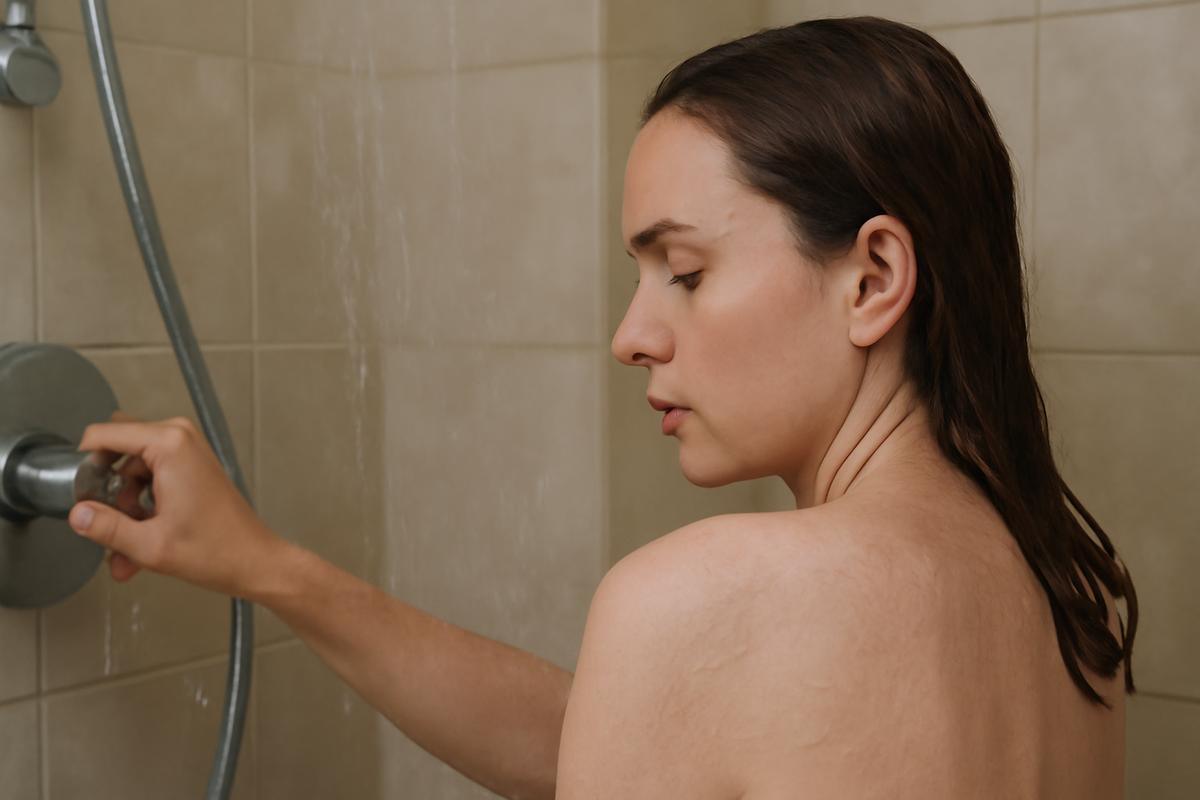
The hottest part of the day, for most of us, isn’t noon under the blazing sun. It’s 7:00 a.m. behind a closed bathroom door, steam billowing, water hissing from the showerhead. You step in, let the warmth crash over your shoulders, and for a few blessed minutes the world goes quiet. The mirror fogs. Your muscles loosen. If you have dry skin, it feels like a small miracle at first—the tightness softens, the itch eases, the flakiness seems to melt away. You stay a little longer than you meant to. Just one more minute. Maybe two.
Then, sometime later—maybe at your desk, maybe on your commute, maybe under the covers that night—you feel it. That familiar pull. The itch at your shins. The tightness across your cheeks. The faint, dusty snow of flakes if you drag a fingernail across your arm. You slather on another layer of moisturizer and blame winter, or heaters, or “just my skin.”
But the real culprit might be the very thing that feels so good: your shower temperature.
The Silent Scald: When Comfort Turns Against Your Skin
Spend a moment inside the shower with all your senses turned up. The sound of water is almost thunderous in the small space, a rainstorm contained in tile and glass. Steam curls off your shoulders and spirals upwards, tracing ghostly shapes on the fogged mirror. You breathe in the warm, dense air and feel it slide down your throat, comforting and heavy, like a wool blanket for your lungs.
This kind of heat is persuasive. It whispers that more is better: hotter water, longer showers, thicker steam. And your brain believes it, because heat is relaxing. It distracts from stress, from sore muscles, and yes, from dry, itchy skin. You stand there thinking, finally, my skin doesn’t feel so tight, not realizing that just beyond the doorway, a slow desert is forming across your arms and legs.
Under that liquid comfort, there’s chemistry at work. Your skin isn’t just a blank surface; it’s a living, breathing barrier, carefully arranged like a brick wall. The “bricks” are your skin cells. The “mortar” is a delicate mix of natural oils, fats, and moisture—your skin’s own defense system against the outside world. That barrier keeps water in and irritants out.
Hot water doesn’t respect that wall. It barges in like a bulldozer, dissolving and washing away the very oils your skin needs to hold itself together. Each extra minute you lean into that steamy stream, you’re not just rinsing away the day—you’re stripping away your skin’s ability to stay hydrated on its own.
The Temperature Trap: Why Hot Showers Feel Good but Hurt Dry Skin
Here’s the twist: your skin can feel temporarily better under hot water, even while it’s being damaged. It’s like scratching an itch—you get instant, delicious relief, but the itch always comes roaring back stronger.
Hot water does three sneaky things to dry or sensitive skin:
- It melts your skin’s natural oils. These oils, called lipids, work like a waterproof jacket, slowing down how quickly water escapes from your skin. When they’re washed away, your skin loses moisture faster, even if you drown it in creams later.
- It disrupts your skin barrier. The outer layer of your skin—the stratum corneum—is like a carefully built wall. Heat and long exposure to water swell and disturb those “bricks,” leaving tiny gaps. Through those gaps, water quietly leaks out, and irritants slip in.
- It triggers inflammation. If you’ve ever stepped out of a hot shower with bright pink or red skin, that’s not “healthy glow.” That’s mild heat damage. Over time, this constant irritation can make dry skin even more reactive and sensitive.
Your body tries to cope. It may crank up oil production in some places while leaving others painfully parched. It may respond with itchiness that flares especially at night, or after toweling off, or the moment you stop applying lotion.
The cruel part? Our brains are wired to love the instant hit of relief. The warmth, the softness, the sense of being “loosened” and comforted. So we do what humans always do with anything that feels comforting: we repeat it. Again. And again. Each hot shower adding another invisible layer to the cycle of dryness.
Finding the Sweet Spot: What “Warm Enough” Actually Feels Like
Most people don’t measure their shower temperature; they just spin the tap to what feels good. Over time, your sense of “normal” resets. Yesterday’s pleasantly warm becomes today’s lukewarm, and you unconsciously edge the dial a little hotter. Before long, “comfortable” is edging into “spa-like,” and your skin is paying the price.
The sweet spot for skin is not a spa-level soak. Dermatologists often suggest lukewarm water—a vague phrase that sounds deeply unappealing when you’re chilled to the bone after a long day. But lukewarm doesn’t mean cold. Think of it like this:
- If your skin turns pink or red in the shower, the water is too hot.
- If you see clouds of thick steam billowing out of the bathroom every time you open the door, it’s too hot.
- If your mirror fogs completely, edge the temperature down a little.
- If your skin feels tight or itchy within 15–30 minutes after your shower, that’s your skin telling you the water was too hot or the shower too long.
“Comfortably warm” water should feel pleasant but not scalding, soothing but not intense. When you step in, you shouldn’t need to inch forward shoulder by shoulder, bracing yourself against the heat. It should feel welcoming right away, not like something to slowly “get used to.”
To make this more concrete, here’s a simple way to reframe the experience: your shower is not where you go to chase heat; it’s where you go to gently clean and reset your skin. The ritual can still be soothing—the sound of water, the scent of your soap, the few minutes of solitude—but the temperature no longer has to be extreme to feel good.
| Shower Habit | What It Feels Like | What It Does to Dry Skin |
|---|---|---|
| Very hot, steamy showers | Intensely relaxing, muscles loosen, mirror fully fogged | Strips oils, damages barrier, leads to more dryness and itch |
| Moderately warm showers (10–15 minutes) | Comfortable, little or no skin redness afterward | Cleans without over-stripping, kinder to dry or sensitive skin |
| Quick lukewarm showers | Less dramatic warmth, but still soothing once you adjust | Helps skin hold on to moisture, supports long-term hydration |
| Ending with a brief cool rinse | Refreshing, wakes you up, slight goosebumps | Can calm redness and reduce post-shower water loss |
The Post-Shower Moment: Where Dryness Really Begins
Step out of the shower and freeze the frame. Tiny droplets cling to your skin, like a thousand miniature mirrors catching the bathroom light. This is the moment that decides whether your skin will stay soft—or turn into parchment paper by evening.
Within minutes, that water begins to evaporate. As it does, it pulls moisture from your skin along with it, like a small, invisible draft. This happens to everyone, but if you’ve just taken a hot shower, your skin barrier is already weakened. It’s like trying to hold water in a cracked cup.
The mistake many people make is waiting too long to moisturize—or skipping it entirely. They dry off fully, wander around the house, check their phone, get dressed, and then later, when the itch starts, reach for a random lotion. By that time, the water loss has already done its work.
For dry skin, the most important part of your entire shower happens after you turn the water off:
- Pat, don’t scrub. Rubbing your skin vigorously with a towel is like sanding wood; it creates friction and irritation. Instead, press the towel gently into your skin, leaving it just slightly damp.
- Moisturize within a few minutes. Think of your moisturizer as a lid you’re placing over that captured dampness. Apply a cream or ointment while your skin is still a little dewy—not dripping, but not fully dry.
- Pick the right texture. Lotions (thin, runny) can evaporate quickly. For very dry skin, thicker creams or ointments tend to seal in moisture better.
It’s a small ritual, almost mundane. Dab, smooth, breathe. But this is how you teach your skin that showers aren’t an attack; they’re a truce. Over time, this consistent care matters more than the most luxurious body wash or fancy soap.
Rewriting the Ritual: How to Keep the Joy Without the Damage
You don’t have to give up the ritual of your shower to protect your skin. You just have to rewrite it slightly—tuning down the intensity, turning up the intention.
Picture this new version of your routine:
You turn on the water and wait—not for thick, ghostly clouds of steam, but for a gentle warmth. When you place your hand under the stream, it feels pleasant, inviting, but not like the prelude to a sauna. You step in and let the sound of the water be your comfort, rather than its scald.
You move with purpose. Ten minutes, maybe twelve. Enough time to wash your hair, cleanse your skin, breathe deeply. You linger in the feeling of solitude, the simple act of standing in a small private universe while water cascades down. When you soap your body, you skip the harsh scrubs. You choose a mild, fragrance-light cleanser, especially on the driest parts of your body. Maybe you don’t wash your whole body with soap every single day—just the areas that need it.
As the shower ends, you resist the urge to crank the heat up “just for a second more.” Instead, you consider a brief cool rinse, like a closing note. You shut off the tap, step out, and feel the air wrap around you.
Then you shift gears. Towel in hand, you press, not drag, letting the fabric absorb what it can without scraping your skin. Within a few minutes, almost on autopilot, you reach for your moisturizer. Maybe it lives within arm’s reach of your shower for this very reason.
You smooth it in, noticing how your skin feels beneath your fingers—less like dry paper, more like soft fabric. Over the next weeks, as you keep this up, you see small changes. The itch quiets a little. The dull ashy tone on your legs softens. Those white, chalky lines on your shins begin to fade. Your skin, it turns out, was never the enemy. It was just asking for a kinder ritual.
Listening to Your Skin: Small Clues, Big Messages
Dry skin doesn’t shout at first. It whispers. Fine lines that look deeper when you smile. Clothing that catches on rough patches. A faint itch that only appears when you’re tired or stressed. These aren’t just annoyances; they’re signals.
Pay attention to what your skin does in the hour after your shower:
- If your face feels tight, like it’s a size too small, your water is probably too hot or your cleanser too harsh.
- If your legs or arms start to itch as they dry, your shower might have been too long, too hot, or followed by no moisturizer.
- If you see more flakes on dark clothing or sheets after shower days, your barrier is struggling.
It’s easy to shrug and blame the weather, your age, “just genetics.” And yes, some skin is naturally drier, some conditions like eczema make things more challenging. But for many people, improving their showers—especially the temperature—shifts the whole story of their skin more than they expect.
The most powerful change is often the least dramatic. No miracle product. No complicated routine. Just a small twist of the faucet, a few minutes less under the spray, a habit of sealing in moisture before life rushes back in.
In a world that sells us solutions in jars and bottles, it’s strangely grounding to realize that sometimes the biggest difference begins not with what you add, but with what you turn down.
Frequently Asked Questions
How do I know if my shower is too hot for my skin?
If your skin looks pink or red afterward, feels tight or itchy within 30 minutes, or if the bathroom fills with heavy steam and fully fogged mirrors, your water is likely too hot for dry or sensitive skin.
Can hot showers cause long-term skin damage?
Repeatedly taking very hot showers can weaken your skin barrier over time, leading to chronic dryness, increased sensitivity, and more frequent irritation or flare-ups, especially if you already have conditions like eczema.
What is the ideal shower temperature for dry skin?
A comfortably warm, lukewarm temperature is best—warm enough to feel pleasant, but not so hot that it turns your skin pink or produces clouds of thick steam. It shouldn’t feel intense or stingy when you first step in.
How long should I stay in the shower if I have dry skin?
Aiming for about 10–15 minutes is a good guideline. Longer showers, especially with hot water, increase moisture loss and worsen dryness.
Does it help to end my shower with a cold rinse?
A brief cool or slightly cooler rinse at the end can help calm redness and may reduce post-shower water loss, but it doesn’t replace using a good moisturizer afterward.
What kind of cleanser is best for dry skin in the shower?
Choose a gentle, fragrance-light or fragrance-free body wash labeled for dry or sensitive skin. Avoid harsh soaps or heavily perfumed products, especially on already dry or irritated areas.
When is the best time to apply moisturizer after a shower?
The best time is within a few minutes after you towel off, while your skin is still slightly damp. This helps trap existing moisture and supports your skin’s barrier more effectively.

Hello, I’m Mathew, and I write articles about useful Home Tricks: simple solutions, saving time and useful for every day.