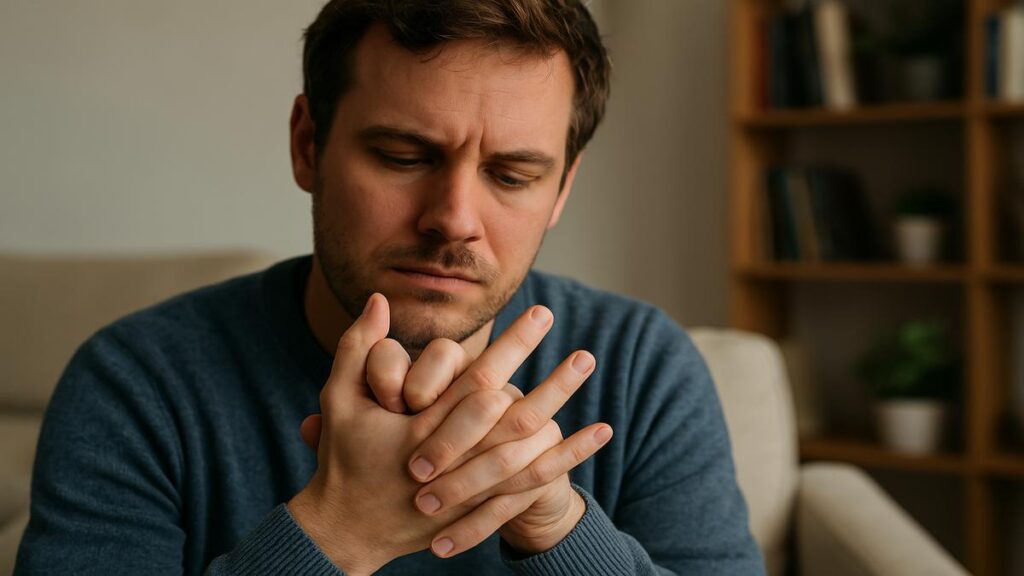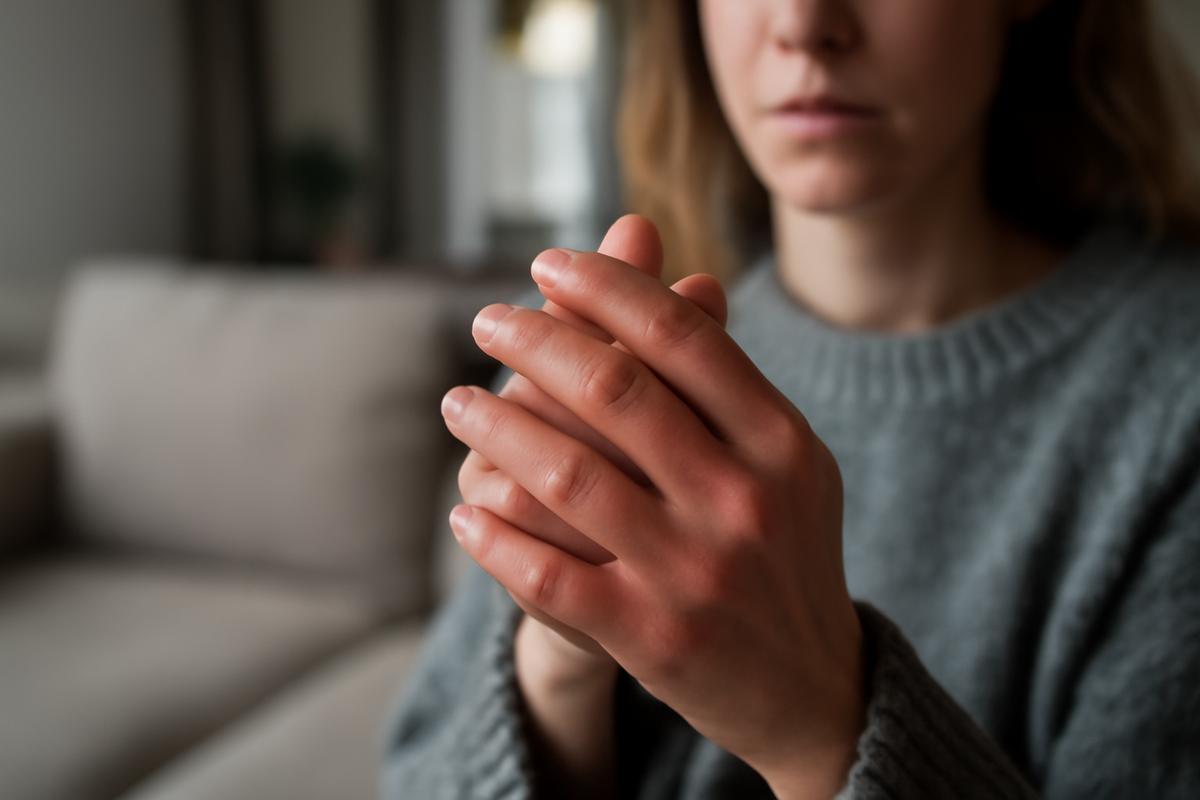
The first thing you notice is not the quiet hum of the heating vent or the low murmur of conversations around you. It’s your fingers. They are the center of your awareness, like ten tiny alarm bells chiming at once. While everyone else in the room casually scrolls on their phones or cradles warm mugs, your hands feel like they’ve been left outside on a frosty porch. You tuck them under your thighs, blow on them, press them together until the knuckles whiten. Still cold. And you find yourself wondering, not for the first time: why do my hands always feel colder than everyone else’s?
The Secret Winter Under Your Skin
Imagine, for a moment, that your body is a city at night. Your heart is the power plant, pumping warm blood down highways of arteries, out into side streets of veins and alleys of capillaries. Now imagine that a sudden storm blows in—a gust of cold air when you step outside, a drop in indoor temperature, or even a spike of stress. In an instant, the city responds. Streetlights dim in the outskirts so the city center can stay bright. Non-essential neighborhoods lose power so the core can stay alive. That’s exactly what your body does with heat.
Your hands and feet are “outskirts”—far from the central organs that keep you alive. When your body senses cold or stress, it pulls warm blood inward, away from the extremities, to protect the vital organs: heart, lungs, brain. Blood vessels in your fingers and toes narrow, a process called vasoconstriction, and the warmth drains away. The skin at the tips of your fingers, with its thin layer of tissue and rich web of nerves, becomes a sensitive weather station, registering even tiny shifts in temperature.
But here’s where it gets interesting: some people’s internal cities are just more conservative with their energy. Their systems react more quickly, more intensely. While your friend across the table still has blood coursing comfortably into their fingers, your body has already flipped the emergency switch, dimming the lights in your hands to keep the center glowing. To them, the room feels “a little cool.” To you, the air feels like it’s crawling under your skin.
The Invisible Tug-of-War in Your Blood Vessels
If you could zoom way in on your hands, down to the level of the blood vessels just beneath your skin, you’d see a constant tug-of-war. On one side: signals that say “open up, send blood to the skin, let the heat out.” On the other: signals that shout “close down, pull in, hold the warmth close.” This dance is run by your autonomic nervous system—the quiet, backstage part of your brain and nerves that also controls your heartbeat, breathing, and sweating without asking you first.
When you walk into a cool room, your body quickly makes calculations. Temperature of the air versus temperature of your skin. Your activity level. Even your emotional state. Stress, for example, doesn’t just live in your mind; it flows through your bloodstream. Adrenaline and other stress hormones tighten blood vessels in your skin, especially in your hands. It’s the leftover echo of a time when cold fingers on a spear or bow didn’t matter as much as pumping blood to your muscles and heart so you could run or fight.
If your hands are often cold, it might mean your personal tug-of-war is especially biased toward conservation. Your system leans toward “shut the windows, save the heat,” even when others’ bodies are still lounging around with the doors wide open.
When Being Cold-Handed Is Just Part of Who You Are
There’s a quieter truth behind your cold fingers: sometimes, they’re just part of your natural design. Spend an afternoon in any shared office or classroom and you’ll notice a theme. One person is in a T-shirt, another in a thick sweater, a third wrapped in a scarf like a cocoon, each convinced the thermostat is obviously on the wrong setting. We like to imagine there’s a single “comfortable” temperature, but your body’s idea of comfort is yours alone.
Metabolism is one of the main characters in this story. People with a naturally slower metabolism may generate less internal heat, making it harder to keep their hands and feet toasty. Those with a lean build, especially lower body fat, can also shed warmth faster. Fat, for all the cultural noise around it, is a decent insulator; less of it, and you cool more quickly, especially at the extremities.
Then there’s simple body geometry. The farther a part of your body is from your heart, the more chances it has to lose heat along the way. Long arms, narrow wrists, slim fingers—they can all affect how quickly your hands lose heat. The skin on your fingertips is thin but richly supplied with nerves, so even a modest temperature drop can feel dramatic, like a soundtrack turned up just a little too loud.
There are also subtle differences in how our nervous systems run. Some people’s blood vessels switch from “open” to “closed” more rapidly. Some have naturally lower blood pressure. Some have more sensitive temperature receptors in the skin. None of these mean something is wrong; often, it’s just the way you’re wired. Your cold hands might be as much a part of you as your laugh or the way you walk.
Hormones, Cycles, and the Mystery of Cold Hands
If you’re someone who menstruates, there’s another rhythmic layer wrapped into this story: hormones. Estrogen, in particular, has a quiet but powerful influence on your blood vessels and how they respond to both heat and cold. Higher estrogen levels can make blood vessels a bit more reactive, more prone to tightening in response to cooler air. This is one reason many women report feeling colder, especially in their hands and feet, at times when those hormone levels are shifting.
Your internal temperature can fluctuate slightly over the course of your menstrual cycle, and your perception of temperature changes along with it. On some days, a mild breeze in the office feels like you’re sitting under an air vent in mid-January. On others, the same breeze hardly registers. None of this is imagined—it’s chemistry translated into sensation.
Even beyond hormones, circulation can be influenced by hydration levels, iron status, general fitness, and how much you move during the day. A long stretch of sitting at a desk, muscles quiet, heart rate low, encourages your body to ease into conservation mode. The body thinks, “We’re not moving much; let’s hold heat close to the core and stop wasting it on the edges.” And your hands whisper their familiar, icy complaint.
When Cold Hands Are More Than Just Cold Hands
Of course, there are times when those icy fingers are trying to tell you something more important. Most of the time, cold hands in a cool room are exactly what they seem: a normal response to an environment your body reads as a little chilly. But when you always feel colder than everyone else, or your fingertips change colors dramatically, or your cold hands come with heavy fatigue, pain, or other symptoms—it’s worth listening a bit more closely.
For some people, cold hands are part of a condition called Raynaud’s phenomenon. In Raynaud’s, the blood vessels in your fingers (and sometimes toes) tighten up more dramatically than usual, often in response to cold or stress. Fingers may turn white, then blue, sometimes red as the blood returns, and you might feel numbness, tingling, or pain. It can look almost like someone flipped a switch in your skin.
Other times, chronically cold hands can be a quiet hint of something like low thyroid function, anemia, or low blood pressure. A thyroid that’s underactive may slow your metabolism, trimming down your internal heat production. Low iron can reduce the oxygen-carrying ability of your blood, affecting how your tissues feel and function. Poor circulation from heart or blood vessel issues can also show up in the extremities first.
None of these possibilities mean that your cold hands are automatically a medical alarm. But if those cold fingers bring company—such as dizziness, unexplained weight changes, persistent exhaustion, chest pain, or fingers that change color in intense ways—it’s wise to have a conversation with a clinician. Your hands, as it turns out, can be very expressive storytellers.
A Small Map of Common Reasons for Colder Hands
Here is a compact overview of some everyday and medical factors that can make your hands feel colder than others in the same room:
| Possible Factor | How It Makes Hands Feel Colder |
|---|---|
| Natural body variation | Your baseline circulation or metabolism simply runs a bit “cooler” than other people’s. |
| Low body fat or smaller build | Less insulation and less stored energy mean heat escapes from the hands more easily. |
| Stress or anxiety | Stress hormones tighten blood vessels, especially in fingers and toes, reducing warm blood flow. |
| Raynaud’s phenomenon | Blood vessels react strongly to cold or stress; fingers may change color and feel numb or painful. |
| Low thyroid (hypothyroidism) or anemia | Lower metabolism or reduced oxygen delivery can cause general cold intolerance and cold extremities. |
| Smoking or nicotine | Nicotine narrows blood vessels, cutting down the flow of warm blood to the hands. |
The Everyday Weather You Carry Inside
Even if your body is completely healthy, your internal climate can be influenced by choices so small you hardly notice them. A skipped breakfast. A third coffee. Hours spent motionless in a chair, shoulders tight, eyes on a screen. Each of these can nudge your circulation, your metabolism, and your nervous system in ways that eventually land in your hands.
Watch what happens the next time you’re deeply stressed. Maybe you’re waiting for an email that matters more than you’ll admit, or sitting across from someone with whom you need to have a difficult conversation. Your heart might not feel like it’s racing, your breath might still be regular, but your hands? They’ll tell a different story. The fingers cool and dry, the palms maybe a bit clammy. The body is preparing for action, even if all you do is sit politely.
Caffeine can play its own quiet role in this inner weather. It’s a stimulant, after all. For some people, a strong coffee or energy drink nudges the nervous system toward that same “on alert” mode, tightening vessels just enough that the hands feel a little colder, a little less alive. It’s subtle, and not everyone feels it, but if you’re already someone whose hands are on the chilly side, it can be one more drop in the bucket.
Food, too, is part of this story. A warm meal or hot drink doesn’t just heat your stomach; digesting food increases your metabolism for a while, creating more internal warmth. That extra heat spills outward, and your fingers may quietly thank you. Go too long without eating, and your body slips into energy-saving mode again, trimming down the warm blood it’s willing to send strolling into the extremities.
Movement as a Kind of Gentle Weather Shift
There’s a simple experiment you can run almost anywhere, any time: pay attention to your hands before and after you move. Sit still for a while—long enough for your body to settle into stillness, for the muscles to rest and your heart rate to stay in its calmest rhythm. Notice your fingers. Then stand up. Walk a few laps around the room or down the hallway. Roll your shoulders, swing your arms lightly, squeeze your fists and release.
What you’re doing, in miniature, is stirring the air in that city of yours. Muscles demand more oxygen, and the heart responds by sending blood out more vigorously. Vessels widen to let the traffic flow. Heat, created as a side effect of that muscle work, travels in the bloodstream and spills into the hands. Even a few minutes of movement—gentle stretches, short walks, shaking out the arms—can bring a soft rush of warmth to your fingertips.
This is one of the simplest, most underestimated ways to negotiate with your cold hands: don’t ask the thermostat to do all the work. Give your heart and muscles a polite reason to join in. You become, in a small way, the one who controls the weather inside.
Little Rituals of Warmth
Living with colder hands than the people around you can feel, at times, like a private inconvenience and at others like a minor betrayal. You reach out to shake hands and feel that tiny flicker of self-consciousness. You dread the first moments after stepping into a chilly room, knowing the numbing will start soon. But there are ways to build small, effective rituals of warmth into your days—habits that nod gently to the way your body is built instead of trying to fight it.
Layering is one of the oldest and simplest strategies. Instead of a single, heavy sweater, think in thin, flexible layers you can add or peel away as the environment shifts. Keep gloves or fingerless mitts in your bag, at your desk, near the couch where you read at night. They may feel like overkill when everyone else seems fine in bare sleeves, but they’re not for everyone else—they’re for the unique thermostat that lives under your skin.
Warm drinks can be both science and comfort. A mug of tea or broth isn’t just a prop; the warmth in your hands travels up your skin’s sensory nerves, telling your brain “all is well, we’re warming up.” The heat you swallow spreads through your core, nudging your internal temperature and circulation just enough that your fingers benefit too. It’s a small, fragrant, everyday kind of medicine.
And then there’s the ritual of touch. Rubbing your hands together briskly to generate friction. Massaging each finger from base to tip. Running palms under warm (not scalding) water for a minute or two. These acts are tiny invitations for blood to return, for the vessels to widen. They’re also, in a quiet way, gestures of kindness toward a part of your body that has maybe only ever been complained about.
Listening to What Your Cold Hands Are Saying
Over time, you might begin to notice patterns. Your hands are colder on days you don’t sleep enough. On afternoons when you skip lunch. In rooms where you feel socially anxious. During particular phases of your monthly cycle. Or perhaps when you’ve spent hours on your phone, shoulders hunched, barely moving anything but your thumbs.
These patterns, once seen, can become guides. Not in the sense of “fix this and you’ll never have cold hands again”—that’s not how bodies or life work—but in the gentler sense of “here are the places where I can make things a little easier for myself.” More stretching breaks. A scarf always close by. Choosing a seat away from the direct line of the air conditioner. Talking with a healthcare provider if the chill comes with fatigue, pain, or other signs your body might need help.
Your cold hands are not a failure to be corrected or a flaw to be hidden. They’re more like a very honest friend—sometimes a bit too dramatic, yes, but faithful in their own way. They react. They report. They remind you that you are, constantly, a creature in negotiation with your surroundings, your habits, your hormones, your history. To understand them is to understand a little more of the quiet intelligence at work in every inch of you.
FAQ
Why are my hands always colder than everyone else’s, even when the room feels warm?
Your hands are far from your core and have lots of small blood vessels that react quickly to temperature and stress. If your body tends to conserve heat more aggressively, it will pull warm blood away from your hands sooner than it does in other people, making them feel colder even in a room others find comfortable.
Is it normal to have cold hands all the time?
It can be normal, especially if you are naturally slim, have lower blood pressure, or a slightly slower metabolism. However, if your cold hands are new, very severe, or accompanied by symptoms like fatigue, color changes, pain, or dizziness, it’s worth discussing with a healthcare professional.
What does it mean if my fingers turn white or blue when they get cold?
Color changes—white, then blue, then sometimes red as they warm up—can be a sign of Raynaud’s phenomenon, a condition where blood vessels in the fingers constrict more intensely in response to cold or stress. It’s not always dangerous, but it should be evaluated, especially if it’s painful or frequent.
Can stress really make my hands feel colder?
Yes. Stress hormones like adrenaline cause blood vessels in your skin, especially in the hands and feet, to tighten. This reduces blood flow and warmth to your fingers, so emotional stress can absolutely translate into physical coldness there.
What can I do day-to-day to warm up my cold hands?
Simple strategies help: keep thin layers and gloves nearby, move regularly (short walks, arm swings, stretches), drink warm beverages, avoid prolonged sitting in one position, and manage stress when you can. Gentle hand massage or running your hands under warm water can also quickly restore some warmth.
When should I worry about my cold hands?
Seek medical advice if cold hands come with finger color changes, pain, sores that don’t heal, significant fatigue, unexplained weight change, chest pain, shortness of breath, or if the coldness is very sudden and severe. These can be signs that there’s more going on than just temperature sensitivity.
Can diet or lifestyle changes make a difference?
They can help. Staying well-fed and hydrated supports metabolism and circulation. Not smoking, moderating caffeine, moving often, and managing stress all support healthier blood flow. They may not turn you into someone with toasty hands overnight, but they can shift your personal “weather” a few welcome degrees warmer.

Hello, I’m Mathew, and I write articles about useful Home Tricks: simple solutions, saving time and useful for every day.