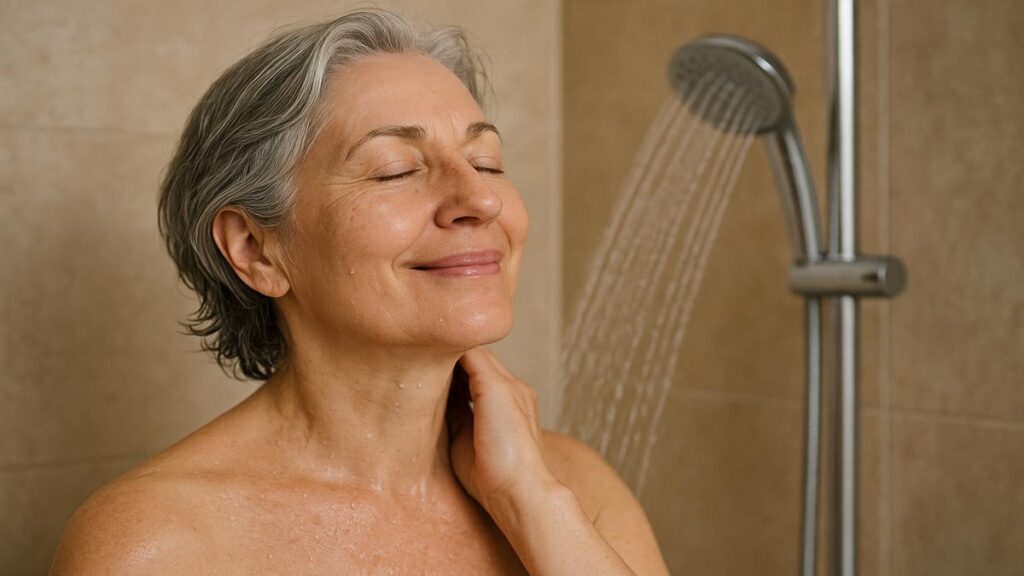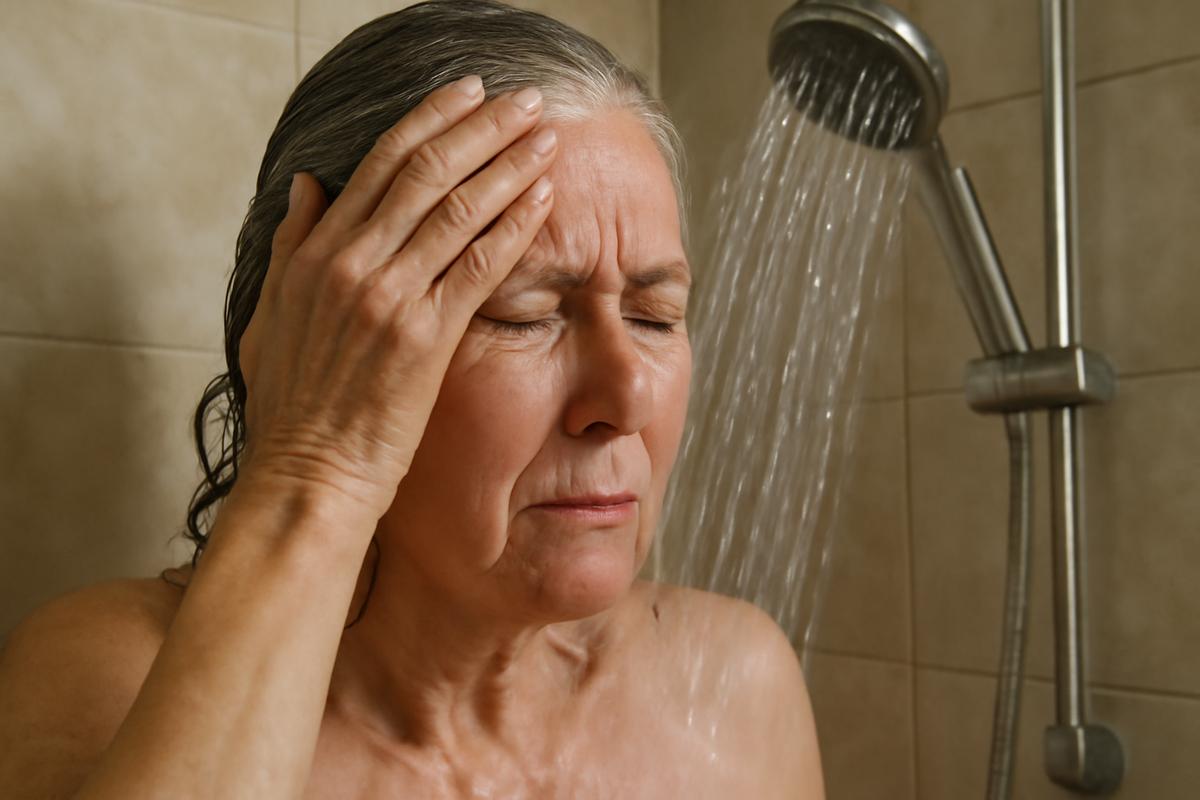
The steam rose in lazy spirals, fogging the bathroom mirror until the world beyond it disappeared. You turned the handle a notch hotter, just like you’ve done for years, letting the needles of water drum a familiar rhythm across your neck, your shoulders, the small of your back. It feels like the one moment of the day that is entirely yours—no emails, no appointments, no noise but the hiss of water and the hollow echo in the tiled room. You stay there a little longer than you mean to, the heat soaking into your muscles, the water tracing the map of a body that has carried you this far. When you finally step out, your skin is flushed, tingling, alive. And yet, over the last few years, something else has settled in too: a faint itch. A pulling tightness. Patches on your shins that look a little more like parchment and a little less like skin.
The Habit That Sneaks Up With the Steam
The culprit, for many people over 55, isn’t some exotic ingredient in a cream, or an obscure medical condition. It’s something much more ordinary, almost boring in its familiarity: long, hot showers.
Not just “nice and warm.” The kind of shower where you crank the temperature until the bathroom turns into a personal sauna. The kind where you linger—ten, fifteen, twenty minutes—letting that heat scour away sleep, stress, and, quietly, the essential oils that keep your aging skin from cracking like sunbaked earth.
In your thirties and forties, your skin could absorb this ritual, shrug it off, rebuild. But somewhere past 55, the rules begin to change. The same shower that once left you glowing now leaves your skin feeling strangely empty—like a field after harvest. And because it happens slowly, you may not notice the shift right away; you only know that body lotion suddenly soaks in faster, that the skin on your arms looks more crepe-like, that the itch on your calves is now a regular visitor rather than an occasional guest.
We rarely think of showering as something that might hurt us. It feels wholesome, almost virtuous. But the body that steps into the steam at 60 is not the body that stepped into it at 30. For skin, time changes the terms of the deal.
What Your Skin Loses After 55 (Even If You’re Doing “Everything Right”)
Imagine your skin as a carefully built stone wall. The cells are the stones; the natural oils and lipids are the mortar. When you’re younger, your body makes plenty of this mortar—ceramides, cholesterol, fatty acids that hold the barrier together and keep water sealed inside. Translated: your skin looks smoother, plumper, less fragile.
As we age, especially after midlife, several quiet shifts start happening beneath the surface:
- Oil production drops. Sebaceous glands slow down, especially in women after menopause and in men as testosterone levels decline. There’s simply less natural oil to lock in moisture.
- Cell turnover slows. The conveyor belt that brings fresh cells to the surface gets sluggish. Dead cells cling longer, giving skin that dull, papery look.
- Barrier function weakens. The “mortar” between cells thins, making it easier for water to escape and irritants to sneak in.
- Collagen and elastin decline. Skin becomes less springy, more easily etched with fine lines and wrinkles.
Now picture that already fragile wall facing a daily blast of heat and surfactants (the cleaning molecules in soap and body wash). Hot water melts oils away like butter on a pan. Harsh cleansers lift what’s left. Each long, hot shower strips more of that crucial mortar from the wall. If your skin had a voice, it might whisper as you turn the dial hotter, “I don’t bounce back the way I used to.”
The result isn’t instant. It’s cumulative. A little more dryness this winter than last. A patch of roughness on the upper arms. A faint burning when you apply your favorite lotion. A feeling that, somehow, your skin has become thinner, as if the world is closer than it used to be.
How a “Perfect” Shower Slowly Wrecks Mature Skin
For many people over 55, the most damaging shower habit looks something like this:
- Turn the dial to very hot, until the water comes out nearly steaming.
- Stand under the spray for several minutes before washing, just to “thaw out.”
- Use a foaming body wash or soap all over, sometimes with a rough sponge or loofah.
- Stay in the shower for 15–20 minutes, enjoying the heat.
- Step out, towel off briskly, check your phone… then remember moisturizer—maybe.
On paper, it sounds comforting, even luxurious. In practice, for older skin, each step is quietly ruthless.
Very hot water does not just rinse your skin; it dissolves the lipids that form your natural barrier. Think of it as washing a greasy pan in scalding water: effective for dishes, disastrous for skin that’s already struggling to hold on to moisture. The higher the temperature, the faster those oils run down the drain.
Extended time under that heat prolongs the damage. Ten seconds of hot water? Your skin shrugs. Fifteen minutes? The barrier is under siege. You might emerge feeling “squeaky clean”—which, ironically, is a red flag. Skin should not squeak. It should feel soft, pliable, lightly cushioned.
Foaming cleansers and deodorant soaps are engineered to cut through oils efficiently. They don’t distinguish between the dirt on your forearms and the ceramides in your skin barrier; everything is fair game. When you’re 25, your skin can rebuild the loss fairly quickly. At 65, the rebuilding is slow, incomplete, and sometimes it just doesn’t catch up.
Skipping or delaying moisturizer finishes the job. The moment you step out of the shower, water begins evaporating from your skin. If there’s no cream or lotion to trap that moisture, you’re left drier than you were before you turned the water on—like a field after a brief, evaporating rain.
Over time, this pattern can lead not only to dryness, but to flares of eczema, increased sensitivity, redness, even micro-tears in the skin that you can’t see but certainly feel. The irony is sharp: the ritual you rely on to feel better in your body may quietly be making that body more uncomfortable.
Signs Your Shower Is Aging Your Skin Faster
The evidence doesn’t usually appear as one dramatic event, but as a series of small, persistent annoyances. As you read this, notice how many feel familiar:
- A tight, almost “shrink-wrapped” feeling on your legs or arms after showering.
- Flaking or fine white “dust” on your clothes, especially on dark fabrics.
- Itchiness that is worst right after bathing or in the evening.
- Red patches or small rough spots on the shins, elbows, or backs of the hands.
- Skin that stings when you put on lotion, even one you’ve used for years.
- A new tendency toward rashy areas, especially in winter or after travel.
Many people over 55 mistake these signs for “just getting older,” as inevitable as gray hair. Yet what’s quietly driving much of this isn’t age alone—it’s how we treat our skin daily, especially under that stream of water we love so much.
If your joints, your heart, or your vision began to complain, you’d listen. Skin deserves the same attention; it is, after all, your largest organ, your first interface with the world, the soft armor you wear into each day.
Turning the Habit Around Without Losing the Pleasure
The goal is not to steal away your shower joy or rebrand bathing as a clinical procedure. A shower can still be a sanctuary. The trick is to make small, almost invisible shifts that protect the skin you live in, instead of warring with it.
Here is how you can transform your shower from a slow saboteur into an ally, especially after 55:
1. Dial Down the Heat—Just a Little
You don’t need to suffer through icy water. Aim for lukewarm to moderately warm, the temperature a baby could tolerate without fussing. If your bathroom mirror fogs lightly but isn’t a dense cloud, you’re close. The first few days may feel underwhelming, but your skin will register the difference quickly—less sting, less redness, less post-shower tightness.
2. Shorten the Ritual, Save the Skin
Consider a simple boundary: 8–10 minutes. Long enough to relax. Short enough to spare your barrier. If you love lingering in the warmth, try turning the water off while you apply a hair mask or while you gently massage your shoulders. Steam remains; damage doesn’t.
3. Soap Strategically, Not Generously
Your entire body does not need sudsing every day. Focus cleansers on the areas that truly require it: underarms, groin, feet, where sweat and bacteria are most active. For arms, legs, and torso, a quick rinse is often enough unless you’re visibly dirty or have been sweating heavily.
When you do reach for a cleanser, choose something creamy and fragrance-free, designed for dry or sensitive skin. Think of it as a fabric wash for silk rather than for denim: gentle, low-foaming, without deodorant or “antibacterial” claims that often come with harsher surfactants.
4. Be Kind With Towels and Tools
That vigorous rubdown with a coarse towel or a stiff loofah may feel invigorating, but to older skin it’s a sandstorm. Pat your skin gently with a soft towel, leaving it slightly damp. Retire abrasive washcloths and scrubbers; if you love the sensation of exfoliation, swap in a very soft cloth once or twice a week, not daily.
5. Lock In Moisture Within Three Minutes
This is the step where everything changes. Keep your body cream or lotion within arm’s reach of the shower. The moment you step out, while your skin is still damp, smooth a generous amount over arms, legs, chest, and back if you can reach. Look for ingredients like ceramides, glycerin, hyaluronic acid, shea butter, or natural oils.
Think of this as sealing a letter with wax before it’s exposed to the weather: you’re trapping precious moisture in the skin before it escapes into the air.
A Quick Comparison: Old Habit vs. Skin-Smart Routine
Sometimes it helps to see the contrast laid out clearly. Here’s how a typical “comfort” shower stacks up against a skin-protective one for people over 55.
| Shower Element | Common Habit | Skin-Friendly Alternative |
|---|---|---|
| Water temperature | Very hot, steaming | Lukewarm to comfortably warm |
| Duration | 15–20+ minutes | 8–10 minutes |
| Cleansing | Foaming soap all over daily | Gentle cleanser on key areas only |
| Skin contact | Scrubbing with loofah or rough towel | Soft cloth, gentle patting dry |
| Aftercare | Moisturizer applied later, or not at all | Moisturizer applied within 3 minutes on damp skin |
Reclaiming the Ritual Without Sacrificing Your Skin
None of this means you must trade pleasure for prudence. In fact, adjusting your shower habits can deepen the experience instead of diminishing it. When you’re no longer inflaming your skin daily, you may notice new rewards: less itching at night, a softer feel when you absentmindedly stroke your forearm, fewer surprise flakes on your clothes.
You might turn the focus away from scalding heat and aggressive scrubbing, and toward smaller, more nourishing details: the scent of a gentle, non-irritating body wash, the feel of a plush towel, the slow massage of lotion into your calves. Perhaps your shower becomes less of an assault and more of a conversation with your body: How are you doing today? What would feel good but not harmful?
The body you move through the world in after 55 is not a problem to be fixed; it is a living history, written across your skin in freckles and faint scars and the soft fold at the base of your neck. Caring for it isn’t about erasing time, but about respecting what time has changed. The shower is simply one of the daily crossroads where you get to choose: strip and stress, or soothe and support.
The next time you stand under the spray and watch the steam rise, pause for a heartbeat before you turn that dial all the way over. Somewhere deep in your skin, tiny cells are waiting to see what you’ll do, how harsh the weather will be today. You can still have your warmth, your quiet, your small private ceremony. Just give them a chance to remain whole.
Frequently Asked Questions
Is hot water always bad for skin over 55?
Not always, but very hot water used daily, for long periods, is hard on aging skin. Occasional warmer showers are usually fine if most of your routine is lukewarm and you moisturize right after. It’s the combination of high heat, long duration, and harsh cleansers that does the real damage.
How do I know if my shower is too hot?
If your skin looks very red after showering, if the bathroom is thick with steam, or if your skin feels tight and itchy within minutes of drying off, your water is likely too hot. Try turning the temperature down until the water feels pleasantly warm but not “stingy.”
Can I still take daily showers if my skin is very dry?
Yes, but keep them short, use lukewarm water, choose a gentle, non-foaming cleanser, and moisturize immediately afterward. On days when you haven’t sweated much, you can rinse your body and limit soap to underarms, groin, and feet to reduce stripping your skin’s natural oils.
What kind of moisturizer is best after 55?
Look for richer creams or lotions labeled for dry or sensitive skin. Ingredients such as ceramides, glycerin, hyaluronic acid, shea or cocoa butter, and plant oils can all help strengthen the barrier and lock in moisture. Fragrance-free formulas are usually better tolerated by mature, sensitive skin.
Are baths better than showers for aging skin?
It depends on how they’re done. Long, very hot baths can be as drying as hot showers. Shorter, lukewarm baths with added bath oils or colloidal oatmeal can be soothing, especially if you also moisturize right after. As with showers, temperature, time, and what you use in the water make the biggest difference.
How quickly will I notice improvements if I change my shower habits?
Many people notice less tightness and itchiness within a week or two of using cooler, shorter showers and applying moisturizer on damp skin. Visible changes—smoother texture, fewer flaky patches—often become clearer over several weeks of consistent care.
Should I see a doctor about dry, itchy skin after showering?
If your skin is cracked, bleeding, very inflamed, or the itching is intense and persistent, it’s wise to see a dermatologist or healthcare provider. Conditions like eczema, psoriasis, or allergies can worsen with hot showers and may need specific treatment in addition to changing your bathing routine.

Hello, I’m Mathew, and I write articles about useful Home Tricks: simple solutions, saving time and useful for every day.