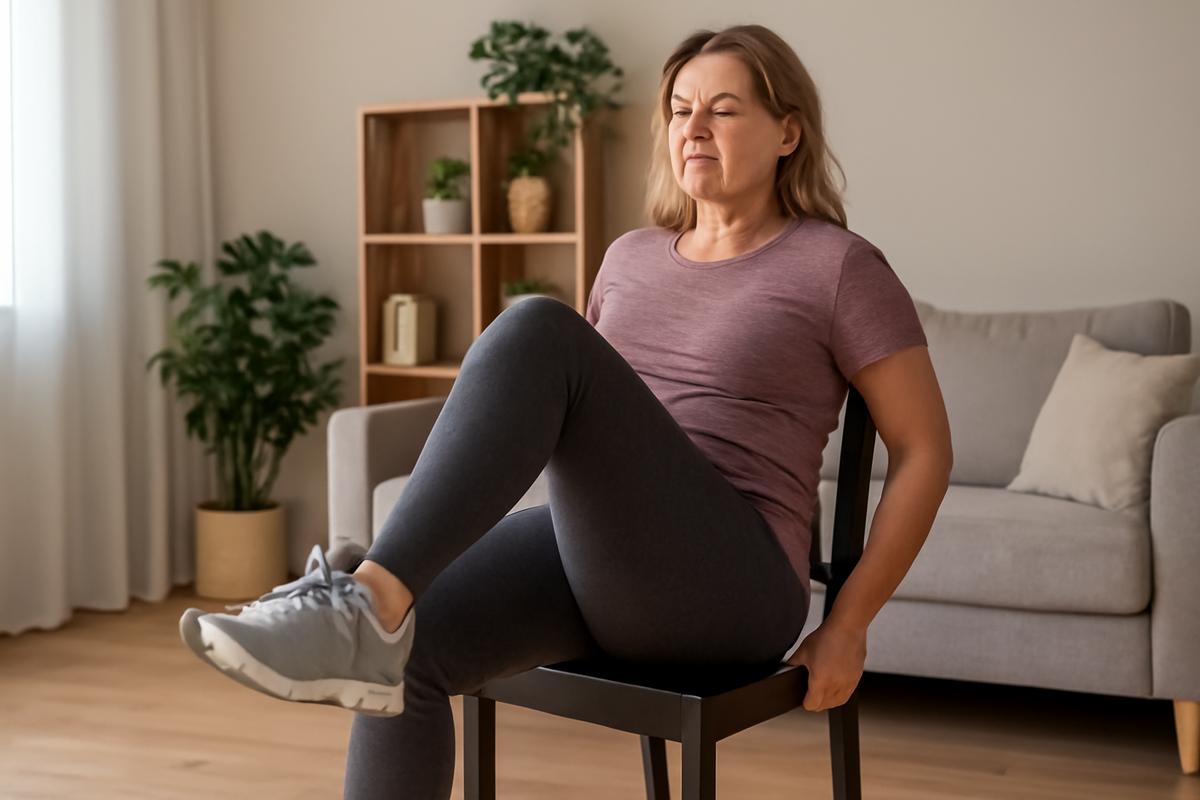
The first time you feel your body betray you usually isn’t dramatic. It’s not a fall or a hospital scare or a doctor sternly tapping a clipboard. It’s subtler than that. Your jeans catch a little at the waist. The mirror shows a new softness around your middle that wasn’t there last year, or the year before that. You sit down in your favorite chair, exhale, and suddenly become aware of your belly pressing just a bit more against your shirt. After 45, change arrives quietly, like an evening fog rolling in: slow, inevitable, and strangely easy to ignore—until you can’t anymore.
The Quiet Panic of the Midlife Belly
For many of us, that belly isn’t just about how we look. It’s about how we feel. Heavier. Slower. A little more tired when we climb the stairs or bend down to tie our shoes. The weight seems to sit there like a stubborn guest who missed the hint that the party is over. Suddenly, words like “visceral fat,” “metabolism,” and “hormones” are not abstract concepts from health articles—they are personal, uncomfortably so.
Maybe you’ve stood in your bedroom early in the morning, the house still quiet, fingers pressed into the soft curve of your belly and wondered: When did this happen? And how do I undo it—without punishing my body? Because that’s the thing about aging. At some point, we get tired of fighting ourselves. Exhausted by fad diets, 5 a.m. boot camps, and punishing workouts that leave our joints aching more than our muscles.
This is where the chair comes in—ordinary, familiar, and already part of your daily landscape. Not a gym membership. Not a treadmill. Just the chair where you drink your coffee, answer emails, or sit to call a friend. It turns out, this everyday object can become one of the simplest, kindest tools for melting belly fat after 45—if you know how to use it.
The Chair You Thought You Knew
The chair has always been a symbol of rest. After a long day, we long to sink into it, to let the weight of our body fall, to be held. But over time, that comfort comes with a trade-off: hours upon hours of sitting, hips stiffening, core muscles quietly switching off, metabolism slowing to match the stillness.
Yet in that same stillness lies an opportunity. Imagine this: you’re sitting on a sturdy chair, feet firmly on the ground. The room is soft with morning light or evening shadows. No loud music, no clanging weights, no echoing gym. Just you, your breath, and the steady, grounded presence of that chair beneath you. This isn’t about turning your living room into a fitness studio. It’s about reimagining what movement can feel like—especially after 45, when your body demands to be treated with more respect, more awareness, more patience.
There is one particular exercise—simple, surprisingly powerful—that uses the chair not just as a throne of rest, but as a quiet engine of change. It doesn’t involve wild jumps or complicated choreography. Instead, it invites you to reconnect with something that’s been quietly fading: the strength and intelligence of your core.
The One Chair Exercise That Changes Everything
The exercise is called the Seated Lean-Back Crunch. It sounds almost too gentle to matter, but done regularly, with intention, it’s like turning the key on a sluggish engine. Your deep core muscles wake up. Your posture shifts. Your belly fat—especially that stubborn ring around the waist—finally has competition again.
Here’s how it looks, in the real world, in your real chair:
- Choose a firm, stable chair without wheels, preferably one with a straight back.
- Sit close to the front edge, feet flat on the floor, hip-width apart, knees bent at about 90 degrees.
- Lengthen your spine as if someone is gently lifting the crown of your head toward the ceiling.
- Cross your arms over your chest or place your fingertips lightly behind your ears—no pulling on your neck.
- Take a slow breath in.
- As you exhale, gently lean your torso back from the hips—only a few inches—until you feel your belly muscles switch on to stop you from falling.
- Hold for a slow count of two, feeling that subtle trembling in your core.
- Inhale as you slowly return to your upright starting position.
That’s one repetition. It doesn’t sound dramatic, and it doesn’t look Instagram-worthy. But in that quiet arc backward and forward, your abs, obliques, and deep stabilizing muscles engage without putting your joints at risk. When repeated, this small, controlled motion tells your body: we still use these muscles; don’t shut them down.
The magic isn’t just in the movement; it’s in what it represents. This is a way to train your core that doesn’t ask you to get on the floor, strain your neck with sit-ups, or twist your spine in ways that your lower back will complain about later. For many people over 45, especially those with knee issues, back pain, or balance worries, that alone is revolutionary.
Why Belly Fat After 45 Is So Stubborn
To understand why this little chair exercise matters, you have to zoom in on what’s really going on with your belly after 45. It isn’t just “a few extra pounds.” It’s a stew of biology, lifestyle, and time.
Hormones shift. Estrogen drops for women, testosterone changes for men. These hormones once helped your body decide where to store fat and how quickly to burn it. After midlife, that decision becomes less flattering: more storage around the belly, less willingness to let it go.
Muscle mass quietly erodes. Starting in your 30s, you lose muscle if you don’t intentionally work to keep it. By your late 40s and 50s, that lost muscle means a slower metabolism. The same amount of food, the same daily routine—and suddenly your body is tucking away more of it into that soft ring around your waist.
And then there’s sitting. We sit at work, we sit in the car, we sit at home. The chair we love becomes the place where our core muscles learn to go on vacation. Over time, your belly isn’t just gaining fat—it’s losing support. Everything softens. Posture collapses. Your organs settle forward. That slight, constant pressure outward makes your middle look and feel bigger, even if the scale hasn’t moved much.
The Seated Lean-Back Crunch sneaks into that story like a gentle rebellion. It doesn’t ask you to become an athlete; it just asks your core to wake up again. When done consistently, this simple motion can:
- Increase deep core activation, helping your body redistribute how it carries weight.
- Support better posture, making your belly appear flatter without losing a single pound.
- Raise your heart rate mildly when done in sets, contributing to daily calorie burn.
- Serve as a gateway habit—once you feel stronger, you’re more likely to move more in other ways.
How to Turn a Simple Move into a Fat-Melting Ritual
The exercise itself is only half the story. The other half is ritual. After 45, your body doesn’t respond best to heroic, once-in-a-while efforts. It responds to steady, kind persistence. Think of this chair exercise as a tiny flame you protect from the wind—done daily, it grows into something warm and bright.
Try this gentle progression:
- Week 1–2: 2 sets of 8–10 lean-back crunches, once a day.
- Week 3–4: 3 sets of 10–12 reps, once a day.
- Beyond Week 4: 3 sets of 12–15 reps, once or twice a day, depending on how you feel.
Move slowly. Breathe. The work should feel like a deep, steady engagement in your belly, not a strain in your neck or back. If your lower back complains, don’t lean back as far. It’s not about distance—it’s about control.
Consistency matters more than intensity. Doing this five or six days a week, even when you’re tired, even when the day feels chaotic, sends a message to your body: We are still investing in you. Pair this with small lifestyle shifts—standing up more often, walking after meals, choosing whole foods more often than processed ones—and suddenly, your belly fat doesn’t feel quite so inevitable anymore.
Building a Whole-Body Chair Routine Around Your Core
Once that seated lean-back starts to feel familiar, your chair becomes more than furniture; it becomes a training partner. You can build a short, full-body routine around that one belly-melting move, all without leaving the safety and comfort of your chair.
Here’s a simple chair-based sequence that respects aging joints but challenges stubborn fat:
- Seated Marches – Sit tall. Lift one knee, then the other, like a slow marching band. This warms your hips and gets your circulation going.
- Seated Lean-Back Crunches – Your main belly-fat fighter, done with attention and control.
- Chair-Assisted Squats – Stand in front of the chair, sit down lightly, then stand up again, using your hands on your thighs only if needed. This wakes up big calorie-burning muscles in your legs and glutes.
- Seated Oblique Twists – Sit tall, arms crossed. Gently rotate your torso to one side, then the other, like you’re turning to listen to someone behind you.
- Seated Overhead Reach – From your chair, reach both arms up like you’re trying to touch the sky. This opens your chest and lengthens your torso, creating space where stiffness likes to live.
Repeat this mini-circuit 2–3 times, three or four days a week. Combined with your daily lean-back crunch ritual, you’ve turned your chair from an accomplice in weight gain into an ally in fat loss.
Sample Weekly Chair Exercise Plan
To make this easier to follow, here’s a simple plan that looks good even on a phone screen and fits into real life—the kind with meetings, grandkids, grocery lists, and days when energy comes and goes.
| Day | Chair Core Focus | Extra Movements | Approx. Time |
|---|---|---|---|
| Monday | 3 × 10–12 Lean-Back Crunches | 2 rounds of Seated Marches + Chair-Assisted Squats | 15–18 minutes |
| Tuesday | 2 × 12–15 Lean-Back Crunches | Light walk (if possible) after dinner | 10–12 minutes |
| Wednesday | 3 × 10–12 Lean-Back Crunches | 2 rounds of Oblique Twists + Overhead Reach | 15 minutes |
| Thursday | 2 × 12–15 Lean-Back Crunches | Gentle stretching in chair | 10 minutes |
| Friday | 3 × 12–15 Lean-Back Crunches | 3 rounds of Chair-Assisted Squats | 18–20 minutes |
| Saturday | 2 × 10–12 Lean-Back Crunches | Optional walk, gardening, or light activity | Variable |
| Sunday | 1–2 × easy Lean-Back Crunches (only if you feel like it) | Rest, stretch, deep breathing | 5–10 minutes |
Listening to Your Body’s New Language
At 25, your body whispers and you ignore it. At 45, it speaks clearly. At 55 and beyond, it sometimes shouts. That little pull in your lower back. The ache in your knees after a long day. The afternoon slump that wasn’t there a decade ago. These sensations are not betrayals; they are communication. They’re your body’s way of saying: Please work with me, not against me.
The beauty of a chair-based belly exercise is that it teaches you to listen. No one is pushing you to go faster. There is no leaderboard, no competition. If leaning back three inches lights up your core, you stay there. If leaning back one inch is all your spine is willing to do today, that’s where you honor the boundary. Over time, as you practice, that boundary moves—not because you forced it, but because you earned it.
You might notice other changes, too. The way you stand up from the couch starts to feel easier. Your lower back, supported by a stronger core, complains a little less. The waist of your pants feels a bit more forgiving. Perhaps most importantly, you begin to feel a quiet pride that has nothing to do with a number on the scale and everything to do with keeping a promise to yourself.
The Emotional Weight We Carry at the Waist
Belly fat after 45 isn’t only physical. It holds stories—pregnancies, losses, long nights at a desk, big meals shared with people we love, stress we couldn’t set down, years when caring for others left us last on our own list. Sometimes that soft curve at our middle is a living archive of everything we’ve survived.
So when you sit on your chair and lean back into that controlled, shaking effort, you’re not just burning calories. You’re rewriting your story about what this phase of life can be. Exercise stops being a punishment for what you ate or how you look in photos. It becomes an offering: Here, body. I know you’ve carried me this far. Let me carry you a bit now.
This shift—away from shame, toward partnership—is the real secret that makes simple movements so effective. Because once you stop fighting your body and start listening to it, you’re more likely to show up for yourself, day after day, chair after chair, breath after breath.
Starting Exactly Where You Are
You don’t need to be ready. You don’t need the “right” outfit, schedule, or mood. You don’t need a perfect nutrition plan or a gym contract. You only need a stable chair, a few spare minutes, and a willingness to begin where you are, not where you think you should be.
Maybe it’s early morning, the world still dim, coffee steaming on the table beside you. Maybe it’s late at night, the house quiet, your shoulders heavy with the day’s weight. Sit down. Plant your feet. Feel the seat beneath you, solid and unmoving. Take a breath.
Then lean back, just a little. Feel your belly wake up, not as an enemy to be flattened, but as a center to be reclaimed. Hold. Return. Repeat.
The chair you’ve known all your life is still a place of rest. But now, it’s also a bridge—between who you’ve been and who you are still becoming. Between the years when your body seemed to change without your permission and the years ahead, when you begin to reclaim that authorship, gently, patiently, one small motion at a time.
Belly fat after 45 is not destiny. It’s a chapter. And every time you sit down and lean back with intention, you’re quietly, courageously beginning to write the next one.
FAQ: Chair Exercise and Belly Fat After 45
Can a chair exercise really help melt belly fat?
Yes—when done consistently and combined with overall healthy habits. The Seated Lean-Back Crunch engages your deep core muscles, supports better posture, and increases daily calorie burn. It won’t work alone against an otherwise sedentary lifestyle and heavily processed diet, but it is a powerful, realistic tool in your toolkit.
How soon will I see results?
Most people feel changes before they see them. Within 2–3 weeks of regular practice, you may notice better posture, less back strain, and improved core awareness. Visible changes in belly fat often take 6–12 weeks, depending on your starting point, nutrition, sleep, and overall activity level.
Is this safe if I have back or knee problems?
For many people, chair exercises are safer than floor or high-impact movements. Still, if you have existing back, hip, or knee conditions, it’s wise to check with your healthcare provider first. Start with a very small lean back and stop if you feel sharp pain. Discomfort in the working muscles is normal; joint pain is not.
How far should I lean back?
Only as far as you can control while keeping your spine long and your feet rooted to the floor. For some, that’s an inch or two; for others, it may be a bit more. The key is to feel your core working, not to chase a big range of motion.
Do I need any equipment besides a chair?
No. A stable, non-rolling chair is all you need. Over time, if you want more challenge, you can add light hand weights or hold a small pillow or ball to increase resistance—but they are optional, not required.
Can I do this every day?
You can, as long as you listen to your body. Many people do the lean-back crunch daily at a moderate volume, and include slightly more intense, full-chair routines 3–4 days per week. If your core feels very sore or fatigued, take a lighter day or focus more on stretching and gentle walking.
What should I pair with chair exercises for best belly-fat results?
For the best outcomes, combine your chair routine with:
- Regular walking or low-impact cardio.
- Mostly whole, minimally processed foods with adequate protein.
- Good hydration and consistent sleep.
- Stress management practices like deep breathing or short breaks from screens.
The chair is your anchor—but the rest of your life quietly supports the transformation.

Hello, I’m Mathew, and I write articles about useful Home Tricks: simple solutions, saving time and useful for every day.