The morning she turned sixty-three, Agnes woke to the tiny, traitorous click in her right knee. It sounded like a bead snapping in a cheap necklace, delicate but ominous. Outside, the first light was just beginning to soften the edges of the maple trees, but all she could think about was whether she’d be able to kneel in her garden come spring, or climb the bluff behind her house like she always had every October to see the leaves ignite in that impossible blaze of orange and red. She sat on the edge of the bed, toes hovering above the floorboards, and realized something quiet and unsettling: she had no idea how to grow old with a body she still wanted to use.
The Habit That Doesn’t Look Like Much—Until It Does
The habit that saved Agnes didn’t arrive as some heroic rehab program or a doctor’s stern prescription. It slipped in almost unnoticed, like the way twilight turns to night without anyone being able to pinpoint the exact moment. It started as ten slow minutes in her living room, barefoot on the rug, coffee cooling on the side table. Ten minutes of moving every joint she could name—and a few she couldn’t—through its natural range, in ways that felt oddly simple and strangely tender.
It wasn’t exercise in the way she’d been taught to think of it. No pounding. No breathless counting of reps. No “feel the burn” bravado. This was something quieter and more intimate: daily, deliberate movement that focused on her joints instead of her muscles. Circling her ankles. Rolling her shoulders. Gently rotating her hips. Opening and closing her hands like sea anemones in slow motion.
Within weeks, something shifted. The morning stiffness that had made the first steps out of bed feel like walking on unfamiliar legs softened, then nearly disappeared. The clicking in her knee became less frequent, like a guest who’d learned to knock before barging in. One chilly November morning, she knelt down among the withered tomato vines to pull the last weeds of the season and realized it didn’t feel like a negotiation with gravity. It felt—if not young—then at least possible.
The one daily habit that keeps joints fluid after sixty is exactly this kind of habit: intentional, full-range, joint-focused movement, repeated every single day. Not heroic. Not dramatic. But as faithful and ordinary as brushing your teeth. It’s the kind of habit that looks like nothing from the outside and everything from the inside.
What “Fluid” Really Means Inside Your Joints
When people talk about keeping joints “fluid,” it can sound like spa language—soft, pleasant, and strangely vague. But inside your body, fluidity is anything but vague. It’s biochemical. It’s mechanical. It’s the quiet choreography of cartilage, bone, synovial fluid, ligaments, and muscle all cooperating like a long-married band that still knows how to improvise.
Slide your hand along your knee while you slowly bend and straighten it. That smooth roll you feel under your skin? That’s your joint surfaces gliding against each other, cushioned by cartilage and lubricated by synovial fluid, the clear, viscous liquid that lives in the tiny space where bones meet. Think of synovial fluid as your body’s own joint oil—thicker than water, rich with nutrients, and exquisitely sensitive to how often you move, and how.
When you move your joints through their full, comfortable range every day, a few remarkable things happen:
- Your movement works like a pump, circulating synovial fluid so that cartilage—which has no direct blood supply—can get the nutrients it needs.
- The joint capsule, a kind of soft envelope around the joint, maintains its elasticity instead of shrinking snugly around the range you actually use, like a shirt that’s been washed one too many times.
- The nervous system learns that these positions are “safe,” so the muscles around the joint are less likely to lock up defensively and more likely to support you cooperatively.
But when movement shrinks—when walking becomes your only form of motion, when you avoid squatting, twisting, reaching overhead, or rotating your spine because it feels “risky”—the environment inside your joints changes, too. The fluid doesn’t circulate as well. The capsule may tighten. Cartilage may start to wear unevenly, like a patch of forest floor where everyone walks the same narrow path.
The real danger after sixty is not just age; it’s underuse. It’s the decade-by-decade narrowing of how we move. We stop kneeling on the ground. We avoid the floor. We always sit in chairs instead of squatting or sitting cross-legged. The body quietly takes note. It adapts to exactly what we ask of it—and nothing more.
The Quiet Art of Daily Joint Care
Imagine a daily ritual that’s less like a workout and more like a conversation with your body. The goal isn’t to burn calories or set personal records. It’s to ask each joint, every day, a simple question: How much of your natural range can you still explore, comfortably, right now?
This is the heart of the habit: slow, gentle, full-range movement tailored to your joints. It goes by many names in different circles—mobility training, joint flossing, controlled articular rotations—but they all boil down to the same idea: intentionally moving every major joint through the range it was built for, without rushing and without pain.
In practice, it might look like this:
- Circling your neck, first in a slow, careful half-moon, then a fuller, more confident orbit as your body warms.
- Drawing big, slow circles with your shoulders, feeling the slight ripple of your shoulder blades sliding across your upper back.
- Rotating your hips, feeling the ball-and-socket joint trace an invisible halo deep inside you.
- Gently flexing and extending your knees and ankles, like checking the hinges on a well-loved gate.
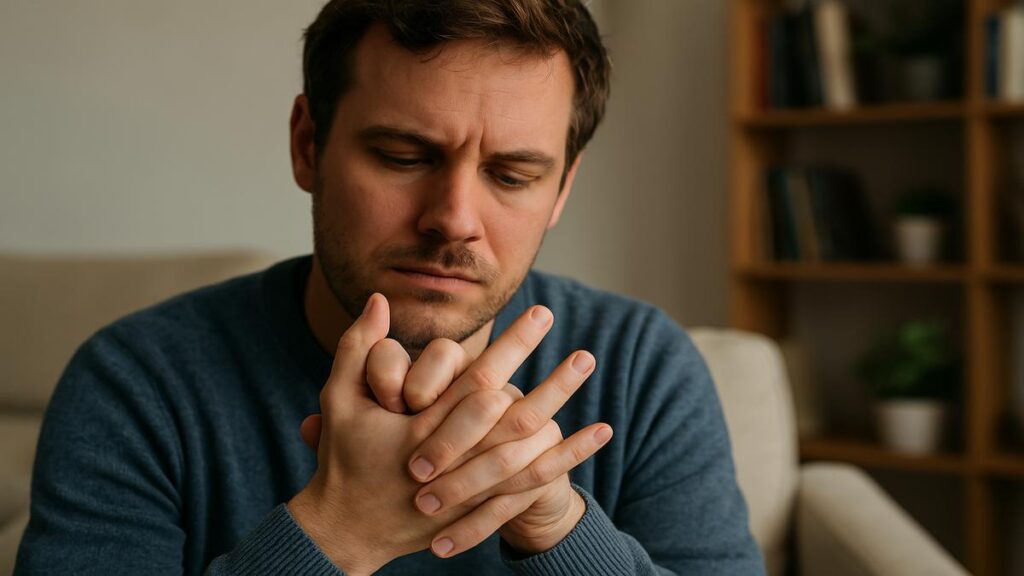
- Spreading your fingers wide, then curling them into a fist, waking up all the tiny joints that write, stir, hold, and steady.
It’s as if you’re walking through a quiet house at dawn, turning on each light to see what’s there. Nothing rushed. Nothing forced. Just a daily inventory of possibility.
Over time, the nervous system learns that this exploration is routine, not threat. Tissues adapt. Stiffness backs down. You reclaim tiny degrees of movement you didn’t know you’d lost until they return and you realize: you can reach the top shelf without thinking. You can step off the curb without bracing. You can twist to look behind you when backing up the car and your spine doesn’t protest like a forgotten hinge.
Putting the Habit on the Calendar (and Into Your Bones)
Most transformations in the body don’t come from what you do once. They emerge from what you do daily, especially when you don’t feel like it, and especially when no one is watching. A single afternoon walk won’t keep arteries clear, just as a single burst of stretching won’t restore fluidity to years of stiff joints. The magic—if there is such a thing—is in the repetition.
The good news: this habit asks less of your schedule than you think. Ten to fifteen minutes a day is enough to shift the internal landscape of your joints, if you do it consistently and with attention. The key is to weave it into something you already do, so it becomes as inevitable as your morning coffee or evening dishes.
Some people do their joint routine while waiting for the kettle to boil. Others do it beside the bed before pulling up the covers. Agnes does hers in the hallway, one hand resting lightly on the wall as she circles her hips and ankles, the other hand cupping her coffee mug. It doesn’t look remarkable. But inside, her synovial fluid is being stirred, her cartilage is being nourished, her range is being kept alive.
Think of it this way: if a friend told you they never brushed their teeth because they’d done a really good, thorough brushing ten years ago, you’d laugh. Joints deserve the same steady upkeep. Not a heroic catch-up session. A modest daily tending.
Here’s one way such a daily ritual might unfold, tailored for life after sixty:
| Body Area | Simple Daily Movement | Time Guide |
|---|---|---|
| Neck | Slowly look up, down, side to side, then gentle circles without forcing the end range. | 1–2 minutes |
| Shoulders & Upper Back | Roll shoulders forward and back, then draw big circles with straight arms, within comfort. | 2–3 minutes |
| Hips | Standing with support, swing leg forward/back, side to side, then slow hip circles. | 2–3 minutes |
| Knees & Ankles | Bend and straighten knees, rise onto toes then heels, circle ankles in both directions. | 2–3 minutes |
| Hands & Wrists | Open fingers wide, make a gentle fist, circle wrists slowly. | 1–2 minutes |
In less than fifteen minutes, every major joint has been invited to show you what it can still do. And if that invitation is offered every single day, the body, astonishingly loyal, often accepts.
Listening for the Line Between Use and Abuse
The most radical part of this habit might not be the movement itself, but the way you learn to listen while you move. We are a culture addicted to effort, to metrics, to “no pain, no gain” narratives that make suffering sound noble. But sixty-year-old joints are not interested in your heroics. They are interested in your precision.
So instead of charging through these movements, treat each one like a slow question. As you circle an ankle, ask: Where does this feel smooth? Where does it feel sticky? Can I approach the sticky part without pushing through it? As you rotate your shoulder, notice: Is there a point where my body tenses or my breath catches? That’s not a place to bulldoze; it’s a place to hover, to breathe, to invite, not demand.
The line between helpful challenge and harmful strain often shows up as a difference in sensation. Gentle stretch, mild warmth, and a feeling of “awakening” are usually signs of safe effort. Sharp pain, grinding, catching, or a sense of instability are your body’s way of flashing the hazard lights. That line is deeply personal. Learning to recognize it—and to respect it—is a form of wisdom that often arrives only with age.
The habit, then, is not just “move your joints.” It’s “move your joints with enough curiosity and patience to stay on the right side of that line.” The reward is not just better mobility, but a renewed sense of trust in your own body, a relationship mended rather than managed.
Stories Written in Cartilage and Courage
If you look closely, you can see this habit in the wild, in the lives of older bodies that still move through the world with a quiet, surprising grace.
There’s the seventy-year-old saxophonist who starts each day not with scales, but with slow wrist circles and finger waves, his hands remembering both the notes and the movements that make them possible. He talks about his joints the way some people talk about their instruments: with reverence, immaculate care, and an understanding that a bit of daily tending can extend a lifespan far beyond what the manufacturer expected.
There’s the retired teacher who discovered tai chi in her late sixties and now moves like she’s underwater, each joint describing invisible arcs in the air. She doesn’t think of it as “exercise.” She thinks of it as rehearsing how she wants to age: balanced, soft-footed, unhurried. The habit at the heart of her practice is the same: daily, rounding the corners of her joints, never letting any of them go too long without being remembered.
And then there’s Agnes, stepping onto the bluff trail on a crisp October afternoon, her breath frosting in front of her. The path is scattered with leaves that hide rocks and roots, little invitations to misstep. But her ankles and knees, now seasoned by years of daily coaxing, feel ready. They know this work: adjusting, stabilizing, catching her when the ground shifts underfoot.
When she reaches the overlook, the valley below is aflame with maples and oaks, the river a silver ribbon threading through. She lowers herself to sit on a flat rock, feeling the familiar flex of her hips, the quiet conversation of her spine and knees. There’s no drama, no triumph. Just this simple, ordinary miracle: her body, still capable of carrying her to the places she loves.
From the outside, her habit remains invisible. No one sees the small, daily circles in the hallway. But its signature is right here, in this moment: joints that have not forgotten how to move.
FAQ: The Daily Joint-Fluid Habit After 60
Isn’t walking enough to keep my joints healthy?
Walking is wonderful for your heart, mood, and general mobility, but it mostly uses your joints in a narrow, repetitive way. Your hips, knees, and ankles move through a limited range, and many joints—like your shoulders, spine, and wrists—barely get involved. Joint-focused daily movement specifically targets full, comfortable range in each joint, which walking alone cannot provide.
How much discomfort is normal when I move my joints?
Mild stiffness, a gentle stretching sensation, or a feeling of “waking up” is often normal as you begin. Sharp or stabbing pain, catching, grinding, or any sensation that makes you wince or hold your breath is a sign to stop or back off. The goal is to explore the edges of your comfortable range, not to push past them.
Can I start this habit if I already have arthritis?
Often, yes—but with guidance. Many people with osteoarthritis find that gentle, regular joint motion actually reduces stiffness and pain over time. It’s important to start slowly, avoid forcing any movement, and consult a healthcare professional or physical therapist for personalized advice, especially if your pain is significant or your joints are unstable.
Do I need equipment or a gym membership?
No. One of the strengths of this habit is its simplicity. You only need your body and a small space where you can stand, sit, or lie down comfortably. A chair, wall, or countertop can provide support if balance is a concern. The most important “equipment” is consistency.
What if I miss a day—does it undo my progress?
Missing an occasional day won’t erase your work, just like skipping one toothbrushing won’t cause a cavity overnight. But your joints respond best to regular input, so aim for most days of the week. If you do miss time—because of travel, illness, or life—resume gently rather than trying to “make up” for what you missed.
When will I start to notice a difference?
People often notice small changes—less morning stiffness, easier turning or reaching—within a few weeks of daily practice. More significant improvements in ease, range of motion, and confidence in movement may take several months. Think in seasons, not days: you’re reshaping how your joints behave over the long term.
Can this replace my regular exercise routine?
It’s better to think of daily joint movement as the foundation of everything else you do, not a replacement. Walking, strength training, balance work, and activities you enjoy—gardening, dancing, swimming—all benefit from more fluid joints. This habit makes those movements safer, more enjoyable, and more sustainable as the years go on.
In the end, the habit that keeps joints fluid after sixty isn’t glamorous. It doesn’t come with medals or step counts or viral challenges. It is small and steady and almost invisible. But in the long arc of a life, it can mean the difference between watching the world from a chair and walking out to meet it, one well-oiled step at a time.

Hello, I’m Mathew, and I write articles about useful Home Tricks: simple solutions, saving time and useful for every day.