The spring onions had been there only three days, but they already looked tired—limp leaves, pale bulbs, and that faint, slippery feeling that tells you, with a small stab of guilt, that you’re probably going to throw them out. You might know this scene: you bought a generous bunch, used two, maybe three, and then life got busy. The rest sulked in the crisper drawer, quietly melting into that universal soup of forgotten greens. But somewhere, under the fluorescent hum of a grocery store or the soft rustle of a farmers’ market, there’s a trick gardeners have been using for years—a simple, oddly beautiful ritual that keeps those spring onions standing tall and crisp for weeks. It starts with a glass of water and a small act of attention.
The Day the Onions Moved to the Windowsill
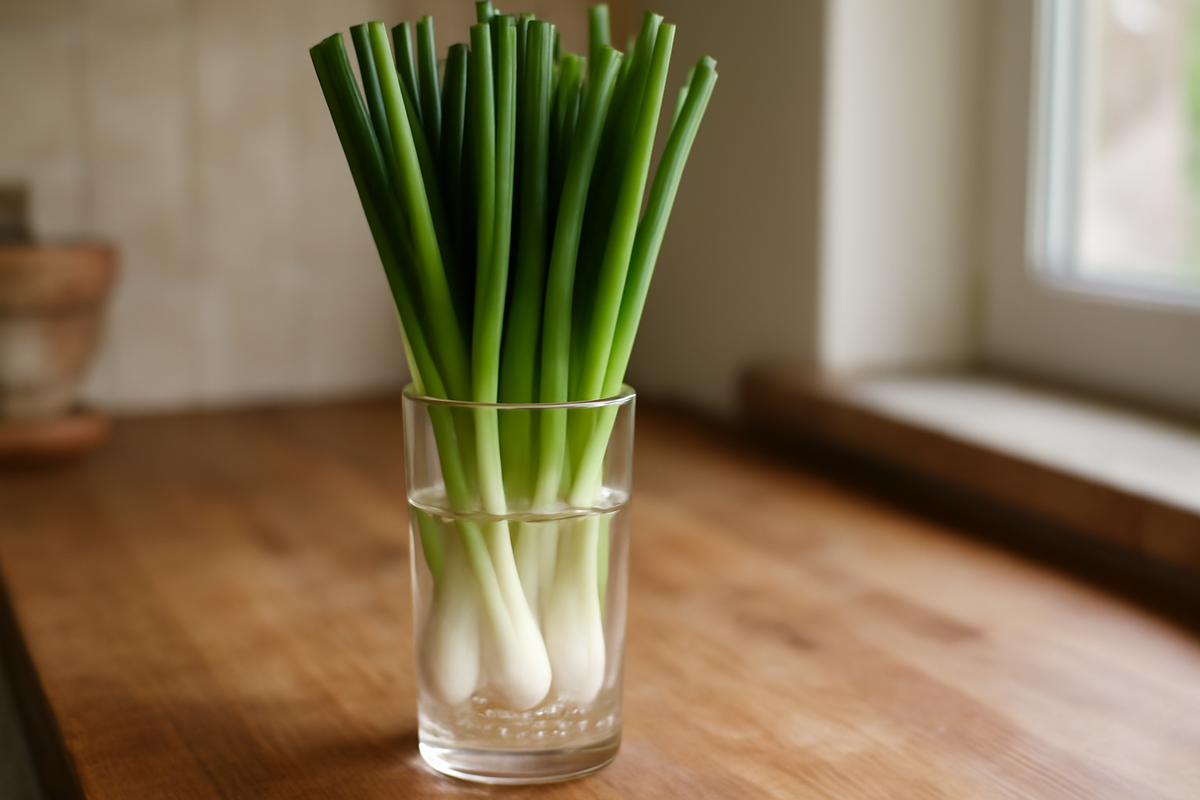
The first time you try it, you might feel slightly ridiculous, as though you’re tucking your vegetables into bed. You take the bunch of spring onions—still bound by that thin elastic band—and trim off the rubbery root tips. A glass comes out of the cabinet, one you’d normally fill with iced tea or orange juice. Instead, you pour in an inch or two of water, enough to touch the bottom of the white bulbs but not drown them completely.
You stand the onions upright in the glass. They fan out like a little bouquet, green leaves splaying and catching the light. Already, they look less like groceries and more like something alive again, which, in a way, they are. You set the glass on the kitchen counter, or better yet by the window where the morning sun drifts in. The room feels a little different, as if you’ve added a tiny kitchen garden without a single bag of potting soil.
By the next morning, you notice it: the water has gone slightly cloudy, but the onions themselves look perkier. The tips are greener, firmer, as though they’ve had a night of deep sleep. A small curl of new growth may have appeared where the pale stalks melt into emerald. Gardeners swear by this, you remember reading—the trick that turns a bunch of spring onions into a living ingredient instead of a countdown to food waste. And as the days pass, you begin to see why.
The Quiet Science on Your Countertop
Behind this small domestic magic is something gentle and biological. Spring onions—also called scallions or green onions—aren’t finished when they’re harvested. Their cells are still breathing, still transporting water, still trying to grow. When you tuck their white bulbs into a glass of clean water, you offer them a second act.
The roots, even if you’ve trimmed them, respond to moisture. Tiny, hairlike filaments start to appear again, grasping at the water. With each hour, the onion draws up what it needs, hydrating its cells, propping up its slender leaves like straws that have just been refilled. The result is texture: that snap when you slice through the stalk; that juicy freshness when it meets a hot pan or a cold salad.
Gardeners know this feeling from the soil. They’ve watched scallions in garden beds survive neglect and surprise frost, only to bounce back with a few days of warmth and water. The glass of water on your windowsill is just a simplified version of the same story—soil swapped for a tumbler, rain replaced by tap water.
What’s enchanting is how visible the change is. Instead of hiding in the refrigerator drawer, slowly wilting in the dark, your onions live right in front of you. You watch their leaves stand a little straighter each day, like quiet green metronomes keeping time in your kitchen.
How to Turn a Bunch into a Mini Kitchen Garden
There’s no ceremony to it, but there’s a kind of pleasure in doing it well. The act is intimate and small, like making a bed or washing a favorite mug. Here’s how you can keep those spring onions crisp for weeks, the way seasoned gardeners and thrifty home cooks have been doing quietly for years.
Step 1: Choose the Right Glass
Pick a glass or jar that feels steady in your hand—something tall enough to hold the onions upright, but not so tall that they disappear inside it. A simple drinking glass works for a small bunch; for larger hauls, a mason jar or repurposed jam jar does the job. The glass becomes their “vase,” and a clear one lets you see what’s going on under the surface: the roots, the water level, the tiny bits of sediment that signal it’s time to refresh.
Step 2: Trim and Tidy
Lay the onions on a cutting board. Slice off any pale, mushy root ends and flick away any loose, slimy outer layers. You don’t need to cut much—just enough to expose fresh, firm tissue. If the dark green tops are badly wilted or yellowing, trim those too. There’s something oddly satisfying about this tiny act of pruning, like giving them a fresh haircut before they move into their new home.
Step 3: Add Water—But Not Too Much
Fill the glass with about 2–3 centimeters (around an inch) of water. The goal is for only the white bulb area—and just the very bottom of the pale green portion—to sit in the water. If the water line creeps up too high, the stalks can turn soggy or invite decay. The roots drink; the stems breathe. That simple balance keeps them crisp rather than waterlogged.
Step 4: Find Their Spot
Set the glass where you’ll see it. A windowsill with gentle light is ideal—especially a bright kitchen window that gets morning sun. Direct, harsh afternoon sun can heat the water and stress the plants, so choose somewhere with softer light if your kitchen bakes in the afternoon. If you don’t have much natural light, a well-lit counter away from the stove works surprisingly well, too.
Step 5: Change the Water Regularly
This is where the “for weeks” promise is either kept or broken. Every two to three days, pour off the old water—by then, it may look a little cloudy—and replace it with fresh, cool tap water. You might notice a faint onion aroma lingering in the glass when you change it; rinse the glass quickly before refilling. With each refresh, you’re not just feeding the onions—you’re keeping bacteria and slime from moving in.
A Tiny Habit That Changes How You Cook
Within a week, you’ll start to notice a new rhythm forming in your kitchen. You go to make scrambled eggs or a bowl of noodles, and instead of digging into the fridge, you reach for the glass of onions. You pinch a stalk between your fingers; it’s cool and firm. The knife makes a sharp, satisfying sound as it slices through the greens. The smell rises up—a clean, grassy sharpness that feels like brushing past a herb patch in June.
Something shifts quietly in how you cook. When fresh flavor sits in plain sight, you use it. You scatter sliced spring onions over bowls of ramen, toss them into salads, whip them into softened butter, tuck them into quesadillas, stir them into mashed potatoes. You stop rationing them, because you know they’ll keep standing there, crisp and ready, not wilting into oblivion in the back of the fridge.
The glass becomes a kind of invitation. Every time you walk through the kitchen, those upright green spears remind you: you have something alive, something bright, waiting to be used. They change not just the lifespan of your ingredients, but the way you experience them—visible, accessible, and always a little bit surprising in their resilience.
From Waste to Wonder: Why Gardeners Swear by This Trick
Ask a gardener about spring onions and you’ll usually get a half-practical, half-affectionate answer. They’ll tell you how scallions forgive forgetfulness in the garden—how they tolerate cool nights, how they keep growing even if you cut them, how you can plant the white bulb ends back in the soil and coax new greens from them.
The glass-of-water method is like that gardener’s wisdom translated into apartment life. It doesn’t require a balcony or raised beds or seed packets. It’s a bridge between soil and sink—between harvesting and eating.
There’s another quiet joy here: the slow regrowth. If you leave at least a few centimeters of the white base when you harvest the greens, you’ll often see new shoots rise from the cut top, pale at first and then deepening into that familiar green. You’ve turned a one-time purchase into something regenerative, at least for a few cycles. Eaten, regrown, eaten again—like a whisper of a garden on your counter.
| Method | How Long They Usually Last | Texture & Flavor |
|---|---|---|
| Loose in fridge drawer (original bag) | 3–5 days | Quickly limp, tips yellowing, mild flavor |
| Wrapped in paper towel & bagged | 7–10 days | Fairly crisp, some wilting at tips |
| Upright in glass of water on counter | 1–2 weeks | Crisp stalks, vibrant flavor, visible regrowth |
| Upright in glass of water in fridge | Up to 2–3 weeks | Very crisp, slower growth, milder scent |
Gardeners love this because it feels like cheating time. Food that would have faded out in less than a week now stretches its life into two or even three, especially if you slide the glass into the refrigerator door once the onions are plump and hydrated. It’s not preservation in the strict sense—it’s care. You’re not freezing or drying; you’re continuing the story the garden started.
Troubleshooting Your Little Glass Garden
Of course, not every glass of onions is a perfect success. Sometimes the water goes slimy faster than you expect, or the stalks droop despite your best intentions. Those small failures are their own kind of lesson, and they’re usually simple to fix.
If the Water Turns Murky Quickly
Cloudy water is your cue to change it more often. Warm kitchens, direct sunlight, or a crowded glass can speed up bacterial growth. Try:
- Using a slightly larger jar so the bulbs aren’t tightly packed.
- Rinsing the roots briefly under cool water when you refresh the glass.
- Moving the glass away from direct afternoon sun, which can heat the water.
If the Bulbs Start to Smell Strong or Feel Slimy
Run your fingers gently over the white parts. If you feel soft, mushy spots, those particular stems may be beyond saving. Remove any rotting onions immediately—they can quickly affect the rest. Trim back to firm tissue, give the remaining bulbs a gentle rinse, wash the glass, and refill with fresh water.
If the Leaves Flop Over
A little flop isn’t a disaster. Often it means the tops dried out before the roots could hydrate fully. Trim off any dried or yellowed tips, keep the bulbs in fresh water, and wait a day or two. Many will stand back up, especially if the kitchen isn’t too hot or drafty.
If You See Little Roots Everywhere
That’s success. Those feathery white tendrils are signs of renewed life. If they get very long and tangled, you can gently trim them back by a centimeter or two to keep things neat. Or, if you feel inspired, you can plant the bulbs in a pot of soil and turn this temporary setup into a permanent windowsill crop.
When the Kitchen Becomes a Place of Small Experiments
Somewhere along the way, the spring onions in the glass stop feeling like “stored food” and start feeling like company. They’re your quiet housemates—standing by the window, drinking water, offering themselves leaf by leaf to whatever you’re cooking. They soften the boundary between indoors and outdoors, between the messiness of soil and the clean lines of a countertop.
And that’s where the deeper pleasure of this trick lives. It reminds you that your kitchen can be more than a place where ingredients arrive, get chopped, and then vanish into recipes. It can be a place of tiny, ongoing experiments: will these regrow? How long can I keep them crisp? What happens if I slide the glass into the fridge, or move it closer to the light, or snip just the tops and let them regrow again and again?
You start to notice other candidates for this gentle kind of care: the celery base you could set in water to sprout new leaves, the herbs you might keep like flowers in a jar instead of lying flat in a plastic box. That single glass of spring onions becomes a small doorway into thinking differently about the food you bring home—less disposable, more alive.
So the next time you walk past a bin of spring onions at the market, imagine them not just in tonight’s stir‑fry but glowing faintly green on your windowsill two weeks from now, still crisp, still ready. Picture your hand reaching for the glass, the simple pleasure of sharp scissors snipping through cool stalks, the way their scent rises up like a quiet reminder of gardens and rain. A glass of water, a bunch of onions, and a little patience: it’s not a miracle. It just feels like one.
Frequently Asked Questions
How long can spring onions really last in a glass of water?
With regular water changes and decent light, spring onions can often stay crisp for 1–2 weeks on the counter and up to 2–3 weeks in the fridge. Their exact lifespan depends on how fresh they were when you bought them and how warm your kitchen is.
Should I keep the glass on the counter or in the fridge?
Both work. On the counter, they may grow faster and develop more new leaves. In the fridge, growth slows down but they tend to stay crisp longer. Many people start them on the counter for a few days to perk up, then move the glass to the refrigerator door.
Do I need to remove the elastic band around the bunch?
Yes, it’s better to remove it. The elastic can pinch the stalks and encourage rot where they’re pressed together. Let the onions fan out naturally in the glass so each stalk has a bit of space.
Can I keep using the same onions by cutting and regrowing them?
You can. If you leave the white bulb and a few centimeters of light green stem, the onions will often regrow new green tops several times. Over time, the regrowth may become thinner and less vigorous, but you can usually enjoy a few good cycles.
Is it safe to eat the roots or just the green and white parts?
The commonly used parts are the white base and green stalks. The roots themselves are usually trimmed off and discarded; while not harmful if clean, they’re fibrous and not particularly pleasant to eat. Focus on the crisp white and green portions for the best texture and flavor.
How often should I change the water?
Aim to change the water every 2–3 days, or sooner if it looks cloudy or you notice a strong smell. Rinsing the roots and the glass when you change the water helps keep the onions fresh and prevents slime from developing.

Hello, I’m Mathew, and I write articles about useful Home Tricks: simple solutions, saving time and useful for every day.