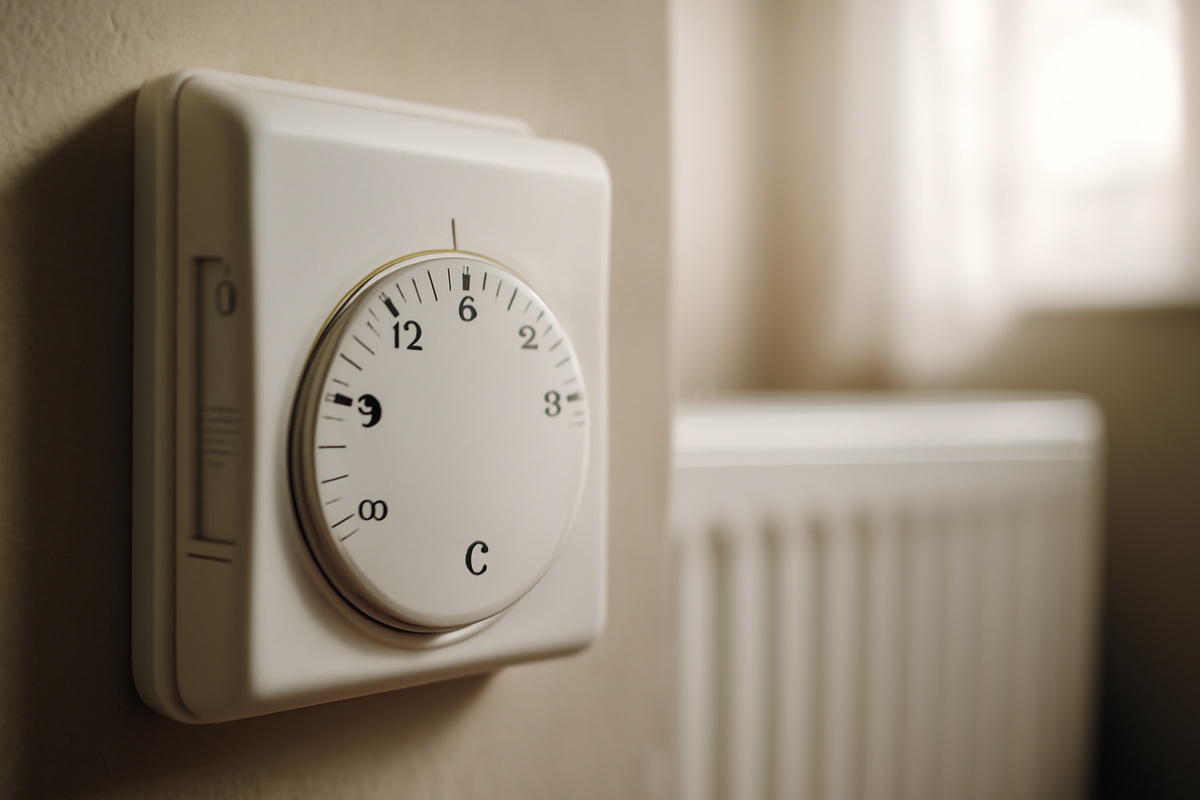
The first cold snap of the year always arrives the same way: quietly, without ceremony. One morning you wake up, slide your bare feet out of bed, and the floor feels just a little too sharp, a chill that climbs your legs like a cat. You shuffle to the thermostat, eyes still half-closed, and there it is—the familiar number glowing back at you. For many people, for many years, that number has hovered around 19°C. The “sensible” temperature. The “official” recommendation. The line between responsible and indulgent.
But as our homes, bodies, and climate have changed, that once-sacred 19°C figure is beginning to feel oddly outdated—like a landline phone on the kitchen wall, still technically functional but no longer suited to how we live now. Around the world, experts are quietly revising their guidance, nudging that magic number higher, tailoring it to real bodies in real homes instead of idealized averages from the 1970s.
The Origin Story of 19°C — And Why It Never Really Fit
The 19°C rule has an almost mythic status in some countries. It grew out of a time when central heating was spreading through post‑war housing and governments were trying to balance public health with energy security and cost. Advisory bodies looked at limited data, mostly on relatively healthy adults, wearing typical indoor clothes, moving around a bit, and declared: 18–19°C is acceptable for living rooms, slightly lower for bedrooms.
That number seeped into leaflets, public campaigns, and later, little green graphs on smart thermostats. It got tangled up with morality: a cooler house meant you were disciplined, climate‑conscious, even a bit stoic. Anything warmer than 20°C started to sound like indulgence, or ignorance.
But it was always a compromise, not a universal truth. It assumed brick walls that leaked heat like sieves. It assumed you were probably wearing a wool jumper. It assumed you weren’t very young, very old, or managing a chronic health condition. It assumed, too, that weather patterns would remain stable and gas would stay cheap enough that a degree here or there wouldn’t cause a crisis.
The world has moved on. The 19°C rule largely has not. And the gap between that old standard and what research now suggests is genuinely safe and comfortable has been slowly widening—until, finally, experts started saying it out loud.
New Guidance: Warmer, Smarter, and Far More Human
In recent years, health agencies and building scientists have been revisiting indoor temperature guidance with fresher data and a much wider lens. Instead of asking, “What’s the minimum people can tolerate?” they’re asking, “What actually keeps people healthy over long winters, especially the most vulnerable?”
The answers are turning an old rule of thumb on its head. Many expert groups are now aligning around a general baseline: for most households, 20–21°C is a better target for main living spaces than the old 19°C, with the freedom to go a little higher depending on who you live with and how your home is built.
At first, a two‑degree shift might sound trivial. Your hand on the thermostat barely moves. But your body notices. That small difference changes how quickly your blood vessels constrict, how your heart works to maintain core temperature, how the dampness in your home behaves, and even how likely it is that mold will creep into dark corners behind your furniture.
Modern guidance is also much more nuanced. It no longer tries to cram all households into one tidy number. Instead, it recognizes that your “right” temperature sits at the intersection of biology, bricks, and behavior:
- Age and health: Babies, older adults, and people with heart or lung conditions often need warmer rooms.
- Housing quality: A drafty, poorly insulated flat that feels “19°C” on the thermostat may feel closer to 16°C on your skin.
- Activity level: Working from home at a desk all day is nothing like bustling around a factory floor or a kitchen.
- Humidity and damp: Cooler, damper homes can encourage condensation and mold growth, which in turn affect respiratory health.
The new guidance doesn’t just inch the dial higher; it asks you to rethink what that number even means.
Comfort vs. Cost: The Quiet Battle Around the Dial
Of course, heating is never just about health. It’s about money—the monthly bill, the standing charge, the invisible meter spinning somewhere outside your front door. Many people keep their heating low not because 19°C feels perfect but because anything more seems financially reckless.
Walk down a street in midwinter, and you’re walking through a hidden map of trade‑offs. Behind one door, a young family keeps the heating at 21°C, stretching their budget because the toddler’s cough gets worse when it’s cold. Behind another, an older person pads around in three layers, the thermostat grudgingly set at 17°C, doing quiet arithmetic every time the radiators click on. Comfort is a private negotiation, often shaped by fear and necessity as much as preference.
That’s partly why the new expert guidance matters. It’s not about scolding people into using more energy. It’s about making visible the risk of going too low for too long—and encouraging policies, support schemes, and home upgrades that mean people aren’t forced to choose between warmth and solvency.
What the Science Says Your Body Is Doing at 19°C vs 21°C
If you’ve ever argued with someone about the heating—one person claiming they’re perfectly fine at 18°C, the other wrapped in a blanket at 21°C—you’ve already experienced the wild diversity of human thermoregulation. But underneath that messy reality, there are clear physiological trends.
At cooler indoor temperatures, especially below about 18°C, your body starts to divert blood away from your extremities to protect core organs. Your blood pressure nudges upward. In older adults or those with cardiovascular issues, this subtle strain can be enough to tip the balance toward health problems, including increased risk of heart attacks and strokes during cold spells.
Cold air can also irritate airways, aggravating asthma and other respiratory conditions. Combine that with a home that’s slightly too cold and slightly too damp, and you have the perfect microclimate for both mold spores and health complications to flourish.
Research consistently shows that homes heated to around 20–21°C in main living areas protect health far better than those kept at or below 18°C, particularly for vulnerable groups. It’s not that 19°C is dangerous in itself. It’s that, for many people and many buildings, it’s simply not generous enough.
There’s also the quiet matter of comfort and productivity. Working long hours at a computer in a chilly room can subtly drain your focus. You’re thinking about the next hot drink, not the next idea. Your shoulders tense. Your fingers stiffen. For people now spending most of their week working from home, the old “just put on another jumper” mindset doesn’t work so well when you’re essentially in your office from dawn to dusk.
A Quick Look at Old vs New Temperature Ideas
To make sense of the shift, it helps to see how old rules stack up against newer, more flexible thinking:
| Aspect | Old 19°C Rule | Evolving Guidance |
|---|---|---|
| Core idea | Single “efficient” target for most homes. | Flexible range, usually 20–21°C for main rooms. |
| Health focus | Based on tolerable minimums for healthy adults. | Centers on vulnerable groups and long‑term health. |
| Building assumptions | Older, leakier homes and heavier clothing. | Recognizes varied insulation, glazing, and ventilation. |
| Lifestyle | Shorter indoor hours, more movement. | More home‑working, sedentary time, and screen use. |
| Environmental view | “Use less heat” as a blunt tool for saving energy. | Target insulation, smart controls, and efficient systems. |
Finding Your Own “Right” Temperature in a Changing Climate
So if 19°C is yesterday’s number, what replaces it? The answer is both simpler and more personal than a single magic figure. Think of your home’s temperature as a dialogue between your body, your building, and the weather outside.
Instead of aiming for a fixed rule, many experts now suggest a range for main living spaces—usually 20–21°C—as a sensible, health‑protective baseline. From there, you adjust according to who’s in the house and how your home holds heat.
Some practical ways to find that sweet spot:
- Start at 20–21°C in your main living room during waking hours, especially in winter. Notice how your body feels after an hour of sitting still, not just when you first walk in.
- Pay attention to edge cases: babies, older relatives, anyone with heart, lung, or mobility issues. For them, 21–22°C may be safer and more comfortable.
- Let bedrooms be slightly cooler, often around 18–19°C, provided bedding is warm and there’s no dampness. Sleep quality can actually improve when it’s not too hot.
- Observe your home’s “microclimates”: the north‑facing room that never quite warms up, the corner where condensation gathers most mornings. Those spots may need extra warmth or insulation attention, even if the thermostat claims everything is fine.
- Watch for hidden damp: steamed‑up windows that never clear, a musty smell behind furniture, cold corners. These are signs your current temperature–ventilation balance isn’t working.
A modern, climate‑aware approach to heating isn’t about cranking the dial mindlessly. It’s about using heat more intelligently and more fairly, so that everyone in a home—not just the warm‑blooded or financially secure—can move through winter without their health taking the hit.
Making Warmth More Affordable Without Dropping the Temperature Too Low
The uncomfortable truth is that telling people “aim for 21°C” is easy; paying for it is not always. But turning the thermostat down to 16–17°C is rarely the best solution, especially for long stretches. Instead, the focus is shifting to how we can keep that healthier temperature without burning through budgets or the planet.
Three themes come up again and again in expert recommendations:
- Insulation first: Plugging the leaks in your home—loft insulation, draft‑proofing, better windows where possible—often saves more energy than aggressively lowering the thermostat.
- Smart, zoned heating: Heating the rooms you actually use to 20–21°C while letting unused spaces sit cooler can be far more efficient than one blunt setting across the whole house.
- Low‑carbon systems: Heat pumps, district heating, and well‑maintained efficient boilers all help deliver that same 21°C with less fuel, fewer emissions, and often lower long‑term costs.
The story of home warmth in the next decade won’t just be about numbers on a thermostat. It will be about upgrading the fabric of our buildings, the intelligence of our systems, and the support we offer to those most at risk of cold homes now.
The Emotional Weather of a Warm Room
Strip away the graphs, and affordable warmth is also deeply emotional. Think of how it feels to step, soaked and wind‑blown, into a house that meets you with a soft wall of heat. Shoulders drop. Breath deepens. Your body recognizes sanctuary before your mind finds the word.
A room at 21°C after a walk in freezing rain is not a luxury; it is the threshold between endurance and rest. For a frail person with poor circulation, it can be the difference between a stable afternoon and a dangerous dip in body temperature. For a child trying to do homework at the kitchen table, it can be the difference between concentrating and just counting the minutes until bedtime.
When we talk about moving on from the 19°C rule, we’re not talking about coddling people or enabling waste. We’re talking about acknowledging, finally, that a number chosen in a different era, for different homes and different lives, no longer fits the world we inhabit now.
Some winters are already arriving wetter, stormier, more unpredictable than the tidy seasons previous generations knew. In poorly heated homes, that means more days where cold presses in from every angle. For the people living in those rooms, it’s not an abstract debate about efficiency; it’s a question of getting through to spring without their health deteriorating.
In that context, the new expert guidance is less a radical shift than a quiet catching up with lived experience. It listens to those who have always known that 19°C leaves them shivering, and it nods in agreement: you were never the problem. The number was.
Stepping Away from 19°C: A New Rule of Thumb
If you want something simple to carry with you—a new compass in place of the old rule—try this:
- 20–21°C in living spaces during the day is a solid, modern baseline for health and comfort in most homes.
- Warmer for vulnerable people: 21–22°C is often safer for older adults, babies, and those with certain health conditions.
- Cooler bedrooms are fine as long as there’s no damp and bedding is warm enough.
- If you need to economize, reduce hours and zones before you slash the temperature across the whole home.
- Long‑term, aim to fix the building—through insulation, draught‑proofing, and better systems—so you’re not forced into dangerous compromises.
One icy morning in the near future, you may find yourself standing at the thermostat again, bare feet on the floor, the faint sound of wind at the windows. The little number glowing back at you no longer needs to be 19°C out of habit or guilt. It can be a conscious choice, grounded in what we now know keeps us not only alive, but well.
In the quiet hum of the radiator, in the gentle warmth that lifts the edge of winter from your bones, you can feel the shift: we are finally designing our homes for the people who live in them, not for the averages in an old report. The rule has changed. The season hasn’t. But this time, you are better prepared.
Frequently Asked Questions
Is 19°C dangerous as a home temperature?
For many healthy, active adults, 19°C is not immediately dangerous, especially for short periods. However, for babies, older adults, and people with heart, lung, or mobility issues, spending long hours in living spaces at or below 18–19°C can increase health risks, particularly during cold spells. That’s why newer guidance generally favors 20–21°C for main living rooms.
What temperature should I set if I’m trying to save money?
Rather than simply dropping the thermostat very low, try 20°C in the rooms you actually use and reduce heating in unused spaces. Use timers and thermostatic radiator valves if possible, and focus on insulation and draft‑proofing to keep the warmth you pay for inside your home. Cutting the temperature too far, especially below 18°C for long periods, can cost you more in health and comfort.
Is it okay to have a cooler bedroom?
Yes. Many people sleep better in bedrooms around 18–19°C, as long as they have adequate bedding and the room isn’t damp. For very young children, older adults, or those with specific medical conditions, slightly warmer bedrooms may be advisable, but they generally don’t need to match living room temperatures.
How can I tell if my home is too cold for health, not just comfort?
Warning signs include persistent condensation on windows, mold growth, musty smells, and needing multiple layers indoors just to feel “okay.” If anyone in the home experiences worsening asthma, frequent chest infections, or feels constantly chilled even at rest, your overall winter temperature strategy may be too low for good health.
Does raising my thermostat always mean higher emissions?
Not necessarily. If you combine a modest increase in temperature with better insulation, draft‑proofing, efficient heating systems, and smart controls, you can often maintain 20–21°C with equal or even lower overall energy use. The goal isn’t endless heating; it’s using the right amount of heat, more intelligently, in better‑performing homes.

Hello, I’m Mathew, and I write articles about useful Home Tricks: simple solutions, saving time and useful for every day.