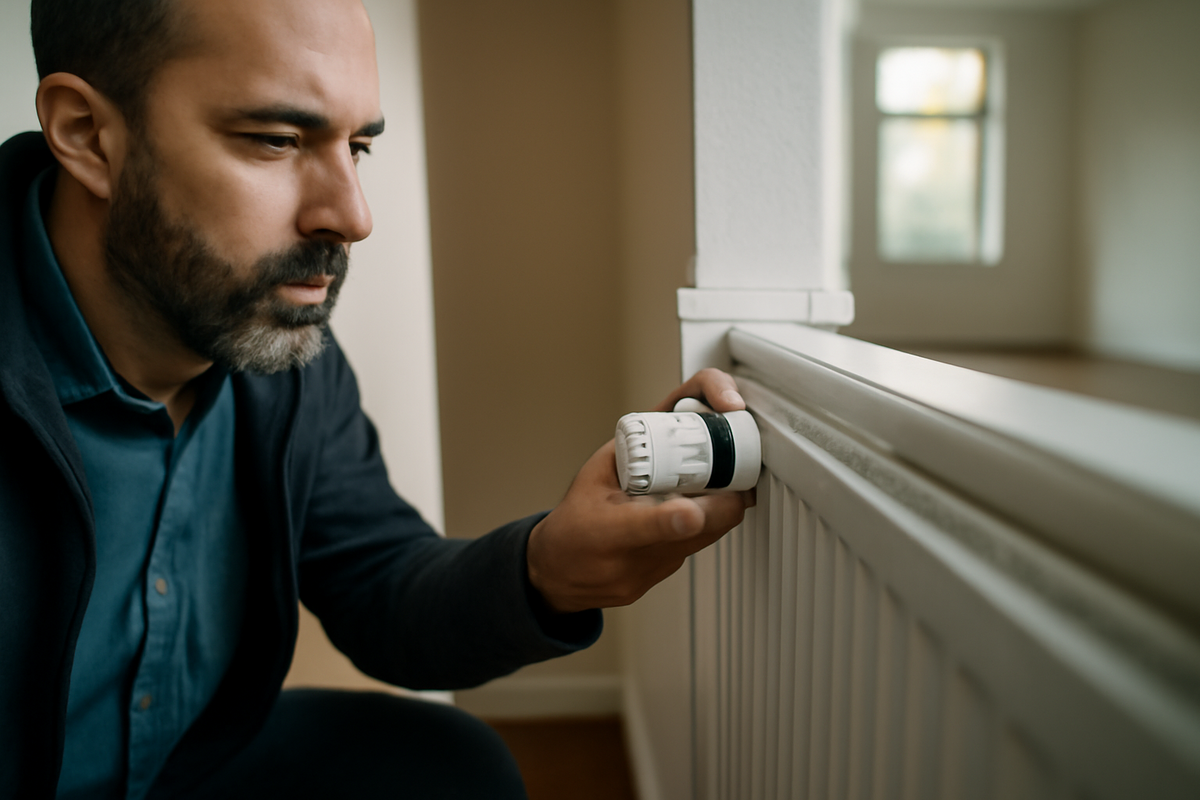
The first time I learned that switching off the radiators in empty rooms might be a bad idea, I actually laughed. It sounded like one of those contrarian tips that clog up the internet in winter. Turn off the heat to save energy — that’s just common sense, right? But then I walked into an old stone cottage on a wet November afternoon, and the place taught me more about heat, cold, and condensation than any smart thermostat ever had.
When an Empty Room Isn’t Really Empty
The cottage sat at the edge of a small village, its back wall pressed into a slope thick with bramble and moss. Inside, the living room was warm and amber-lit, thanks to a woodburner and a couple of aging radiators. But the spare bedroom at the back — the one the owners kept “off” to save money — felt like stepping into a fridge.
The air in that room had a smell, a faint sourness beneath the cold. The plaster near the window was freckled with dark spots. A wardrobe stood against the outside wall; the owners opened it for me with an embarrassed half-smile. The clothes inside were limp and faintly damp, like they’d spent the night in a tent rather than a house.
They’d done what millions of us have been told to do: turn the heat off in unused rooms. The logic seems watertight — why pay to warm a space where nobody sits, sleeps, or works? Yet the room, and the rising repair bills that came with it, told a different story. Energy experts, surveyors, and building physicists all say the same thing now: in many homes, turning the heat off completely in empty rooms doesn’t save as much as you think and can quietly invite problems you don’t want.
To understand why, you have to start thinking less like a person with a thermostat and more like the house itself.
The House That Breathes in Slow Motion
Every building you’ve ever walked into has an invisible rhythm. It soaks up heat, gives it back, pulls in moisture, and pushes it out again — a slow breathing that continues night and day. Bricks, plaster, stone, timber, insulation, furniture, even the clothes in your wardrobe: they all store and release heat. Some materials are like wool sweaters; others are like cold metal chairs.
When you turn the heating off entirely in a room, that rhythm is jolted. The temperature doesn’t just dip; it keeps sliding down until the room reaches a new balance with the outside. The walls cool first, then the furniture, then the air. The difference in temperature between that room and the rest of the house becomes a kind of internal weather front.
Step to the doorway between a warm hallway and a chilled spare room, and you can feel the border. Warm air is nudged in at floor level, cooler air rolls out near the ceiling. They mix, they churn, and in that mixing, the problems begin. Because in a modern home, what moves with that air isn’t just temperature. It’s water.
The Moisture Game You Can’t See
Everyday life pours water into the air. A shower, a pan of boiling pasta, a drying rack of laundry, even your own breathing — it all releases moisture. In a well-balanced home, that moisture is diluted, vented, and absorbed by materials that later release it outwards. But when you create a very cold room inside a warmer home, you’ve just created the perfect trap.
Warm air can hold more moisture than cold air. As the moist, heated air from your kitchen or bathroom creeps into a chilly bedroom or storage room, it cools rapidly. Cooling air loses its capacity to hold water. The excess has to go somewhere, and it chooses the coldest surfaces available: outside walls, window panes, corners, floor junctions, backs of wardrobes. That’s where you see the ghostly fingerprints — beads of water, speckled mold, peeling paint, musty smells.
What felt like an energy-saving win starts to look more like a slow leak in your home’s health. Plaster can crumble, window frames swell, wallpaper bubble. And once mold takes hold, it’s astonishingly good at creeping behind furniture, into fabrics, and along skirting boards, often out of sight until it’s well established.
So when energy experts talk about heating empty rooms “just enough”, they’re not being vague. They’re acknowledging this quiet, invisible dance of temperature and moisture that’s always happening between your rooms.
Why “All Off” and “All On” Are Both the Wrong Questions
Most of us approach heating like a light switch: lights on, lights off. Rooms used, rooms unused. It feels satisfying to twist a radiator valve to zero in a room we hardly enter. There — money saved. But heat doesn’t follow doorways and neat mental categories. It bleeds, seeps, and sneaks through walls, floors, ceilings, and gaps.
Imagine your home from above, like a cutaway drawing. One room glowing with heat, the next one shaded icy blue. Between them, the wall becomes a battlefield, with heat trying to flow from the warm side to the cold side. The bigger the temperature difference, the harder the heat flows. That means the warm room has to be heated more often to maintain its comfort level, because energy is constantly leaking across to that cold, unheated space.
Energy specialists call this “internal heat loss,” and it can nibble away at the savings you think you’re making. In poorly insulated homes, or those with lots of exposed external walls, the effect is even stronger.
At the same time, heating unused rooms exactly as much as your living room doesn’t always make sense either. If nobody is working in the study today, there’s no need for it to be toasty. But the answer isn’t “full blast or nothing.” It’s something subtler and, as it turns out, surprisingly kinder — both to your wallet and your walls.
What Energy Experts Now Suggest
Across building research labs, energy agencies, and the desks of experienced heating engineers, a new consensus has emerged: the best strategy is often to keep a gentle, background level of heat in seldom-used rooms, instead of switching them off entirely.
This doesn’t mean treating your guest room like a sauna. It means keeping it in the same general climate zone as the rest of your home — cool but not cold, dry rather than damp, protected instead of forgotten. Think of it more as “idling” than “off”.
For many homes, the advice looks roughly like this:
- Keep frequently used rooms (living room, office, main bedroom) at your comfort temperature.
- Set little-used rooms a few degrees lower, not to zero.
- Keep the doors open some of the time to even out extremes, unless you’re managing very clear zones.
- Ventilate briefly but effectively, instead of cracking a window all day.
It’s about stability. A house likes steady rhythms: moderate temperatures, regular air changes, consistent moisture levels. When you slam one room down to “icebox” and crank the next to “tropical,” the entire building has to work harder to keep up. That takes energy — often more than the bit you saved by turning the radiator off in the first place.
Feeling the Difference: A Day in a Balanced Winter Home
Imagine it’s mid-January. Outside, the sky has that frozen-grey look that makes sound feel muffled. Inside, your home is quietly humming along.
The living room is where life gathers — soft lamplight, a dog sprawled shamelessly near the radiator, the low murmur of a podcast. The thermostat is set to a temperature that keeps your hands comfortable on a book and your feet warm in socks. Not overheated, not chilly — just right.
Down the hall is the spare room. You haven’t had guests in months, and you only go in occasionally to grab a suitcase. The radiator there isn’t off; it’s turned down to a low setting, enough to keep the room just cool, not cold. The air has no hint of dampness. When you run your fingers along the wall under the window, it feels dry and solid, not clammy.
A dehumidifier hums gently in the hallway for an hour in the evening, timed to kick in after showers and cooking. The bathroom window opens wide for five brisk minutes after each shower, the mirror clearing quickly. In the kitchen, lids sit on simmering pots, keeping the windows from fogging up like a greenhouse. There’s a small gap under the interior doors, allowing air to drift and balance itself instead of getting trapped and stubborn.
This isn’t a show home. There’s a pile of shoes by the door and yesterday’s mail on a side table. But the structure of the home — the plaster, timbers, hidden corners — is being quietly protected by that choice: low heating, not no heating. Over the season, the boiler cycles more gently. There are fewer sharp spikes of demand, fewer panicked rushes to “take the chill off” an arctic room.
And when the energy bill comes, something interesting appears. The cost hasn’t exploded. In many cases, it’s surprisingly close — sometimes even lower — than in winters when you played thermostat roulette with off-and-on rooms and last-minute bursts of full-power heating. Meanwhile, the walls haven’t grown black freckles, and your house doesn’t smell like a forgotten tent after a wet festival weekend.
A Quick Look at How Strategies Compare
Here’s a simplified comparison of common habits and their typical pros and cons. It won’t match every house, but it captures what many experts see in the field:
| Heating Strategy | Short-Term Effect | Risks / Hidden Costs | Better For |
|---|---|---|---|
| Turn radiators off in unused rooms | Lower fuel use in that room, feels logical | Cold surfaces, condensation, mold, higher heat loss from adjacent rooms, comfort swings | Rarely ideal; sometimes okay in very dry, very well insulated homes |
| Heat all rooms to same temperature | Even comfort, simple to manage | Possible unnecessary energy use in seldom-used spaces | Small, compact, well-occupied homes |
| Low, continuous heat in unused rooms | Stable temperatures, no “cold shock” rooms | Slight energy use, but often offset by lower internal heat loss and less moisture damage | Most typical homes, especially older or moderately insulated ones |
| Sharp on/off bursts when needed | Fast comfort when you enter a cold room | High demand peaks, more strain on system, condensation on reheating cold surfaces | Occasional, truly temporary spaces (e.g., short visits to a storage room) |
The Quiet Cost of Letting Rooms Get Too Cold
The most expensive damage in a house often starts quietly. A dark bloom in a corner you don’t look at much. A rough patch behind a dresser. A musty smell when you open a cupboard. These are the house’s early whispers that the off-switch approach isn’t working.
Over time, repeated cycles of deep chilling and rapid reheating can stress materials. Wooden trim swells and shrinks. Cracks appear along plasterboard joints. Metal pipes in very cold spaces can be pushed toward freezing temperatures. And then there are the health effects: mold spores drifting through the air, triggering allergies and worsening respiratory issues.
When energy auditors walk through homes and trace the origins of mold blooms and peeling paint, they often end up in the same story: a room rarely used, kept unheated “to save on bills,” with a closed door and a cold outside wall. What looked like thrift turns into redecorating costs, insulation repairs, or even structural fixes.
The irony is striking. In trying to use less energy by shutting off heat in certain rooms, you can end up spending more money later on repairs, deep cleans, and medical appointments — not to mention the energy needed to dry out and warm a damp, damaged building again.
Small Shifts That Make a Big Difference
The good news is that you don’t need an expensive retrofit or a brand-new heating system to start aligning with what experts advise. Small, thoughtful shifts can ripple through your home’s whole winter story.
- Nudge, don’t slam: Instead of turning a radiator to zero, try setting it low. Many modern thermostatic valves have a frost or low-comfort setting that keeps the room above that critical “cold soak” point.
- Let the house equalize: Keep internal doors open for part of the day, especially between warm and cooler rooms, so temperatures and humidity can balance out.
- Vent with intention: Open windows wide for short bursts — five to ten minutes — instead of leaving them on a crack all day, which just invites slow heat loss without really clearing moisture.
- Watch the corners: Pay attention to external corners, behind wardrobes, and around window reveals. These are the canaries in the coal mine; if they stay dry, you’re likely on the right track.
- Use fabrics wisely: Don’t press wardrobes and big furniture tight to cold external walls. Leave a little space for air to move, especially in cooler rooms.
Bit by bit, these choices add up. Your home becomes a place that’s not just heated, but cared for — a living shell instead of a collection of on/off boxes.
Living With Heat, Not Fighting It
Behind all the technical talk about energy efficiency lies something older, almost instinctive: the idea of living in tune with your shelter. Before digital thermostats and smart valves, people knew their buildings intimately. They knew which walls held the dusk chill, where frost first bloomed on the inside of glass, which rooms needed a fire even when nobody slept there — not for comfort, but for the house’s bones.
Modern advice from energy experts isn’t a rejection of saving energy. It’s a refinement of it, informed by decades of research into how moisture, temperature, and materials interact. It says: yes, be mindful. Yes, avoid heating empty space unnecessarily. But also: don’t treat any room as if it exists in isolation. The house feels every choice you make.
So the next time your hand hovers over a cold radiator in a quiet room, imagine not just the meter spinning outside but the slow breathing of the house itself — the way warmth creeps through brick and plaster, the way water hangs in the air looking for a landing place. Ask not “How do I shut this room down?” but “How do I keep this room gently alive?”
With a little low, steady heat and a bit of daily attention, you can save energy without declaring parts of your home winter wastelands. Instead of rooms that smell like forgotten attics come springtime, you get a house that feels whole — every room a quiet participant in your winter, even when it’s empty.
Frequently Asked Questions
Should I ever completely turn off the heating in a room?
Short-term, yes — for very occasional spaces like storage areas you pop into for a minute. But for bedrooms, studies, and guest rooms that are part of your home’s daily air circulation, experts generally advise keeping at least a low level of heat to avoid condensation and mold.
Will keeping unused rooms slightly heated really save money?
In many cases it can come close to, or even outperform, the “off” approach once you factor in reduced internal heat loss from warmer rooms, fewer extreme reheating cycles, and a lower risk of moisture and mold damage. It’s not about heating them fully — just keeping them from becoming cold sinks.
What temperature should I aim for in seldom-used rooms?
Exact numbers depend on your climate and building, but a common rule of thumb is to keep them a few degrees cooler than your main living space — cool but not cold. Enough that surfaces don’t feel icy and air doesn’t feel damp.
Does this advice change for very well insulated homes?
Yes, highly insulated, airtight homes are less prone to cold surfaces and internal heat loss. In such buildings, turning off heat in a room may have fewer downsides, especially with good ventilation. Still, avoiding big temperature swings between rooms is usually more efficient and comfortable overall.
What if I can’t afford to heat all rooms, even a little?
If you must prioritize, focus on one or two core living spaces and your main bedroom, while doing everything you can to reduce moisture: shorter showers, lids on pans, controlled ventilation, and keeping an eye on cold corners. When you can, give other rooms short “warm-up” periods on the coldest, dampest days to reduce the risk of deep chill and condensation.

Hello, I’m Mathew, and I write articles about useful Home Tricks: simple solutions, saving time and useful for every day.