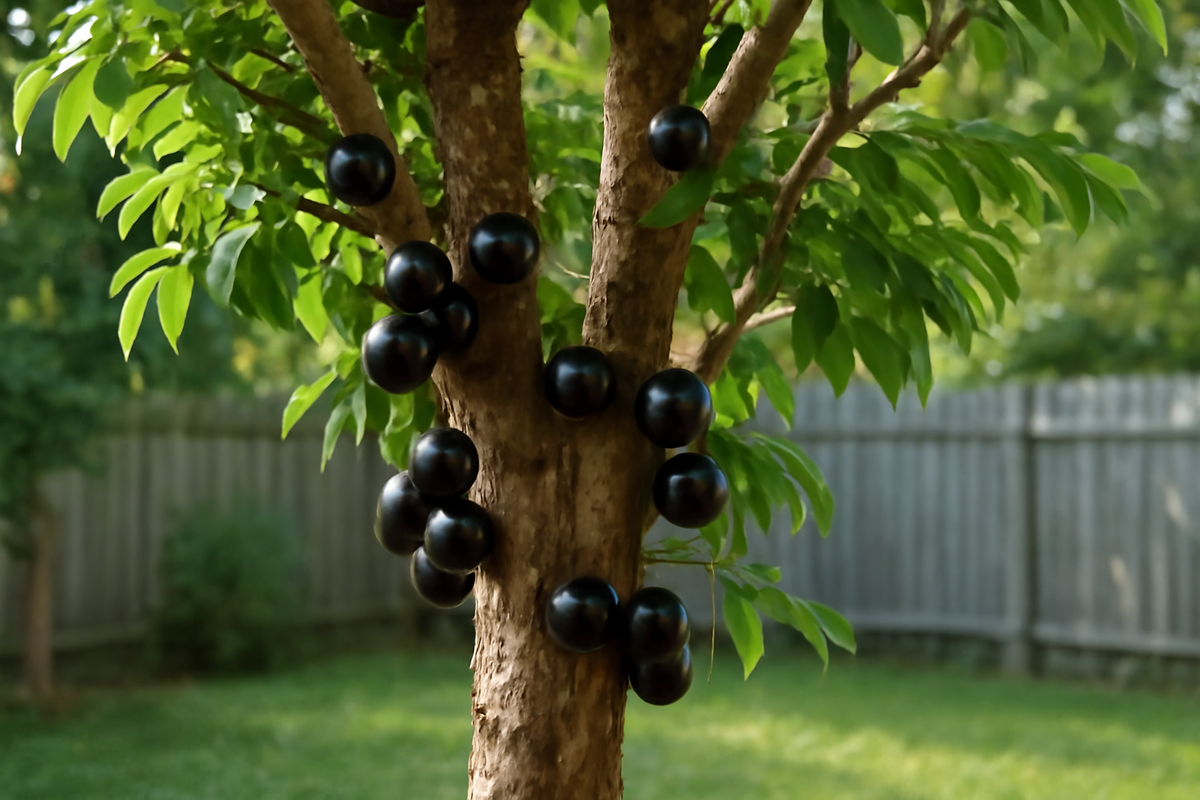
The first time I met a pitanga tree, I didn’t know its name. I only remember the flash of red between glossy green leaves, the sound of children arguing over who’d spotted the ripest fruit, and the way the air smelled—warm earth, cut grass, and something faintly sweet, like sun-warmed berries. Someone pressed a tiny, pumpkin-shaped fruit into my hand. “Eat it here,” they said, “right under the tree. That’s how it tastes best.” I bit into it, and the sour-sweet juice exploded across my tongue, startling and bright, like someone had turned up the volume on my taste buds. That was my initiation into one of Brazil’s most beloved backyard companions: the pitanga tree, also known as Surinam cherry, or simply, the fruit that never seems to stop giving.
The Little Tree That Owns the Backyard
Across Brazil, from coastal towns to sprawling suburbs and sleepy countryside homes, there is a quiet, leafy presence that anchors countless backyards. The pitanga tree doesn’t shout for attention. It doesn’t tower over rooftops or drop coconuts with a thud. Instead, it stands with a kind of humble elegance—shiny leaves, slender branches, and a trunk that looks more like a sturdy shrub grown up over time. You could almost miss it, until you realize that this modest tree is the heartbeat of the yard.
In many Brazilian homes, the pitanga isn’t just a plant; it’s part of the family history. Children learn to climb on its lower branches. Grandparents tell stories in its shade. Dogs sleep at its feet in the heat of the afternoon. At certain times of the year, the ground beneath it turns into a scatter of red, orange, and wine-colored fruit—pecked by birds, squished by bare feet, or scooped up in bowls to be carried into bustling kitchens.
Ask almost anyone who grew up with a pitanga tree nearby, and they’ll likely smile before they even answer. The tree is small enough to fit into most backyards but generous enough to feel like an orchard all by itself. It’s the kind of tree that becomes a meeting place, a summer memory factory, and a year-round promise: come back tomorrow, there might be more fruit waiting.
The Tree That Fruits Almost All Year Long
One of the pitanga’s quiet miracles is how often it decides to fruit. In warm, tropical or subtropical regions of Brazil, it doesn’t wait for a strict season. Instead, its glossy leaves hide tiny white flowers that appear several times throughout the year, each bloom carrying the promise of another round of fruit. The tree seems to follow its own rhythm, pulsing with new growth and new harvests whenever conditions are kind.
There’s a small thrill in walking out to the yard and noticing the first hint of color: a pale green fruit just beginning to blush into orange, or a fully ripened deep red gem hiding in plain sight. Children become experts at timing, arguing fiercely over when a fruit is perfectly ripe. “Not yet,” one might say, pointing out that a patch of orange still clings to its ridges. “Now,” insists another, fingers already stained from the last handful they didn’t bother to show anyone else.
Unlike larger fruit trees that demand attention at harvest time—huge baskets, frantic peeling, preserving before everything rots—the pitanga offers its gifts in smaller, manageable waves. A bowl here, a handful there, a few gathered absentmindedly while hanging laundry or watering plants. The tree becomes part of a daily routine rather than a seasonal event, always promising one more bite, one more tangy mouthful as you pass by.
The fruit itself is as expressive as the tree that bears it. Slightly ribbed, like a tiny pumpkin or lantern, it ranges from bright scarlet to a rich, almost black red, depending on the variety and ripeness. Bite into a very ripe, dark fruit and you might get a mellow, almost tropical sweetness with a hint of resin. Catch a lighter red one and it snaps back with a citrusy tang that can make your mouth water and your eyes widen. Some people swear by the sweetest, almost purple ones; others love the sharp, tongue-tingling punch of the just-ripe fruit. Either way, the pitanga has a way of waking you up.
More Than a Snack: A Tree That Feeds the Whole Yard
It isn’t only people who follow the cycles of the pitanga. Birds learn the schedule too. Early in the morning, before anyone’s had time to grab a colander or basket, the yard fills with movement: tanagers hopping from branch to branch, tiny birds slipping in between leaves, doves waddling below to clean up whatever falls. The tree becomes a miniature ecosystem, a wild café for winged visitors.
Butterflies float through when the tree is covered in small, fragrant white flowers. Bees hum softly among the blossoms, doing the invisible work that ensures another generation of fruit. Lizards pause on the sunlit trunks, flicking their tongues as if tasting the sweetness in the air. Under the pitanga, the soil stays just a bit cooler, shaded by its branches and nourished by fallen leaves and fruit that break down over time.
In a world where many yards are paved over or dominated by lawn, the pitanga tree quietly resists the idea that a backyard is just a yard. It turns it into habitat. Planting one means you aren’t just choosing a fruit tree—you’re choosing to invite more life in. For families with children, it becomes a living classroom. “Look,” a parent might say, pointing to a cluster of blossoms, “those flowers will become fruit.” Weeks later, little fingers trace the transformation from flower to fruit, fruit to seed, seed to sapling.
And the tree itself is surprisingly forgiving. It doesn’t demand perfect soil or constant attention. It can be pruned into a small, tidy hedge or allowed to spread into a generous little tree, offering a patch of shade that feels made for a hammock or a pair of chairs. It doesn’t loom. It simply settles in, adapting to its place, becoming part of the backyard’s personality.
A Backyard Pharmacy: Leaves You Can Drink
For many Brazilians, the pitanga tree is more than just a fruit source. It’s also a quiet, leafy apothecary. On cooler evenings or during moments of stress, someone will step outside with a small pair of scissors or just use their hands, gathering a few young leaves—tender, glossy, and aromatic when crushed. Those leaves go straight into a kettle or a pot, turning into a gently fragrant tea known locally for its calming and digestive properties.
The scent of pitanga leaf tea is subtle, almost shy. It’s not as forceful as mint or as floral as chamomile. Instead, it carries a green, slightly resinous note, with whispers of the fruit’s sweetness. Sip it slowly, and the warmth seems to move through your chest and stomach, easing tension in a way that feels more emotional than medicinal. It’s the taste of evenings on verandas, of conversations that stretch past sunset, of old remedies passed down without ever having been written.
Some people drink pitanga leaf tea when they feel slightly feverish, others when their nerves are frayed. In traditional folk knowledge, pitanga leaves are associated with gentle relief—from anxiety, from digestive discomfort, from the weight of the day. Science has begun to explore these uses, studying the plant’s antioxidants and essential oils, but in backyards across Brazil, no one waits for research papers to feel its value. They just know that, when in doubt, a handful of leaves and a pot of hot water are a good place to start.
The beauty of it is how seamlessly this “medicine” fits into everyday life. No pharmacy trip, no complicated instructions. You need only step outside, touch the living source, and harvest just enough. There is something grounding about preparing tea from a tree you see every day—the same tree that offers fruit to your kids, shade to your dog, and nectar to passing bees. It blurs the lines between food, remedy, and relationship.
How One Tree Offers So Much
Part of the wonder of the pitanga is how many roles it plays without fanfare. It’s a snack bar, a tea cabinet, a bird feeder, and an ornament all at once. To understand its gifts more clearly, it helps to see them side by side.
| What the Tree Gives | How It’s Used in Daily Life |
|---|---|
| Fresh fruit (pitanga berries) | Eaten straight from the tree, used in juices, jams, desserts, and frozen into popsicles. |
| Leaves | Brewed into a simple herbal tea, often associated with relaxation and digestion. |
| Flowers | Provide nectar for bees and other pollinators, supporting local biodiversity. |
| Shade and shelter | Creates a cool corner in the yard—perfect for sitting, reading, or children’s play. |
| Aromas and presence | Brings subtle scents, visual beauty, and a calming green presence to everyday life. |
Everything about the pitanga’s gifts feels accessible. You don’t need special tools to harvest the fruit—just your hands and maybe a small container, if you’re planning to share. You don’t need fancy teapots or complicated recipes for the leaves—hot water is enough. In this way, the tree weaves itself into ordinary routines, turning simple actions into small rituals of care: for yourself, for your family, for the land just outside your door.
Stories Rooted in the Soil
Beyond all its practical uses, the pitanga tree also holds stories. Some of them are as personal as the crack in a favorite mug. A woman might remember learning how to climb by hoisting herself into its branches, stretching for fruit just out of reach. A man might think back to long childhood afternoons when he and his siblings pretended the pitanga was a magical portal or the heart of an imaginary kingdom. Grandparents might recall how, when they were young, there were no supermarkets full of imported fruits—only what you picked from the yard, washed under a tap, and ate with juice dripping down your arms.
In certain neighborhoods, the pitanga serves as a landmark as precise as a street sign. “Turn left at the big pitanga tree,” someone might say when giving directions. Over time, it becomes a quiet witness to changing lives: new paint on old houses, kids moving away, new families arriving with their own stories and traditions, all under the same rustling leaves.
There is also the story of adaptation. Native to tropical parts of South America, the pitanga traveled—sometimes intentionally, sometimes as a curiosity. It found its way into gardens in other countries, especially in warm climates, where it charmed people with its colorful fruit and compact shape. Yet, nowhere does it feel as inseparable from daily life as it does in Brazilian backyards, where it merges with a culture that understands how to live outside as much as inside, how to let a tree become part of the home rather than just part of the scenery.
For many, the pitanga holds a flavor of nostalgia. Tasting the fruit as an adult can trigger a rush of childhood memories: the rough feel of tree bark, the shock of sourness, the sticky fingers rubbed absently on shorts or wiped on a sibling’s arm. Even those who move away from Brazil often talk about missing that specific taste—the way it sits somewhere between cherry, passion fruit, and something entirely its own. It’s more than flavor; it’s a sense of time and place made edible.
Planting a Future in a Single Sapling
Because the pitanga is so intertwined with memory, planting a new tree can feel a bit like making a promise. When a sapling goes into the ground, it carries with it the potential for years—decades, even—of small, everyday joys. Someone might plant it when a child is born, imagining them at five years old, hand outstretched for a low-hanging fruit; at ten, scrambling into the branches; at twenty, returning home and pausing under its shade, now taller than the tree that once towered above them.
Unlike ornamental trees planted only for looks, the pitanga invites interaction. It asks you to pay attention, to notice when the leaves flush with new growth or when the fruit darkens into that perfect moment of ripeness. It turns you into a participant in the backyard rather than a spectator. That simple act—walking outside, checking on a tree, picking what is ready, brewing what you need—reminds you that nature isn’t something distant or abstract. It’s the living, changing presence just beyond your doorway.
Why This Modest Tree Matters More Than Ever
In an age of imported everything and disposable anything, a small tree that quietly feeds, soothes, and shelters may seem almost radical. The pitanga tree doesn’t rely on cold storage or long-haul trucks. It doesn’t need a label or a brand. Its fruit never comes wrapped in plastic; its leaves don’t arrive in a box. Instead, it offers a different model of abundance—one rooted in patience, care, and proximity.
For urban dwellers, a single pitanga tree in a small yard or even a large pot can be an anchor to something older and slower. Watching it move through its cycles, you begin to notice the subtler shifts in the seasons—the way certain birds arrive when the fruit ripens, or how the leaves look just before a flush of new growth. You start to care about rainfall and soil and pollinators in a more immediate way, because their well-being shapes the health of this small being you’ve come to love.
And then there’s the question of food itself. When you bite into a pitanga you’ve just picked, you know exactly where it came from. You felt the bark, saw the flower, watched the fruit swell day by day. That intimacy changes your relationship with what you eat. It’s no longer just “produce”; it’s a story you’ve been following—one that includes morning light, heavy rain, patient waiting, and, finally, one satisfying bite.
Maybe that is the pitanga’s greatest gift: not only fruit or tea, but a way of being in relationship with the natural world that is direct, personal, and everyday. It reminds us that a backyard can be more than a background, that a tree can be more than decoration, and that abundance can arrive in small, steady offerings rather than in grand, overwhelming floods.
Somewhere in Brazil, at this very moment, a child is standing under a pitanga tree, hand outstretched, deciding whether that fruit is ready. Somewhere else, someone is cradling a warm mug of pitanga leaf tea, exhaling the day’s worries. In another yard, birds are busy among the branches, scattering seeds that may someday take root. All of them, whether they know it or not, are woven into the quiet, generous life of this beloved little tree.
Frequently Asked Questions
Is pitanga the same as Surinam cherry?
Yes. “Pitanga” is the Brazilian name for the fruit of Eugenia uniflora, commonly known in English as Surinam cherry. They are the same plant, just with different regional names.
Does the tree really fruit year-round?
In warm tropical and subtropical climates, pitanga can flower and fruit several times a year, so it often feels like it fruits almost year-round. In slightly cooler regions, it may have more defined fruiting seasons, but it still tends to be very generous.
What does pitanga fruit taste like?
Ripe pitanga is usually sweet-tart, with notes that some people compare to cherry, passion fruit, or even a hint of resin. Darker, fully ripe fruits tend to be sweeter and milder, while bright red ones can be sharply tangy.
Can you really make tea from pitanga leaves?
Yes. In Brazilian folk tradition, fresh or dried pitanga leaves are often steeped in hot water to make a mild herbal tea, commonly associated with relaxation and digestive comfort. As with any plant remedy, moderation and personal sensitivity should be considered.
Is pitanga tree suitable for small backyards?
Definitely. Pitanga can be kept as a compact tree or large shrub through pruning, making it well-suited for modest yards and even large containers. Its size, beauty, and multiple uses make it a favorite in Brazilian home gardens.

Hello, I’m Mathew, and I write articles about useful Home Tricks: simple solutions, saving time and useful for every day.