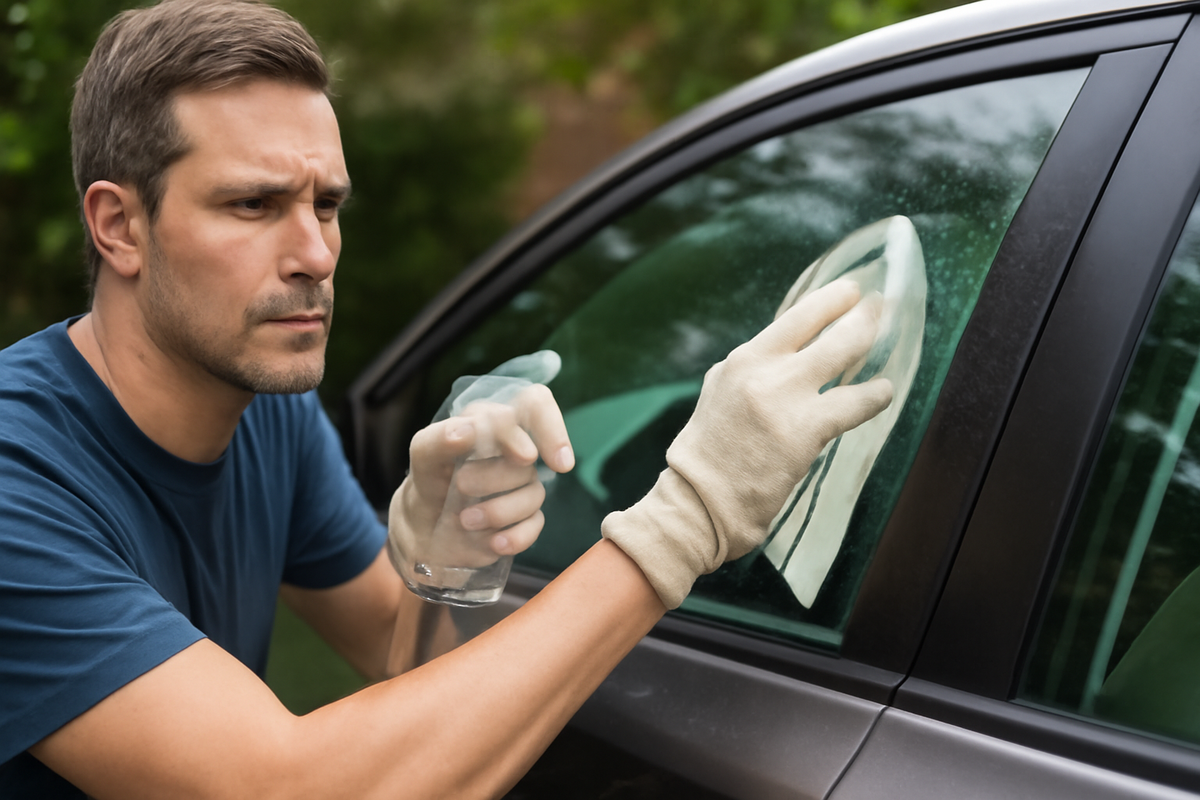
The glass looks innocent until sunrise hits it. That’s when you finally see it: a smoky haze across the inside of your windshield, the fingerprints on the passenger window, the faint spray of dog nose art in the back, and that weird, streaky arc right where your wipers should have helped but didn’t. You swipe at it with your sleeve. It just smears. You try the expensive bottle from the auto aisle, the one with promises and neon labels. It smells like a chemical factory and, still, the glass somehow looks tired. That’s when somebody quietly says, “You know… you could just use vinegar.”
The Day the Fancy Glass Cleaner Lost
I didn’t believe it at first either. Vinegar? The same thing I splash into a salad? The same stuff my grandmother used to clean her windows on Saturday mornings with an old newspaper and a hum that carried through the house? It felt too simple for modern grime.
But one late autumn afternoon, when the low sun turned every streak into a spotlight, a retired detailer named Marco set out to prove me wrong. He showed up in the driveway with a plastic spray bottle, a jug of plain distilled white vinegar, and a handful of soft, well-worn microfiber cloths.
The air was cold enough that every breath fogged, and you could smell the sharp, tangy note of vinegar even before he mixed anything. We stood by my car, its bronze paint dull under a crust of road dust, windows freckled with dried rain, pollen ghosts, and months of neglect.
“You’ve bought those ‘streak-free formulas,’ right?” he asked, tilting his head toward the trunk where I kept a small arsenal of car-care products.
I nodded. Glass cleaner that promised anti-fog. A “ceramic-infused” spray. Something vaguely blue and expensive. None of them ever quite erased that misty film that made night driving feel like staring through soft-focus lenses.
Marco just smiled and twisted off the vinegar cap.
The Simple Science of Why Vinegar Works
There’s a reason cleaning pros keep coming back to vinegar, even in an age of hyper-specialized products. Distilled white vinegar is essentially acetic acid diluted in water, usually around 5 percent acid. That mild acidity is the key: it breaks down the invisible film that builds up on car glass—everything from evaporated plasticizers that off-gas from your dashboard, to oily fingerprints, cigarette smoke, traffic fumes, and the tiny mineral deposits left behind by dried rain or hard water.
Most commercial glass cleaners rely on a blend of surfactants (to loosen dirt), solvents (to cut grease), fragrances, dyes, sometimes ammonia, and occasionally polymers or waxes meant to leave behind a “protective” layer. That coating can make glass more reflective and, ironically, more prone to streaks, especially when headlights hit it at night.
Vinegar, by contrast, cuts straight to the chase. No glossy residue, no perfume attempting to disguise itself as “Ocean Rain.” Just an acidic solution that dissolves and lifts that cloudy film so you can physically wipe it away. And because it’s not battling against its own additives, it often leaves glass looking crisper, sharper, almost newly installed—if you use it correctly.
“The trick,” Marco said, pouring clear vinegar into the bottle, “is less about what you use and more about how you use it. Bad technique can ruin good products. Good technique can turn ‘cheap’ into magic.”
Mixing the Magic: The Right Vinegar Ratio
Before we get to the cloths and the motions, it starts with the mixture. Straight vinegar will work, but it can be a little too punchy on your nose and, on some tinted windows, too strong for repeated use. Pros usually dilute it. Here’s the sweet spot Marco swears by.
| Mixture | Ingredients | Best For |
|---|---|---|
| Standard Vinegar Cleaner | 1 part distilled white vinegar + 1 part water | Routine interior and exterior glass |
| Heavy-Duty Haze Buster | 2 parts vinegar + 1 part water | Stubborn film, smoker’s cars, oily buildup |
| Tint-Friendly Mix | 1 part vinegar + 2 parts water | Aftermarket tints, frequent cleaning |
Always choose plain distilled white vinegar. Skip the apple cider vinegar and anything “infused” or colored; those can leave their own residue and smell like a salad bar in your car long after you’re done.
The Technique Cleaning Pros Swear By
Spray, wipe, done, right? Not quite. The special satisfaction of vinegar on car glass comes from a deliberate rhythm: the order you clean in, the direction of your strokes, the patience to let the solution work for a few seconds. Watching Marco clean my windows felt almost like watching someone sharpen a knife—small, quiet, intentional movements that make a huge difference.
Step 1: Start in the Shade
Light matters. On a bright day, park in the shade or wait until the sun drops. Direct sunlight heats the glass and flashes the vinegar dry before it can dissolve anything, baking streaks right into your effort. In the soft, cooler light of late afternoon, the vinegar has time to loosen the haze instead of just evaporating into it.
Step 2: Two Cloths, No Paper Towels
Marco handed me two microfiber cloths: one slightly thicker, for cleaning; one thinner and smoother, for buffing. “Paper towels,” he muttered, “are streak machines.” They shed lint, they drag rather than glide, and on some glass they can even leave microscopic scratches. Microfiber, on the other hand, grabs onto grime and holds it in its thousand tiny loops.
One cloth stays damp with cleaner. The other stays as dry as possible. It’s a dance between wet and dry.
Step 3: Outside First, Horizontal Strokes
We started with the exterior. Cold air nipped at our fingers while the vinegar solution kissed the glass with a faint, bracing scent. Marco sprayed a fine mist across the windshield—not dripping, not stingy, just enough to bead and veil the glass.
“Let it sit for a few breaths,” he said. In those seconds, the acid quietly dissolved grime you couldn’t see yet. Then, using the damp cloth, he wiped side to side in long, horizontal strokes, each pass slightly overlapping the last like careful brushwork on a blank canvas.
With every sweep, grayish moisture gathered along the edges of the towel. That was the film you’d never see unless the light hit it.
When he’d covered the whole surface, he switched to the dry cloth. Again, horizontal strokes, this time lighter, almost like polishing. The glass changed character—not just “cleaner,” but clearer, crisper. The low sun bounced off it and, for the first time in months, it looked nearly invisible, which is exactly what you want your windshield to be.
Step 4: Inside Next, Vertical Strokes
Inside the car, the air was warmer, laced with the faint vanilla from an old air freshener. This time, he sprayed the vinegar mix directly onto the cloth, not the glass. “We don’t want it dripping into your dashboard or staining anything,” he explained.
Same process, new direction. Vertical strokes now: up and down, up and down across the inside of the windshield and side windows.
“Horizontal on the outside, vertical on the inside,” he reminded me. “If you see a streak later, you’ll know which side it’s on.” It’s a small mental trick, but brilliant: if a streak runs side to side, the outside needs another pass. If it runs up and down, the inside missed a spot.
When he finished with the damp cloth, he buffed again with the dry one, this time with barely any pressure, letting the microfiber glide. The interior film—years of off-gassing plastics, fingerprints from closing the door, the faint mist of coffee and cologne—lifted away, leaving a sharp, cool clarity behind.
The Sensory Difference You Notice When You Drive
The real test came not in the driveway, but on the road. Twilight settled, and I took the car out, half skeptical, half quietly hopeful. Streetlights flicked on, casting their orange halos over wet pavement. Approaching headlights, usually the enemy of a dirty windshield, shone ahead like sharp, clean stars instead of expanding into fuzzy halos.
The glass no longer drew my eye. It disappeared. I could see through it instead of at it. No lingering perfume of chemical cleaner, just the tiniest trace of vinegar fading quickly into nothing. Even my rearview mirror view was crisper; the once-murky glow of brake lights behind me had turned to distinct, precise points of red.
It struck me how often we tolerate a kind of low-level blur as normal. A film over our view becomes invisible until it’s gone. With the vinegar technique, the world outside the car felt closer, more immediate. Pine needles on the roadside were individual, not a greenish smudge. The lettering on a distant road sign snapped into focus a split second sooner.
Sometimes “better cleaning” sounds like a marketing phrase. On nights like that, it felt like safety. Less glare meant less eye strain, less squinting, and more confidence on a dark road where every second counts.
What Vinegar Does Better Than Pricey Products
You feel the difference in your hands, too. Expensive glass cleaners often leave a faint slip on the cloth, a slickness that never quite goes away. Vinegar doesn’t coat the surface; it strips it clean. That means:
- Less nighttime glare from oncoming traffic
- Fewer streaks catching the rising sun
- No scented residue mixing with your car’s natural smells
- No mystery chemicals reacting with your dashboard or tint
And then, there’s the simple satisfaction of stepping away from your car and seeing your own reflection in the window, not as a vague shape but as a sharp silhouette. The glass stops competing with the scenery; it becomes a frame instead of the painting.
Little Pro Tweaks That Make a Big Difference
As we finished, Marco shared a few of the small habits that separate the “spray and pray” method from the pro-level clarity vinegar can deliver.
Use Fresh, Clean Cloths Every Time
Microfiber that’s already done battle with dirty dashboards, wheels, or doorjambs will betray you on glass. Even a hint of grease or wax in the fibers will smear across the window. Keep a separate set of glass-only cloths, and wash them without fabric softener, which can coat the fibers and cause streaks of its own.
Mind the Edges and the Corners
That hazy half-moon where your wipers can’t quite reach? The thin line of fog along the very top of the windshield? Those are the spots you notice on the highway and curse not having cleaned. Fold your cloth into a small square, press it into the corners, and run it right along the edges where grime likes to hide. Those tiny details are what make the whole glass surface feel professionally finished.
Don’t Forget the Rearview and Mirrors
A quick pass of vinegar solution and a gentle buff on your rearview mirror and side mirrors can change the way you experience distance at night. Sharper reflections mean better depth perception and faster recognition of what’s behind you.
Use Just Enough Product
Drenching the glass doesn’t make it cleaner; it just makes your job harder. A light, even mist gives the vinegar room to work without pooling or running. If you hit a really stubborn patch—like the hazy ring left by a suction-cup phone mount—spray the cloth a bit heavier and hold it against the area for a few seconds before wiping.
Repeat the First Time, Then Maintain
If your windows have been neglected, one round may not erase years of buildup. A second pass with fresh solution and a clean cloth can take them from “much better” to “shockingly clear.” After that, a quick vinegar wash every few weeks usually keeps things pristine with minimal effort.
Why This Old-School Trick Feels So Right Now
There’s something quietly satisfying about solving a modern problem with something as humble and familiar as vinegar. In an age of specialized sprays for every surface of your car, grabbing one jug from the pantry feels like an act of small rebellion—and of trust in the simple chemistry that’s been working for generations.
It’s cheaper, too. A big bottle of distilled white vinegar costs a fraction of a single premium automotive glass cleaner, and it stretches into dozens of refills of your spray bottle. That’s less plastic, less clutter in your trunk or garage, and more room in your budget for the things that actually bring you joy, like the road trip you’re cleaning the car for in the first place.
But beyond cost and convenience, there’s a more personal pleasure in it. Cleaning with vinegar has a kind of tactile honesty: you feel the drag of the cloth turn to glide as the film breaks down; you see the reflection sharpen; you breathe in a scent that’s sharp but recognizable, not manufactured to smell like a distant ocean you’ve never visited.
Standing there with the bottle in hand, you’re connected—however quietly—to every person who has ever stepped back from a freshly cleaned window and admired the way the world suddenly looks both nearer and more precise.
Next time you catch your windshield haze in the early light, or you notice how oncoming headlights bloom across the glass at night, remember that the solution might already be waiting in your kitchen. No neon label, no big promises, just a clear bottle and a familiar smell.
Vinegar won’t brag. It will just help you see where you’re going.
Frequently Asked Questions
Can I use vinegar on tinted car windows?
Yes, you can use a diluted vinegar mix (about 1 part vinegar to 2 parts water) on most aftermarket tints, but always spray onto the cloth, not directly onto the glass, and test a small corner first. Avoid very strong vinegar solutions on tint over long periods.
Will my car smell like vinegar afterward?
Only briefly. The smell is noticeable while you’re cleaning but fades quickly as the glass dries and the car airs out. Leaving the windows cracked for a few minutes speeds this up.
Is vinegar safe for rubber seals and paint around the windows?
Yes in normal use. A light mist or a damp cloth won’t harm rubber seals or paint. Just avoid soaking any one area and wipe away drips as you go.
How often should I clean my car windows with vinegar?
For daily drivers, every 2–4 weeks is ideal, especially the inside of the windshield. If you smoke or live in a dusty area, you may want to clean a bit more often.
Can I mix vinegar with dish soap for even better cleaning?
For glass, it’s usually better not to. Dish soap can leave a subtle film on windows and create streaks. A simple vinegar-and-water mix with good technique is typically all you need.
Why do my windows still streak after using vinegar?
Streaks are usually from dirty or linty cloths, cleaning in direct sun, or using too much solution. Try fresh microfiber towels, work in the shade, use less liquid, and finish with a dry cloth buff.
Can I store the vinegar solution in a spray bottle long-term?
Yes. A vinegar-and-water mix keeps well for months in a clean, labeled spray bottle. Just give it a little shake before each use to remix any settled droplets.

Hello, I’m Mathew, and I write articles about useful Home Tricks: simple solutions, saving time and useful for every day.