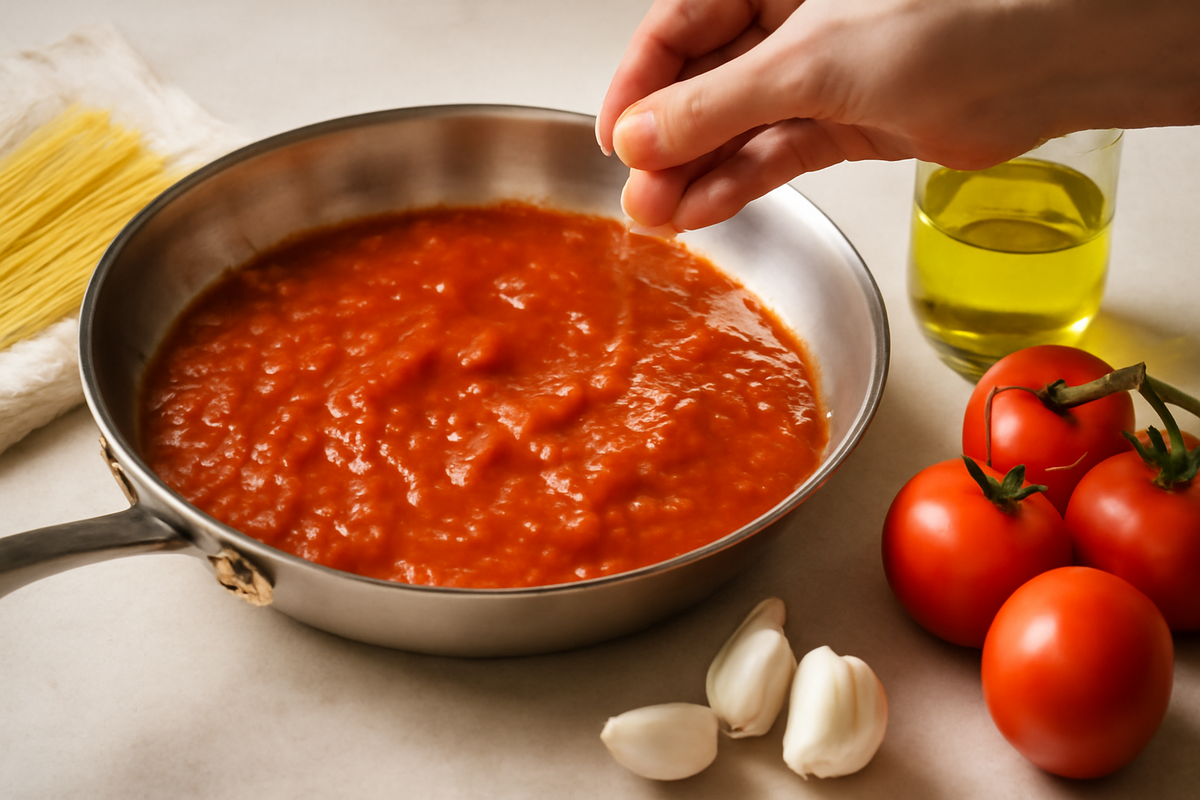
The onions were already sweating gently in the pan when the rain started tapping on the kitchen window. Outside, the world smelled of wet pavement and leaf mold; inside, it smelled like every cozy memory you’ve ever wanted to walk into. The whole scene was unremarkable—no chef’s jacket, no gleaming restaurant line, just a battered wooden spoon, a wide pan, and four ingredients you could probably find in nearly any corner shop. Yet if you closed your eyes, you’d swear you were sitting in a candlelit trattoria, waiting for a plate of pasta a chef had just sworn over, tasted five times, and finally pronounced “good enough.”
That’s the secret nobody really tells you: the distance between your home kitchen and “restaurant quality” is not as far as it looks. In fact, sometimes it’s only four ingredients wide.
The Four-Ingredient Myth (And Why It Actually Works)
When people hear “four-ingredient pasta sauce,” they usually picture something pared down to the point of boredom—maybe a little tomato, a little garlic, and a lot of compromise. But chefs know a different rule: limitations can unlock flavor. With fewer ingredients, you’re forced to treat each one with almost unreasonable respect. You give them time. Space. Heat. Salt. And in return, they show you everything they can do.
Our four-ingredient sauce leans into that philosophy. It’s not a hack, not a 10-minute throw-together, and definitely not a jarred sauce impersonator. It’s the kind of sauce that builds slowly, deepens as it simmers, and grows in complexity purely based on how you treat those ingredients—no fancy extras, no secret powders, no mystery umami tonics.
Think of this as the culinary equivalent of a well-shot black-and-white photograph: fewer colors, more attention to texture, light, and shadow. You’re not hiding behind twenty flavors. You’re making four ingredients do the work of twelve, simply by handling them the way a chef would on a good night.
The Core Cast: What You Actually Need
There are many ways to do a minimalist sauce, but one combination has that quiet, restaurant-level magic you can return to again and again:
- Good canned tomatoes (whole or crushed, ideally San Marzano–style)
- Onion (yellow or white, sliced or finely chopped)
- Butter (unsalted, so you control the salt)
- Salt (kosher or fine sea salt)
That’s it. Yes, you can add garlic later. Yes, you can grate cheese over the finished pasta. But those are optional embellishments, not part of the foundational four. These four alone can give you a sauce that glows with depth, clarity, and balance—if you treat each of them like they’re the star.
Chef Mindset: Cook Fewer Things, Pay More Attention
Professional kitchens aren’t actually about wild creativity every second. They’re about attention—watching, listening, smelling. A chef would never just toss tomatoes into a pot with butter, wander off, and hope for the best. They listen to the sizzle, watch the edges caramelize, taste the salt level at every turn.
Bring that mindset into your kitchen, and your four ingredients transform. You’re not “making pasta sauce.” You’re coaxing sweetness from the onion, encouraging richness from the butter, softening the tomato’s acidity, and circling slowly toward balance with the salt. It’s almost meditative once you sink into it.
Step 1: Onions, Patience, and the Quiet Sizzle
Start with a wide pan if you can—surface area is flavor. Add a generous knob of butter and let it melt over medium-low heat. When it’s foamy and quietly fragrant, slide in your sliced onion. The moment the first piece hits the pan, listen. That soft hiss? That’s the sound you’re going to follow.
You’re not trying to aggressively brown the onions here. Think more “gentle slump” than “crispy edges.” Stir enough to coat everything in butter, then let the heat do its work. Over 15–25 minutes, the onions will go from sharp and raw to tender and mellow, just barely tinged with gold at the edges. Along the way, the kitchen fills with that unmistakable smell of warmth: sweet, savory, a little nutty from the butter.
A chef’s tip: if the onions start to brown too quickly, your heat is too high. Turn it down and add a tiny splash of water to cool things off, scraping up anything that’s trying to stick. You’re building a foundation of sweetness and softness—this is what will tame the acidity of the tomatoes later without any sugar.
Step 2: Tomatoes, Heat, and Learning to Taste Like a Chef
When the onions have slumped into softness, it’s time for the tomatoes. If you’re using whole canned tomatoes, crush them gently with your hands in a bowl first, feeling the seeds and juices run through your fingers. It’s a small, messy ritual that gives you a sense of the fruit you’re working with—how thick, how watery, how bright the smell.
Pour the tomatoes and all their juice into the pan. Stir, and watch butter, onion, and tomato swirl together into a loose, streaky red-orange mixture. Season with a good pinch of salt, but don’t worry about perfection yet. Salt is not just a “last step” seasoning—it’s a tool you use throughout cooking to shape flavor.
Now raise the heat until the mixture just barely simmers. Not a rolling boil, not a lazy puddle—something in between. Little pops at the surface, a slow, rhythmic plume of steam. Tilt your head over the pan and inhale: you should smell fruitiness, a hint of acidity, and the soft base note of butter.
Here’s where you start tasting like a chef. Spoon up a bit, blow on it, and taste. At first it might feel sharp, thin, maybe a little flat. That’s fine. You’re not just judging; you’re creating a mental snapshot. As the sauce reduces and cooks, you’ll taste again and compare: Has the sharpness eased? Has the sweetness increased? Has the texture grown silkier?
The Slow Simmer: Where Restaurant Magic Actually Happens
The difference between “pretty good” sauce and restaurant-worthy sauce is usually time and water. Many home cooks stop cooking their sauce when it looks “done”—everything is hot, flavors are blended, the pasta’s almost ready, so they call it. Chefs rarely do.
What chefs know is this: a sauce that simmers a little longer, at the right heat, can transform. Water evaporates. Flavors concentrate. The tomato’s acidic edges file down. The butter emulsifies into the sauce, making it feel lush instead of greasy. The onions almost disappear into the background, leaving only their gentle sweetness.
The 30–40 Minute Sweet Spot
Give this sauce at least 30 minutes of gentle simmering, up to 45 if you can. Stir occasionally, watching the way it thickens. At first, it will look watery, marbled with streaks of fat from the butter. Over time, those streaks vanish into the sauce. It deepens into a more consistent, velvety red, clinging a little to the spoon.
Keep an eye on the bottom of the pan. If you notice it thickening too quickly or trying to stick, lower the heat. This isn’t a race; it’s a slow reduction. Taste every 10 minutes. Feel for the shift: the brightness of the tomatoes softens, the butter comes into focus, and the whole thing starts to feel less like “tomatoes and onions” and more like a single, coherent thought.
As it approaches the finish line, adjust the salt gradually. Add a pinch, stir, let it simmer for a couple of minutes, then taste again. Salt takes a moment to settle into the sauce; if you chase instant intensity, you’ll overdo it. When you’re close, the sauce should taste complete on its own, even without pasta—round, balanced, and quietly rich.
| Stage | Visual Cues | Flavor Check | Chef Adjustment |
|---|---|---|---|
| Early Simmer (0–10 mins) |
Loose, watery, butter streaks visible | Bright, sharp, a bit thin | Hold off on extra salt; let it reduce first |
| Mid Simmer (10–25 mins) |
Thickening, color deepens, fewer fat streaks | Acidity softening, sweetness emerging | Taste and add small pinches of salt as needed |
| Finish Line (25–40 mins) |
Velvety, clings to spoon, uniform color | Balanced, round, no harsh edges | Final salt tweak; optionally remove onion pieces |
Marrying the Sauce to the Pasta Like a Pro
The sauce is only half the story. The other half is the pasta—and, more importantly, the moment they meet. Chefs don’t just pour sauce over drained noodles like gravy over mashed potatoes. They marry them in the pan, letting starch, sauce, and heat fuse into one dish instead of two separate components.
Boil your pasta in generously salted water until it’s just shy of al dente. Use a ladle or heatproof cup to scoop out some of that starchy pasta water before you drain anything—this is liquid gold for finishing the sauce. Then, instead of draining the pasta bone-dry and dumping it into a bowl, transfer it straight from the pot to the pan of simmering sauce.
Emulsion: The Restaurant Texture Trick
Once the pasta is in the sauce, add a small splash of pasta water and turn the heat to medium-high. Toss or stir vigorously for a minute or two. You’re not just coating the pasta; you’re creating an emulsion. The starch from the pasta water and the fat from the butter bind together, thickening the sauce lightly and helping it cling to every curve and crevice.
Watch closely: the sauce will go from runny and separate to glossy and integrated. If it looks too thick or sticky, add a bit more pasta water. Too loose? Let it bubble for another minute, tossing all the while. Taste one piece of pasta. Does it need a pinch of salt? Add it directly to the pan and toss again. This is where restaurant dishes are born—not from the recipe itself, but from these last-minute adjustments guided by taste and touch.
Chef Tips to Elevate a Four-Ingredient Sauce
Once you’ve got the basic method down, a few quiet, chef-level tweaks can push your sauce from “very good” to “how is this only four ingredients?” territory—without breaking the rules.
Tip 1: Choose Your Tomatoes Like You’re Choosing Wine
All tomatoes are not created equal. For this kind of minimalist sauce, the quality of your canned tomatoes is crucial. Look for cans that list only tomatoes (or tomatoes and tomato juice) plus maybe a little salt or basil—no added sugar, no mysterious “natural flavors.” If you can find whole peeled tomatoes, even better; they tend to be less processed and more flavorful.
If your tomatoes taste too acidic straight from the can, don’t immediately reach for sugar. A longer simmer and properly sweated onions will often solve that, pulling the sauce into balance. Let time do its work before you try to correct with shortcuts.
Tip 2: Butter as Seasoning, Not Just Fat
Butter here isn’t just richness—it’s a flavor carrier. As it melts and emulsifies into the sauce, it rounds off sharp edges, carries aromas, and adds a subtle nutty depth if you let it foam gently with the onions at the start.
Resist the temptation to use too much. An overly buttery sauce can feel heavy and dull. Aim for a level where you can just barely taste its warmth without feeling coated by it. If your sauce tastes flat but already seems salty enough, a tiny extra knob of butter near the end can bring it into focus, like adjusting the contrast on a photograph.
Tip 3: Salt in Layers, Not All at Once
Salting at the beginning is about structure; salting in the middle is about guidance; salting at the end is about polish. Add a pinch of salt to the onions as they cook to help draw out moisture and sweetness. Salt the tomatoes lightly when they go in. Then, salt again—gently—near the end to fine-tune.
Train your palate by asking yourself specific questions each time you taste: Is it dull or bright? Is it harsh or gentle? Does the flavor linger or disappear quickly? Often, if a sauce tastes “muddy” or “muted,” it doesn’t need more ingredients—it needs either more reduction or a careful, final touch of salt.
Tip 4: Know When to Stop Simmering
There’s such a thing as over-reduction. If you simmer too long, your sauce can become thick in a tired way—overly jammy, stripped of its brightness, like overcooked fruit. You want concentration, not exhaustion.
When the sauce clings softly to the back of a spoon and leaves a faint trail when you run your finger through it, you’re close. Taste: if there’s still a gentle lift of tomato brightness, you’re in the sweet spot. Turn off the heat and let it sit for a few minutes before finishing with the pasta; this pause lets everything settle and meld.
Tip 5: Let Imperfection Be Part of the Charm
Restaurant dishes often hide their humanity under perfect plating and repetition. At home, you get to keep a little wildness. Maybe one night the sauce is a touch thicker, another night a bit brighter. Maybe this batch is smoother because your onions melted more, while last time they stayed chunkier. That’s not failure; that’s personality.
Chefs cook by feel as much as by rule. Over time, you’ll notice yourself doing the same: adjusting the heat with a flick of your wrist because you can “hear” the simmer changing, reaching instinctively for that last whisper of salt, cutting the heat at just the moment the sauce looks right. Four ingredients become an old song you know how to play differently each time, but always beautifully.
FAQs
Can I add garlic or herbs to this sauce?
Yes, you can, but try the pure four-ingredient version at least once first. If you do add garlic, cook it gently in the butter before the onions, keeping the heat low to avoid burning. Fresh basil can be stirred in right at the end off the heat, so it stays bright and aromatic.
What type of pasta works best with this sauce?
Short shapes like rigatoni, penne, or fusilli work beautifully, as do long strands like spaghetti or linguine. The key is to finish the pasta in the sauce with a splash of pasta water so they truly combine, rather than treating the sauce like a topping.
Can I use fresh tomatoes instead of canned?
You can, but you’ll need very ripe, flavorful tomatoes and a bit more cooking time to concentrate them. Peel and core them first if possible, chop, and cook them down until they resemble a rustic puree before proceeding with the butter and onions.
How long does the sauce keep, and can I freeze it?
The sauce keeps well in the fridge for 3–4 days in a sealed container. It also freezes nicely for up to 2–3 months. Reheat gently, adding a splash of water if it’s too thick, and taste again for salt before serving.
Why does my sauce taste too acidic or sharp?
Often it just needs more time. Let it simmer longer to mellow the acidity, and make sure your onions are fully softened and sweet before adding tomatoes. If you’ve already reduced it well and it’s still too sharp, a small extra knob of butter and a pinch more salt can help round it out.

Hello, I’m Mathew, and I write articles about useful Home Tricks: simple solutions, saving time and useful for every day.