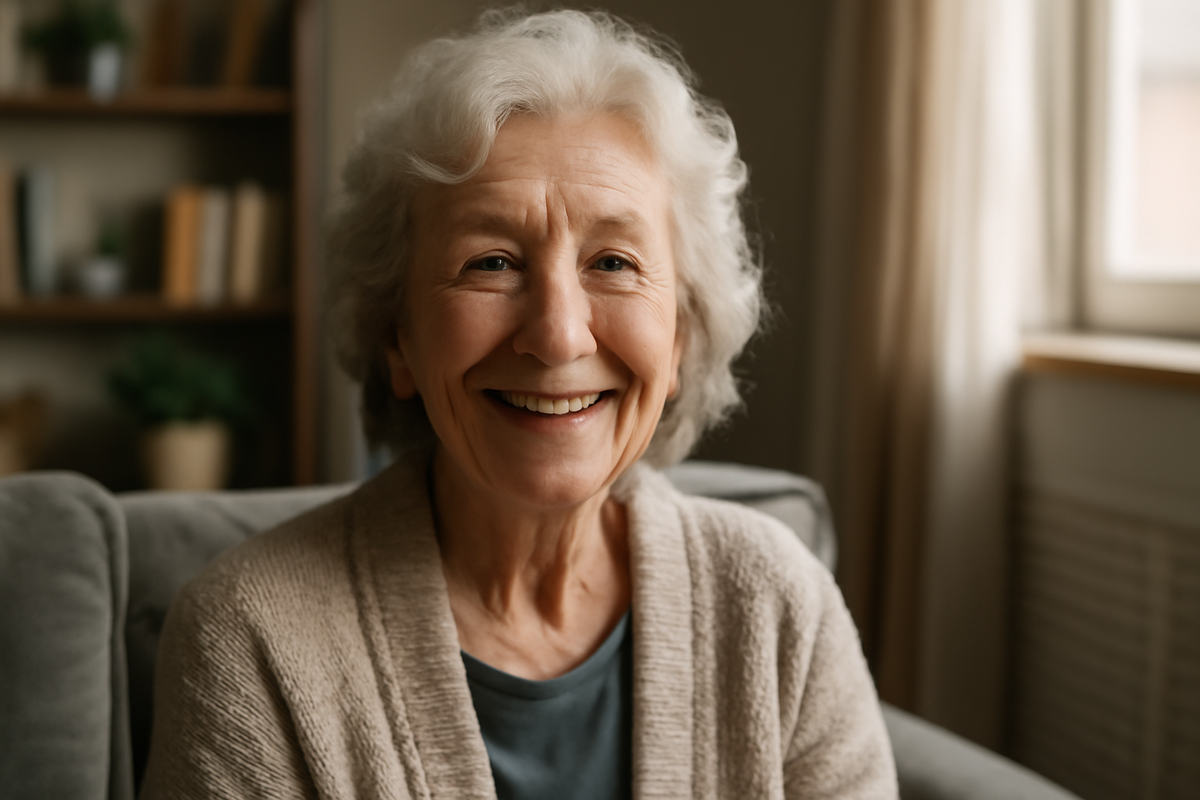
The old man on the park bench has no idea what “doomscrolling” means. He doesn’t care that an algorithm thinks it knows what he should watch next. His morning ritual is simpler: a slow walk to the pond, a thermos of coffee, a folded newspaper, a small bag of bread for the ducks he’s not really supposed to feed. The sky is a soft gray, the kind that makes colors gentler and sounds sharper—geese calling, leaves talking against each other, a distant dog bark. His phone is somewhere at home in a dish with his keys. And as you stand there, half-distracted by yet another notification, you can’t help but notice something about him: he looks…peaceful.
The Quiet Art of Being Fully Where You Are
Older people don’t usually talk about “mindfulness.” They just do it, often without tagging it as a practice or a trend. Watch a grandmother knead bread dough or a retiree pruning roses. There is a slowness there, but it isn’t laziness. It’s attention—the kind that younger, tech-glued generations often trade away for speed and stimulation.
A senior stirring soup doesn’t need a meditation app to tell her to notice the smell of onions browning in butter, the warmth of steam on her cheeks, the soft weight of the wooden spoon in her hand. Her life has taught her something that notifications can’t: when you hurry through every moment, you don’t actually get more life; you get less of it, stretched thin and noisy.
Contrast that with the modern habit of splitting attention into a thousand pieces—one eye on a video, one thumb on a text, the mind half-planning the next thing. It feels productive, but it often leaves a particular aftertaste: that strange combination of exhaustion and emptiness at the end of a day where nothing really stood still long enough to be felt.
Many seniors have already tried living fast. They’ve rushed through careers, child‑rearing, anxiety-laced commutes. Now, freed from the pressure to hit the next milestone, they give themselves permission to inhabit ordinary moments fully: watching birds, stirring tea, looking out the window and actually seeing what’s there. Far from trivial, these small acts of presence quietly anchor their days in a form of happiness that doesn’t depend on likes, shares, or unread messages.
The Power of Routines Younger Generations Keep Abandoning
Ask a group of seniors about their mornings and you’ll often hear something that sounds almost ritualistic. Coffee at seven. A walk at eight. Crosswords after lunch. Gardening when the sun softens. To younger people, wired for novelty and constant change, this can seem…boring. But hidden inside those routines is a kind of emotional scaffolding.
Routines reduce mental clutter. The older woman who wakes up, opens the curtains, makes the same oatmeal with the same handful of raisins every day is not living a small life; she’s creating a reliable rhythm. That rhythm becomes a quiet stage on which surprises—visits, phone calls, an unexpected flower bloom—can stand out more brightly.
Younger, tech-obsessed lifestyles tend to be streaky and jagged: late nights, shifting schedules, work bleeding into weekends, screens glowing long after the sun has gone. The lack of rhythm can make the days blur into each other, and the heart quietly loses its sense of “enough.”
For many seniors, routine isn’t a cage; it’s a gentle frame. They’ve lived long enough to know that dramatic change and big achievements are overrated as daily fuel. Safety, predictability, and small, dependable pleasures—like an early morning walk before the world wakes up—often become deeper sources of happiness than any breaking news or viral trend.
Habit 1: They Keep a Simple, Steady Daily Rhythm
Instead of chasing an ever-changing schedule, seniors often build simple, repeatable patterns. They wake at similar times, eat at similar hours, and anchor their day with a few beloved activities. There is a softness to this, but also a strength. A stable rhythm supports emotional balance, much like a heartbeat you can rely on.
A retired man might water his tomatoes every evening at dusk. A widowed woman might walk the same route around the block, greeting the same dog, watching the same houses gradually cycle through seasons of flowers and wreaths. Younger people sometimes see this as monotonous. But within that sameness, seniors notice details: new buds, changing light, a neighbor’s car missing from its usual place. The world becomes knowable, and that sense of familiarity is soothing.
The Rare Beauty of Face-to-Face Time
In an era where “connection” often means a blue dot turning green, many older adults still prefer the sound of a real voice in the same room, the warmth of a hand on a shoulder, the shared silence of just sitting together. They come from a time when you had to knock on doors, schedule visits, and actually show up.
If you walk into a community center on a weekday morning, you might see a circle of seniors playing cards, leaning close over their hands, arguing cheerfully about the rules. There’s laughter there that doesn’t need captions or reaction emojis. No one is recording it for their “story.” It exists fully in that moment, experienced all the way through and then allowed to vanish into memory.
Compare that to a group of younger people, each half-present in several places at once—texting someone not there, checking a group chat, skimming notifications, glancing up only when something dramatic happens. The room is full, but the attention is splintered.
Habit 2: They Prioritize In-Person Conversation
Many seniors still pick up the phone to call instead of sending a quick message. Better yet, they drop by. A visit might mean bringing a small bag of fruit, sitting at the kitchen table, and wandering without hurry through family stories, local gossip, or nothing in particular. That unstructured, meandering talk builds a kind of connection that algorithm-driven feeds can’t replicate.
Loneliness does affect many older adults, and it’s a serious problem. But those who maintain regular, in-person contact—coffee groups, church gatherings, walking clubs, game nights—often feel grounded in a real, physical network of people. They know their neighbors’ names. They remember birthdays without having to set a reminder. And their happiness flows not from numbers on a screen, but from the felt sense of “I belong somewhere.”
Moving Slowly, But Always Moving
Watch a senior tie their laces before a walk. There is no command to “close your rings” or beat yesterday’s step count. The habit is older than that language. It might have started as a doctor’s advice, or a way to regulate sleep, or simply as a response to the body’s quiet, insistent plea: keep me moving or I will stiffen.
A younger person might think of movement primarily as “exercise,” scheduled, optimized, and tracked. For many seniors, movement is woven into the fabric of daily life: stairs instead of elevators when possible, sweeping the porch, raking leaves, walking to the store, stretching in the morning because that’s what feels good now.
Habit 3: They Build Movement Into Ordinary Moments
They might not talk about “van life workouts” or “high-intensity intervals,” but their small, repeated movements accumulate. Decades of walking the dog, tending the yard, doing their own chores—these behaviors support physical and emotional health more quietly than flashy fitness trends, but often more reliably.
Movement also becomes time for observation and reflection. A solitary walk becomes a moving meditation: the crunch of gravel, the smell of rain on hot pavement, the neighbor’s hydrangea that suddenly turned from blue to purple. This ordinary motion, repeated daily, often provides the kind of mental clarity many younger people now try to buy in the form of apps, retreats, or wellness programs.
The Old-School Relationship With Stuff
Open the drawers of a senior who has lived in the same house for 40 years and you’ll see a particular pattern: things are kept, but not endlessly accumulated. A pair of well-used shoes, carefully polished. A coat altered instead of replaced. A sewing kit that has patched a hundred knees and buttons. There is certainly clutter sometimes, but it’s the clutter of history, not the rapid-fire debris of one‑click deliveries.
Younger, tech-saturated generations are constantly nudged to want more: new gadgets, new upgrades, new clothes in new colors each season. The result is a continuous low-level dissatisfaction—a sense that what you have is always just a bit outdated or insufficient.
Habit 4: They Respect and Repair What They Already Own
Many seniors grew up in times when scarcity wasn’t a lifestyle trend but a reality. You fixed what broke. You made things last. This practice didn’t just save money; it shaped a deeper relationship with objects. The chipped mug isn’t just a mug; it’s 20 years of morning coffee, winter colds soothed with tea, grandchildren’s sticky hands reaching for hot chocolate.
When you value things for their stories instead of their novelty, the desire for constant replacement fades. That shift often becomes a quiet form of freedom. Happiness is less tangled with purchases. You don’t need every new device; the one that works is enough. There is relief in that, like stepping out of a crowded, noisy mall into clear, cool air.
Time, Stories, and the Long View
Perhaps the most timeless habit seniors share isn’t about what they do, but how they see. Their lives stretch backward across decades—wars, recessions, births, funerals, marriages, divorces, quiet years, chaotic years. This long view becomes a kind of internal weather map for the heart. They know storms pass. They know that the thing currently consuming your thoughts probably won’t matter as much in five years, let alone fifty.
When a grandparent listens to their grandchild agonize over an exam or a breakup, they aren’t dismissive. But they are, usually, steadier. They’ve lived through their own versions of those heartaches, plus others that younger people can’t yet imagine. And they survived. That knowledge is a form of deep, bone-level reassurance.
Habit 5: They Tell, and Retell, Their Stories
You’ve probably noticed how older people repeat themselves sometimes. The same anecdotes surface at family gatherings: “Did I ever tell you about the time…” At first, it may feel redundant, but there’s more happening under the surface.
By telling their stories, seniors weave their lives into a coherent narrative. They affirm that what happened to them meant something—that the joys and losses weren’t random, but part of a journey that led to who they are now. Storytelling also pulls younger listeners out of their narrow, screen-sized present and into a broader human timeline.
In those stories, happiness often turns out to be simpler than current culture suggests. It’s not about constant excitement but about a handful of steady threads: people who showed up, small chances they took, daily routines they kept for years. That realization can be quietly radical for younger, tech-pressed adults who’ve been taught to chase extraordinary lives and then wonder why they feel perpetually behind.
Nine Timeless Habits at a Glance
All of these patterns overlap and blend into one another. They are less a checklist and more like roots of a tree—different directions, one source of stability. Here’s a simple view of some of the habits that so often leave seniors quietly happier than younger, tech-obsessed people:
| Timeless Habit | How Seniors Practice It | Why It Often Brings More Happiness |
|---|---|---|
| 1. Being fully present | Single-tasking: one conversation, one chore, one walk at a time. | Reduces mental noise, deepens enjoyment of ordinary moments. |
| 2. Keeping simple routines | Regular wake times, meals, walks, and quiet hobbies. | Creates stability, eases anxiety, makes life feel more manageable. |
| 3. Valuing face-to-face contact | Coffee visits, community groups, neighborly chats. | Builds genuine belonging and emotional support. |
| 4. Moving naturally every day | Walking, gardening, doing chores instead of outsourcing them. | Supports physical health and offers gentle mental reset. |
| 5. Repairing and reusing | Fixing clothes, mending tools, keeping devices longer. | Reduces financial stress and detaches happiness from shopping. |
| 6. Enjoying analog pleasures | Reading paper books, cooking from scratch, writing notes. | Engages the senses, slows time, deepens memory. |
| 7. Telling life stories | Sharing memories with family, reminiscing with old friends. | Creates meaning, strengthens identity, connects generations. |
| 8. Accepting limits | Knowing when to rest, when to say no, when “good enough” is enough. | Softens perfectionism and chronic pressure to perform. |
| 9. Keeping perspective | Seeing crises in the context of a long, eventful life. | Reduces overreaction, nurtures calm, and protects hope. |
What We Can Quietly Borrow From Them
You don’t have to abandon your smartphone, delete every app, or move to a cabin to taste the kind of happiness that many seniors carry. You can keep your music streaming and your video calls and your favorite online spaces—and still practice a few small, older habits that change how your days feel from the inside.
You might start with one: a phone‑free walk each morning, keys in pocket, screen left behind. Or you might choose to fix something—sew that loose button, glue that broken handle—rather than replacing it. You could decide that at least a couple of your weekly conversations will happen voice-to-voice or face-to-face instead of through text bubbles.
Most of all, you can let go, just a little, of the idea that happiness lives in the next update, the next notification, the next version of you you’re trying to download from the future. Seniors know, in their bones, something our devices will never tell us: often, the richest life is not the one that moves fastest, shines brightest, or documents itself best, but the one that quietly loves what is already here.
Frequently Asked Questions
Are seniors really happier than younger people?
Many studies suggest that emotional well‑being often increases with age, especially after midlife. Seniors tend to report more life satisfaction and fewer intense negative emotions, partly due to experience, perspective, and the calming effect of long-term routines and relationships.
Can younger, tech-obsessed people actually adopt these habits?
Yes. You don’t need to give up technology completely. The key is balance: carving out tech‑free pockets of time, choosing face‑to‑face conversations more often, building simple routines, and practicing appreciation for what you already have.
What’s one small habit I can start with today?
Begin with a daily, device‑free ritual that takes 10–20 minutes: a walk, a cup of tea by the window, journaling, or sitting outside noticing sounds and smells. Protect that time like an appointment.
Don’t some seniors struggle with loneliness and poor health?
They do, and those challenges are real. The habits described here don’t erase hardship, but when present, they often cushion it. Seniors who maintain routines, social ties, movement, and perspective tend to cope better emotionally, even with health or mobility issues.
How can I encourage seniors in my life to share their wisdom?
Invite their stories with simple, open questions: “What was it like when…?” or “What did you do when you were my age?” Then listen without rushing, phones away. That attention itself becomes a bridge between their timeless habits and your tech-shaped world.

Hello, I’m Mathew, and I write articles about useful Home Tricks: simple solutions, saving time and useful for every day.