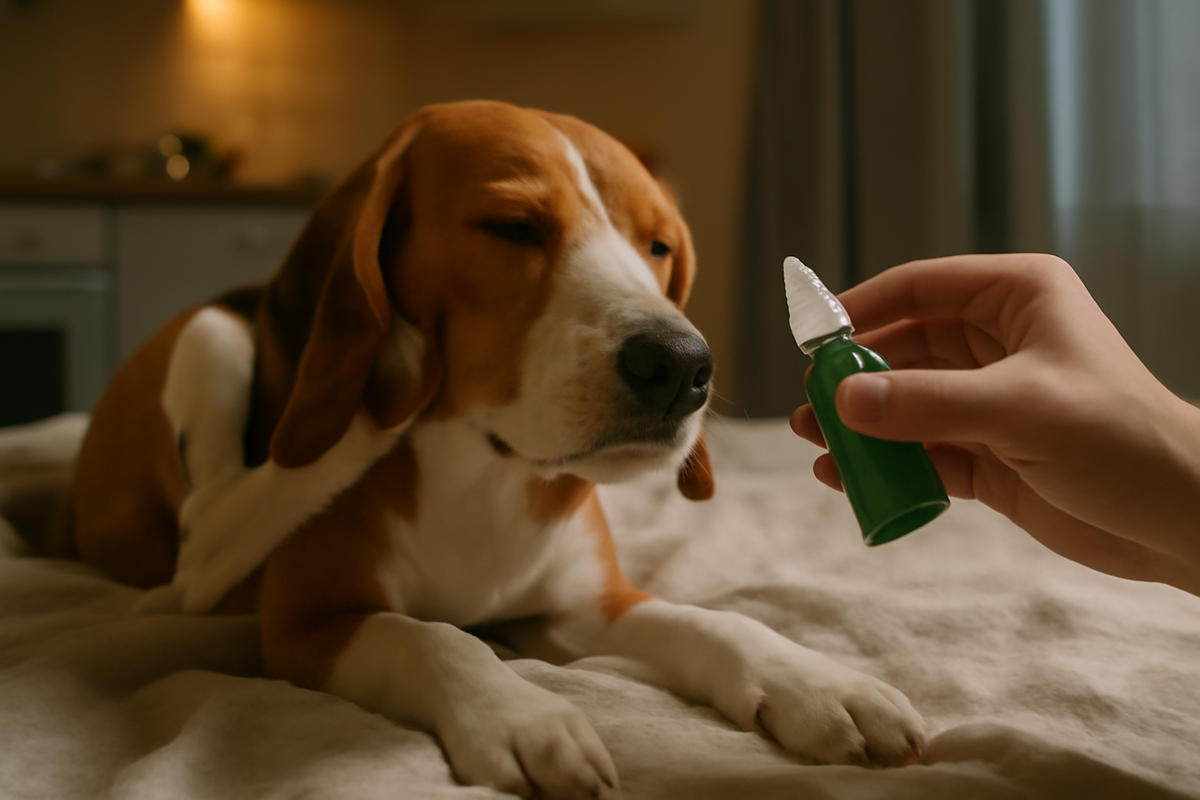
The first time I heard it, I thought a branch was scraping the siding. A slow, restless scratching, then the soft huff of a dog trying not to bark. I rolled over, squinting at the glowing red numbers on the clock. 3:07 a.m. Again. The room smelled faintly of sleep and old books, the kind of humid quiet that only exists in the middle of the night. At the foot of the bed, my dog, Rio, shifted and scratched, nails rasping against his collar, skin twitching in an invisible battle I couldn’t see but could definitely hear.
I whispered his name. The scratching stopped for two seconds, then started again, more frantically. His tags clinked like tiny wind chimes. He licked at his paws, then sat up and shook, the sudden jangle shattering the thin glass of silence. My body buzzed with that particular brand of awake that has nothing to do with caffeine: the wakefulness of worry. What if it’s fleas? Allergies? Dry skin? Something worse?
By 3:19 a.m., I was in the kitchen, barefoot on cold tile, scrolling through desperate dog-owner forums on my phone while the fridge hummed beside me. Every post looked the same: My dog is up all night scratching… I’m exhausted… Tried everything… Please help. The glow of the screen lit up the stainless-steel sink, a half-empty water bowl, a lineup of everyday bottles and jars. One headline popped out at me: “The Kitchen Bottle Trick That Stopped My Dog’s 3 a.m. Scratching.”
I actually laughed. A cure for my dog’s nightly misery… in the kitchen? In a bottle I already owned? It sounded like the kind of internet magic that never works. But I was too tired to be picky, and there was something about the idea—simple, close, ordinary—that made me keep reading.
The Midnight Mystery of the Itchy Dog
Before we get to the bottle, it helps to understand why so many dogs suddenly turn into nocturnal scratching machines just when humans have finally found a little peace.
Nighttime has its own soundscape. During the day, you might not notice every little scratch or lick because it’s camouflaged under traffic noise, phone calls, the TV, the dishwasher. But at 3 a.m., the house becomes an echo chamber. Every collar jingle is an alarm. Every lick is a clock tick. Your dog has probably been mildly itchy all day—but at night, their discomfort becomes the main event.
There are real reasons that itch often feels worse after dark:
- Heat and blankets can warm your dog’s skin, making existing irritation feel more intense.
- Stillness means nothing is distracting your dog from that one itchy paw, ear, or belly.
- Dry indoor air, especially when heaters or AC are running, can make already sensitive skin tighter and itchier.
- Anxiety and restlessness can show up as extra licking and scratching, not just pacing or whining.
All of this turns your quiet bedroom into the stage for a late-night drama: your dog trying to scratch away a feeling that never quite disappears, while you lie there counting the seconds between collar jingles and wondering if you will ever sleep normally again.
The Usual Suspects: Why Your Dog Might Be Scratching at 3 a.m.
Imagine you could step inside your dog’s skin for a moment—the way the fur feels, the tug of the collar, the tiny prickle on the back of the neck that just will not quit. If you could, you’d likely run into one of these culprits:
- Allergies – Grass, dust mites, pollen, mold, or food ingredients like chicken or grain can all trigger itch. Dogs don’t always sneeze like we do; they often scratch, chew, and lick instead.
- Parasites – Fleas, mites, or, more rarely, ticks and lice. Even a single flea bite can send some dogs into a full-body itch spiral.
- Dry or irritated skin – Indoor heating, frequent bathing with harsh shampoos, or low humidity can leave skin flaky and tight.
- Yeast or bacterial infections – Especially in the paws, ears, or skin folds. These often have a distinct odor and a greasy or red appearance.
- Contact irritants – Detergents, cleaning sprays, yard chemicals, or even certain fabrics.
- Stress and boredom – Compulsive licking and scratching can become a self-soothing habit when your dog feels anxious or under-stimulated.
This is why most vets will tell you: the goal isn’t just to silence the scratching—it’s to figure out why it’s happening. Still, when you’re standing barefoot in a dark kitchen at 3:41 a.m., your dog gnawing on a paw like it personally offended them, long-term detective work feels very far away. You want something, anything, that can take the edge off.
So… What’s With the Kitchen Bottle?
The phrase sounds almost like a riddle: a kitchen bottle that can calm your dog at night. People online talk about it like a kind of quiet miracle. And in many homes, it really does live in the kitchen, quietly waiting: a simple bottle of unflavored, plain oil—often extra-virgin olive oil or food-grade fish oil.
No, this isn’t a trendy “pour it all over your dog” hack. It’s simpler and more respectful than that. The idea behind the “kitchen bottle” is using a safe, everyday oil in a couple of thoughtful ways to support your dog’s skin from the inside and sometimes on the outside—not as a cure-all, but as a piece of a bigger picture.
Think of it less like a magic potion and more like this: you’re giving your dog’s skin the building blocks it needs to stay moist, flexible, and less reactive, so that little irritations don’t explode into nightly scratching marathons.
How a Simple Bottle of Oil Can Support Calmer Nights
Many household oils contain healthy fats that can help reduce dryness and support the skin’s natural barrier. When used properly, they create subtle but powerful shifts in how your dog experiences everyday irritants.
Here’s what that looks like in real life:
- Feeding a tiny daily amount of dog-safe oil (like fish oil or small amounts of olive oil) can help support overall skin health over time.
- Gentle spot-moisturizing for certain dry, flaky patches (with vet approval) can sometimes decrease that “itchy tightness” feeling.
- Paired with better hydration and a good diet, you’re giving your dog more tools to resist environmental triggers that used to send them into a scratching spiral.
Does that mean every kitchen bottle is safe? Absolutely not. Some oils are dangerous for dogs, and even the good ones can cause trouble if you use them the wrong way or in the wrong amount.
The 3 A.M. Plan: Step-by-Step Calm, Starring a Bottle from Your Shelf
Picture this: it’s another restless night, but this time, instead of just lying there listening to that awful scratching soundtrack, you have a small, clear plan. It doesn’t involve magic. It involves observation, a bottle, and a gentle shift in how you respond.
Step 1: Pause and Actually Look
Turn on a dim light and check your dog’s skin: behind the ears, under the collar, between the toes, along the belly and tail. You’re looking for clues:
- Redness or hot spots
- Flecks of “dirt” that could be flea droppings
- Bald patches or broken skin
- Greasy, smelly areas (often yeast)
If you see any of these, especially open sores or severe redness, your next stop is the vet—not the kitchen. The bottle is for support, not for replacing medical care.
Step 2: The Bowl, the Bottle, and the Right Amount
If your vet has cleared it—or if your dog is generally healthy and not on a special restricted diet—many owners start by adding a tiny amount of dog-safe oil to their dog’s daily food.
Common choices include:
| Oil Type | Typical Use | General Small Starting Amount* |
|---|---|---|
| Fish oil (dog-safe, food-grade) | Supports skin, coat, joints | As per product/vet guidance |
| Olive oil (plain, extra-virgin) | Occasional support for dry skin | About 1/4–1/2 tsp for small dogs, up to 1 tsp for large |
| Coconut oil (use cautiously) | Sometimes used topically; can upset stomach if overused | A dab to start; vet guidance strongly recommended |
*Always check with your vet for your dog’s specific size, health, and diet. Too much oil can cause digestive upset or pancreatitis.
Think of the oil as a long-game companion. You won’t see an overnight miracle, but over several weeks, some owners notice:
- Softer, shinier fur
- Less flaking
- Slightly calmer, less panicky scratching episodes
Step 3: A Tiny Topical Ritual (When It’s Truly Safe)
Sometimes the kitchen bottle trick is more about touch than taste. With vet approval, some people use a barely-there smear of oil on particularly dry spots—like a chapped elbow or flaky patch. This should always be:
- Very thin—no greasy puddles
- Kept away from open wounds, infected areas, or eyes
- Followed by gentle distraction (like a chew toy) so the dog doesn’t immediately lick it all off
The magic here isn’t just the oil. It’s the ritual. Late-night scratching often comes wrapped in anxiety—for both of you. Turning those moments into a calm, reassuring check-in—your hands moving gently, your voice low and steady—can tell your dog: You’re safe. I see you. I’m helping.
Beyond the Bottle: Small Changes That Add Up to Quiet Nights
As soothing as that kitchen bottle idea feels, it works best as part of a small ecosystem of changes—each one subtle, but together, capable of shifting your nights from frantic to peaceful.
Rethinking the Sleeping Environment
Walk through your dog’s nighttime life like a detective:
- Bedding: Is it freshly washed with strong detergent? Some dogs react to fragrances and residues. Try an unscented, gentle detergent and an extra rinse cycle.
- Temperature and humidity: A basic humidifier in winter or a fan in summer can make a huge difference for dry or hot skin.
- Location: Dogs who sleep on hot floors, near radiators, or under heavy blankets might itch more. Experiment with breathable beds or a cooler corner.
Sometimes the solution is something as small as moving the bed a few feet away from a heating vent or giving your dog a lighter blanket.
Feeding the Calm
That kitchen bottle doesn’t have to work alone. Alongside it, think about:
- Slow, steady dietary changes: If allergies are suspected, talk to your vet about an elimination diet rather than rapid-fire food switching.
- Hydration: Make sure your dog has easy access to fresh water, not just at dinner but through the evening.
- Pre-bedtime snacks: A tiny, balanced bite (like part of their regular food) before bed can smooth out nighttime restlessness for some dogs.
Calm often starts in the gut. The right combination of food, fats, and timing can edge your dog toward deeper, more comfortable sleep.
When a Simple Bottle Isn’t Enough
There’s a fine line between “a little itchy” and “something’s wrong,” and you know your dog better than anyone. The kitchen bottle approach is meant for mild, ongoing dryness or occasional itch—not for dogs who are shredding their skin, nipping at their tail in distress, or waking you every night in obvious pain.
Call your vet—soon—if you notice:
- Open sores, scabs, or constant licking of one specific spot
- Strong odor from skin, ears, or paws
- Hair loss in patches
- Visible parasites or black “flea dirt”
- Changes in appetite, energy, or bathroom habits along with scratching
Your vet may recommend allergy testing, prescription shampoos, medications, or a strict food trial. Think of the bottle as a supporting character in the story, not the main hero. It’s the soft background presence, humming along quietly while the real medical work happens.
And still, there’s something undeniably hopeful about it—that in the middle of the night, in a kitchen that smells faintly of last night’s dinner, you can reach for a familiar bottle and feel like you’re not entirely powerless.
Weeks after I first tried it, I noticed the change with Rio in the quietest way. One night, I woke with that vague, automatic expectation of scratching… and heard nothing. Just a slow, steady breathing from the foot of the bed. No collar jingling, no restless shifting. The room felt full instead of frayed. I walked my fingers through his fur. Softer. Less flaky. When he lifted his head, his eyes were heavy, unbothered, already halfway back to dreams.
The kitchen bottle hadn’t cured him—our vet had helped us tackle a food sensitivity, too—but it had become part of our small, nightly ritual. A splash in his dinner, a check of his ears and paws, a moment of connection before the lights went out. A simple human act in a complicated world: noticing, adjusting, caring.
That’s the quiet truth hiding inside all the dramatic online claims. The bottle itself isn’t magic. The magic is you, awake at 3 a.m., choosing to pay attention to the living, breathing creature at the end of the bed—and being willing to change the story, one tiny, oily drop at a time.
Frequently Asked Questions
Can olive oil really help my dog stop scratching at night?
Olive oil can sometimes help support skin health when used in very small, appropriate amounts as part of a balanced diet. It may reduce dryness for some dogs, which can lessen mild itching. However, it’s not a cure for serious allergies, infections, or parasites. Always talk to your vet before adding oil regularly.
How much oil is safe to give my dog?
The safe amount depends on your dog’s size, health, and overall diet. Many vets suggest starting with a very small amount—often about 1/4–1/2 teaspoon for small dogs and up to 1 teaspoon for large dogs, but only with professional guidance. Too much oil can cause vomiting, diarrhea, or even pancreatitis.
Can I put kitchen oil directly on my dog’s skin?
Sometimes, in tiny amounts and only on intact, non-infected skin, a vet might approve using a little oil for dryness. But overdoing it can trap heat, worsen certain conditions, or encourage licking and irritation. Never apply oil to open sores, red inflamed areas, or ears without veterinary advice.
What if my dog keeps scratching even after I try the oil trick?
If the scratching continues, gets worse, or your dog seems distressed, stop experimenting and contact your vet. Persistent itching can signal allergies, infections, parasites, or other medical issues that need proper diagnosis and treatment. Oil alone will not fix those problems.
Are some oils dangerous for dogs?
Yes. Not all kitchen oils are safe. Seasoned, flavored, or essential-oil–infused products can be harmful. Large amounts of any fat can be risky. Stick only to dog-safe, plain, food-grade oils recommended by your vet, and avoid “home remedies” you find online that haven’t been professionally vetted.
How long does it take to see changes in my dog’s skin and scratching?
For dietary support like fish oil or small amounts of olive oil, you’re usually looking at weeks, not days. Skin and coat changes are gradual. If you don’t see any improvement—or if you see new symptoms—within a few weeks, check in with your vet to reassess the plan.
Is 3 a.m. scratching always a sign of a health problem?
Not always, but it’s rarely “nothing.” It might be as simple as dry skin or a too-warm sleeping spot, or it could be the first sign of allergies or anxiety. If the scratching is frequent, intense, or paired with other symptoms, it deserves attention. Your dog’s nighttime discomfort is a message; your job is to help translate it.

Hello, I’m Mathew, and I write articles about useful Home Tricks: simple solutions, saving time and useful for every day.